Jun 19, 2015 | Advocacy, Non-legal submissions
Today, the ICJ made a submission to the Human Rights Council’s Working Group on the Universal Periodic Review in advance of the Human Rights Council’s review of Singapore.
In its submission, the ICJ expressed concern about the following:
(1) corporal punishment;
(2) the death penalty;
(3) the continued criminalization of consensual same-sex relations;
(4) corporate accountability for companies registered in Singapore; and
(5) international human rights instruments and mechanisms.
A copy of the submission can be found here:
Singapore-ICJ UPR-Advocacy-non legal submission-2015-ENG
Jun 18, 2015 | News
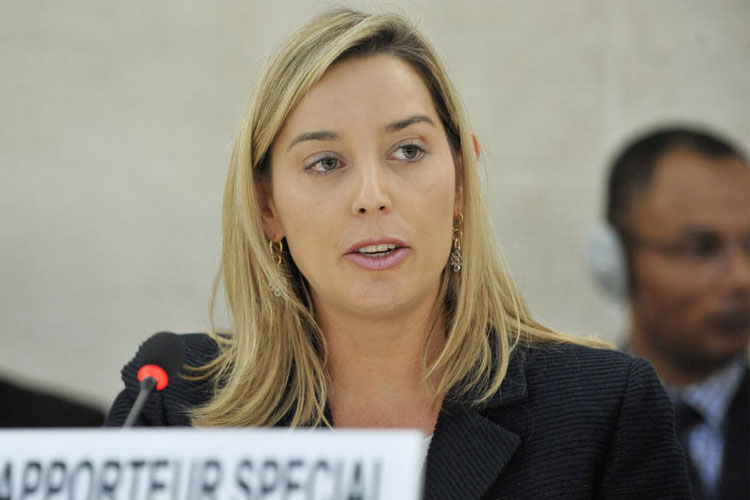
Mrs Gabriela Knaul (Brazil) today participated in an Interactive Dialogue with the Human Rights Council. Topics included children in the justice system, her visits to Qatar, United Arab Emirates, Tunisia and Portugal, and the need more generally for better implementation of relevant UN standards.
Mrs Knaul’s appearance before the Human Rights Council will be her last before her term in the mandate comes to an end in the coming months.
Her successor as UN Special Rapporteur on the independence of judges & lawyers is to be appointed at the end of the Council session, on 3 July 2015.
Following an initial presentation by the Special Rapporteur, the concerned countries responded, followed by discussion by other states, and civil society.
Jun 9, 2015 | News
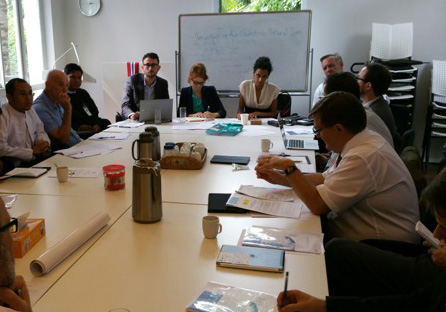
The ICJ today organized a diplomatic dialogue, in advance of the Universal Periodic Review (UPR), with ambassadors and high-level diplomatic representatives, to share the state of human rights in Myanmar.

May 30, 2015 | Advocacy, Legal submissions
This paper was prepared by the ICJ for the first session of the Open Ended Intergovernmental working Group on a Legally Binding Instrument on TNCs and other business enterprises, argues that all conduct by all types of business enterprises, whether local or transnational, should be addressed in the legally binding instrument.
The paper argues that business enterprises that do not have any or any significant transnational operations no doubt are capable of and in many instances have been responsible for human rights abuses no less serious in scale or severity than those of transnational businesses. The victims of human rights abuses committed directly or indirectly by businesses are unlikely to distinguish whether the business enterprise that causes them harm has transnational ownership or operations; nor are victims likely to excuse abuses they suffer from a “local” business simply because the entity lacks a transnational element.
Therefore, in principle all conduct by all types of business enterprises, whether local or transnational, shall be addressed in the legally Binding instrument. The footnote in the preamble should not be interpreted as limiting in any way the scope of possible discussions in the Intergovernmental Working Group or any analysis or recommendations that may be reported back to the Council on a future treaty.
Global-Report-ScopeBusinessTreaty-2015

Apr 30, 2015 | News
The ICJ welcomes yesterday’s adoption, by the UN Working Group on Arbitrary Detention, of the Working Group’s “Basic Principles and Guidelines on Remedies and Procedures on the Right of Anyone Deprived of His or Her Liberty by Arrest or Detention to Bring Proceedings Before Court”.
Under its resolution 20/16 (2012), the UN Human Rights Council requested the Working Group to prepare draft basic principles and guidelines on habeas corpus. The Working Group set out a first draft set of principles and guidelines ahead of its global consultation on the subject in September 2014. From 2 to 5 February 2015, the Working Group met to continue its elaboration of the Basic Principles and Guidelines, resulting in the adoption of a second draft. The Working Group adopted its final iteration of the document at the conclusion of its session on 29 April 2015. The Basic Principles and Guidelines will be presented to the Human Rights Council during the Council’s 30th regular session, to be held from 14 September to 2 October 2015.
The ICJ welcomes the Basic Principles and Guidelines as a means of assisting States to enhance, in law and in practice, respect for the right to habeas corpus. It especially welcomes certain aspects of the document, including:
- Paragraph 68, in which applicable qualifications are set out to any derogating measures to accommodate constraints on the application of some procedural elements of the right to habeas corpus;
- Principle 6 and Guideline 4 which reaffirm that habeas corpus petitions must be heard by courts that bear all characteristics of competence, independence and impartiality (paras 27, 70 and 72(a)), that competence includes the power to order immediate release if detention is fund to be arbitrary or unlawful (para 27), that immediate implementation of such orders is required (para 71(c)) and that courts must give reasoned and particularized decisions (para 71(d));
- Guideline 7, in which it is provided that individuals are entitled to take proceedings multiple times (paras 81 and 82), that expediency is required, including in cases of subsequent challenges, and especially in cases alleging, among other things, torture or ill-treatment (para 83) and that authorities remain obliged to ensure regular review of the continuing need for detention (para 84);
- Principle 9 and Guideline 8 concerning legal representation and legal aid;
- The clarifications in Principle 10 and Guideline that persons able to bring proceedings include counsel, family members or other interested parties, whether or not they have proof of the consent of the detainee (paras 34 and 92) and that no restrictions may be imposed on a detainee’s ability to contact such persons (para 35);
- The express recognition in Guideline 12 that information obtained by torture or other forms of ill-treatment may not be used in evidence;
- Guideline 13 concerning disclosure and limitations applicable to any non-disclosure of information on security or other grounds;
- Guideline 14, reflecting authorities’ obligation to justify the need and proportionality of detention;
- Principle 15 and Guideline 16 (on remedies), reflecting the overarching right to remedies and reparation (paras 43), the need for authorities to give immediate effect to an order for release (para 44) and the right to compensation, restitution, rehabilitation, satisfaction and guarantees of non-repetition (paras 109-112); and
- Principle 16 concerning the application of Article 9(4) of the International Covenant on Civil and Political Rights (ICCPR) alongside international humanitarian law (paras 45 and 47), the application of Article 9(4) to civilians in an international armed conflict (para 47), the application of habeas principles to prisoners of war (para 48), and the question of administrative detention or internment in the context of a non-international armed conflict (para 49).
The ICJ has engaged in all stages of the Working Group’s elaboration and consultations. It made written submissions in November 2013, April 2014 and March 2015. Its staff, Matt Pollard and Alex Conte, gave panel presentations at the September 2014 global consultation.