Mar 23, 2019 | News
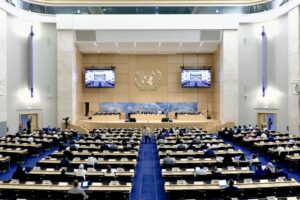
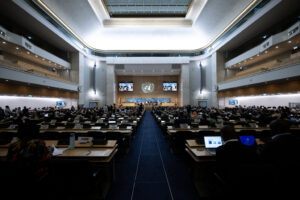
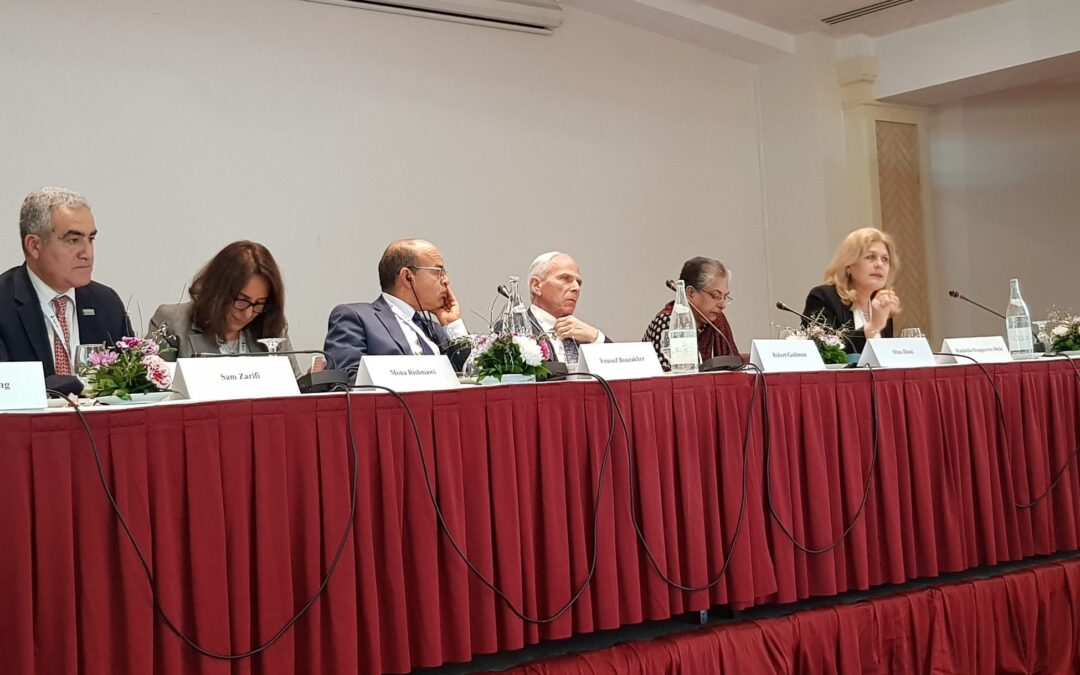
Some 100 distinguished judges and lawyers from around the world commit to expanding the reach of human rights and rule of law principles, in the face of a global backlash against human rights values. The Tunis Congress is the ICJ’s 18th Global Congress since 1952.
The ICJ World Congress, consisting primarily of jurists serving as Commissioners, ICJ National Section and affiliates, and the ICJ Secretariat, is discussing strategy for concerted action and issue a final Declaration reflecting the outcome.
“Since its founding 1952 the ICJ has been steadfast in its belief in the primacy of human rights grounded in rule of law principles as indispensable for well being of all people, as well as for peaceful and just international order,” said Sam Zarifi, ICJ Secretary General.
“Cynical manipulation by authoritarian populists positions the rule of law and human rights as obstacles to the popular will. But as the ICJ’s experience over the past six decades has shown, the rule of law is inextricably bound with the proper functioning of democracy and to the protection and promotion of human rights,” he added.
The ICJ Congress will focus on five key areas of concern: the independence of judges and lawyers and administration of justice; access to justice and accountability for human rights violations; global security and counter-terrorism; equality and non-discrimination; and fundamental freedoms and civil society space.
“The international human rights legal framework has allowed for huge improvements in the lives of people around the world since the Universal Declaration of Human Rights 70 years ago, and the ICJ has played an important role in the development of this legal framework,” Zarifi said.
“But we are now witnessing a resurgence of some of the dangerous, insidious ideas and practices that have led the world to carnage and chaos in the past: the scapegoating of groups such minorities, refugees and migrants; the undermining of multilateral institutions; and the silencing of civil society and those who are giving voice to those who are marginalized on the basis of their gender, religion, ethnicity, physical capacity or sexual orientation,” he added.
“Global powers such as the United States, Russia, and China are actively attacking the rule of law and respect for human rights around the world, while the European Union is distracted by the politics of xenophobia and fearmongering,” he further said.
“It is now crucial for other States, and for people around the world, to show that respect for the rule of law and human rights are universal values and global demands, and the ICJ is proud to pull together the community of jurists from all regions of the world to support these values and demands,” he added.
In the face of these threats and challenges, the Congress will consider means to defend and strengthen the rule of law and legal protection of human rights globally, regionally and in individual countries.
The ICJ is made up of around 60 distinguished judges and legal practitioners from all parts of the world and diverse, works on all five continents and addresses human rights protection in dozens of countries.
Mar 15, 2019 | News
The ICJ called on the Government of Malaysia to take immediate steps to protect the right of all persons in the country to freedom of expression and assembly, after seven organizers of the International Women’ Day (IWD) March were summoned for questioning by police authorities on 14 March 2019.
“It is very concerning that the Malaysian authorities continue to rely on repressive legislation to control and undermine freedom of expression and freedom of assembly in the country,” said Emerlynne Gil, ICJ’s Senior International Legal Adviser.
The Women’s March took place in Kuala Lumpur, on 9 March 2019. The demands of the participating groups included an ‘end of all violence based on gender and sexual orientation’, the ban of all child marriages, and the setting of RM1,800 as a minimum wage.
A statement by the Dang Wangi District Police Deputy Chief identified the organizers as individuals who had spoken at an ‘LGBT’ rally.
There were reportedly taken in for questioning on 18 March for potential violations of Section 4(1) of the Sedition Act and Section 9(5) of the Peaceful Assembly Act. They remain at risk of being charged for these offences.
The ICJ considers the Sedition Act 1948 and the Peaceful Assembly Act 2012 to be incompatible with international standards. The ICJ has previously called on the Government of Malaysia to abolish both laws, which have historically been used to silence voices of those challenging governmental policy.
The laws place restrictions on the exercise of freedom of expression that are overbroad, unnecessary and disproportionate, and inconsistent with rule of law and human rights principles. The Pakatan Harapan Government committed itself to abolishing the Sedition Act 1948 and the Peaceful Assembly Act 2012, but has not done so to date.
“The vague definition of ‘seditious tendencies’ in the Sedition Act has been used as a tool for silencing government critics and human rights defenders by previous administrations. It is disappointing that the Malaysian authorities have ended the moratorium on the use of the Sedition Act 1948, and continue to use it, instead of moving towards its abolition,” said Gil.
According to international standards, any limits on the right to peaceful assembly should not require prior authorization by the authorities. Notification requirements must not be unduly bureaucratic and be used only for the purpose of allowing the authorities to facilitate the exercise of the right to peaceful assembly, and to protect public safety.
In a 14 March statement, the organizers claimed to have been in regular communication with the police and to have been in compliance with the relevant notice provisions of the Peaceful Assembly Act.
The ICJ calls on the Malaysian authorities to end any investigations targeting the organizers of the Women’s March pursuant to the Peaceful Assembly and Sedition Act. It also calls on the Government to abolish the Peaceful Assembly Act and the Sedition Act.
Contact
Emerlynne Gil, ICJ Senior International Legal Adviser, t: +66 840923575, e: emerlynne.gil(a)icj.org
Malaysia-Womens March-News-web stories-2019-ENG (full story with additional information, in PDF)

Jan 3, 2019 | Advocacy, News, Non-legal submissions
On 30 December 2018, the ICJ and the International Service for Human Rights (ISHR) jointly submitted a communication to the Committee on the Elimination of Discrimination against Women (CEDAW Committee) directed against Thailand.
They did this as a State Party to the Optional Protocol to the UN Convention on the Elimination of All Forms of Discrimination against Women (the CEDAW Convention) on behalf and with the consent of Angkhana Neelapaijit, regarding the alleged enforced disappearance of her husband, Somchai Neelapaijit.
Somchai Neelapaijit, a prominent lawyer and human rights defender, disappeared after being stopped on a road in Bangkok on 12 March 2004 and pulled from his car by a group of men. He has not been seen since. More than 14 years after his alleged enforced disappearance, Somchai’s fate and whereabouts remain unknown.
Prior to his disappearance, Somchai had been defending clients from Thailand’s southern border provinces and had been doing extensive work to advocate for the rights of persons accused of terrorism, and to highlight the treatment of Malay-Muslims in the region.
The joint communication by ICJ and ISHR to the CEDAW Committee submits that Thailand has breached Articles 2(b)(c)(f), 5(a)(b), 15(1) and 16(1)(c)(d) of the CEDAW Convention, which relate to the rights of women to substantive equality and protection from all forms of discrimination, including in all matters relating to marriage and family relations, as well as to their right to an effective remedy for violations of the abovementioned provisions.
The communication further highlights the impact of enforced disappearance on family members of a disappeared person, noting its disproportionate impact on wives and female relatives, as most cases of enforced disappearance in Thailand involve male victims.
In addition to the CEDAW Convention and its Optional Protocol, Thailand is a party to a number of other international human rights instruments, including the International Covenant on Civil and Political Rights and the Convention against Torture and Other Cruel, Inhuman or Degrading Treatment or Punishment. In January 2012, Thailand also signed the International Convention for the Protection of All Persons from Enforced Disappearance (ICPPED), thereby committing itself to refrain from acts that would defeat the object and purpose of that treaty, namely the prevention and prohibition of the crime of enforced disappearance.
The ICJ has consistently called upon the Thai authorities to comply with their obligations under international human rights law to independently, impartially and effectively investigate the case of Somchai Neelapaijit and all other reported cases of enforced disappearance, and provide the families of the victims in such cases with access to effective remedies and reparations, including regular updates on the status of the investigations.
The ICJ has also submitted recommendations to the Thai authorities on the current Draft Prevention and Suppression of Torture and Enforced Disappearances Act, highlighting the crucial need for a domestic law to define and criminalize enforced disappearance and torture in line with Thailand’s international obligations.
Thailand-Communication to CEDAW-Advocacy-2019-ENG (full submission, in PDF)
Contact
Livio Zilli, ICJ Senior Legal Adviser & UN Representative, email: livio.zilli(a)icj.org
Read also
Thailand: ICJ submits recommendations on draft law on torture and enforced disappearance amendments
Thailand: ICJ marks 14th year anniversary of the enforced disappearance of Somchai Neelapaijit’
Thailand: ICJ, Amnesty advise changes to proposed legislation on torture and enforced disappearances
Thailand: pass legislation criminalizing enforced disappearance, torture without further delay
On the 10th anniversary of Somchai Neelapaijit’s alleged disappearance, the ICJ released a report ‘Ten Years Without Truth: Somchai Neelapaijit and Enforced Disappearances in Thailand’ documenting the legal history of the case.

Dec 28, 2018 | Multimedia items, News, Video clips
During a week of training and practical experience of UN human rights mechanisms in Geneva, women lawyers spoke of the ways in which civil society actors can use these mechanisms to strengthen advocacy efforts.
As part of a project supported by the German Mission to the United Nations in Geneva the ICJ invited two groups of women lawyers to Geneva to attend training workshops that took place during the course of the June and September ordinary sessions of the UN Human Rights Council.
Participants spoke about their experiences with the interplay between UN mechanisms and domestic changes.
Lebanese lawyer Nina Abdallah noted the limitations of these mechanisms when States do not accept mechanisms that allow for individual complaint. As Lebanon has not yet become party to the Optional Protocol of the CEDAW Convention this means that individuals cannot access the CEDAW Committee to seek a remedy for violations and against that State’s failure to meet obligations under the Convention.
However, she explained that although this limits the accessibility of certain mechanisms, civil society can still play an important role in raising rights issues, calling for removal of reservations and acceptance of complaint procedures for specific Conventions through other mechanisms, such as the Universal Periodic Review reporting process.
Maria Sol Taule, a lawyer from the Philippines working for human rights NGO Karapatan, noted that it is difficult for UN mechanisms to address individual cases when there are so many issues to deal with. However, she said that these mechanisms do still serve as an “effective tool to use as a platform to drumbeat our issues that haven’t been heard by our respective governments.”
Civil society participation in the Human Rights Council, State reporting processes for Committees and the UPR provide an occasion to highlight the human rights difficulties faced within specific countries. Ms Taule said this kind of engagement also offers the opportunity to enhance international solidarity with other organizations from other countries that are dealing with similar rights issues.
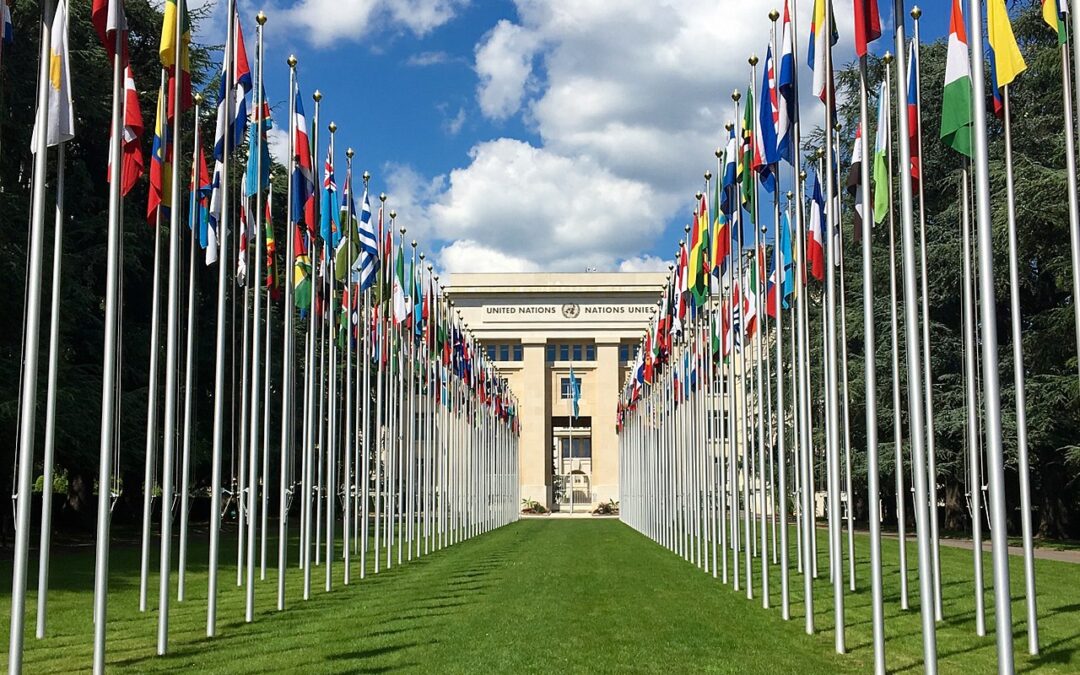
Dec 21, 2018 | Multimedia items, News, Video clips
The ICJ invited a number of women lawyers to Geneva to participate in a training workshop and gain practical experience of UN human rights mechanisms as part of a project supported by the German Mission to the United Nations in Geneva.
One group of women came to Geneva in June during the 38th session of the UN Human Rights Council and 70th session of the Committee on the Elimination of Discrimination against Women, and the other group came in September to coincide with the 39th session of the Human Rights Council.
During the week long training workshops participants learned about the international human rights mechanisms available to tackle issues of women’s access to justice and gained hands-on exposure to the operation of these mechanisms in practice.
Participants spoke about the impact that the CEDAW Convention has had in their domestic legislation.
Donia Allani a lawyer and lecturer at the Faculty of Legal, Political and Social Sciences of Tunis, discussed the impact of CEDAW in shaping legislation in Tunis to eliminate violence against women and facilitate access to justice but noted that women still faced stigmatization.
Donia Allani commented, however, that UN mechanisms could be improved to ensure that all activists and feminists can access these mechanisms without fear of reprisals.
Uzbek lawyer Sabina Saparova, also spoke of the impact that international law and standards can have domestically. She explained that Uzbekistan’s ratification of the CEDAW Convention provided an international commitment to incorporating equality between men and women into its legal structure. Recently the president of Uzbekistan initiated the first steps toward the adoption of a law on the prevention of domestic violence.