Oct 9, 2009
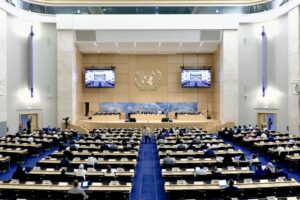
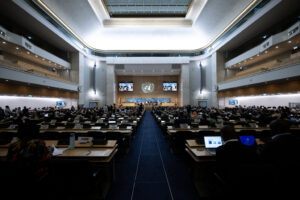
In this submission, the ICJ explores key aspects of the “Protect, Respect, Remedy” framework established by the Special Representative to the Secretary General John Ruggie (photo).
In its resolution 8/7 of June 2008, the Human Rights Council requested the Office of the High Commissioner for Human Rights to organize, within the framework of the Council, a two-day consultation “in order to discuss ways and means to operationalize the framework, and to submit a report on the meeting to the Council”.
The consultation was conceived of as a means to respond to calls from civil society for the Council to ensure wide and non-selective participation by grass-root organizations and victims groups in the debates around the issue of corporate human rights responsibilities.
Guided by United Nations instruments, the ICJ attaches great importance to the development of an approach that is centred on the individual, including victims or potential victims of abuse, their rights and needs.
The ICJ submission discusses the need for a normative approach to holding corporations accountable for their human rights violations, and it applies the findings of the ICJ Expert Panel Report on Corporate Complicity to elaborate on corporations’ legal responsibility to conduct due diligence into their suppliers, buyers, partners and subsidiaries.
The submission also highlights the obstacles victims face to achieving redress through national judiciaries, including corruption, a lack of judicial independence, capacity, and enforcement, as well as significant procedural hurdles. Finally, the submission discusses the weaknesses of current international mechanisms and the need for exploration into alternatives.
ICJ Submission for the Consultation on Business and Human Rights-Position Papers-2009 (full text PDF)

Oct 9, 2009
The ICJ provided its views on the implementation of the International Covenant on Economic, Social and Cultural Rights in the Democratic Republic of the Congo. The ICJ suggested that the Committee address the issues of forced labour, exploitative child labour, discrimination against minorities and women in access to health and education services and in the labour market, and the issue of sexual violence and of effective recourse by victims of human rights violations to justice.
Congo-ICJ comments reports-analysis brief-2009 (full text, PDF)
Sep 23, 2009
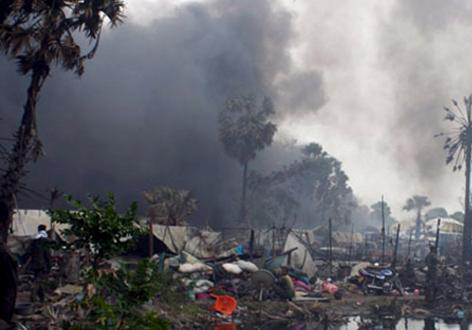
The ICJ urged the Council to address the Sri Lankan authorities’ limitations on access to internally displaced persons, maintenance of internment camps through unjustifiable restrictions on freedom of movement.
The ICJ also urged the Council also to establish a group of independent experts on Zimbabwe – to help its Government investigate past and on-going human rights violations, prevent violence and boost full observance of human rights.
In addition, the ICJ denounced the fresh human rights violations in Iran following the disputed presidential election and called on the Government of Nepal to implement court-ordered arrests of military officials.
ICJ Intervention under Item 4 on Human Rights Situations-Open Letters-2009 (full text, PDF)
Sep 23, 2009
The ICJ commended the decision of at least nine States to sign the Optional Protocol to the International Covenant on Economic, Social and Cultural Rights when it opens for signature in New York on 24 September 2009.
It called on other States, including those already engaged in procedures aimed toward becoming a party to the Optional Protocol, to follow this example and do its utmost to sign the Optional Protocol on that occasion or soon afterwards, with a view towards its ratification and subsequent entry into force. Once in force, the Optional Protocol would restore the original holistic vision of the Universal Declaration of Human Rights and provide the victims of violations of economic, social and cultural with a means to seek justice at the international level.
Optional Protocol to the ICESCR-open letter-2009

Sep 17, 2009
This Memorandum, submitted to the government of Nepal by the ICJ and other NGOs, includes some comments and recommendations on the latest draft of the Disappearances of Persons Bill 2066.
The organizations welcome the opportunity to comment on the draft and look forward to a constructive dialogue with the government of Nepal.
Nepal-Joint Memorandum on the Disappearances of Persons Bill-Position Papers-2009 (Full text PDF)