Dec 19, 2013 | Advocacy, News
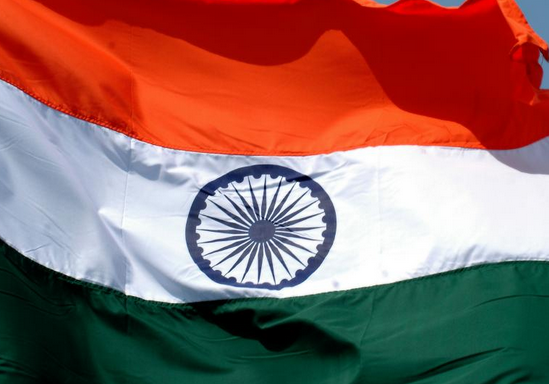
The ICJ is profoundly concerned at the judgment of 11 December 2013 of the Supreme Court of India, which effectively recriminalizes consensual same-sex sexual conduct between adults in private.
The decision by India’s highest court in Suresh Kumar Koushal and another v NAZ Foundation and others overturned the 2009 decision of the Delhi High Court.
That earlier judgment had held section 377 of the Indian Penal Code to be unconstitutional to the extent that it violated the rights to equality before the law, non-discrimination, life and personal liberty guaranteed by the Indian Constitution.
Section 377 criminalized certain consensual sexual acts in private between adults that are particularly associated with same-sex conduct.
The 2009 High Court’s ruling had the effect of decriminalizing such conduct between adults in private in India.
Its decision was based on an in-depth analysis of India’s obligations under international human rights law and standards, as well as international comparative law.
The High Court had examined the scope of the rights to equality, non-discrimination and personal liberty under the Indian Constitution and determined Section 377 to be unconstitutional.
Section 377, which was enacted in 1860, is a historical relic from colonial times bequeathed to India under the British empire; it made it an offence to voluntarily have “carnal intercourse against the order of nature” with any man, woman or animal.
Those convicted are liable to imprisonment for up to 10 years or for life and a fine.
The Supreme Court decision of 11 December reversed the High Court’s courageous and much celebrated decision.
Purporting to uphold the separation of powers, the judgment of the Supreme Court overturned the High Court by ruling that it acted in excess of its judicial review jurisdiction by failing to exercise restraint and to accord the necessary deference to the Indian legislature in its review of the constitutionality of section 377.
The Court effectively holds that the provision is not inconsistent with human rights and India’s obligations under international human right law, and that it is up to the Indian Parliament to amend or repealed it.
The ICJ is deeply troubled by the reasoning of the Supreme Court judgment.
It would appear to constitute an abdication of the essential role of the judiciary in safeguarding human rights.
In this case, the Court failed to uphold and protect the rights to equality and non-discrimination; equality before the law and equal protection of the law; dignity; privacy; freedom of expression and association; family life; and the highest attainable standard of health.
The judgment is inconsistent with India’s obligations under international human rights law.
The judgment also disconcertingly dismisses without apparent reason the wealth of evidence before the court documenting how the criminalization of same-sex sexual conduct leads directly to human rights violations.
Oct 2, 2013
Amnesty International and the ICJ comment on the case of three asylum seekers in the Netherlands who say the criminalisation of who they are puts them at risk of being persecuted in their country of origin.
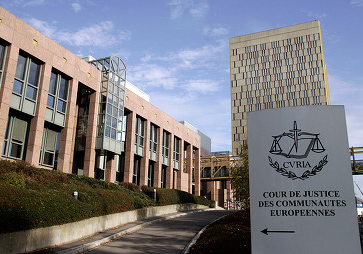
Following Advocate General Sharpston’s Opinion in the case of X, Y and Z v Minister voor Immigratie, Integratie en Asiel (C‑199/12, C‑200/12 and C‑201/12) pending before the Court of Justice of the European Union, in these observations Amnesty International and the ICJ assert that when the criminalization of same-sex acts or conduct provides the possibility of imprisonment upon conviction it would per se give rise to a well-founded fear of persecution irrespective of evidence of recent enforcement.
Europe-Observations by AI and ICJ on X, Y and Z CJEU-analysis brief-2013 (full text in pdf)
Photo: ec.europa.eu
Jun 20, 2013 | News
Today the ICJ launches two new innovative legal tools: the Sexual Orientation & Gender Identity UN Database and the Sexual Orientation & Gender Identity Legislative Database.
The UN Database gathers all the SOGI-related doctrine and jurisprudence of the UN human rights system in one searchable database.
It is the electronic version of the UN Compilations, which the ICJ has issued regularly since 2005.
The documents are organized by source (such as treaty body, special rapporteur or working group) and it is possible to search the database by source or by country, region or key word.
The Legislative Database is the result of a year-long pilot project in collaboration with the International Human Rights Program at the University of Toronto Faculty of Law.
Student researchers gathered and analyzed laws from twenty-four countries in all regions of the world. Each country is introduced with a legislative overview.
The laws themselves are LGBT-friendly or neutral with regard to sexual orientation and gender identity. It is searchable by country and topic.
The purpose was to provide the actual texts of laws as comparative examples for use in legislative reform efforts.
The ICJ is very pleased to announce the launch of these new resources to help activists and lawyers around the world advocate for LGBT human rights.
Both databases were created by HURIDOCS.
The hard copy version of the 2013 edition of the UN Compilation can be downloaded below:
SOGI UN Compilation electronic version – publications-2013 (full text in pdf)
May 13, 2013 | News
On 13 May, the Hong Kong Court of Final Appeal granted W, a transgender woman, the right to marry her male partner. The ICJ, which made submissions in the case, applauds this decision.
W is a resident of Hong Kong who has undergone gender reassignment surgery, paid for by the Hong Kong Government, and who holds a national identity card and passport recording her sex as female.
In 2008 she applied to the Registrar of Marriages seeking confirmation that she could marry her male partner.
The Registrar denied her request on the grounds that “the biological sexual construction of an individual is fixed at birth and cannot be changed.”
Because “only an individual’s sex at birth counts,” the Registrar would not celebrate the marriage.
The trial court and court of appeal upheld the Registrar’s interpretation of the Marriage Ordinance and Matrimonial Causes Ordinance and ruled that it did not conflict with Hong Kong’s Basic Law or its obligations under the International Covenant on Civil and Political Rights.
These courts relied on the 1970 British case of Corbett v. Corbett, which held that sex was fixed immutably at birth.
W won her case at the Court of Final Appeal, which ruled in a 5-4 decision that the Marriage Ordinance and Matrimonial Causes Ordinance ignored the “psychological and social elements of a person’s sexual identity” and thus were inconsistent with the constitutional right to marry.
Furthermore, the ordinances were unconstitutional because they denied W the right to marry at all and thus impaired the very essence of the right.
While the Court granted the parties leave to make further submissions as to the exact nature of the declaratory relief, it held that “a transsexual in W’s situation” should in principle be granted a declaration that she is in law a woman within the meaning of the marriage ordinances and “therefore eligible to marry a man.”
Importantly, the Court also stated: “We would not seek to lay down a rule that only those who have had full gender reassignment surgery involving both excising and reconstructive genital surgery, qualify. We leave open the question whether transsexual persons who have undergone less extensive treatment might also qualify.”
“This is a historic decision,” said Alli Jernow, Senior Legal Advisor at the International Commission of Jurists. “Not only has W won her own case at the Court of Final Appeal, her courage and commitment have changed the lives of transgender people in Hong Kong.”
The parties have an additional 21 days to file written submissions. The Court’s proposed order gives the Hong Kong legislature time to respond but indicates that even in the absence of intervening legislation, the marriage ordinances would be given a remedial interpretation to include W.
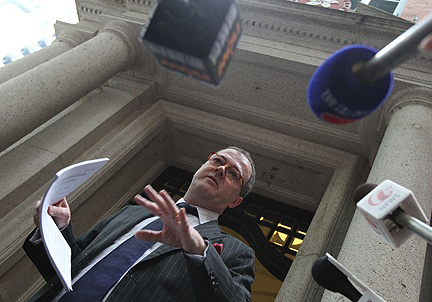
Photo by K.Y. Cheng: Michael Vidler, solicitor of the appellant, holds the judgment in his hand outside Court of Final Appeal.

Mar 13, 2013
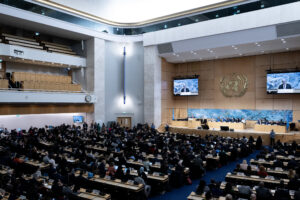
The ICJ today called on the Human Rights Council and its subsidiary bodies to reject efforts to introduce the language of traditional values into the framework of human rights.
Noting the conclusion of the Council’s Advisory Committee that traditional values can be negative and have been used to justify the subordination of women and other vulnerable or minority groups, the ICJ recalled that emphasis should always be on the implementation of human rights law regardless of tradition and culture.
The ICJ’s statement was delivered today during the General Debate under Item 5 of the Council’s agenda (human rights bodies and mechanisms) as part of the 22nd regular session of the Human Rights Council (25 February to 22 March 2013).
HRC22-Item5GD-TVReport-LegalSubmission-2013 (download statement in PDF)