Jun 11, 2014 | Advocacy, Non-legal submissions
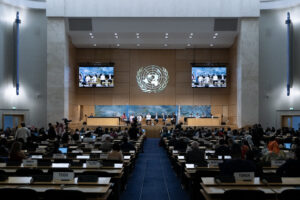
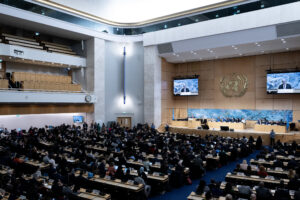
The ICJ, together with the International Lesbian and Gay Association (ILGA) and on behalf of ARC International, today delivered an oral statement to the Human Rights Council during an interactive dialogue with the UN Special Rapporteur on peaceful assembly and association.
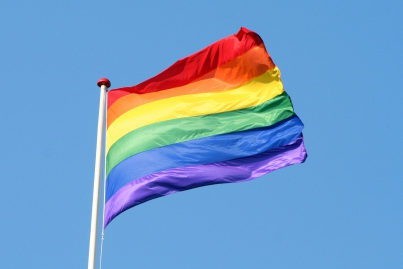
The report of the Special Rapporteur addressed challenges faced by groups at risk, including lesbian, gay, bisexual, transgender and intersex persons.
The statement welcomed the report by the Special Rapporteur.
It referred to the Nigerian Same Sex Marriage (Prohibition) Act (which in fact criminalizes a much broader range of human rights-protected activities than its title would necessarily suggest), Uganda’s Anti-Homosexuality Act, and Ukraine’s draft law on “propaganda of homosexual relations”. All of these laws impede freedom of peaceful assembly of LGBTI persons. The Nigerian law also interferes with freedom of association, as it bans registration, funding and activities of “gay” organizations.
It also referred to Russia’s ban on “propaganda of non-traditional sexual relations”.
It emphasised the detrimental impact of such laws on the work of LGBTI human rights defenders and the activities of health care providers. It stressed that laws directly targeting the freedom of peaceful assembly or association of LGBTI individuals solely because of their sexual orientation or gender identity are inconsistent with international human rights law.
UN-HRC26-AssociationLGBTI-OralStatement-advocay-non legal submission-2014 (full text in pdf)
The report of the Special Rapporteur is available here.
May 14, 2014 | Advocacy, Cases, Legal submissions
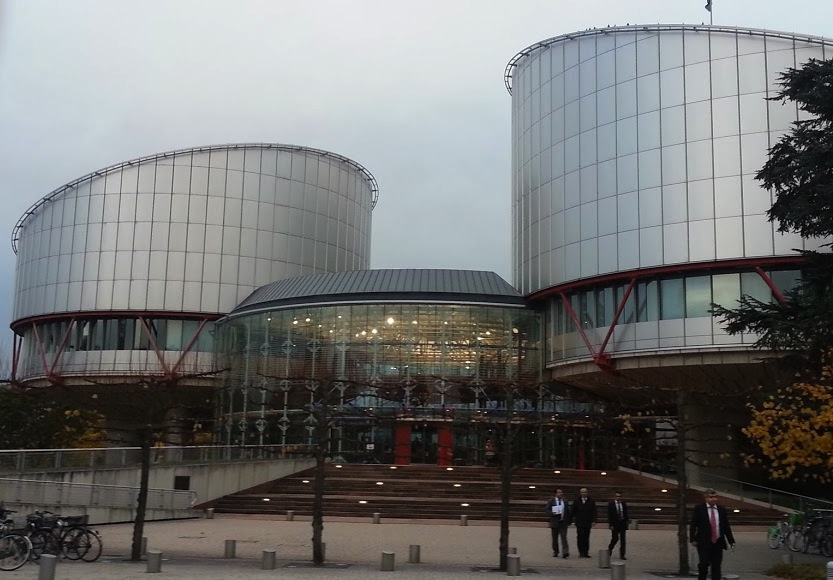
The European Court of Human Rights granted permission to the AIRE Centre, ILGA-Europe and the ICJ for a third-party intervention in the case of Pavla Sabalić v. Croatia (Application No. 50231/13).
Apr 21, 2014 | Cases, News
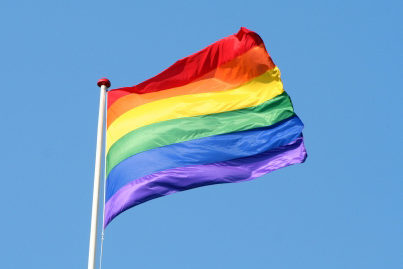
The ICJ welcomes the 16 April 2014 judgment of the Court of Appeal of Victoria, Australia, in Christian Youth Camps Ltd & Anor v Cobaw Community Health Services Ltd & Ors [2014] VSCA 75. The ICJ intervened as amicus curiae in the case.
Apr 1, 2014
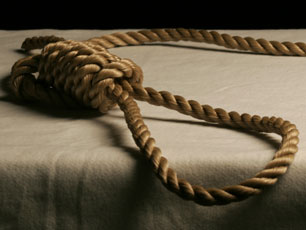
The ICJ has submitted a briefing to the UN Secretary-General on capital punishment in connection with real or purported engagement in consensual sexual relations, in view of his forthcoming report on the question of the death penalty to the Human Rights Council.
The submission focuses on country developments regarding the retention, imposition and carrying out of capital punishment in connection with real or purported engagement in consensual sexual relations.
The ICJ opposes the death penalty under any circumstances and considers that laws criminalizing real or purported engagement by adults in consensual sexual relations contravene international human rights law and standards.
The UN Secretary-General will submit his report to the 27th session of the Human Rights Council (September 2014), covering developments between 1 April 2013 and 31 March 2014 on the question of the death penalty.
SGreportDeathPenalty-AnalysisBrief-2014
Dec 19, 2013 | News
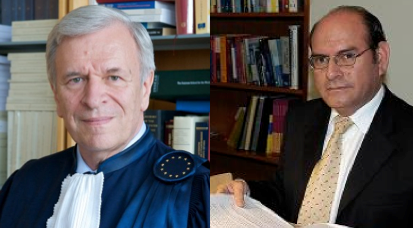
The ICJ is delighted to announce that two new Commissioners were elected in December 2013: Justice Sir Nicolas Bratza (UK) and Professor César Landa (Peru).
Justice Sir Nicolas Bratza is a former President of the European Court of Human Rights. His term on the court ended on 31 October 2012, and he resigned as a Justice of the High Court on 1 November 2012.
Professor César Landa is the Dean of the Faculty of Law at the Pontifical Catholic University of Peru. Prior to this, Processor Landa was the President of the Constitutional Court of Peru. He also served as a Judge on the Constitutional Court.
In a year of significant change within the ICJ Commission, Justice Bratza and Professor Landa are the 14th and 15th new members to join the Commission in 2013.
Biographies for all our Commissioners can be found here.