Mar 15, 2021 | Advocacy, Non-legal submissions
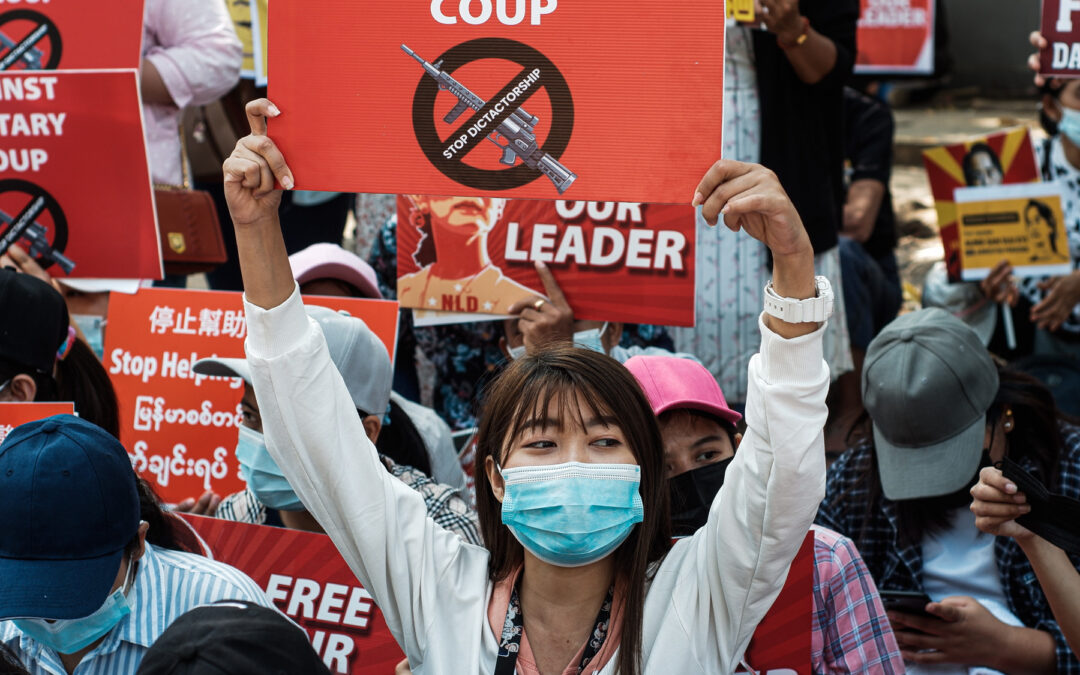
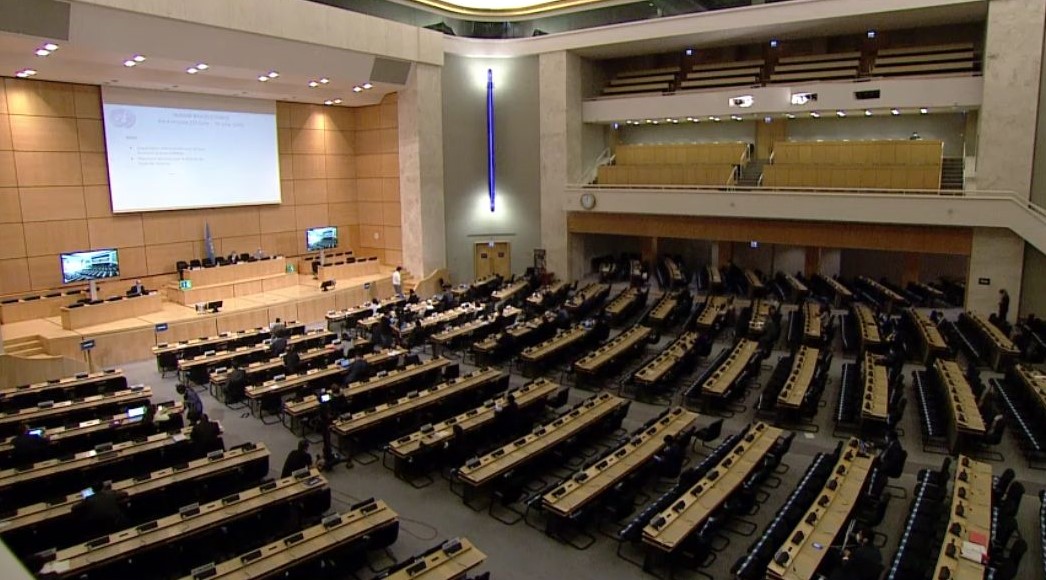
Today, during a General Debate, the ICJ called on the UN Human Rights Council to condemns a set of laws amendend by the military governmentn in Myanmar and restricting human rights, and to demand the return to of Myanmar civilian rule respecting the rule of law.
The statement reads as follows:
“Madame President,
The International Commission of Jurists (ICJ) condemns the illegitimate attempts to “amend” several laws by the Military appointed Myanmar’s State Administration Council (SAC) following its unlawful seizure of power on 1 February 2021.
The implementation of the Amended Law Protecting the Privacy and Security of Citizens (2017) would undermine the democratic process, criminalize peaceful protests and remove various human rights protections. It would provide for broad and unchecked power to the military to arrest anyone without a warrant and aim to remove basic protections, including the rights to be free from arbitrary detention and from warrantless surveillance and search and seizure.
The amendments to the Penal Code and the Criminal Procedural Code have made non-bailable certain offenses, specifically targeting persons criticizing the coup or the military junta, as well as those encouraging others to support the “Civil Disobedience Movement.”
In addition, Amendments made to other existing laws, such as the Ward and Tract Administration Law and Electronic Transactions Law, allow for search and seizure at night without arrest warrant and allow for the silencing of critical voices against the coup and human rights violations of the military, in violation of international standards.
The ICJ calls on the Council to adopt a resolution, which, among other things, univocally condemns and demands the repeal of these laws and the return to of Myanmar civilian rule respecting the rule of law.
Thank you.”
Mar 12, 2021 | Advocacy, Non-legal submissions
Today, the ICJ delivered a statement to the UN Human Rights Council calling for accountability for crimes against humanity committed in Myanmar during the Interactive Dialogue on the report by the UN Special Rapporteur on the situation of human rights in Myanmar.
The statement reads as follows:
“Madame President,
The International Commission of Jurists (ICJ) welcomes the recent report of the Special Rapporteur on the situation of human rights in Myanmar.
The widespread gross violations of human rights documented in the report – including extrajudicial killings, arbitrary arrests and detention- underscore the need for urgent measures of accountability to redress these and to deter further violations.
ICJ has documented further evidence that the unlawful crackdown against peaceful protestors have continued to worsen leading to more extrajudicial killings. More than 50 people have already been unlawfully killed and several hundreds have been severely injured.
Hundreds of others have been arbitrarily arrested and detained, with some subjected to torture and ill-treatment. As the scale of violations continues to increase in many parts of the country, these attacks have become systematic and widespread, and must be investigated as crimes against humanity.
The ICJ therefore supports the recommendations made by the Special Rapporteur, including for referral of the situation to the ICC.
The ICJ urges the Council to adopt a resolution that would strengthen and support the IIMM’s work to collect and preserve evidence for accountability; and to extend the mandate of the Special Rapporteur, including to ensure the immediate, full and unrestricted monitoring of the situations and prompt and effective implementation of their recommendations.
Thank you.”
Contact:
Massimo Frigo, ICJ UN Representative, e: massimo.frigo(a)icj.org, t: +41797499949
Mar 12, 2021 | Advocacy, News
Several Iranian and international human rights organisations urge member states of the United Nations Human Rights Council to support the renewal of the mandate of the United Nations Special Rapporteur on the situation of human rights in Iran.
The letter reads:
We, the undersigned Iranian and international human rights organisations, call on your government to support the renewal of the mandate of the United Nations Special Rapporteur on the situation of human rights in Iran at the 46th session of the Human Rights Council. We also urge your government to use this opportunity to voice concern at the grave and systematic violations of human rights reported by the Special Rapporteur, and to call on Iranian authorities to put an end to the endemic impunity that surrounds these violations.
The renewal of this mandate is essential in light of the persistence of widespread and systematic violations of human rights committed by Iranian authorities with total impunity.
Iran remains second only to China in the number of executions carried out each year. In 2020, the authorities executed more than 240 people, including for drug offences and other acts that do not amount to the ‘most serious crimes’ under international law. Several people were executed in secret without prior notice to their families and lawyers. Among those executed was dissident and journalist Ruhollah Zam who was sentenced to death in connection with his anti-establishment social media news channel. Several protesters were sentenced to death and dozens of others faced capital crimes in relation to the nationwide November 2019 protests. The Iranian authorities executed at least three juvenile offenders in 2020, in violation of international law and despite repeated calls from UN bodies and member states for Iran to cease this unlawful practice and high-level bilateral engagement with the Office of the High Commissioner for Human Rights on this issue.
Fair trial rights continue to be systematically violated, making the hundreds of death sentences, corporal punishment sentences and long prison terms issued all the more egregious. The UN Working Group on Arbitrary Detention has raised alarm at ‘a familiar pattern of arrest and detention that does not comply with international norms’, including ‘lengthy detention pending trial with no access to judicial review; denial of access to legal counsel; incommunicado detention and solitary confinement; prosecution under vaguely worded criminal offences for the peaceful exercise of human rights; a closed trial and appeal by courts lacking in independence; disproportionately harsh sentencing; torture and ill-treatment; and denial of medical care’. In addition to these concerns, courts consistency rely on forced ‘confessions’ extracted under torture and other ill-treatment to issue convictions, as in the recent case of Navid Afkari, executed on 12 September 2020.
The Iranian authorities continue to routinely arbitrarily arrest, detain and sentence individuals to prison terms and flogging for the exercise of their rights to freedom of expression, association and peaceful assembly. Among those who are targeted are protesters, media workers, journalists, political dissidents, artists, writers, and human rights defenders, including lawyers, women’s rights defenders, labour rights activists, minority rights activists, conservationists, anti-death penalty campaigners and
those demanding truth, justice and reparation for the mass extrajudicial executions of the 1980s.
Authorities in Iran have further quashed civic space through state policies and the recent introduction of new provisions in the Islamic Penal Code, which further criminalise the exercise of the rights to freedom of expression, religion or belief. Violent crackdowns on protests have become intertwined with the imposition of internet shutdowns or disruptions in recent years. These measures stifle internet freedom and have been used by the authorities to prevent protesters from mobilising and to conceal the scale of grave human rights violations and international crimes carried out by the state and its security forces.
Conditions in many prisons and detention facilities are cruel and inhuman, with prisoners suffering from overcrowding, bad ventilation, lack of adequate food, poor hygiene and sanitation and inadequate access to toilet and washing facilities. Despite such conditions providing a breeding ground for infectious diseases, authorities have failed to adequately resource prisons to control the spread of COVID-19 and treat infected prisoners. They have excluded prisoners of conscience and others held for politically motivated reasons from temporary releases or pardons announced to mitigate the spread of COVID-19 and have deliberately denied them access to adequate health care.
As highlighted in the report of the Special Rapporteur before the Human Rights Council, discrimination in law and practice remains pervasive and a daily reality for women and girls, for persons belonging to ethnic, religious or linguistic minorities, as well as for lesbian, gay, bisexual and transgender (LGBT) individuals. Women and girls continue to face widespread and systematic discrimination in law and practice in all aspects of their lives, amid the authorities’ continued failure to protect them from gender-based violence.
Ethnic minorities, including Ahwazi Arabs, Azerbaijani Turks, Baluchis, Kurds and Turkmen continue to face entrenched discrimination, which curtails their economic, social, cultural and other rights. The High Commissioner has recently noted that ‘an apparently coordinated campaign has been targeting minority groups since December, including in Sistan and Balochistan; Khuzestan; and in the Kurdish provinces. Mass arrests and enforced disappearances have been reported, as well as increasing
numbers of executions, following deeply flawed processes’. Some ethnic minorities have also been disproportionately affected by the imposition of the death penalty in 2020.
Freedom of religion or belief continues to be systematically violated, including for Baha’is who face widespread and systematic persecution, hate speech and obstacles to access education and work. Christian converts, the Yarsan (Ahl-e Haq), Sunni Muslims and non-believers also face discrimination and persecution for expressing or practising their faith or beliefs.
These long-standing patters of human rights violations have been facilitated by systematic impunity and lack of transparency. An illustration of this crisis of impunity is the continued failure of the authorities to investigate and prosecute crimes and human rights violations committed in the context of the violent repression of the nationwide protests of November 2019. The state repression resulted in the unlawful killing of hundreds of men, women and children, the arrest of at least 7,000 others, and widespread patterns of enforced disappearances and torture and other ill-treatment of detainees to obtain ‘confessions’ that have been used to issue convictions in unfair trials. In his report before the Human Rights Council, the UN Special Rapporteur has expressed dismay that ‘more than one year on, the Government has failed to conduct an impartial, independent and transparent investigation into the use of excessive and lethal force during nationwide demonstrations in November 2019’. On the contrary, the authorities have engaged in harassment and violence against victims and their families for seeking truth, justice and reparation, as documented in the recent reports of the Special Rapporteur.
In this context, the mandate of the Special Rapporteur on the situation of human rights in Iran continues to be critical to monitor, document and report to this Council on steps taken by Iran to uphold its human rights obligations or of its failure to take such measures. It is essential to engage with Iranian authorities on issues of concern, and to make potentially life-saving urgent appeals and other communications. The mandate draws the attention of this Council to the voices of victims, and its expert findings and recommendations steer and inform the efforts of UN bodies and member states to encourage Iran’s authorities to undertake long overdue human rights reforms and hold them to account for human rights violations.
For these reasons, we urge your government to support the renewal of the mandate of the UN Special Rapporteur on the situation of human rights in Iran at this session and to press Iran to give unfettered access to the Special Rapporteur. We also call on your government to voice concern at the dire situation of human rights in Iran, and to send a strong message to the Iranian authorities that the cycle of impunity must be broken, and that members of the Council expect without delay the adoption of long-overdue
human rights reforms and tangible improvements to the human rights situation in the country.
Download
Joint letter with a list of organizations in English.
Mar 12, 2021 | News
Non-governmental organizations (NGOs) from around the world expressed their strong support today for a joint declaration by UN member states condemning the human rights situation in Egypt which was delivered at the UN Human Rights Council.
In the declaration governments expressed “deep concern” for widespread human rights violations committed with impunity by the Egyptian authorities.
The joint declaration, signed by 31 states and delivered by Finland at the Council’s 46th session highlighted “restrictions on freedom of expression and the right to peaceful assembly, the constrained space for civil society and political opposition.” It also condemned the use of counter-terrorism laws to punish peaceful critics.
“The March 12 declaration ends years of a lack of collective action at the UN Human Rights Council on Egypt, despite the sharply deteriorating human rights situation in the country,” said Bahey Hassan, Director of the Cairo Institute for Human Rights Studies. “Countries should continue to make it clear to the Egyptian government that it will no longer have a carte blanche to arbitrarily imprison, torture or violate the right to life or unlawfully kill people.”
More than 100 NGOs from around the world wrote to UN member states in early 2021, warning that the Egyptian government is attempting to “annihilate” human rights organizations and eradicate the human rights movement in the country through sustained, widespread, and systematic attacks.
The organizations had asked UN member states to adopt a resolution establishing a monitoring and reporting mechanism on Egypt. The declaration delivered on March 12 is a significant step and should be followed up by concrete action toward achieving this goal, the organizations said. The declaration was on the Council’s agenda under Item 4, which provides a space to raise concerns about grave and systematic human rights violations, including country-specific situations.
The last joint declaration on the human rights situation in Egypt at the Human Rights Council was delivered by Iceland and co-signed by 26 countries in March 2014.
Since that time the human rights situation in Egypt has deteriorated dramatically. The Egyptian authorities have virtually obliterated almost all space for free expression, peaceful assembly, and association. Under President Abdel Fattah al-Sisi’s rule security forces, with the complicity of prosecutors and judges, have arrested, detained or prosecuted thousands, including hundreds of human rights defenders, religious minorities’ rights activists, peaceful protesters, journalists, academics, artists, politicians and lawyers.
Many have been forcibly disappeared, tortured or otherwise ill-treated, and detained for months or years in inhumane conditions without trial. Those detained are regularly held on the basis of unfounded terrorism-related charges. If referred to trial individuals are often convicted in grossly unfair proceedings before military courts and through mass trials. Many have been sentenced to death and executed after unfair trials that have relied on statements likely obtained through torture. The authorities have also used morality and debauchery laws to arrest and detain women influencers, sexual violence survivors and witnesses, and LGBTI individuals and activists.
The UN Working Group on Arbitrary Detention has found that arbitrary detention is a systematic problem in Egypt. The UN Committee against Torture said in 2017 following an inquiry on Egypt that the facts gathered by the committee “lead to the inescapable conclusion that torture is a systematic practice in Egypt.”
“Today’s declaration sends a clear message to the Egyptian authorities that the world will no longer turn a blind eye to their relentless campaign to crush peaceful dissent. The authorities must take urgent action to comply with their obligations under international law, starting by releasing the thousands of men and women arbitrarily detained, protecting those in custody from torture and other ill-treatment, and ending the crackdown on peaceful activism, ” said Kevin Whelan, Amnesty International representative to the UN in Geneva.
In the March 12 joint declaration governments called for “accountability and an immediate end of impunity” for abuses. Governments also called on Egypt to cease “abuses of due process,” the excessive use of “extended pre-trial detention,” and “the practice of adding detainees to new cases with similar charges after the legal limit for pre-trial detention has expired.”
Governments that have joined the declaration, led by Finland, include: Australia, Austria, Belgium, Bosnia and Herzegovina, Bulgaria, Canada, Costa Rica, Czech Republic, Denmark, Estonia, France, Germany, Iceland, Ireland, Italy, Latvia, Liechtenstein, Lithuania, Luxembourg, Montenegro, the Netherlands, New Zealand, North Macedonia, Norway, Slovenia, Spain, Sweden, Switzerland, the United Kingdom, and the United States of America. Other governments can join the declaration until two weeks after the end of the current Human Rights Council session.
“Bringing the human rights situation in Egypt to the attention of the Human Rights Council and properly addressing these abuses is of fundamental importance to ensure Egypt’s long-term stability and the dignity of its people,” said John Fisher, Geneva Director at Human Rights Watch.
The Co-signing organizations to this statement include:
Amnesty International, Arab Network for Knowledge and Human Rights (ANKH), Artists at Risk (AR), Association of juridical studies on Immigration (ASGI), The Cairo Institute for Human Rights Studies (CIHRS), le Comité de Vigilance pour la Démocratie en Tunisie, Committee for Justice, Democracy for the Arab World Now (DAWN), DIGNITY – Danish Institute Against Torture, The Egyptian Front for Human Rights, Egyptian Human Rights Forum, EuroMed Rights, The Freedom Initiative, Freedom House, Human Rights Watch (HRW), humanrights.ch, International Federation for Human Rights (FIDH), The International Commission of Jurists (ICJ), International Service for Human Rights (ISHR), MENA Rights Group, Minority Rights Group International, MTÜ Andalus Institute for Tolerance and anti-Violence Studies, The Project on Middle East Democracy (POMED), Réseau des Organisations de la Société Civile pour l’Observation et le Suivi des Elections en Guinée, PEN International, People in Need, Robert F. Kennedy Human Rights, Tunisian Coalition to Abolish the Death Penalty
Download
Press release in English and Arabic.
Q&A in English.
Contact
Said Benarbia, International Commission of Jurists (Geneva) – said.benarbia@icj.org
Jeremie Smith, Cairo Institute for Human Rights Studies (Geneva) – jsmith@cihrs.org
Neil Hicks, Cairo Institute for Human Rights Studies (New York) – nhicks@cihrs.org
John Fisher, Human Rights Watch (Geneva) – fisherj@hrw.org
Amr Magdi, Human Rights Watch (Berlin) – magdia@hrw.org
Kevin Whelan, Amnesty International (Geneva) – kevin.whelan@amnesty.org
Sara Hashash, Amnesty International (London) – Sara.Hashash@amnesty.org
Rasmus Grue, Christensen, DIGNITY – Danish Institute Against Torture – rgc@dignity.dk
Antoine Madelin, International Federation for Human Rights (Paris), amadelin@fidh.org
Mohammed Soltan, The Freedom Initiative – Soltan@thefreedomi.org
Mar 11, 2021 | Incidencia
Hoy, la CIJ pidió à la Oficina de la Alta Comisionada para los Derechos Humanos de asegurar transparencia y participación de sus actividades en Venezuela, durante el dialogo sobre la actualización oral de Alta Comisionada para los Derechos Humanos sobre la situación en Venezuela
Aqui la Declaración Oral:
“Señora Presidenta,
La Comisión Internacional de Juristas agradece la actualización oral de la Alta Comisionada sobre la situación en Venezuela, particularmente respecto de la cooperación entre su oficina y las autoridades venezolanas.
La CIJ subraya la importancia de la transparencia en las actividades realizadas bajo el Memorándum de Entendimiento (MDE) firmado por ambas partes. La publicación del MDE para informar al público y asegurar el óptimo involucramiento de las partes interesadas, es fundamental para su éxito.
La CIJ enfatiza que además de los derechos civiles y políticos, los derechos económicos sociales y culturales continúan siendo violados en Venezuela; esta situación se ha visto agravada por la pandemia de COVID-19. En enero de 2021, al menos 37 trabajadores habían fallecido debido a la falta de equipos de protección y suministros básicos en los centros de salud.
Además, a la luz de los recientes anuncios de autoridades venezolanas, parecen existir consideraciones políticas en las prioridades del plan de vacunación contra la COVID-19, en lugar de criterios objetivos y de salud pública, lo que podría dar lugar a discriminación y denegación de igual protección ante la ley.
La CIJ recomienda que la Alta Comisionada monitoree y reporte sobre el cumplimiento de sus recomendaciones previas que fueron realizadas a las autoridades estatales, así como sobre el involucramiento más amplio de su oficina con organizaciones de la sociedad civil local, con miras a proteger los derechos humanos
Gracias.”
Contact:
Massimo Frigo, ICJ UN Representative, e: massimo.frigo(a)icj.org, t: +41797499949