Mar 11, 2021 | Advocacy, Non-legal submissions
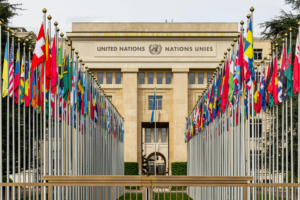
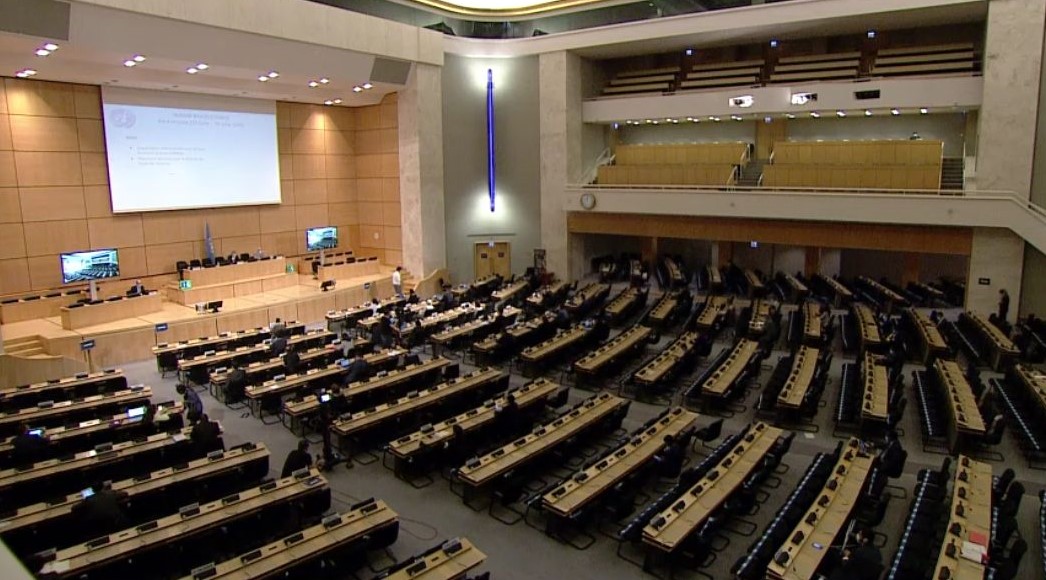
Today, the ICJ called on the Office of the High Commissioner for Human Rights to guarantee transparency and participation in its activities in Venezuela in an oral statement delivered during the interactive dialogue on the oral update by the UN’s High Commissioner of Human Rights on Venezuela.
The statement reads as follows:
“Madame President,
The International Commission of Jurists (ICJ) welcomes the High Commissioner’s oral update on the situation of human rights in Venezuela, particularly regarding the cooperation between her office and the Venezuelan authorities.
The ICJ underscores the importance of transparency on the activities conducted under the Memorandum of Understanding (MoU) signed by both parties. Publication of the MoU to inform the public and ensure the optimal engagement of stakeholders is critical to its success.
The ICJ stresses that in addition to civil and political rights, economic, social, cultural rights continue to be violated in Venezuela, a situation aggravated by the COVID-19 pandemic. As of January 2021, at least 37 health workers have died due to the lack of protective equipment and basic supplies in healthcare centers.
In light of recent announcements by Venezuelan authorities, political considerations appear to be a driving factor in the COVID-19 vaccine prioritization plan, instead of objective and public health criteria, which could lead to discrimination and a denial of equal protection of law.
The ICJ recommends that the High Commissioner monitor and report on the status of the Venezuelan authorities’ compliance with her previous recommendations, and on her broader engagement with local civil society with a view to protecting human rights.
Thank you.”
Contact:
Massimo Frigo, ICJ UN Representative, e: massimo.frigo(a)icj.org, t: +41797499949
Mar 10, 2021 | Incidencia
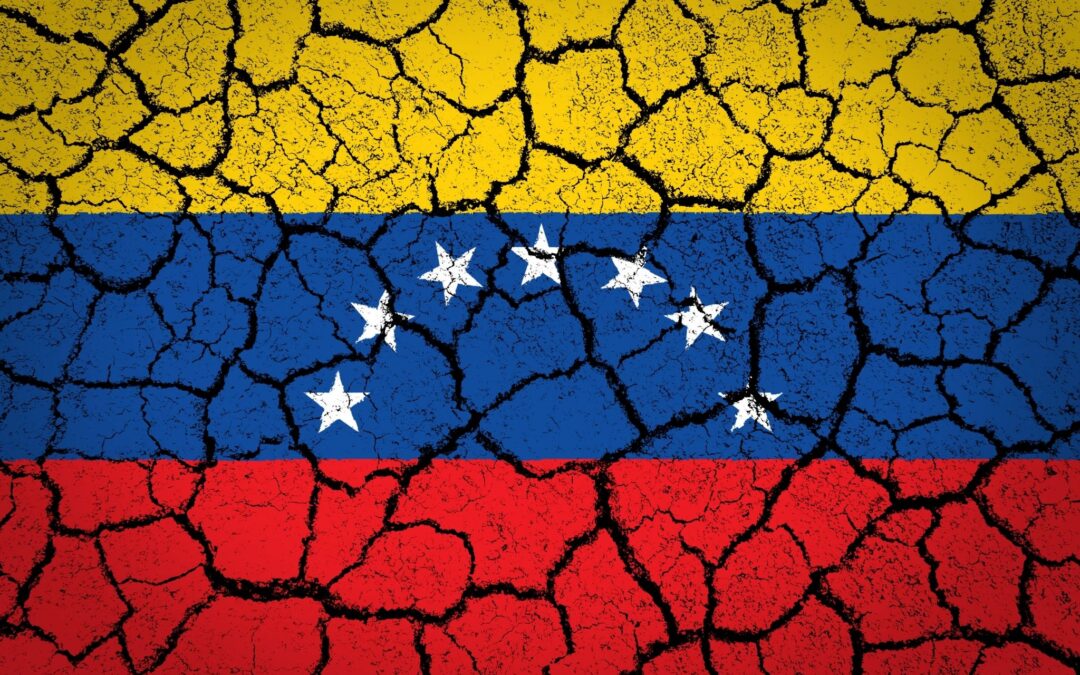
Hoy, la CIJ alertó el Consejo de Derechos Humanos de la ONU sobre la persistencia de las graves y generalizadas violaciones a los derechos humanos en Venezuela, en el contexto du un dialogo sobre actualización oral de la Misión Internacional Independiente para la Determinación de los Hechos sobre la situación en Venezuela.
La declaración oral:
“Señora Presidenta,
La Comisión Internacional de Juristas (CIJ) agradece la actualización oral presentada por la Misión Internacional Independiente para la Determinación de los Hechos (FFM) acerca de la situación en Venezuela.
La CIJ llama la atención sobre la persistencia de las graves y generalizadas violaciones a los derechos humanos reportadas por la FFM en su informe de 2020, incluyendo las ejecuciones extrajudiciales.
Las autoridades venezolanas han incumplido totalmente las recomendaciones de la Misión, incluida la necesidad de realizar “investigaciones rápidas, eficaces, exhaustivas, independientes, imparciales y transparentes de las violaciones de los derechos humanos y los delitos”. Esto resalta el déficit de independencia de los jueces y de los fiscales, lo que ha socavado el derecho a un juicio justo.
La CIJ está extremadamente preocupada por los ataques a defensores de derechos humanos y organizaciones de la sociedad civil en Venezuela por parte de las autoridades, que incluyen la criminalización de la defensa de los derechos humanos, siendo que esta defensa está protegida por el derecho internacional de los derechos humanos. Las organizaciones afectadas en 2020 incluyen a “Acción Solidaria”, “Provea”, “Alimenta la Solidaridad” y “CONVITE”, y a principios de este año cinco miembros de “Azul Positivo” fueron detenidos arbitrariamente y continúan siendo acosados.
La CIJ insta a las autoridades venezolanas a garantizar su plena cooperación con la FFM y a cesar de inmediato los ataques contra defensores de derechos humanos; a realizar investigaciones independientes y llevar ante la justicia a los responsables de graves violaciones de derechos humanos; y a eliminar los obstáculos para el acceso a la justicia de las víctimas.
Gracias.”
Contacto:
Massimo Frigo, Representante de la CIJ ante la ONU, e: massimo.frigo(a)icj.org, t: +41797499949
Mar 2, 2021 | News
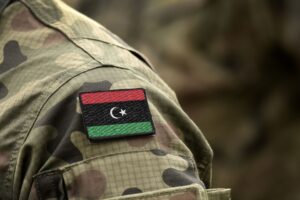
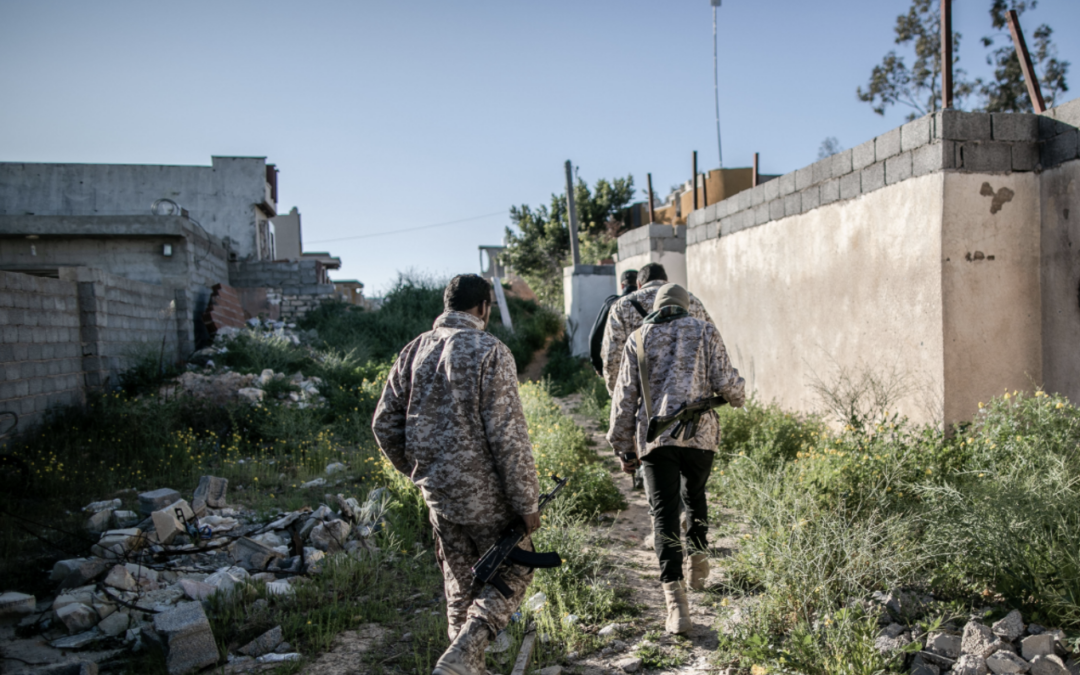
Justice and accountability in Libya can only be achieved if activists and lawyers fully engage with and support the UN Independent Fact-Finding Mission on Libya (FFM) in documenting and collecting evidence of serious violations in the country, the ICJ said today.
To facilitate such engagement, the ICJ’s Question and Answer (Q&A) published today provides guidance for Libyan and international civil society actors on:
- the role and mandate of the FFM;
- the FFM’s relationship with other accountability mechanisms, such as the International Criminal Court (ICC);
- what the FFM may be expected to achieve; and
- how to engage with the FFM.
“The success of the FFM’s mandate rests largely on its ability to establish the facts about and collect evidence of violations and abuses of international human rights and humanitarian law perpetrated in Libya.”
“We urge lawyers, activists and civil society actors to fully support the FFM in achieving these objectives and bringing about the accountability that has so far eluded Libya.”
– Said Benarbia, the ICJ’s MENA Programme Director.
The FFM was established by the UN Human Rights Council on 22 June 2020 through resolution 43/39. Its mandate includes:
- Establishing facts and circumstances of the human rights situation throughout Libya;
- Collecting and reviewing relevant information;
- Documenting alleged violations and abuses of international human rights law and international humanitarian law, including any gendered dimensions of such violations and abuses; and
- Preserving evidence with a view to ensuring that perpetrators be held accountable.
While the FFM cannot conduct criminal investigations or prosecute individuals, the evidence preserved may be used by Libyan judicial authorities, the ICC, and third countries exercising universal jurisdiction.
The FFM has issued a call for submissions of relevant information and materials, the deadline for which is 30 June 2021.
Contact
Said Benarbia, Director, ICJ Middle East and North Africa Programme; t: +41 22 979 3817, e: said.benarbia(a)icj.org
Vito Todeschini, Legal Adviser, ICJ Middle East and North Africa Programme; t: +216 53 334 679, e: vito.todeschini(a)icj.org
Asser Khattab, Research and Communications Officer, ICJ Middle East and North Africa Programme; e: Asser.Khattab(a)icj.org
Download
Q&A on the UN International Fact-Finding Mission in English and Arabic.
Press Release in English and Arabic.
Mar 1, 2021 | News
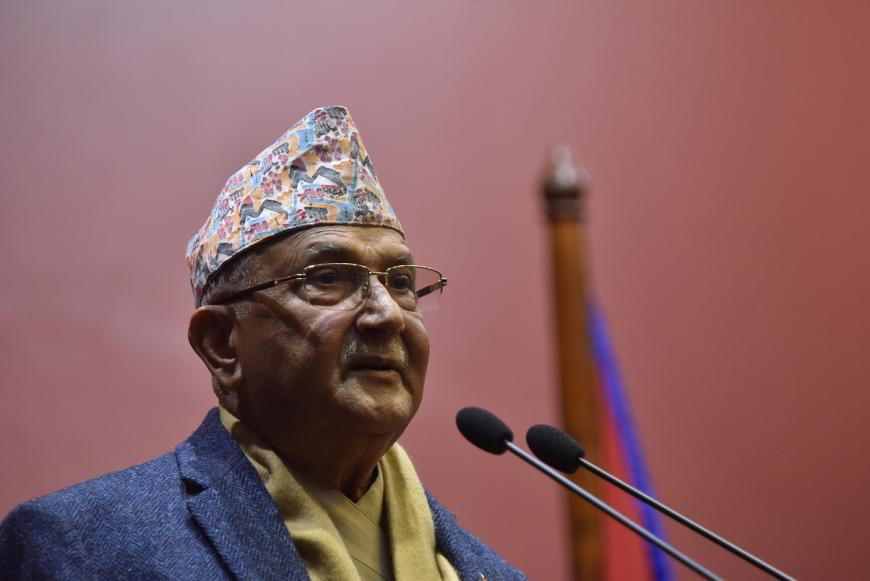
The Nepal government should immediately withdraw an ordinance that undermines the independence of constitutional human rights bodies and rescind recent appointments that were made without consultation or parliamentary approval, the ICJ, Human Rights Watch, and Amnesty International said today.
These government actions undermine public trust and confidence in the integrity of the judiciary and other constitutional bodies such as the National Human Rights Commission and the Election Commission. The illegitimate appointments process is not simply an abstract irregularity but will lead to ineffective and weak implementation of critical mandates to protect human rights and other rule of law objectives, the groups said.
“The government’s actions are a severe dent in Nepal’s long struggle for a rule of law-based constitution, which was finally adopted in 2015 to guarantee human rights,” said Meenakshi Ganguly, South Asia director at Human Rights Watch. “It is sad to see some of the same politicians who drafted the Constitution playing fast and loose with the charter just a few years later.”
On December 15, 2020, President Bidya Bhandari endorsed an executive ordinance to amend the law governing the Constitutional Council, which makes appointments to the judiciary, the National Human Rights Commission (NHRC), and other constitutional bodies including the Election Commission. Under the Constitutional Council Act, five out of six members must be present, but under the ordinance a simple majority is sufficient. Because one seat on the council is vacant the quorum has been reduced to three.
The Constitutional Council met the same day with a newly reduced quorum. Three council members made 38 nominations to vacant positions on constitutional bodies at that meeting. They included all five seats on the National Human Rights Commission (NHRC), as well as nominations to bodies established to protect the rights of Dalits, women, and marginalized minorities, and to investigate corruption allegations.
Under the Constitution, appointments to these key institutions are supposed to be vetted by parliament. However, parliament was abruptly dissolved on December 20, five days after the appointments were announced. The nominees were sworn in on February 3, 2021, despite legal challenges in the Supreme Court to the constitutionality of the nominations and the dissolution of parliament. On February 23, the Supreme Court ruled that the dissolution of parliament was unconstitutional.
“In a context where repeated calls for institutional reforms have gone unheeded for decades, this move by the government further weakens the effectiveness of constitutional bodies that are supposed to be beacons of hope for victims of human rights violations and abuses,” said Mandira Sharma, senior international legal adviser at ICJ. “Independence, impartiality and legitimacy are preconditions for these bodies to effectively and efficiently deliver their mandates.”
Nepal’s Human Rights Commission, until recently, had played an important role in calling for accountability, including by releasing the names of people allegedly responsible for serious human rights violations such as torture and extra-judicial killing and recommending that they should be prosecuted. It is currently graded ‘A’ by the Global Alliance of National Human Rights Institutions (GANHRI) for its compliance with the Paris Principles, which were adopted by the UN General Assembly as the basic standards governing the mandate and operation of effective national human rights organizations. Core among the Paris Principles is that a national human rights institution must be independent and that its independence must be guaranteed by law. The organizations are concerned that following the new appointments the commission no longer meets those standards.
Among the other constitutional bodies to which new commissioners have been appointed in the same manner are the Election Commission and the Commission for the Investigation of Abuse of Authority (CIAA), Nepal’s anti-corruption agency. The Election Commission is seen by many people as playing an important role in efforts to achieve a society based on the rule of law and respect for human rights , while the CIAA has the authority to bring corruption cases against politicians.
Numerous appointments have also been made to commissions with mandates to protect the rights of people from vulnerable groups, including the National Women’s Commission, National Dalit Commission, and National Inclusion Commission. Many of these positions had lain vacant for years.
At least two Supreme Court petitions have been filed challenging the ordinance amending the Constitutional Council Act, and the new appointments to constitutional bodies. The chief justice, Cholendra Shumsher Rana, who sits on the constitutional bench of the Supreme Court, participated in the three-member Constitutional Council meeting that made the disputed nominations, and he administered the oath of office to the new commissioners on February 3.
“The doubts over the independence and integrity of the NHRC and other commissions will endanger the protection of human rights in Nepal,” said Dinushika Dissanayake, Deputy South Asia Director of Amnesty International. “The government must immediately reverse these appointments and start a new process in consultation with the civil society and rights holders in Nepal.”
The Accountability Watch Committee, a group of prominent human rights defenders in Nepal, issued a statement on February 12 announcing that they would not “cooperate and engage with the NHRC and other constitutional bodies until the Supreme Court’s decision.” Accountability Watch also called upon “the United Nations, diplomatic missions in Nepal and international organizations not to give legitimacy and cooperate with this appointment process which is currently sub-judice at the Supreme Court of Nepal.”
Foreign donor agencies that have previously engaged with the NHRC, and with the other commissions affected by this process, should stand clearly for a proper, open, and transparent appointments process that is based on international standards, Human Rights Watch, ICJ, and Amnesty International said.
Download the statement in English and Nepali.
Contact
In London, Meenakshi Ganguly (English, Bengali, Hindi): gangulm(a)hrw.org
In Colombo, Dinushika Dissanayake (English): dinushika.d(a)amnesty.org
In Kathmandu, Mandira Sharma (English, Nepali): mandira.sharma(a)icj.org
Feb 25, 2021 | Advocacy, Non-legal submissions
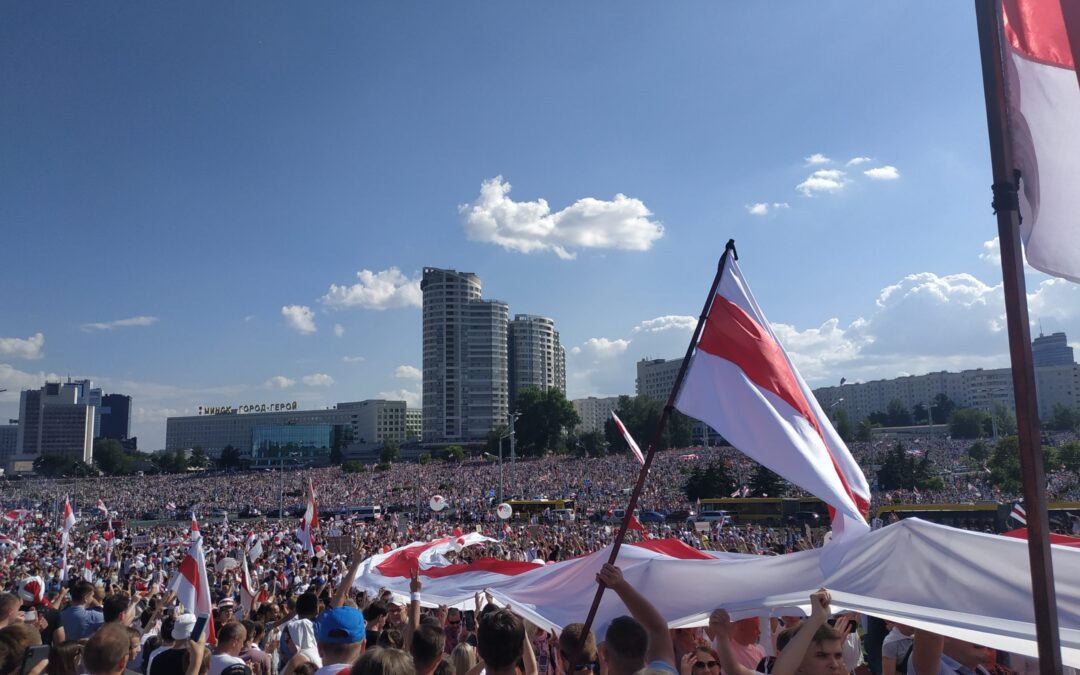
The ICJ today addressed the UN Human Rights Council in the Enhanced Interactive Dialogue on the Report of the Office of the High Commissioner for Human Rights on the situation of human rights in Belarus in the context of the 2020 presidential election.
The statement reads as follows:
“Madam President,
The International Commission of Jurists welcomes the High Commissioner’s report on the situation of human rights in Belarus (A/HRC/46/4).
The ICJ stresses the need to address the systemic issues underlying unfair trial, arbitrary detention, torture, other ill-treatment and enforced disappearance in Belarus. In particular, it is crucial to ensure an independent judiciary and bar association.
Without comprehensive reforms to these institutions, there is little prospect of fair trial, or of effective remedies or accountability for the widespread human rights violations occurring after the 2020 election.
The ICJ is alarmed at recent arrests and disbarments of lawyers in connection with the protests. Disbarred lawyers include Aleksandr Pylchenko as well as Liudmila Kazak, the fourth lawyer of Maria Kolesnikova, a detained opposition figure, to have suffered consequences as a result of their professional activities. Furthermore, criminal cases have been initiated against lawyers Ilya Saley and Maxim Znak.
We call on the Human Rights Council to establish a mechanism to collect and preserve evidence, identify perpetrators, and support accountability for gross human rights violations in Belarus.
The Council should further call on Belarus to
- promptly and fully implement the High Commissioner’s recommendations;
- co-operate with and facilitate access of the Special Rapporteur to the country;
- uphold the independence of judges and lawyers, in accordance with international law and standards.
I thank you.”
Contact:
Massimo Frigo, ICJ UN Representative, e: massimo.frigo(a)icj.org, t: +41797499949