May 26, 2018 | News
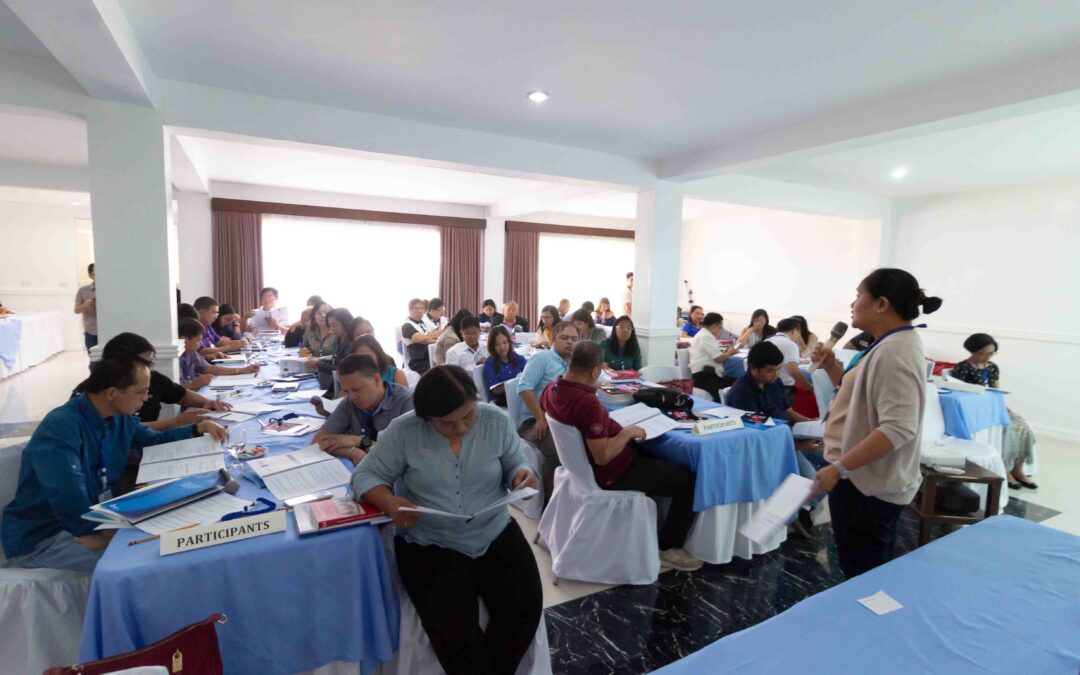
Today, the ICJ and the Integrated Bar of the Philippines (IBP) concluded a two-day workshop on eliminating gender discriminatory attitudes and behaviours towards women with a commitment to step up efforts on the protection of rights of women in the country.
Participants at the workshop were lawyers from IBP’s legal aid committees from the Eastern and Western Visayas Regions.
The workshop was held in Bohol from 25 to 26 May 2018.
“Legal aid providers are at the frontline of assisting women in accessing justice,” said Frederick Rawski, ICJ’s Regional Director for Asia and the Pacific.
“It is critical that they are able to immediately detect discriminatory conduct against the women they are assisting and help in eliminating such discrimination,” he added.
Recourse to gender stereotypes in the administration of justice widespread in the Philippines and they impact women’s access to justice.
Participants at the workshop noted, in this respect, examples such as the belief that women, unlike men, are weak in the physical and cognitive sense, and the ‘virtuous-or-good-woman-versus-bad-woman-or slut’ stereotype that are still reflected in law and court decisions in Philippines.
It was noted that the UN Committee on the Elimination of Discrimination against Women had emphasized that “stereotyping and gender bias in the justice system have far-reaching consequences for women’s full enjoyment of their human rights.”
The discussions during the two-day workshop also focused on strengthening the capacity of legal aid providers to further enhance access to justice of women whose loved ones and relatives had been extra-judicially killed.
Atty. Abdiel Dan Fajardo, National President of the IBP addressed the ongoing extrajudicial killings and culture of impunity in the Philippines that affects women particularly.
He said: “Without combatting the culture of impunity, legal aid lawyers cannot enhance access to justice for women. Therefore, it is high time to bolster the knowledge and awareness of legal aid lawyers in combatting impunity that affect women and their children.”
It was recalled that the remarks of the UN Special Rapporteur on extrajudicial, summary, or arbitrary executions, Agnes Callamard, in her report to the Human Rights Council in 2017, stressed that women are particularly affected by the extrajudicial killing of their partners and other family members.
The Special Rapporteur noted that in the Philippines, since majority of the victims are men, their female partners, “by virtue of their gender-based roles, are left to confront the associated stigma, fear, insecurity and economic deprivation, in addition to the burdens of identifying and burying their dead loved ones and seeking justice.”
At the Bohol workshop, ICJ and IBP also signed a Memorandum of Agreement to commence joint work on strengthening the IBP’s National Center for Legal Aid (NCLA).
May 25, 2018 | News
The ICJ today called on the Tunisian Parliament to reverse its decision of 26 March 2018 and allow the Truth and Dignity Commission (IVD) to carry out its mandate for at least another year.
The IVD should be in the position to finalize its investigations of past serious human rights violations in the country and, when appropriate, refer cases to the Specialized Criminal Chambers (SCC), the ICJ added.
Since its decision, the Parliament has not considered or adopted any measures to address the legal and practical consequences, including how incomplete investigations by the IVD will be handled, how other investigations will be transferred to the SCC and by whom, how evidence will be preserved and protected, how the documents and the material gathered by the IVD will properly be archived, and what would happen if the IVD were unable to complete the drafting of the final report.
The initial four-year term of the IVD ends on 31 May 2018.
“It’s absolutely irresponsible for the Tunisian Parliament to thwart the whole transitional justice process and curtail the work of the IVD without providing any path forward,” said Said Benarbia, ICJ MENA Director.
“As one of the three branches of government, the Parliament must abide by Tunisia’s obligations under international law to establish the truth about past human rights violations, bring the perpetrators to account, and provide victims with effective remedies and reparation,” he added.
The March decision runs counter to all these obligations.
It denies the rights of victims, and broader society, to know the truth, including about the circumstances and reasons that led to decades of serious human rights violations in the country.
The IVD has not been able to finalize its investigations or produce its final report.
It also shields those responsible from criminal accountability. Only eight cases have so far been referred by the IVD to the SCC.
The fate of cases that have been investigated but are not referred before 31 May 2018 remains unclear. The IVD reportedly received some 62’712 complaints.
“The Parliament is abdicating its responsibility to respect and protect victims’ rights,” Benarbia said.
“Instead of playing cynical political games that can only foster impunity, the Parliament should reverse its decision and remove all the obstacles that might impede the IVD’s work in ensuring accountability for past abuses, ” he added.
Contact
Said Benarbia, Director of the ICJ Middle East and North Africa Programme, t: +41798783546, e: said.benarbia(a)icj.org
Background
Under the 2013 law on transitional justice, the IVD initially had a four-year term, with the possibility of renewal for a single additional year, on the basis of a reasoned decision by the IVD.
The 2013 law provided that the IVD’s decision on renewal should be submitted to the Parliament.
The law is however silent as to whether the submission of the IVD decision was simply a matter of notification, or required approval of Parliament to be effective.
In any event, 68 members of the Parliament voted on 26 March against extending the term of the IVD for another year.
Under its bylaws, for decisions of Parliament to be valid they must be adopted by at least 72 of its members.
The apparent lack of quorum for the Parliament’s 26 March decision has only introduced more uncertainty and confusion, further complicating the position for the IVD and others, including most notably the victims themselves.
On 24 May 2018, the IVD and the Minister in charge of relations with constitutional bodies, civil society and human rights issued a joint statement reiterating Tunisia’s commitments to the transitional justice process as provided by the Constitution.
In the statement, the IVD was requested to transfer all cases concerning serious human rights violations to the SCC, to establish criteria on the basis of which reparation for victims will be provided, to establish compensation criteria for the Victims Fund, and to send the final report to the President of the Republic, the President of the Parliament and the President of the Government.
Tunisia-IVD Parliament-News-2018-ARA (full story in Arabic, PDF)
May 24, 2018 | News, Publications, Reports, Thematic reports
The widespread occurrence of sexual and gender-based violence (SGBV) in Swaziland requires prompt action to enact the Sexual Offences and Domestic Violence Bill, says the ICJ in a report released today.
The ICJ’s report found that discriminatory practices based on customary laws and traditional beliefs undermine equality between men and women and contribute to an environment in which SGBV is at crisis point in the country.
“As the Senate of Swaziland deliberates over the Sexual Offences and Domestic Violence Bill, it must recall that enactment of the Bill is an essential step in complying with recommendations of the UN Human Rights Committee and CEDAW Committee and as a means of discharging the commitments made by His Majesty’s Government during the 2016 Universal Periodic Review,” said Arnold Tsunga, Director of the ICJ Africa Regional Programme.
In earlier submissions to the Senate of Swaziland, the ICJ noted that enactment of the Bill is a matter required of the Kingdom of Swaziland pursuant to its international human rights law obligations, including those arising from the Africa region, to criminalize and sanction the perpetrators of SGBV.
His Majesty’s Vision 2022, the aims and targets of the Deputy Prime Minister’s Office and Swaziland’s consensus in the adoption of the 2030 Agenda for Sustainable Development reinforce compliance with those obligations.
The Sexual Offences and Domestic Violence Bill 2015, first drafted over ten years ago, has still not been passed into law, including because there is a perception that some of its provisions will infringe Swazi law and custom.
“Legislative and policy reform is needed as is the enhanced technical capacity and commitment of justice actors and policy makers to combat domestic and sexual violence,” Tsunga added.
Contact
Arnold Tsunga, Director, ICJ Africa Regional Programme, t: +27.73.131.8411; e: arnold.tsunga(a)icj.org
Alex Conte, ICJ Global Redress and Accountability Initiative, t: +41.79.957.2733; e: alex.conte(a)icj.org
Download
Swaziland-GRABaselineStudy-Publications-Reports-Thematic reports-2018-ENG (full report in PDF)
May 20, 2018
The ICJ has published today a set of training materials on access to justice for migrant children that were developed as part of the FAIR (Fostering Access to Immigrant children’s Rights) project.
These training modules should help lawyers when representing migrant children to increase their knowledge of the rights of the migrant children, to increase their understanding of the use of international redress mechanisms for violations of human rights of migrant children and give some advice on how to effectively communicate with child clients.
The materials include the following training modules:
0. Guiding principles and definitions,
I. Access to fair procedures including the right to be heard and to participate in proceedings,
II. Access to justice in detention,
III. Access to justice for economic, social and cultural rights,
IV. Access to justice in the protection of their right to private and family life,
V. Redress through international human rights bodies and mechanisms,
VI. Practical handbook for lawyers when representing a child.
These materials have been used in national trainings for lawyers organised by the ICJ-EI in Spain, Italy, Greece, Malta, Bulgaria, Ireland and Germany and include also practical training tools, such as case studies and warm-up questionnaires to guide possible future trainings.
They will be translated into five other languages: Spanish, Greek, Bulgarian, German and Italian.
You can download the materials here:
In English
Europe-FAIR module 0-Training modules-2018-ENG
Europe-FAIR module 1-Training modules-2018-ENG
Europe-FAIR module 2-Training modules-2018-ENG
Europe-FAIR module 3-Training modules-2018-ENG
Europe-FAIR module 4-Training modules-2018-ENG
Europe-FAIR module 5-Training modules-2018-ENG
Europe-FAIR module 6-Training modules-2018-ENG
In Bulgarian
Europe-FAIR module 0-Training modules-2018-BUL
Europe-FAIR module 1-Training modules-2018-BUL
Europe-FAIR module 2-Training modules-2018-BUL
Europe-FAIR module 3-Training modules-2018-BUL
Europe-FAIR module 4-Training modules-2018-BUL
Europe-FAIR module 5-Training modules-2018-BUL
Europe-FAIR module 6-Training modules-2018-BUL
In German
Europe-FAIR module 0-Training modules-2018-GER
Europe-FAIR module 1-Training modules-2018-GER
Europe-FAIR module 2-Training modules-2018-GER
Europe-FAIR module 3-Training modules-2018-GER
Europe-FAIR module 4-Training modules-2018-GER
Europe-FAIR module 5-Training modules-2018-GER
Europe-FAIR module 6-Training modules-2018-GER
In Greek
Europe-FAIR module 0-Training modules-2018-GRE
Europe-FAIR module 1-Training modules-2018-GRE
Europe-FAIR module 2-Training modules-2018-GRE
Europe-FAIR module 3-Training modules-2018-GRE
Europe-FAIR module 4-Training modules-2018-GRE
Europe-FAIR module 5-Training modules-2018-GRE
Europe-FAIR module 6-Training modules-2018-GRE
In Italian
Europe-FAIR module 0-Training modules-2018-ITA
Europe-FAIR module 1-Training modules-2018-ITA
Europe-FAIR module 2-Training modules-2018-ITA
Europe-FAIR module 3-Training modules-2018-ITA
Europe-FAIR module 4-Training modules-2018-ITA
Europe-FAIR module 5-Training modules-2018-ITA
Europe-FAIR module 6-Training modules-2018-ITA
In Spanish
Download here
May 18, 2018 | Advocacy, Non-legal submissions
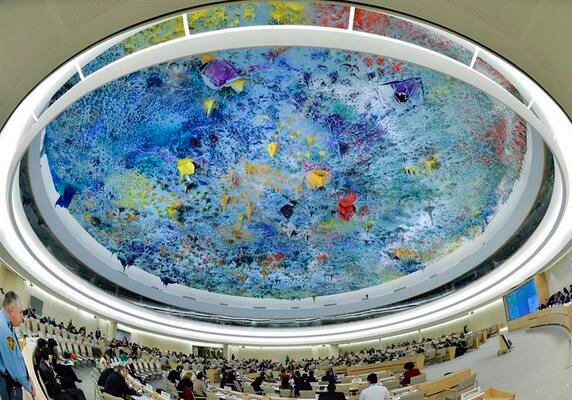
Speaking today at a special session of the UN Human Rights Council, the ICJ joined calls for an independent international inquiry into the use lethal and other force by Israeli security forces in Eastern Gaza.
The statement read as follows:
The International Commission of Jurists (ICJ) deplores apparent violations of international law by Israeli security forces during the past six weeks in Eastern Gaza near the border with Israel, in relation to demonstrations by Palestinians.
The ICJ is concerned at the many killings and serious injuries associated with the excessive, unjustified or otherwise unlawful use of force, including the killing of a number of children.
The ICJ recalls that international human rights law permits use of lethal force only when strictly necessary to protect life. The ICJ understands that Israel has taken the position that only the international law of armed conflict, and not international human rights law, was applicable, and that all lethal force used against protestors was justified. The ICJ insists that human rights law – and specifically, standards on the use of force in law enforcement contexts – was indeed applicable, and that the use of lethal force was in the circumstances wholly unjustified.
Excessive force, including lethal force, has apparently been used against unarmed persons who do not pose a threat to life. Irrespective of legal regime, such use of force is manifestly inconsistent with the principles of necessity and proportionality.
The ICJ joins the call for this Council to establish an independent Commission of Inquiry or similar investigation, to ensure accountability for serious violations of international law.
Update: The session concluded with the adoption (29 yes, 2 no, 14 abstained) by the Council of a resolution establishing a Commission of Inquiry.