Jun 28, 2017 | News
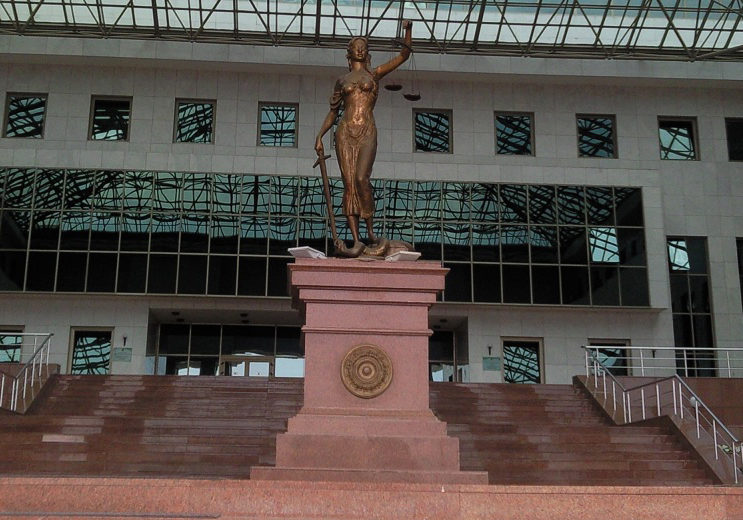
Government moves to amend the regulatory framework of the legal profession in Kazakhstan may undermine its independence and are contrary to the principle of self-regulation of the profession, the ICJ said today.
The ICJ called on the authorities of Kazakhstan to refrain from interference in the governance of the independent legal profession and step back to allow the collegia of lawyers to continue to take responsibility for such matters.
The ICJ stressed that any proposals for reform put forward by the governing bodies of the profession should be developed in consultation with and enjoy the consent of the members of advokatura in accordance with international law and standards on the independence of lawyers.
The ICJ was responding to proposals put forward by the Justice Minister Marat Beketayev for reform of the legal profession in Kazakhstan.
In a statement to Parliament on 29 May 2017 (Report of the Minister of Justice on the issues of further development and reform of the institutes of notary and advokatura on 29 May 2017), the Minister outlined plans to:
- lower training and entrance fees to the profession “in order to simplify access to the profession”;
- broaden the powers of the Republican Collegium to regulate the disciplinary system for lawyers, in light of the Minister’s view that lawyers were avoiding disciplinary responsibility in many cases under the current system;
- require lawyers to undergo annual training followed by exams, which would be set not by the collegia themselves, but by universities or external training centres;
- require lawyers, in addition to the participation in state-funded legal aid scheme, to provide mandatory legal assistance without financial support from the Government, which the Minister described as “pro bono” service
The importance of an independent legal profession which is self-regulating is well recognized and accepted under international standards and by international authorities.
One of the means by which such independence may be guaranteed is the governance of the profession by an organization independent from the State or other national institutions.
International standards provide that it is an important function of the lawyer’s association “[t]o maintain the honour, dignity, integrity, competence, ethics, standards of conduct and discipline of the profession” (Singhvi Declaration, para.99).
In this context, comments by the Justice Minister Marat Beketayev on the need to change the disciplinary system due to lawyers avoiding disciplinary responsibility “for violations committed” is of serious concern, the ICJ said.
While it is important that lawyers who act against the interests of their clients, or otherwise violate standards of lawyers’ ethics are subject to disciplinary responsibility, it is the function of the profession itself to decide on such matters. Disciplinary proceedings should never be used to undermine lawyers’ independence.
Lowering entrance fees for qualifying lawyers may be a positive measure that can enhance access to the profession for qualifying lawyers, in circumstances where such fees are inaccessibly high.
However the initiating and design of such proposals should not be in the hands of the executive, as this may limit the independence and effectiveness of the legal profession.
Financial sustainability of an independent legal profession largely depends on its members’ fees.
The advokatura should be able to regulate and finance its regular operations, including administration and training, the ICJ added.
As noted by the former UN Special Rapporteur on the Independence of Judges and Lawyers in his report of 2009: “… the legal profession is best placed to determine admission requirements and procedures and should thus be responsible for administering examinations and granting professional certificates. This would further help in preserving its independence and self-governance, as advised in the Basic Principles.”
The ICJ is also concerned at suggestions that, as part of continuing legal education, lawyers will be subject to examinations by institutions outside the profession.
While it remains unclear what role or effect such examinations would have, the proposal raises concerns regarding the legal profession’s self-regulation and would risk undermining its independence, the ICJ said.
It should be recalled that, Kazakhstan is required take measures to remove obstacles to the independence of lawyers.
Regarding the proposals on so called ‘pro bono legal assistance’, while it is welcome when any State adopts measures to make legal aid more accessible, such measures should not place an unreasonable burden on lawyers to provide mandatory legal assistance.
The scheme proposed by the Minister for Justice whereby lawyers become responsible for providing legal services without financial compensation for their work is of concern, and appears unlikely to ensure a high quality of legal advice, the ICJ added.
It should be the role of the government to provide regular and sufficient funding for such services, ensuring that legal aid is available for indigent clients in line with international standards.
Kazakhstan-Interference legal profession-News-2017-RUS (Russian version, in PDF)
Jun 26, 2017 | Advocacy
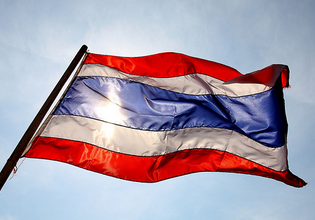
Amnesty International (AI) and the ICJ welcome the commitments made by the Royal Thai Government to prevent torture and other ill-treatment and urge authorities to ensure no further delay in implementing these undertakings.
The statement came on on the 30th anniversary of the United Nations Convention against Torture and Other Cruel, Inhuman or Degrading Treatment or Punishment (UNCAT) – marked on June 26 as the International Day in Support of Victims of Torture.
October 2017 will mark ten years since Thailand pledged to respect and protect the right of all persons to be free from torture and other ill-treatment by ratifying the Convention against Torture. AI and the ICJ however remain concerned that torture is still prevalent throughout the country.
Thailand has made significant and welcome commitments at the United Nations Committee against Torture, Universal Periodic Review of the Human Rights Council and UN Human Rights Committee to uphold its obligations under the Convention against Torture.
These include commitments to penalize torture, as defined in the Convention, under its criminal law and to create an independent body to visit all places of detention under the purview of the Ministry of Justice.
However, to date, these remain paper promises, which have not yet translated into action.
AI and the ICJ call on Thailand to move forward with these commitments, including by criminalizing torture and other acts of ill-treatment, establishing practical, legal and procedural safeguards against such practices, and ensuring that victims and others can report torture and other ill-treatment without fear.
The prohibition of torture and other ill-treatment in international law is absolute. Torture is impermissible in all circumstances, including during public emergencies or in the context of threats to public security.
AI and the ICJ regret repeated delays to the finalisation and passage of Thailand’s Draft Prevention and Suppression of Torture and Enforced Disappearance Act.
If the remaining discrepancies with the Convention against Torture are addressed, the passage of this Act would criminalise torture and enforced disappearances and establish other safeguards against these acts.
Both organizations urge the Royal Thai Government to actualise its commitment to eradicating torture by addressing remaining shortcomings in the Act and prioritising its passage into law in a form that fully complies with Thailand’s obligations under the Convention against Torture and the Convention for the Protection of All Persons from Enforced Disappearance.
Additional consultations with the public and other parties should be carried out in a transparent and inclusive manner and without delay.
Similarly, AI and the ICJ urge Thailand to move ahead with its commitment to ratify the Optional Protocol to the Convention against Torture, which obligates authorities to establish a National Preventive Mechanism – an independent expert body authorised to visit places of detention, including by carrying out unannounced visits – as well as to allow such visits by an international expert body.
Such independent scrutiny is critical to prevent torture and other ill-treatment, including through implementing their detailed recommendations based on visits.
Authorities should also act immediately on the commitment made at Thailand’s Universal Periodic Review before the United Nations Human Rights Council in 2016 to inspect places of detention in line with the revised UN Standard Minimum Rules for the Treatment of Prisoners, also known as the Nelson Mandela Rules.
Thailand-Torture satement AI-ICJ-Advocacy-ENG-2017 (full statement in English, PDF)
Thailand-Torture satement AI-ICJ-Advocacy-THA-2017 (full statement in Thai, PDF)
Jun 23, 2017
The ICJ has issued its Annual Report 2016, which offers a concise summary of the work carried out by the ICJ over the past year.
In 2016, the ICJ’s mission gained new urgency as the organization countered a global assault on the concept of the rule of law and respect for the international human rights legal order.
The year started with the international community seeming to accept, via the adoption of Sustainable Development Goal (SDG) 16, the fundamental importance of the rule of law to the implementation of sustainable development around the globe.
The inclusion of the rule of law in the SDGs emphasizes the need to develop the nexus between development and the legal framework of human rights; the ICJ has done this since its inception in 1952, and more consistently since the 1970s, and will continue to do so in the context of the SDGs.
However, this optimism has been overshadowed by an unprecedented, if not entirely unforeseen, invocation by political figures around the world of fear-mongering, discrimination, and demagoguery to erode respect for human rights and undermine the basic notion of an international legal order.
As the year drew to a close, Burundi, the Gambia and South Africa initiated steps to withdraw from the Rome Statute of the International Criminal Court (though at the time of writing the withdrawals have either been reversed or suspended in all three countries, thanks in part to efforts by the ICJ).
A new administration in the United States of America signaled policies, inside and outside the country, at odds with fundamental principles of nondiscrimination and constitutional checks and balances.
Similarly, a new administration in the Philippines rapidly transformed the country from an important advocate for abolition of the death penalty to a country that has unapologetically embraced extrajudicial killings and taken steps to reintroduce the death penalty.
Turkey responded to a failed coup d’état by initiating an arbitrary purge of the judiciary that has significantly weakened the State’s judicial system.
Egypt has undermined the concept of judicial accountability by systematically using the judicial system as a tool of oppression.
Regrettably, there are many more examples of rights regression that can also be considered.
The anger about globalization is real and should not be ignored; in fact, the ICJ has for years pointed out the dangers of a global order that provides profit-making businesses with tremendous privileges but does not hold them to account, and we are currently engaged in the ongoing process for the elaboration of an international treaty on business and human rights.
However the solution is not to throw out the international institutions and systems that have been targeted but rather to strengthen these to ensure that they are fit for purpose.
The ICJ believes in the continued relevance of institutions such as the UN and the importance of the international standards that can be upheld through its mechanisms.
The ICJ has been working to ensure that these are increasingly accessible to everyone and has been working on a project with individuals and organizations from ASEAN to encourage and facilitate access to UN mechanisms for victims of rights abuses from the region.
The ICJ’s 2016 Geneva Forum explored the role of judges and lawyers in situations of large-scale movements of refugees and migrants and considered how the judiciary can uphold and protect the rights of those affected.
The ICJ also undertook training workshops with European lawyers to enhance their capacity to protect the rights of refugees and migrants through domestic legal systems in compliance with relevant regional and international standards.
The ICJ believes that an independent and robust judiciary is essential to this dynamic concept of the rule of law but also considers that a judiciary that acts with impunity and is unaccountable for any rights transgressions committed by the judiciary itself undermines this concept.
A new Practitioners’ Guide on judicial accountability was launched that addresses the complex and under-examined issues of how to ensure accountability for judicial misconduct whilst preserving the independence of the judiciary.
Judicial systems and processes can only be effective if they are accessible and the ICJ has been working to strengthen access to justice for particularly vulnerable and marginalized groups.
For example, in 2016, the ICJ released new Practitioners’ Guides on women’s access to justice for sexual and gender-based violence and on refugee status claims based on sexual orientation and gender identity.
For a complete overview of ICJ’s most important activities in 2016, you can download the Annual Report 2016 (in light PDF) here:
Universal-ICJ year 2016-Publications-Annual Report-2017-ENG (in low resolution to download faster)
Jun 23, 2017 | News, Op-eds
An opinion editorial by Belisário dos Santos Júnior, a Brazilian lawyer who is a member of ICJ’s Executive Committee.
When assessing the Brazilian political situation, it is important to always mention the date, since the situation changes almost every minute, following the rhythm of denunciations and accusations.
Over the past three years, the main preoccupation of most people living in Latin America has been the level of violence in their countries.
In Brazil, however, although political and criminal violence is high, corruption has been the primary concern of the population, before health and with violence coming in only third position of the population’s concerns (source: Latino barômetro).
The yearly global corruption perception index of Transparency International put Brazil in the 79th position, of 176 countries rated (where 1st position is given to the country with the lowest perception of corruption and 176th given to the country with the highest perception of corruption) with a grade of 40 (0 is for the most corrupted countries and 100 for the cleanest ones).
Brazil was sharing its position with countries such as China, India and Belarus. Its grade was 3 points below the world average.
The report mentioned a clear relationship between corruption and inequalities, creating a vicious circle between corruption, unequal distribution of power and unequal distribution of wealth. How can we correct this?
Brazil is currently reacting to the problem with new laws, new police investigations and legal proceedings, which are important.
But these measures alone will not be enough to change a culture of bypassing laws into a culture of integrity and respect of honesty.
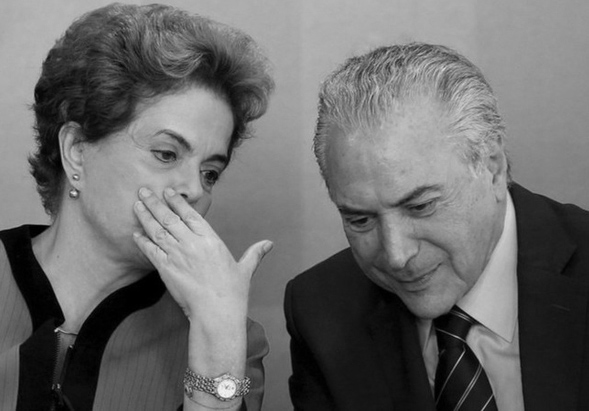
The last elected government, elected in 2014, with Dilma Rousseff as President and Michel Temer as Vice-President (photo), should have lasted until 2018 but fell in 2016 with the impeachment of Dilma Rousseff led by the President of the Federal Supreme Court and decided by the National Congress after two ballots.
Rousseff was accused of having manipulated the federal budget to hide the country’s real economic situation. Michel Temer assumed office as President following Rousseff’s impeachment.
Lula da Silva, the former President (2003-2010), ended his term in the middle of a legal storm when the Federal Supreme Court issued its judgment on the Criminal Lawsuit 470 (corruption of parliamentarians to maintain the influence of the Government in the Congress) and sentenced to prison ministers, businessmen, leaders of Lula’s Workers’ Party and other party leaders.
With the progressive use of the system of delação premiada (which is where a defendant is granted a reduced sentence or other beneficial measure for providing evidence against other persons), a measure included in the new Brazilian law to combat criminal organizations, and a series of police operations (the most famous of which is the operation Lava Jato, or ‘Car Wash’ in English), even more politicians and businessmen have been arrested and/or tried for corruption or money laundering.
More than one third of the National Congress’s members have been targeted by police operations for being implicated in controversial acts, either as agents or beneficiaries.
The current President, Michel Temer, and some of his ministers are under investigation by the Federal Police and on the verge of being denounced by the Federal Prosecutor’s Office for passive corruption.
The last two delação premiada, those of the CEOs of two Brazilian transnational corporations (Odebrecht and JBS), have overturned the political order, and so did the information that more than 2000 politicians received money from slush funds to finance their election campaigns.
Two governors and various parliamentarians are already in jail, including the former President of the Chamber of Deputies, Eduardo Cunha.
Lula da Silva himself is already facing various legal proceedings for corruption.
The winning ticket of the 2014 presidential election was recently judged in a case concerning potential abuse of economic power during their campaign.
Following a very close vote (4 against 3), the Superior Electoral Court rejected claims that illegal money was used in the Rousseff-Temer campaign.
If convicted, Michel Temer would have been forced out of the presidency.
The claim of economic power abuse was rejected only on a procedural matter: the evidence gathered – recordings, pictures, content of delação premiada – was considered inadmissible.
Aécio Neves, the opposition leader who competed against the Rousseff-Temer ticket in 2014, is in no better situation: a few weeks ago, a judicial decision deprived him of his mandate in the Federal Senate.
His sister and his cousin are already in jail and he himself is at risk of being sent to prison if the Federal Supreme Court requests this from the National Congress.
The Brazilian institutions are under investigation, but they are still functioning. Even members of the judiciary and the prosecutor’s office are being investigated.
There is still a decent level of trust in the work the current economic team is doing.
The National Congress gave its approval for the Constitutional Amendment on the Expenditure Ceiling, which will impose a series of conditions to public spending over the next few years. This somehow increases the credibility of the country’s economy.
On the agenda of the Congress, but affected by the series of denunciations for corruption that have hit parliamentarians, are the social security and labour reform bills considered essential for the future of the country by all the economic experts.
But it must also be noted that in the name of the fight against corruption, the Police and Federal Prosecutor’s Office have committed some abuses, to the point that a judge of the Supreme Court said Brazil was on the way to turning into a police state.
Corruption has reached such a level of intensity in the Brazilian political world that people are left in a severe and dangerous state of disappointment and despair. Already the current President is reaching a mere 1% approval rating…
Only elections would improve such a situation. The next presidential election is scheduled in 2018. But who will be eligible to run for it? The law prevents anyone who has a police record from applying.
However, society is reacting, taking various initiatives that value integrity measures, compliance actions, measures linked to education, in addition to the holding of intense debates demanding respect for democracy and human rights and calling for political reform.
Some people want direct elections now but this is contrary to the Constitution. However, 2018 is a long way to go and in the meantime there will be many public demonstrations.
But one thing is sure: Brazil is greater than the crisis it is facing now. This country has survived worse situations, including two long periods of dictatorship. Brazil will battle against this new agony. Respect for democracy, the Constitution and rule of law will prevail at the end.
A versão portuguesa pode ser descarregada abaixo:
Brazil-Corruption crisis-News-Op-ed-2017-POR (em PDF)
Jun 23, 2017 | Advocacy, Non-legal submissions
The ICJ has joined other NGOs in highlighting some of the achievements and failures of the June 2017 session of the UN Human Rights Council in a statement at the end of the session.
The statement, delivered on behalf of the group of NGOs by the International Service for Human Rights (ISHR), read as follows:
At the close of this session, we welcome the commitment by many States from all regions to enhance the Council’s success and effectiveness, and the performance of Human Rights Council (HRC) members through a series of concrete actions. The steps outlined by the Netherlands, such as more competitive HRC elections and the application of objective human rights based criteria to determine whether and how to act on situations of concern, would go a long way in making the Council more accessible, effective, and protective.
The leadership shown by States in the development of joint statements on killings in the Philippines‘ so-called ‘war on drugs’ and threats against human rights defenders, and on the increasingly dire situation in the Maldives are examples of this. We regret the lack of such leadership on other States including China and Egypt.
Although we’d hoped for a more robust response on the Democratic Republic of the Congo (DRC) from the Council, the international team of experts brings hope of uncovering the truth about the horrific violence in the Kasai. The UN, this Council, and the DRC itself must now ensure unhindered access for and support to the team, for it to independently produce a robust and credible report, which will constitute a step towards accountability.
We congratulate Cote d’Ivoire for its six years of cooperation with the UN and the mandate of the Independent Expert. We urge the Council to continue to pay attention to the human rights situation, particularly in the context of recent mutinies, and to assist the country in the implementation of the Independent Expert’s recommendations, including by striving for A-status for its National Human Rights Institution (NHRI).
We also echo the joint call by several States urging you to create a publicly accessible register of alleged acts of intimidation and reprisals and to provide short oral updates on cases at the start of every Item 5 general debate giving States concerned the opportunity to respond.
We also welcome the joint statement of the core group on civil society space together with some NGOs, and its reaffirmation that the “substantive participation of civil society makes this Council’s debates and work, including the UPR, richer and more meaningful”.
Mr President,
We are pleased that both resolutions on discrimination and violence against women were adopted by consensus, and that adverse amendments designed to remove language on comprehensive sexuality education and women human rights defenders were defeated. We regret that the Russian Federation and others systematically seek to remove reference to human rights defenders in all resolutions at each session. Denial of the existence of defenders is absurd, given the long history of formal recognition of the concept by the Commission on Human Rights, Council and General Assembly.
We regret that the resolution on the “protection of the family” fails to fully recognise that older persons are individual rights holders entitled to self-determination and autonomy, and ignores a significant UN process, the General Assembly Open-Ended Working Group on Ageing. The resolution also fails to acknowledge that diverse forms of the family exist. The entire initiative is implicated in an effort to subvert the aims of our human rights system and the universality of rights.
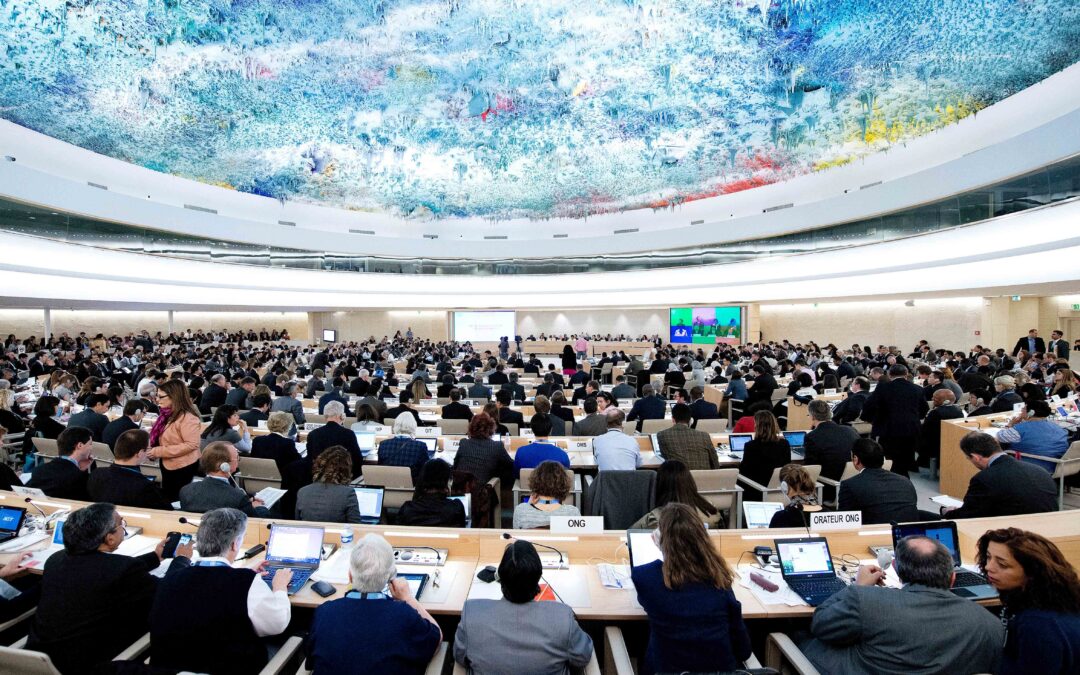
In closing, Mr President, we are dismayed at the lack of progress in terms of ensuring the most effective participation of civil society, in accordance with established rules and practice of the Council. Although symbolic, the massive reduction of reserved NGO desk space in this room is illustrative of this.
We are concerned about the lack of formal engagement by you and your Bureau with civil society, the absence of visible steps to curb and respond to intimidation or reprisals, and the abusive interruptions of NGO statements, including in some instances by the chair. And we look forward to engaging with your office to reverse this trend.
Thank you.
Among the NGOs joining the statement were the following:
- Amnesty International
- CIVICUS
- Human Rights Watch
- International Commission of Jurists
- International Lesbian, Gay, Bisexual, Trans and Intersex Association (ILGA)
- International Longevity Center Global Alliance
- International Platform Against Impunity
- International Service for Human Rights
The joint statement may be downloaded in PDF here: UN-HRC35-EndSessionStatement-2017
* For additional information on ICJ priorities and activities at the session, see the following:
Refugees and migrants: the role of judges and lawyers
Business responsibility to protect human rights
Corporate impunity; legal protection of refugees and migrants
Discrimination against women in access to justice
Threats to independence of judges and lawyers; backsliding on violence against women
Ensuring women’s access to justice for gender based violence
Turkey: judicial independence and freedom of expression
Civil society space in the Human Rights Council
Call for strong action on Egypt at the Human Rights Council
Continuing lack of accountability for rendition and secret detention
“Protection of the Family”: concerns regarding the resolution
UN Human Rights Council adopts resolutions on independence of judges and lawyers