Mar 5, 2021 | Editorial, Noticias
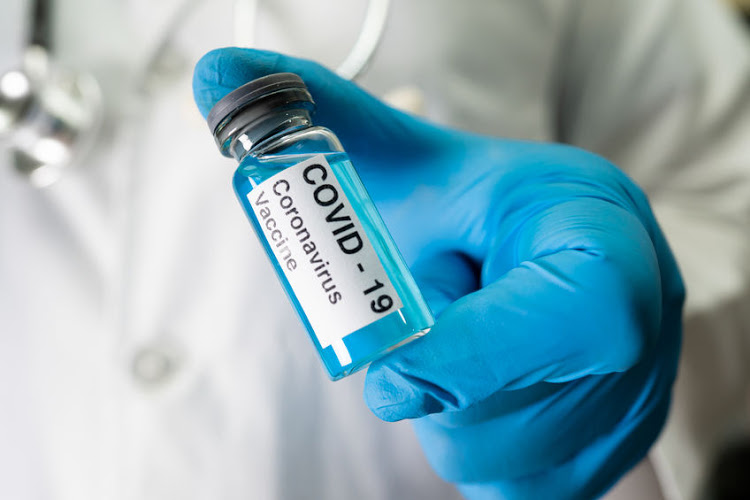
En esta columna de opinión, el Comisionado de la CIJ, Rodrigo Uprimny, discute si las patentes de las vacunas COVID-19, que favorecen los intereses de propiedad intelectual de los productos farmacéuticos, tienen un costo inaceptable para proteger la vida y la salud de millones de personas. El Comisionado Uprimny también es Investigador en Dejusticia y miembro del Comité de Derechos Económicos, Sociales y Culturales..
Esta columna se publicó por primera vez en El Espectador, el 27 de febrero de 2021.
¿Por qué, me preguntaron en una conversación informal, tenemos que esperar todo este tiempo a que nos lleguen las vacunas contra COVID-19, mientras que la economía sigue mal y muere tanta gente, si ya hay muchas vacunas seguras y efectivas? ¿Es que acaso nosotros no podemos producirlas?
La respuesta a esta sencilla pero esencial pregunta es que el problema no es técnico sino político.
Tal vez Colombia no pueda técnicamente producir algunas de esas vacunas, como las basadas en el ARN mensajero, pero muchos otros países podrían hacerlo, incluso varios del Sur global, como India, Argentina o Brasil. Como lo ha mostrado Médicos sin Fronteras, no hay un obstáculo técnico a que una producción masiva mundial permita en pocos meses tener vacunas suficientes para todos los 7.800 millones de seres humanos.
El obstáculo es jurídico y político. Es la propiedad intelectual que prevé patentes para las farmacéuticas que crearon esas vacunas, que es un monopolio temporal, en general de 20 años, conforme al cual nadie puede producir esas vacunas, en ese período, sin su permiso. Y por eso esas empresas pueden también imponer precios y condiciones.
Las patentes son defendidas por los países ricos, que es en donde están domiciliadas muchas de esas farmacéuticas. El argumento es que sin patentes no habría innovación pues las empresas no tendrían incentivos para investigar y lograr nuevos productos.
No voy a controvertir acá esa defensa de la propiedad intelectual, que es muy discutible, sino que planteo esta pregunta: incluso si las patentes fueran buenas y ayudaran a la innovación, ¿es justo que hoy se mantengan intactas frente a COVID-19 si eso impide el acceso rápido a vacunas en todo el planeta?
La respuesta es negativa pues no sólo condenamos a morir a millones de personas, sino que además el riesgo epidemiológico es altísimo. Cada contagio es un riesgo de una nueva mutación del coronavirus. Nada excluye entonces que lleguemos a variantes que escapen a las vacunas actuales. O que surja y se extienda alguna variante letal para los niños, que por ahora han logrado escapar al efecto devastador de la pandemia.
Por eso, sin cuestionar la propiedad intelectual como tal, Sudáfrica y la India propusieron ante la Organización Mundial del Comercio, que es el foro internacional sobre estos temas, una exención temporal (o “waiver”) frente a las patentes de vacunas y tratamientos para COVID-19, al menos mientras se controla la pandemia. Podría incluso preverse alguna compensación justa a las empresas que descubrieron las vacunas, descontando obviamente el inmenso apoyo financiero que recibieron de dineros públicos.
Esta exención temporal es imprescindible pues las flexibilidades hoy previstas frente a las patentes, como las licencias obligatorias, son demasiado rígidas y limitadas para enfrentar esta crisis. Sólo el waiver permitirá que empresas y Estados con las capacidades técnicas suficientes se pongan a producir masivamente las vacunas necesarias, sin temer sanciones drásticas por violar patentes.
Esa propuesta enfrenta la resistencia de ciertos países del norte, pero ha recibido un apoyo creciente de muchos Estados y organizaciones científicas y humanitarias. Sin embargo, el gobierno Duque se ha abstenido de apoyarla con el vergonzoso argumento de que necesita más evidencia. ¿Más evidencia de qué? ¿No es obvio que hoy no hay suficientes vacunas pudiendo técnicamente haberlas y que las que hay están yendo sobre todo a los países ricos? ¿Y que eso se debe en gran parte a las patentes sobre las vacunas, que lejos de ser un premio justo a la innovación parecen hoy más patentes de corso a favor de las farmacéuticas, por la muerte que están provocando en el mundo?
Download the Op-Ed in English and Spanish.
ICJ Statements on Vaccine Access:
Global: “ICJ calls on States to ensure human rights compliant access to COVID-19 vaccines (UN Statement)”: (1 March 2021) https://www.icj.org/icjhrcgd2covid19/
Global: “ICJ urges the UN Committee on Economic, Social and Cultural Rights to call on States to comply with their obligations to ensure equitable access to vaccines for all” (15 Feb 2021): https://www.icj.org/icj-urges-the-un-committee-on-economic-social-and-cultural-rights-to-call-on-states-to-comply-with-their-obligations-to-ensure-equitable-access-to-vaccines-for-all/
Peru: “The COVID-19 vaccine demands international and national solidarity” (23 Feb 2021): https://www.icj.org/the-covid-19-vaccine-demands-international-and-national-solidarity/
Africa: “The ICJ recommends that the African Union acknowledge COVID-19 vaccines are a “public good” (4 Feb 2021): https://www.icj.org/the-icj-recommends-that-the-african-union-acknowledge-covid-19-vaccines-are-a-public-good/
Zimbabwe: “The ICJ and ZimRights ask for urgent intervention on access to COVID-19 vaccines from African Commission Mechanism” (19 Feb 2021): The ICJ and ZimRights ask for urgent intervention on access to COVID-19 vaccines from African Commission Mechanism
Further reading:
UN Special Procedures: “COVID-19: UN experts urge WTO cooperation on vaccines to protect global public health” (1 March 2021): https://www.ohchr.org/EN/NewsEvents/Pages/DisplayNews.aspx?NewsID=26817&LangID=E
UN Special Procedures: “Statement by UN Human Rights Experts Universal access to vaccines is essential for prevention and containment of COVID-19 around the world” (9 Nov 2020): https://www.ohchr.org/EN/NewsEvents/Pages/DisplayNews.aspx?NewsID=26484&LangID=E
UN CESCR Committee: “Statement on universal and equitable access to vaccines for the coronavirus disease (COVID-19)” (27 Nov 2020) https://tbinternet.ohchr.org/_layouts/15/treatybodyexternal/Download.aspx?symbolno=E/C.12/2020/2&Lang=en
IACHR and its SRESCER: “IACHR and its SRESCER Call on American States to Make Public Health and Human Rights the Focus of All their Decisions and Policies Concerning the COVID-19 Vaccine” (5 Feb 2021): http://www.oas.org/en/IACHR/jsForm/?File=/en/iachr/media_center/PReleases/2021/027.asp

Mar 5, 2021 | Advocacy, Non-legal submissions
The ICJ issued a statement today on the occasion of an interactive dialogue with the UN Special Rapporteur on situation of human rights defenders calling for measures of protection for lawyers who defend human rights and human rights defenders.
The ICJ was not able to read the statement during the interactive dialogue due to the limited time provided for NGO statements.
The statement was as follows:
“Madame President,
The International Commission of Jurists (ICJ) welcomes the Special Rapporteur’s report and agrees with her observation on the absence of political will in some States to protect Human Rights Defenders (HRDs).
As noted by the previous Special Rapporteur (A/HRC/37/51/Add.1), lawyers are HRDs when they act in their professional capacity to promote or protect human rights. Lawyers, like other defenders, are often targeted for harassment including through death threats and killings. The ICJ has recently documented such cases in Zimbabwe, Egypt and Ukraine.
The ICJ recalls that under the UN Basic Principles on the Role of Lawyers, States have special protective responsibilities, namely that “[w]here the security of lawyers is threatened as a result of discharging their functions, they shall be adequately safeguarded by the authorities.”
The ICJ welcomes the Special Rapporteur’s recommendation that the international community, particularly States through Foreign Embassies and the OHCHR must react faster in addressing threats issued against HRDs. This should include situations where lawyers are threatened for doing their work.
The ICJ further welcomes the recommendation to maintain adequately resourced protection mechanisms for HRDs. In this regard, we consider strong and independent Bar Associations to be essential in helping protect the security of lawyers.
Madam Special Rapporteur, are there particular measures you would recommend for protecting lawyers when acting as HRDs?
Thank you.”
Contact:
Massimo Frigo, ICJ UN Representative, e: massimo.frigo(a)icj.org, t: +41797499949

Mar 5, 2021 | Advocacy, Non-legal submissions
The ICJ issued a statement today on the occasion of an interactive dialogue with the UN Special Rapporteur on the promotion and protection of human rights while countering terrorism on the need for a human rights-based approach for countering terrorism.
The ICJ was not able to read the statement during the interactive dialogue due to the limited time provided for NGO statements.
The statement was as follows:
“Madam President,
The ICJ welcomes the attention given by the Special Rapporteur to the human rights impact of counterterrorism policies on the rights of women and girls and the need to incorporate a gender perspective into counter-terrorism policy and law in all areas (See, para. 39b, UN Doc. A/HRC/46/36).
We share the Special Rapporteur’s concern that the critical State obligation to promote economic, social and cultural rights should not be absorbed into a new, generalized, non-rights based category of “economic effects of terrorism (para. 37.) The emphasis must remain squarely on preventing and redressing violations and abuses against victims (para. 36).
We agree with the Special Rapporteur that human rights obligations and counterterrorism are directed at the State and that care must be taken to avoid the blurring of lines between counterterrorism and international humanitarian law (para. 39e). We concur that States must address the rule of law and human rights effects of misuse of sanctions and listing processes to target civil society and persons exercising rights protected by international law.
The ICJ therefore calls on the Council to maintain in this matter a human rights-based approach to victims of terrorism, as stressed by the Special Rapporteur.
Thank you.”
Contact:
Massimo Frigo, ICJ UN Representative, e: massimo.frigo(a)icj.org, t: +41797499949
Mar 5, 2021 | News, Op-eds
An opinion piece by ICJ Commissioner, Rodrigo Uprimny, asks whether the existing COVID-19 vaccine patenting arrangements favouring the intellectual property interests of pharmaceuticals come at an unacceptable cost to protecting the life and health of millions. Commissioner Uprimny is also Researcher at Dejusticia and member of the UN Committee on Economic, Social and Cultural Rights.
During an informal conversation I was asked:
“Why is it that, although so many of us are dying due to COVID-19 and suffering from the dramatic state of the economy, we continue to wait for vaccines despite the availability of so many safe and effective ones? Is it that we cannot produce the vaccines locally?
The answer to this simple but essential question is that vaccine access is no longer a technical but also a political issue.
While Colombia cannot technically manufacture or produce some COVID-19 vaccines such as those based on the RNA messengers, many other countries, including several in the global South such as India, Argentina or Brazil, could. As has been highlighted by Doctors without Borders, there is no technical obstacle to mass vaccine production that would allow to vaccinate every one of the 7.8 billion human beings on earth within a few months
Instead, the obstacle is legal and political. It is the intellectual property that provides patents to pharmaceutical companies, who have developed COVID-19 vaccines. That creates a temporary monopoly. During such a temporary monopoly period, which usually lasts 20 years, no other company can produce their vaccines without permissions. As a consequence, those companies can impose and regulate the prices and conditions for the production of their vaccines.
Patents are defended by high-income countries, where many large pharmaceutical companies are based. They argue that there would be no innovation without patents as companies would not have incentives to research and develop new products.
Here, I will not dispute this defense of intellectual property, which is highly debatable. I would instead like to pose this question: even if patents were good and helped innovation, is it fair that they remain intact during the COVID-19 pandemic if they prevent rapid access to vaccines all over the world? The answer to this question is no, because we are condemning millions of people to die, but also because the epidemiological risks are extremely high. Each contagion poses a new risk for a novel coronavirus mutation that may eventually result in a variant that could escape the efficacy of current vaccines. It is also possible that a new mutation has a severe impact on the health of children, who have been somewhat spared from the more lethal impacts of COVID-19 until now.
In light of the current situation, without challenging the institution of intellectual property as such, South Africa and India issued a proposal to the World Trade Organization, the international organization overseeing such trade-related issues. They proposed a temporary exemption (or “waiver”) of patents on vaccines and treatments for COVID-19 at least until the pandemic is under control. A potential, fair compensation for companies who discovered the vaccines might also been considered, although obviously discounting the immense financial support they have already received from public funding.
This temporary exemption is crucial as current flexibilities in patent rights, such as compulsory licenses, are too rigid and limited to face the current crisis. This waiver provides the only opportunity for companies and States, with sufficient technical capabilities, to mass-produce necessary vaccines without having to fear the severe penalties of patent (intellectual property) violations.
While this proposal continues to face resistance from certain countries in the Global North, it is receiving growing support from many states, scientific and humanitarian organizations. Regrettably, the Colombian government has refrained from supporting it, with the shameful argument that more evidence needs to be provided. More evidence of what? Does it not suffice that we currently do not have access to necessary vaccines, although technically we could produce ample amounts? Or that available vaccines are, above all, headed to high-income nations? And is this mainly due to patents on vaccines that, far from being a fair award for innovation, seem to be letters of marque in favor of pharmaceutical companies, without any consideration of deaths and harms caused by the global lack of COVID-19 vaccines?
This op-ed was first published on El Espectador, 27 February 2021.
Download the Op-Ed in English and Spanish.
ICJ Statements on Vaccine Access:
Global: “ICJ calls on States to ensure human rights compliant access to COVID-19 vaccines (UN Statement)”: (1 March 2021)
Global: “ICJ urges the UN Committee on Economic, Social and Cultural Rights to call on States to comply with their obligations to ensure equitable access to vaccines for all” (15 Feb 2021): https://www.icj.org/icj-urges-the-un-committee-on-economic-social-and-cultural-rights-to-call-on-states-to-comply-with-their-obligations-to-ensure-equitable-access-to-vaccines-for-all/
Peru: “The COVID-19 vaccine demands international and national solidarity” (23 Feb 2021): https://www.icj.org/the-covid-19-vaccine-demands-international-and-national-solidarity/
Africa: “The ICJ recommends that the African Union acknowledge COVID-19 vaccines are a “public good” (4 Feb 2021): https://www.icj.org/the-icj-recommends-that-the-african-union-acknowledge-covid-19-vaccines-are-a-public-good/
Zimbabwe: “The ICJ and ZimRights ask for urgent intervention on access to COVID-19 vaccines from African Commission Mechanism” (19 Feb 2021): https://www.icj.org/the-icj-and-zimrights-ask-for-urgent-intervention-on-access-to-covid-19-vaccines-from-african-commission-mechanism/
Further reading:
UN Special Procedures: “COVID-19: UN experts urge WTO cooperation on vaccines to protect global public health” (1 March 2021): https://www.ohchr.org/EN/NewsEvents/Pages/DisplayNews.aspx?NewsID=26817&LangID=E
UN Special Procedures: “Statement by UN Human Rights Experts Universal access to vaccines is essential for prevention and containment of COVID-19 around the world” (9 Nov 2020): https://www.ohchr.org/EN/NewsEvents/Pages/DisplayNews.aspx?NewsID=26484&LangID=E
UN CESCR Committee: “Statement on universal and equitable access to vaccines for the coronavirus disease (COVID-19)” (27 Nov 2020) https://tbinternet.ohchr.org/_layouts/15/treatybodyexternal/Download.aspx?symbolno=E/C.12/2020/2&Lang=en
IACHR and its SRESCER: “IACHR and its SRESCER Call on American States to Make Public Health and Human Rights the Focus of All their Decisions and Policies Concerning the COVID-19 Vaccine” (5 Feb 2021): http://www.oas.org/en/IACHR/jsForm/?File=/en/iachr/media_center/PReleases/2021/027.asp
Mar 5, 2021
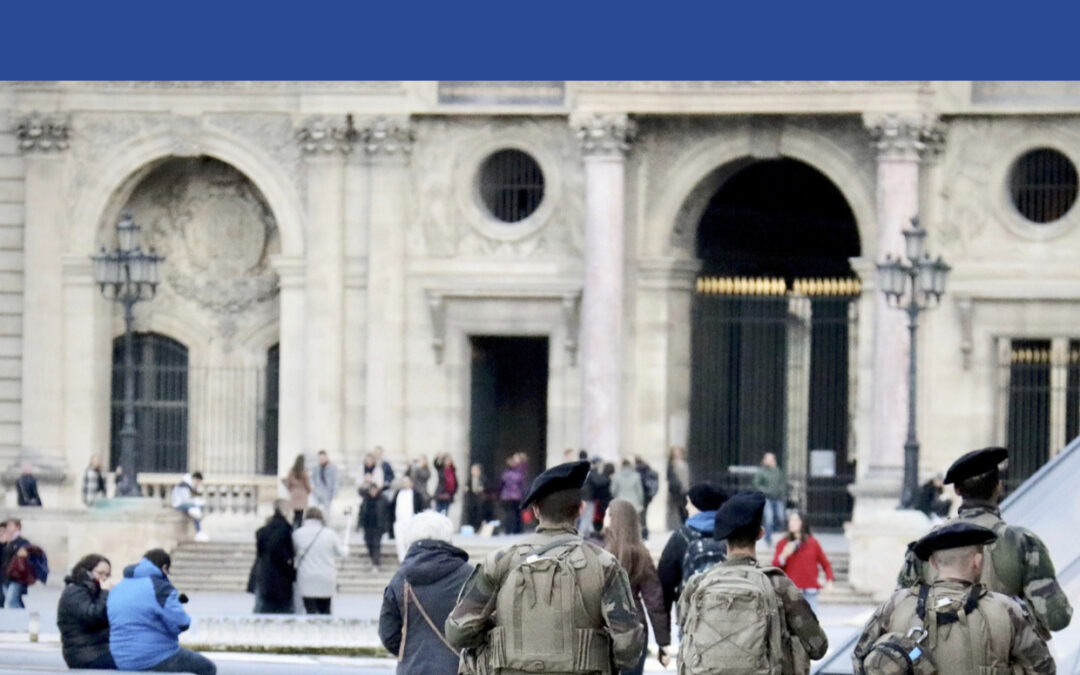
Today, the ICJ published Terrorism offences and human rights in the EU: a short guide aimed at supporting civil society and others advocating for the human rights of people affected by terrorism and counter-terrorism
Across Europe, national laws criminalise a wide range of conduct in the name of countering terrorism. In practice, these laws can affect rights to freedom of movement, expression, association, assembly, privacy, private and family life or the right to political participation. They may be applied in a way that is discriminatory, or through processes involving insufficient procedural safeguards that affect the right to liberty or the right to a fair trial..
This short Guide presents an overview of the international and EU legal framework for the protection of human rights in the application of terrorism-related criminal offences in EU Member States. It particularly addresses the impact on human rights of investigating, prosecuting and trying offences under the EU Directive on combatting terrorism.
The Guide outlines the scope of conduct considered as “terrorism” in international and EU law, as well as international law and standards on the rights of victims of terrorism and of suspects of terrorism-related crimes.
It summarises how international human rights law applies to counter-terrorism criminal law, including in times of crisis, in accordance with principles of legality, necessity and proportionality, and non-discrimination.
The Guide is complemented by the more detailed legal analysis of these issues in Counter-terrorism and human rights in the courts: guidance for judges, prosecutors and lawyers on application of EU Directive 2017/541 on combatting terrorism (the Guidance), published by the ICJ in collaboration with Human Rights in Practice, Nederlands Juristen Comité voor de Mensenrechten (NJCM) and Scuola Superiore Sant’Anna di Pisa in November 2020 as part of the EU JUSTICE project.
Download here: Terrorism offences and human rights in the EU: a short guide
Contact:
Róisín Pillay, Director Europe and Central Asia Programme; roisin.pillay(a)icj.org
Karolína Babická, Legal adviser Europe and Central Asia Programme; karolina.babicka(a)icj.org