Sep 22, 2020 | Advocacy, News
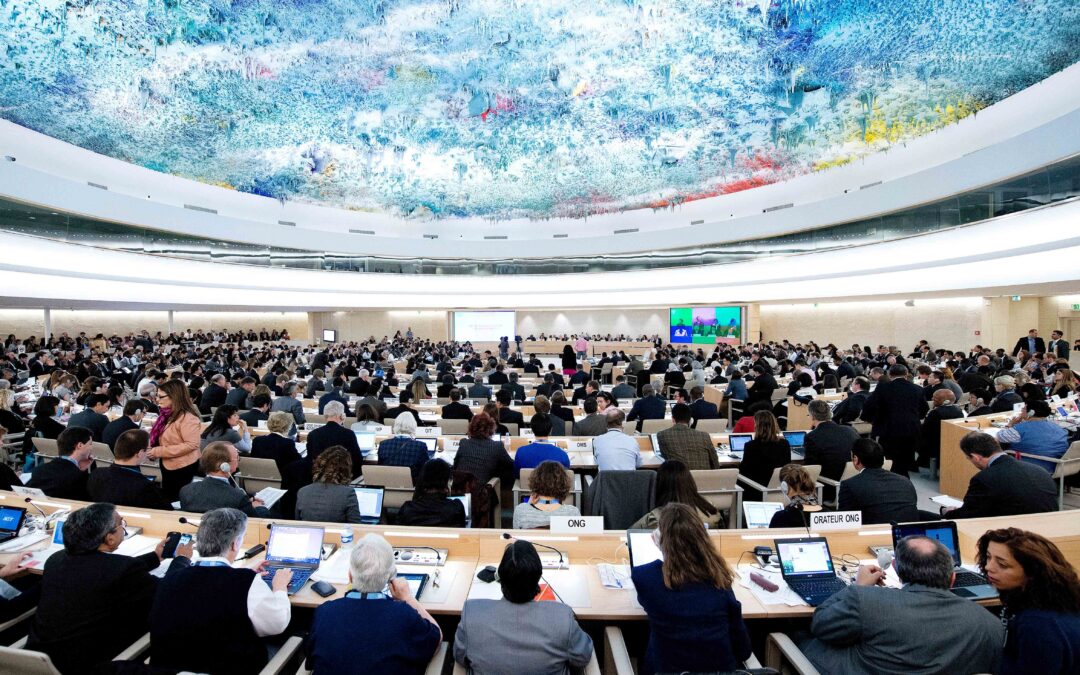
States should help pave the way towards credible accountability and redress for the people of Yemen by renewing and strengthening international investigations into war crimes, other serious violations of international humanitarian law, and grave human rights abuses during this 45th Session of the HRC, the ICJ and 23 other organizations said today.
Yemen is suffering from an “acute accountability gap,” according to the UN Group of Eminent Experts (GEE) on Yemen, which released its third report on September 9, 2020.
With COVID-19 threatening the lives and livelihoods of millions across Yemen, peace talks floundering, and airstrikes, shelling and attacks impacting civilians once again increasing, the reality for millions of Yemeni civilians is growing ever more bleak.
This session, the Human Rights Council has the opportunity to pave the way towards credible accountability and redress for victims and survivors in Yemen.
People in Yemen have experienced grave abuses since the conflict began in 2014, when Ansar Allah (the Houthi armed group) and military units loyal to former president Ali Abdullah Saleh took control of the capital, Sana’a, and escalated in 2015 when the Saudi/UAE-led coalition militarily intervened on the side of the Yemeni government.
With the conflict in its sixth year, millions of Yemenis are without adequate food, water, shelter or healthcare. The parties to the conflict impede the flow of life-saving goods into and around the country, attack critical infrastructure, and misdirect goods and their revenues to their own coffers and loyalists.
Thousands of civilians have been killed, wounded and otherwise harmed by airstrikes that violate international humanitarian law, indiscriminate shelling and the use of banned anti-personnel landmines.
The societal fabric has torn, with expression, speech, peaceful protest and movement increasingly restricted, and political and other identity-based divisions weaponized by those in power.
The human rights and humanitarian catastrophe in Yemen is man-made, and was avoidable. The parties to the conflict continue to hold the vast majority of power in and over Yemen.
For Yemen’s trajectory to change, the behavior of the parties to the conflict and their backers needs to change. As of September 2020, perpetrators have gone unpunished, states responsible for violations have faced no real consequences, parties have rarely acknowledged fault or taken measures to protect civilians, suppliers keep the arms used for international humanitarian law violations, and victims have been denied justice and redress.
In 2017, the Council established the GEE to report on violations of international law in Yemen and, where possible, to identify those responsible. The Council renewed the GEE’s mandate in 2018 and 2019, despite opposition from the Saudi/UAE-led coalition.
In its third report, the UN experts found the international community “can and should” do more to “help bridge the acute accountability gap” in Yemen.
The experts provided a list of specific recommendations, including for the Security Council to refer the situation in Yemen to the International Criminal Court and to expand the list of persons subject to Security Council sanctions.
The GEE supported the establishment of an investigative body, similar to the International, Impartial and Independent Mechanism for Syria, and specifically called on the Council to ensure the situation of human rights in Yemen remains on its agenda, including by ensuring adequate resources are provided to the GEE for the collection, preservation and analysis of information related to violations and crimes.
In the longer term, the Group encouraged “further dialogue about the creation of a special tribunal such as a ‘hybrid tribunal’ to prosecute cases of those most responsible,” reiterated the importance of victims’ right to a remedy, including reparations, and called for human rights to be “at the heart of any future peace negotiations,” including that “no steps are taken that would undermine respect for human rights and accountability, such as granting blanket amnesties.” 2
The GEE also reiterated concerns that states supplying arms to parties to the conflict, including to Saudi Arabia and the UAE, may be violating their obligations under the Arms Trade Treaty, and that this support may amount to aiding and assisting internationally wrongful acts.
Today, 24 Yemeni, regional, and international civil society organizations, including the ICJ, came together to call on the Council to endorse the GEE’s report, including its findings on accountability, and to take concrete steps this Council session to pave the way towards credible justice for Yemen.
The 24 organizations are calling on the Council to renew and strengthen the GEE’s mandate this September, including to collect, consolidate, preserve and analyze evidence related to, and clarify responsibility for, the most serious crimes under international law and violations of international law committed in Yemen since 2014.
The organizations are also calling on the Council to task the GEE with issuing a special report advising states on practical steps they can take to help ensure justice and redress for the tens of thousands of Yemeni civilians unlawfully harmed by the warring parties throughout this conflict.
Sep 21, 2020 | Advocacy, Non-legal submissions
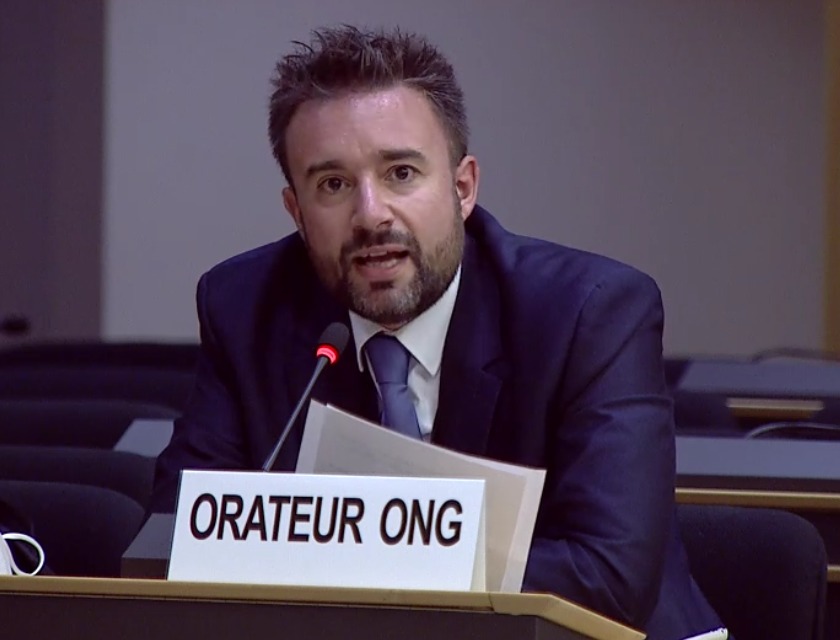
At the interactive dialogue with the Working Group on Enforced and Involunatary Disapparances during the UN Human Rights Council in Geneva, the ICJ has called on Tajikistan and Turkey to comply with the recommendations by the Working Group and to end practices of abduction and forced return.
The Chair of the Working Group on Enforced and Involuntary Disapperances in his replies to the questions pressed Turkey to implement the recommendations of the Working Group’s report.
The oral statement read as follows:
Mr Vice-President
The International Commission of Jurists (ICJ) welcomes the report by the Working Group on the follow up of its recommendations on its visit to Turkey (A/HRC/45/13/Add.4) and shares its concerns at the lack of implementation by the Turkish authorities and at the State-sponsored practice of “abductions and forced returns” (para 8). The ICJ agrees with the Working Group that a critical factor that fosters impunity in Turkey is “the lack of judicial independence and impartiality” (para 17).
The ICJ also welcomes the Working Group’s report on Tajikistan (A/HRC/45/13/Add.1). The ICJ shares its concern at the forcible return of Tajikistan nationals to the country, involving enforced disappearances (para 53), the harassment of lawyers (para 9) including the lengthy imprisonment of Buzurgmehr Yorov and Nuriddin Makhkamov, the obstruction of lawyers’ access to detainees, and inadequate judicial review of detention (para 47).
The ICJ urges both countries to fully implement the recommendations of the Working Group and particularly:
- on Tajikistan, to end forced return of their nationals, and to ensure prompt and confidential access to lawyers for detainees and prompt and independent judicial review of detention.
- on Turkey, to stop all practices of abduction and forced return from other countries and to restore the independence of its judiciary.
Sep 21, 2020 | News, Op-eds
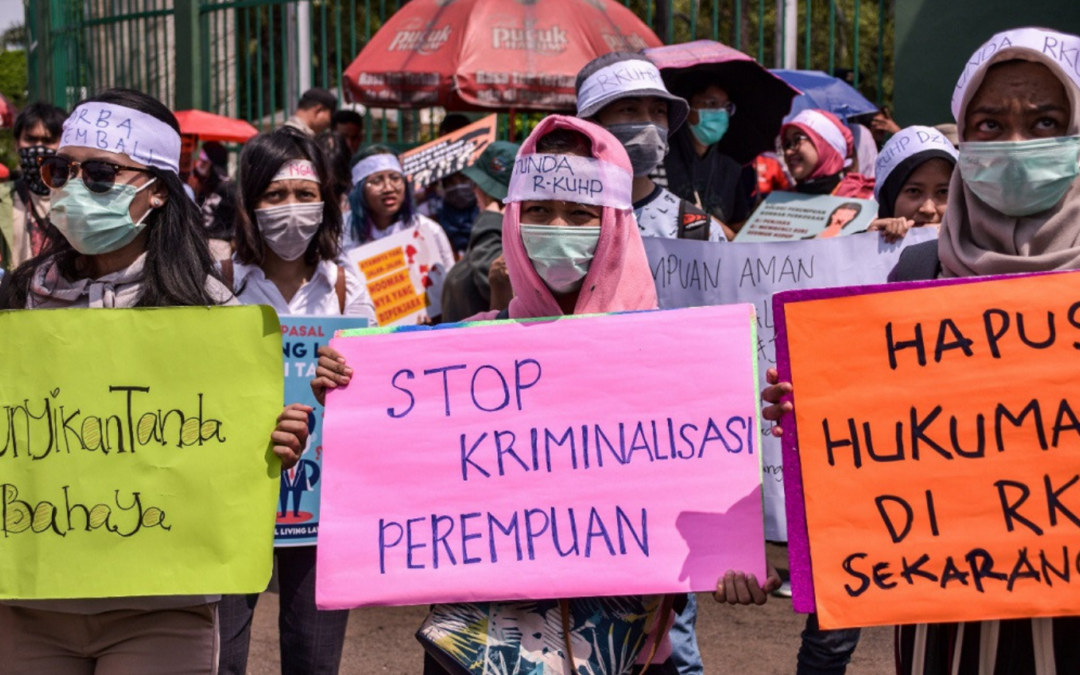
An opinion piece by Ruth Panjaitan, ICJ National Legal Adviser in Indonesia.
Amid the COVID-19 outbreak in Indonesia, the House Representatives and the Law and Human Rights Ministry have continued their deliberation of the controversial Criminal Code revision as a priority bill.
The International Commission of Jurists has previously expressed concern that a number of provisions in the bill are inconsistent with Indonesia’s obligations under international human rights law. These provisions relate to the right to privacy, freedom of speech and freedom of association.
There are provisions in the draft that would have dire consequences for women’s rights in Indonesia. For instance, if implemented in its current form, the bill would explicitly criminalize cohabitation or the act of two consenting adults living together as heterosexual sexual partners outside of a legal marriage. Persons found guilty of cohabitation would risk up to six months of imprisonment or a fine of approximately Rp 10 million (US$633).
The act of cohabitation is currently not a criminal offence under the existing Criminal Code. However, Indonesian women who live with their partners outside of marriage are often stigmatized as women “of low honor”. In addition, there are some regions in Indonesia that have adopted local ordinances prohibiting cohabitation, such as in Batam and Aceh, as this practice is disfavored by the authorities because of harmful gender stereotypes and their interpretations of religious and cultural norms.
These local ordinances are being used by the local Public Order Agency (Satpol PP) and self-appointed “moral police” to publicly shame cohabiting couples, especially the women.
There have been numerous instances where the neighbors of a cohabiting couple have barged into private homes and publicly chastised the couple. In 2017, a couple’s house in Jakarta’s neighboring city of Tangerang was raided by men from the neighborhood who punched the couple, stripped them naked, paraded them around the community, and forced them to confess that they were living together “illegally”. The perpetrators recorded the incident on video, which unfortunately later went viral on social media.
Local vigilantes account for the biggest percentage of those who invade the privacy of those accused of cohabitation.
The National Commission on Violence Against Women (Komnas Perempuan) noted that gender-based violence of this nature often led women to experience excessive stress, depression, mental health disorder, sometimes even resulting in suicide attempts.
Under the bill, the prosecution of this offense can be initiated by a complaint filed by the spouse, parents and children. With written approval from family members, village heads may also file a complaint.
Consequently, this may serve to legitimize more arbitrary police and vigilante raids based on “mere suspicion” of any family member. This may also potentially empower abusive family members to accuse survivors of domestic violence, of a crime.
Since same-sex marriage is not legal in Indonesia, lesbian, bisexual and transgender women are at risk if they decide to cohabit as couples. Furthermore, this provision will also threaten women in remote areas who could only afford to have religious and/or adat (customary) marriage.
First, the criminalization of cohabitation constitutes an arbitrary and unlawful interference with people’s privacy. The right to privacy is protected under international human rights law, including the International Covenant on Civil and Political Rights (ICCPR) by which Indonesia is bound.
The right to privacy is central to the protection of human dignity and forms the basis of any democratic society. It supports and reinforces other rights, including the right of women to freely choose when or if she will marry.
The UN Human Rights Committee, the supervisory body for the ICCPR, has made clear that states have an obligation to adopt legislative measures to give effect to the prohibition against interferences with and attacks against the right to privacy – and to take measures to ensure the protection of this right.
Second, the criminalization of cohabitation violates other human rights guaranteed by the ICCPR, including the right to family life, a right that, as international human rights law acknowledges, may be exercised and enjoyed by two cohabiting partners without the need for them to be married to one another.
Third, the criminalization of cohabitation would constitute prohibited discrimination and a violation of the right to “equality before the law” and “equal protection of the law without discrimination for all” under international human rights law binding on Indonesia.
The House must therefore reject this bill because of its gender discriminatory nature and arbitrary interference with the right to privacy.
To download in Bahasa Indonesia , click here.
This article was first published in The Jakarta Post, available at: https://www.thejakartapost.com/academia/2020/09/05/consenting-adults-living-together-is-not-a-crime.html

Sep 18, 2020 | Advocacy, Non-legal submissions
At a special session of the UN Human Rights Council in Geneva, the ICJ and IBAHRI have called on Belarus to comply with its international human rights obligations, including by releasing those arbitrarily detained and ceasing abusive prosecutions as well as harassment of lawyers.
The oral statement read as follows:
“Madame President,
The International Commission of Jurists (ICJ) and the International Bar Association’s Human Rights Institute (IBAHRI) are concerned at the continuing human rights violations in Belarus following the Presidential election. Widespread arbitrary arrests, police violence against peaceful protesters, torture and other ill-treatment of detainees and allegations of enforced disappearances, violate Belarus’s international law obligations, and require accountability.
Our organizations are particularly concerned about reports that these violations are accompanied by widespread denial of detainees’ access to a lawyer. Lawyers face harassment and obstacles in carrying out their professional duties.
We highlight the recent arrests and detention of two prominent lawyers, Ilya Salei and Maxim Znak, on politically motivated charges on 9 September 2020. According to official information, the lawyers are charged with the crime of “calls for actions aimed at causing harm to the national security of the Republic of Belarus”.
We urge the Council to call on Belarus to:
- comply with its international human rights obligations, including by releasing those arbitrarily detained and ceasing abusive prosecutions;
- provide detainees with confidential access to lawyers of their choice;
- end harassment of lawyers and ensure accountability and reparations for those whose human rights have been violated; and
- request OHCHR to monitor and report to the Human Rights Council on the human rights situations in Belarus.
Thank you”
Sep 18, 2020 | Artículos, Noticias
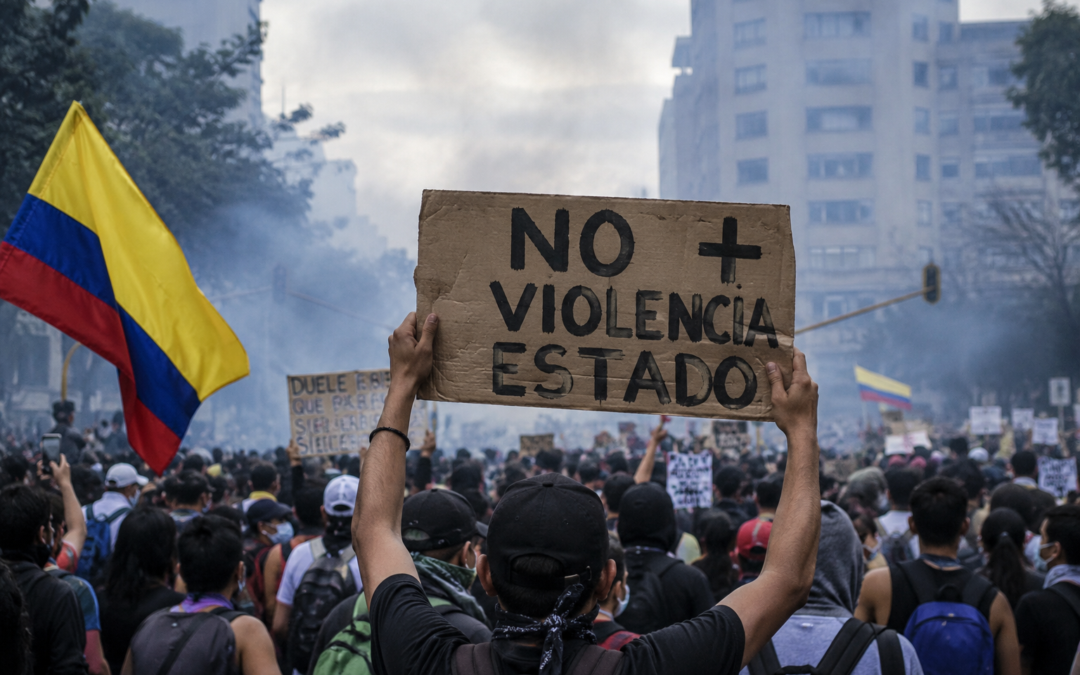
Hoy, la CIJ realizó un llamado a las autoridades competentes para que se realicen investigaciones prontas, transparentes, rigorosas, imparciales y efectivas en los casos de posibles ejecuciones extrajudiciales y otras violaciones a los derechos humanos cometidas por la Policía colombiana durante las recientes protestas en la capital.
La CIJ enfatizó que cualquier persona responsable debe ser judicializada y llevada ante la justicia. Además, se debe garantizar el acceso a la justicia y a reparaciones a las víctimas.
Del 9 al 10 de septiembre de 2020, se llevaron acabo protestas masivas contra violaciones a los derechos humanos cometidas por la Policía. Las protestas tuvieron su origen en la muerte de Javier Ordóñez. Ordoñez falleció bajo custodia policial luego de haber sido sujeto a severos malos tratos, incluyendo múltiples descargas de electricidad con pistolas taser.
Durante las protestas, la Policía hizo un uso ilegítimo, innecesario y desproporcionado de la fuerza. Como resultado de las protestas, 13 personas fallecieron y más de 200 resultaron heridas.
Los hechos fueron condenados por la Comisión Interamericana de Derechos Humanos (CIDH), que señaló denuncias de detenciones ilegales y de malos tratos contra personas que fueron arrestadas. La Alta Comisionada de Naciones Unidas para los Derechos Humanos también expresó preocupación por las denuncias de uso excesivo de la fuerza durante las protestas.
Según testigos, la Policía abrió fuego contra personas que estaban protestando pacíficamente. Algunas de las personas asesinadas no hacían parte de las protestas y murieron al ser alcanzadas por balas perdidas. Algunos videos de la conducta policial durante las protestas han circulado en redes sociales.
En el mismo sentido, la alcaldesa mayor de Bogotá, Claudia López Hernández, afirmó que había entregado videos, con evidencia del abuso policial, a las autoridades competentes. López también compartió parte de estos videos en su cuenta de Twitter.
La CIJ recuerda que bajo los estándares del derecho internacional que regulan el uso de la fuerza por parte de oficiales encargados del mantenimiento del orden público, no debe hacerse uso de fuerza letal a menos que sea estrictamente necesario para proteger la vida.
La CIJ enfatiza la necesidad de que las investigaciones sean independientes, lo que requiere que los investigadores sean independientes de la policía. De igual forma, las investigaciones deben desarrollarse dentro de la jurisdicción ordinaria y no en la militar.
La CIJ también expresa su preocupación por las amenazas recibidas por defensores de derechos humanos que estaban monitoreando el desarrollo de las protestas.
Antecedentes
Las protestas tuvieron su origen en la muerte de Javier Ordóñez, quien murió en un Comando de Acción Inmediata (CAI), en la madrugada del 9 de septiembre de 2020.
Un video muestra que antes de ser trasladado al CAI, policías dispararon pistolas taser contra Ordóñez a pesar que este ya se encontraba en el suelo inmovilizado y no representaba ninguna amenaza contra la vida o seguridad de los policías.
Los resultados iniciales de las investigaciones, incluyendo el reporte de la autopsia, indican que Ordóñez recibió golpes en la cabeza, el cuello, los hombres y el pecho al interior del CAI.
El 11 de septiembre de 2020, la Policía Nacional y el Ministro de Defensa ofrecieron disculpas por cualquier violación que hubieran podido cometer los uniformados. No obstante, no hubo reconocimiento de ninguna violación en particular. Posteriormente, el 16 de septiembre, el Ministro de Defensa reconoció que Javier Ordóñez había sido asesinado por la Policía.
Aunque el Ministro dijo que la policía respetaba las protestas pacíficas, afirmó que “lo ocurrido el 9 y 10 de septiembre fue un ataque masivo y sistemático en contra de la infraestructura policial y de los agentes de Policía”.
Adicionalmente, el 13 de septiembre, la Alcaldía mayor de Bogotá llevó a cabo una jornada de perdón y reconciliación. En la jornada participaron algunas de las víctimas, que exigieron justicia.
El 17 de septiembre de 2020, la Fiscalía General de la Nación solicitó orden de captura contra dos policías involucrados en la muerte de Ordoñez, la cual fue concedida por un juez. Los dos policías ya fueron capturados.
De conformidad con las obligaciones internacionales de Colombia consagradas en el Pacto Internacional de Derechos Civiles y Políticos, las investigaciones siempre deben ser independientes, imparciales, prontas, rigurosas, efectivas, creíbles y transparentes.
Los Principios Básicos sobre el Empleo de la Fuerza y de Armas de Fuego por los Funcionarios Encargados de Hacer Cumplir la Ley establecen que el uso de la fuerza deber ser excepcional, necesario y proporcional. Además, determinan que la fuerza letal solo puede usarse para proteger la vida.
Recientemente, Colombia ha sufrido de un aumento significativo en las violaciones y abusos a los derechos humanos, incluidas las muertes ilícitas. Por ejemplo, desde la firma del Acuerdo de Paz, en noviembre de 2016, han aumentado los asesinatos, amenazas de muertes y hostigamientos contra los defensores de derechos humanos.
A diciembre de 2019, la Misión de Verificación en Colombia de las Naciones Unidas verificó el asesinato de 303 defensores/as de derechos humanos y líderes sociales desde la firma del Acuerdo. Durante 2020, la Oficina de la Alta Comisionada para los Derechos Humanos en Colombia ha documentado 47 asesinatos y se encuentra verificando otros 44 casos potenciales.
Contactos:
Carolina Villadiego, Asesora Legal, América Latina. Email: carolina.villadiego(a)icj.org
Rocío Quintero M, Asesora Legal, América Latina. Email: rocio.quintero(a)icj.org