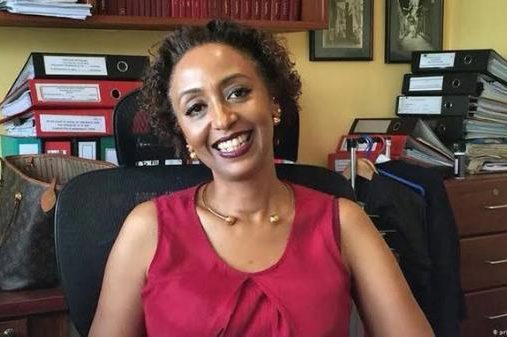
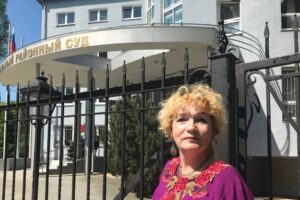
The ICJ today called for reinstatement of Tanzania lawyer Fatma Karume, characterizing a permanent prohibition from her practicing law as a violation of her rights and the independence of the legal profession.
In September 2019, the High Court of Tanzania issued an order suspending senior lawyer Fatma Karume from practising law in mainland Tanzania.
The High Court directed the Advocates’ Disciplinary Committee of Tanzania to conduct a disciplinary hearing and make a final determination on whether Fatma Karume, a former president of Tanganyika Law Society, which is the Bar association of mainland Tanzania, should be allowed to practice law.
Allegations of misconduct against Fatma Karume arose from her written submissions in a constitutional challenge to President Magufuli’s appointment of Professor Adelardus Kilangi as the Attorney General of Tanzania.
The State’s counsel complained that the language used by Fatma Karume in her submissions was unprofessional and disrespectful of the Attorney General, who was the subject of the constitutional challenge.
A year later, on 23 September 2020, the Advocates’ Disciplinary Committee found Fatma Karume guilty of the alleged misconduct and directed that she be permanently disbarred from practising law in Tanzania.
“The ICJ views the decision to permanently disbar Fatma Karume from legal practice, as a grave violation of Tanzania’s domestic, regional and international legal obligations relating to Fatma Karume’s right to be heard, her right to work and a violation of the independence of lawyers,” said ICJ Africa Director, Kaajal Ramjathan-Keogh.
“Fatma Karume’s right to be heard was violated in many ways. First, the complaint of misconduct was made in the State’s rejoinder submissions and Ms Karume was not afforded an opportunity to respond on record, before the High Court made the decision to temporarily suspend her from practice. Secondly, her right to a speedy hearing was violated because it took the Advocate’s Disciplinary Committee of Tanzania a year to make a final determination in her case,” she added.
The ICJ also considers that the substance of the charges of misconduct against Fatma Karume was inconsistent with international and regional standards, in so far as they were based on written submissions made in good faith as part of the due discharge of her professional functions.
The ICJ urges the authorities in Tanzania to rescind the decision to disbar Fatma Karume from legal practice and restore her right to work and in particular, her right to practice law.
In the meantime, ICJ welcomes the decision of the Tanganyika Law Society to support Fatma Karume to appeal against her disbarment.
Background
Articles 21 and 13 (6) (a) of the Constitution of Tanzania guarantee every person with the right to work and the right to a fair hearing respectively. In terms of regional law, Article 7(1) of the African Charter on Human and People’s Rights obliges governments to respect and protect the right of every individual to be presumed innocent until proven guilty by a competent court or tribunal; the right to present a defense; and, the right to be tried within a reasonable time by an impartial court or tribunal. Similar rights are recognised in Article 14 of the International Covenant on Civil and Political Rights (ICCPR). In addition, Principle 27 of the United Nations Basic Principles on the Role of Lawyers (UN Basic Principles) states that “Charges or complaints made against lawyers in their professional capacity shall be processed expeditiously and fairly under appropriate procedures. Lawyers shall have the right to a fair hearing, including the right to be assisted by a lawyer of their choice.”
Principle 20 of the UN Basic Principles provides that “Lawyers shall enjoy civil and penal immunity for relevant statements made in good faith in written or oral pleadings or in their professional appearances before a court, tribunal or other legal or administrative authority.” Similar provisions are included in Part I of the African Principles and Guidelines.
Contact
Kaajal Ramjathan-Keogh, Director of ICJ’s Africa Regional Programme, c: +27845148039, e: Kaajal kaajal.keogh@icj.org
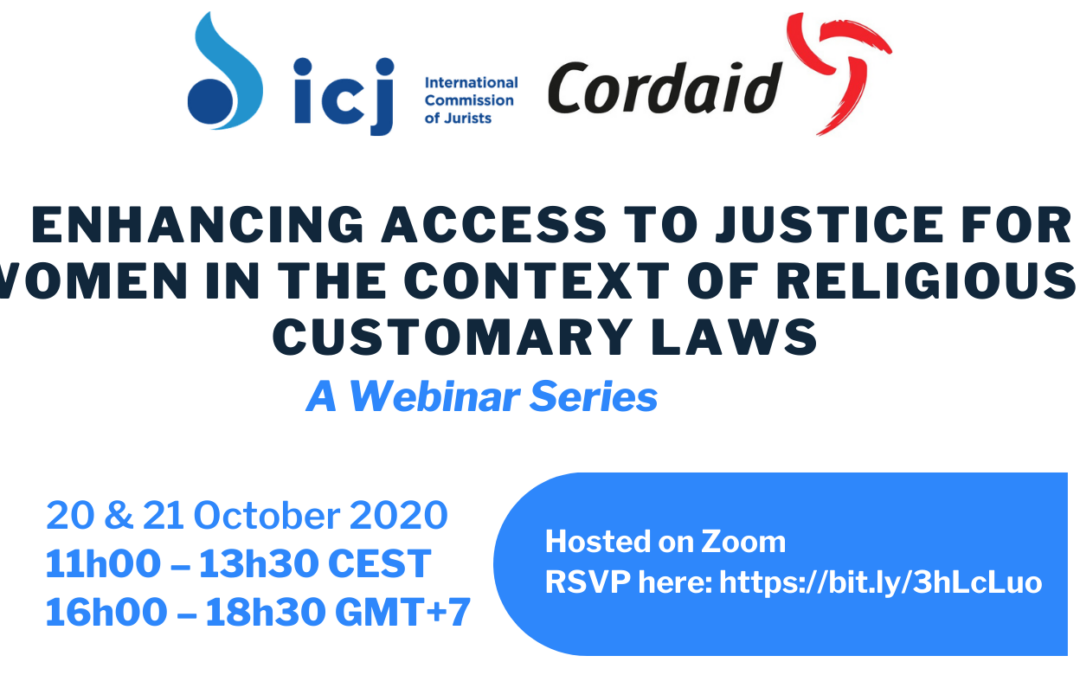
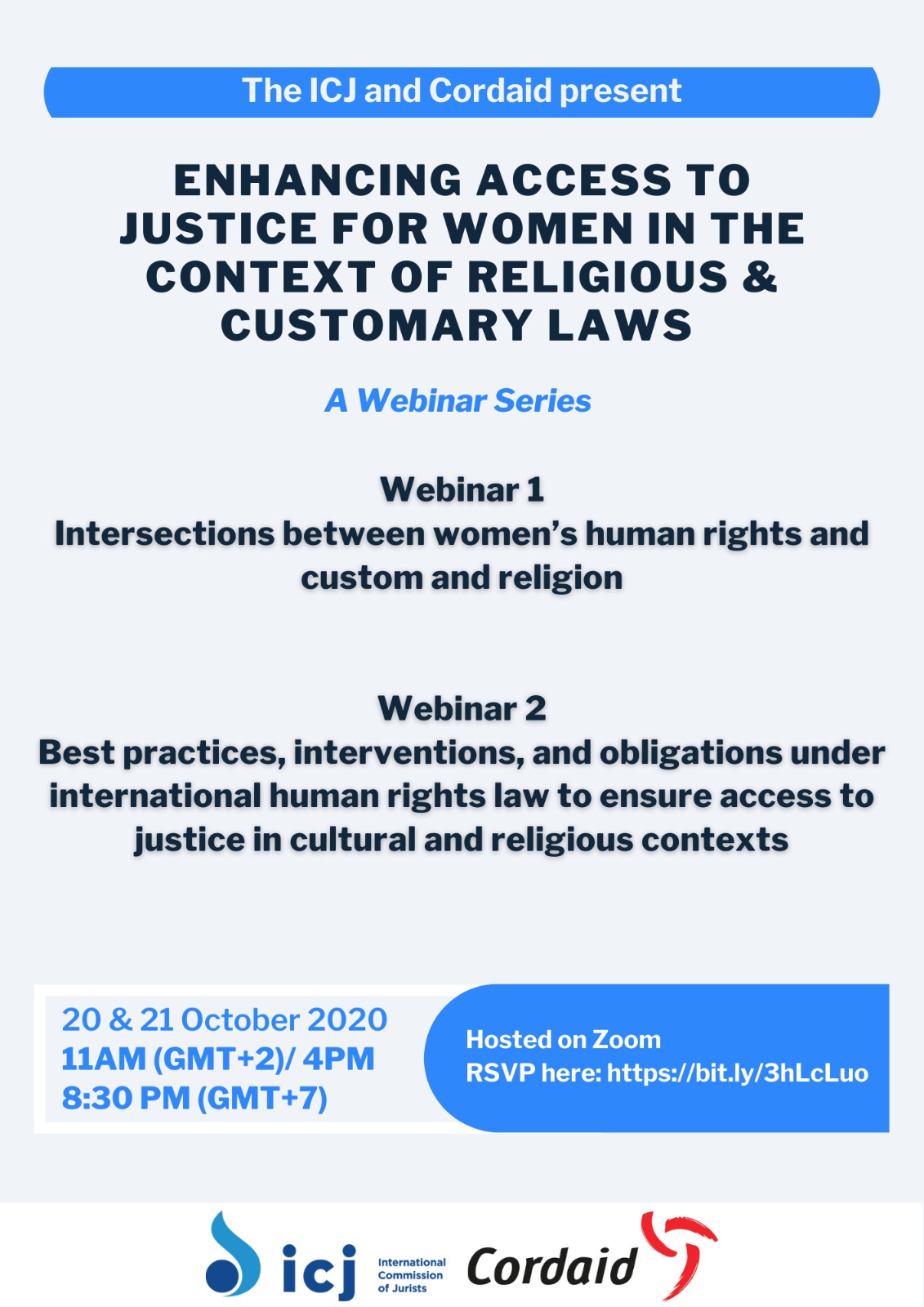
The ICJ and Cordaid are convening a webinar series to foster dialogue among women human rights defenders and religious and customary justice actors.
This public online event takes place 20 & 21 October 2020 11:00-13:30 (CEST) / 16h00 – 18h30 GMT+7
Women’s empowerment in every aspect of their lives is reliant upon ensuring that systems of law and justice work for women. Over the years, many countries have seen an expansion of women’s legal entitlements and enhancement of their right to access justice; however, in many contexts, there is also a growing trend of invoking religion and custom to violate women’s human rights. It is in these contexts where laws and policies exist that expressly discriminate against women, posing a continuing serious challenge to women’s ability to access justice.
In response, Cordaid and the ICJ will convene a webinar series to foster dialogue among women human rights defenders (WHRDs) and religious and customary justice actors.
The focus of the exchange will be on ensuring the protection of women’s human rights and access to justice in contexts where religious and customary laws are prevalent, within a framework of rule of law and international human rights standards. Diverse WHRDs and religious and customary justice actors from Asia, Africa, and the Middle East and North Africa will come together in two consecutive sessions:
Webinar 1 (Oct 20): Intersections between women’s human rights and custom and religion
Webinar 2 (Oct 21): Best practices, interventions, and obligations under international human rights law to ensure access to justice in cultural and religious contexts
Both sessions will be held on Zoom with simultaneous translation in Bahasa, Dari, English and French.
During the first webinar, the discussion will be focused on responding to the questions below:
How do custom and religion shape the ability of women to access justice?
Do pathways to justice based in custom and religion promote women’s human rights?
Do you perceive a clash between women’s human rights and pathways to justice based on custom and religion? If so, how?
Are there religious and cultural practices, which have an impact of exacerbating inequalities between men and women, and negatively affect women’s ability to defend their human rights?
How have women created space within customary and religious law to advocate for women’s human rights?
During the second webinar, the discussion will be focused on responding to the questions below:
What are the best practices and interventions, which can be adopted by States, international organisations and civil society to support positive impacts of custom and religion on women’s access to justice?
What practical measures can be adopted by States, international organisations and civil society to eliminate practices, which exacerbate women’s inequality and are barriers to pathways to justice?
What are the obligations of these actors when customary and religious law discriminate against women and prevents them from being able to defend their rights?
How have women successfully created space for advocacy within customary and religious contexts?
Documents:
Cordaid Publication: Diverse Pathways to Justice for All: Supporting Everyday Justice Providers to Achieve SDG16.3
ICJ Publication: Indigenous and other Traditional or Customary Justice Systems – Selected International Sources
IDLO report: Navigating Complex Pathways to Justice: Women and Customary and Informal Justice System
ICJ Publication: Access to Justice Challenges Faced by Victims and Survivors of Sexual and Gender-Based violence in Eswatini
Human Rights Council: Report of the Special Rapporteur on freedom of Religion or Belief
Report of the 2017 Geneva Forum on traditional and customary justice systems
Report of the 2018 Geneva Forum on indigenous and other traditional or customary justice systems in Asia
Report of the 2020 Geneva Forum on indigenous and other traditional or customary justice systems in Africa
2019 Report of the UN Special Rapporteur on the rights of indigenous peoples, on indigenous justice
Obstacles to Women’s and Girls’ Access to Justice for Gender-based Violence in Morocco (June 2019), in English and in Arabic
Gender-based Violence in Lebanon: Inadequate Framework, Ineffective Remedies (July 2019), in English and in Arabic
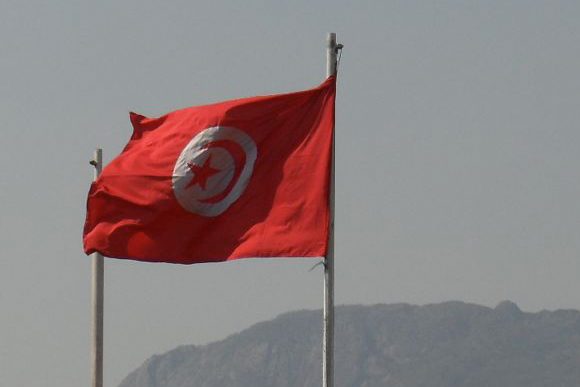
The Tunisian Parliament should amend or reject the revised Draft Organic Law No. 25-2015 on the protection of security forces scheduled for discussion in Parliament today, said the ICJ. The Law if adopted would reinforce impunity for violations committed by security forces and undermine the rule of law and human rights.
The revised Draft Law was approved by the Parliamentary Commission in July 2020, following unsuccessful attempts to adopt it in 2015 and 2017.
Article 7 of the Draft Law provides for the exoneration of security forces from criminal responsibility for using lethal force to repel attacks on a security building, when the force is necessary and proportional to the danger posed to the building. In 2017, the ICJ and other organizations urged Parliament to reject a prior draft which included the same provision.
“More than 10 years after the uprising, Tunisia’s security forces continue to enjoy impunity for decades of serious human rights violations,” said Said Benarbia, the ICJ’s MENA Programme Director.
“The Parliament should adopt all the effective measures at its disposal to end such impunity, not entrench it by allowing the use of lethal force when it’s not strictly necessary to protect lives.”
Article 7 of the Draft Law would preserve the operation of Law No. 69-04, which permits the use of firearms to defend property, “mitigate” a resistance, or stop a vehicle or other form of transport in the context of public meetings, processions, parades, public gatherings, and assemblies. It allows for the use of lethal force to disperse an unlawful gathering where other means of dispersal have failed.
Under international law, including the United Nations Basic Principles on the Use of Force, the intentional use of lethal force must be reasonable, necessary and proportional, and is only permissible if strictly necessary to protect life from an imminent threat to life, not a threat to property.
In the context of non-violent assemblies, the use of force should be avoided and, where unavoidable, restricted to the minimum extent necessary against only those individuals posing an imminent threat of death or serious injury.
The Draft Law appears to preserve an exemption under article 42 of the Criminal Code and Article 46 of Law No. 82-70 on the Statute of Internal Security Forces of 6 August 1982. Article 42 of the Criminal Code provides that a person is not liable for crimes under the Criminal Code, including homicide, if their acts were carried out pursuant to other laws or orders from a competent authority. Article 46 of Law No. 82-70 limits this immunity in relation to orders given to officers of the Internal Security Forces by requiring the orders be given “by their superior in the framework of legality.” Under international law, superior orders cannot serve as a ground of defence to a crime of unlawful killing by a State agent, such as a member of a security force.
“The Tunisian Parliament should reject the Draft Law and conduct a complete review of all laws regulating the conduct of the security forces to ensure they meet standards necessary to protect the population from the excesses demonstrated in the past,” said Kate Vigneswaran, the ICJ’s MENA Programme Senior Legal Adviser.
“Members of the Parliament should send a clear, unequivocal message that the impunity of the security forces can no longer be tolerated.”
Contact:
Said Benarbia, Director, ICJ Middle East and North Africa Programme, t: +41-22-979-3817; e: said.benarbia(a)icj.org
Kate Vigneswaran, Senior Legal Adviser, ICJ Middle East and North Africa Programme, t: +31-62-489-4664; e: kate.vigneswaran(a)icj.org
Durante décadas, las víctimas de desapariciones forzadas y ejecuciones extrajudiciales en América Latina han demando justicia, verdad y reparación. A pesar de estos esfuerzos, la impunidad en estos delitos es alta. En algunos casos, las víctimas han esperado por más de cuatro décadas para que se haga justicia.
Como parte de su estrategia para promover la rendición de cuentas en casos de graves violaciones a los derechos humanos alrededor del mundo, la CIJ, junto con sus socios, está implementando un proyecto regional para promover justicia en casos de ejecuciones extrajudiciales y desapariciones forzadas en Colombia, Guatemala y Perú.
El proyecto cuenta con el apoyo de la Unión Europea. Uno de los resultados del proyecto ha sido apoyar la elaboración de tres casos emblemáticos por parte de los socios locales de la CIJ.
En Colombia, para ilustrar uno de los patrones de ejecuciones extrajudiciales, la Asociación de Red Defensores y Defensoras de Derechos Humanos (dhColombia) produjo un documento sobre tres casos de ejecuciones extrajudiciales cometidos de 2005 a 2008. El documento Una práctica sistemática ejecuciones extrajudiciales en el eje cafetero (2006-2008) presenta las dificultades que las víctimas y sus abogados han enfrentado para demostrar la responsabilidad de demando en estos casos.
En Perú, el Instituto de Defensa Legal (IDL) documentó la desaparición forzada de estudiantes universitarios y profesores entre 1989 y 1993, en el momento más argüido del conflicto interno peruano. En el documento Los desaparecidos de la Universidad Nacional del Centro IDL describe el difícil camino jurídico que las víctimas han enfrentado, para llevar a la justicia a los agentes del Estado que estarían involucrados en estos crímenes.
En Guatemala, para subrayar la manera en como se cometieron desapariciones forzadas contra las comunidades rurales en el marco del conflicto armado guatemalteco, la Asociación de Familiares de Detenidos-Desaparecidos de Guatemala (Famdegua) escribió acerca de la desaparición de más de 500 personas en la región de las Veparaces. En el informe Las desapariciones forzadas en la región de las Verapaces se presenta la historia de cinco de estos casos.
Estos tres informes contribuyen a comprender la prevalencia de estas violaciones en América Latina y las opciones disponibles para hacer frente a la impunidad.
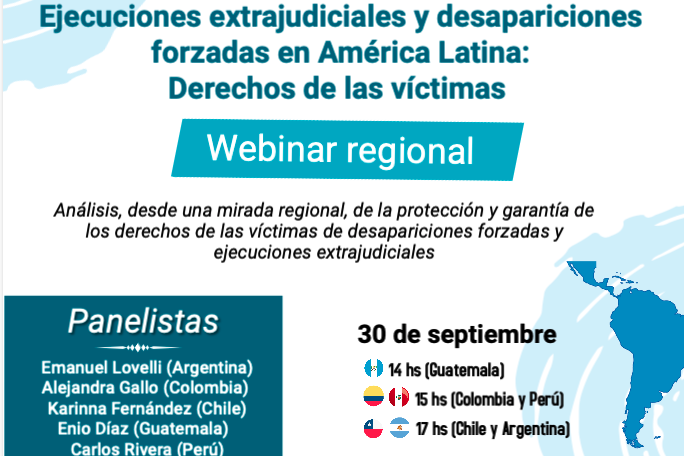
El 30 de septiembre de 2020, la CIJ organizará un webinar regional para discutir la protección y garantía de los derechos de las víctimas de desapariciones forzadas y ejecuciones extrajudiciales en Argentina, Colombia, Chile, Guatemala y Perú. El webinar será transmitido en vivo en la página de Facebook de la CIJ, a las 14 horas (hora de Guatemala) / 15 horas (hora de Colombia y Perú) / 17 horas (hora de Chile y Argentina).
Contactos:
Kingsley Abbott, Coordinador de la iniciativa global de rendición de cuentas de la CIJ. Correo electrónico: kingsley.abbott(a)icj.org
Carolina Villadiego, Asesora Legal, América Latina y coordinadora regional del proyecto. Correo Electrónico: carolina.villadiego(a)icj.org
Venezuela está sufriendo una crisis humanitaria y de derechos humanos sin precedentes que se ha profundizado debido a la negligencia del gobierno autoritario y la ruptura del estado de derecho en el país.
La Organización Internacional para las Migraciones (OIM) ha estimado que alrededor de 5.2 millones de venezolanos han dejado el país, llegando la mayoría como refugiados e inmigrantes a países vecinos.
En 2018, la Oficina del Alto Comisionado de las Naciones Unidas para los Derechos Humanos (ACNUDH) calificó esta situación de los derechos humanos como “una espiral descendente que no parece tener fin“.
La situación del derecho a la salud en Venezuela y su sistema de salud pública mostraron problemas estructurales antes de la pandemia, y la Alta Comisionada la describió como una “dramática crisis sanitaria y (…) un completo colapso del sistema de atención sanitaria”.
Recientemente, la ACNUDH presentó un informe al Consejo de Derechos Humanos que mencionó, entre otras cuestiones, los ataques a los derechos de los pueblos indígenas en el Arco Minero del Orinoco (AMO).
Los derechos de los pueblos indígenas y los proyectos mineros en el AMO antes de la pandemia de la COVID-19
Los pueblos indígenas han sido tradicionalmente olvidados por las autoridades gubernamentales venezolanas y condenados a vivir en la pobreza.
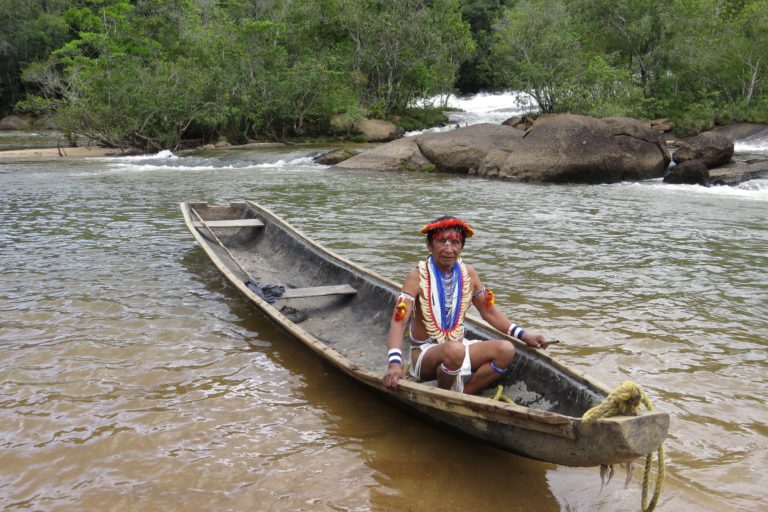
Durante la crisis humanitaria han sufrido nuevos abusos debido a la actividad minera y a la violencia que ocurre en sus territorios.
En 2016, el gobierno venezolano creó la Zona de Desarrollo Estratégico Nacional del Arco Minero del Orinoco a través del Decreto presidencial No. 2248, como un proyecto de megaminería enfocado, principalmente, en la extracción de oro en un área de 111.843.700 kilómetros cuadrados.
El AMO se ubica al sur del río Orinoco en los territorios amazónicos de Venezuela y abarca tres estados: Amazonas, Bolívar y Delta Amacuro. Es el hábitat de varios grupos étnicos indígenas a los que no se les consultó de manera adecuada antes de la implementación del proyecto.
El derecho a la tierra de los pueblos indígenas está reconocido en la Constitución de Venezuela. Sin embargo, como reportó la ONG Programa Venezolano de Educación- Acción en Derechos Humanos (PROVEA), las autoridades no han mostrado avances en la demarcación y protección de los territorios indígenas desde 2016.
Varias organizaciones indígenas y otros movimientos sociales han expresado su preocupación y rechazo al proyecto del AMO.
La implementación de este proyecto ha impactado de manera negativa los derechos de los pueblos indígenas a la vida, la salud y un medio ambiente seguro, saludable y sostenible.
Human Rights Watch, Business and Human Rights Resource Center, organizaciones no gubernamentales locales, movimientos sociales y la ACNUDH, han documentado la destrucción de la tierra y la contaminación de los ríos debido a la deforestación y la actividad minera, que también está contribuyendo al aumento del paludismo y otras enfermedades.
Las mujeres y los niños indígenas están entre los más afectados. La Organización Panamericana de la Salud (OPS) ha reportado que “[l]os pueblos indígenas que viven en la zona fronteriza de Venezuela son sumamente vulnerables a las enfermedades epidémicas”, y ha planteado una preocupación especial sobre el pueblo Warao (que vive en la frontera entre Venezuela y Guyana), y el pueblo Yanomami (que vive en la frontera entre Venezuela y Brasil).
Las mujeres y los niños también corren grandes riesgos de explotación sexual, laboral y violencia de género en el contexto de las actividades mineras. El reciente informe de la Alta Comisionada menciona que desde 2016 hay un fuerte incremento “en prostitución, explotación sexual y tráfico en áreas mineras, incluyendo a niñas adolescentes”.
La Oficina de Coordinación de Asuntos Humanitarios de las Naciones Unidas (OCHA) y el Fondo de las Naciones Unidas para la Infancia (UNICEF) han determinado una tendencia entre los adolescentes a abandonar la escuela, en particular entre los 13 y los 17 años. Los adolescentes indígenas se ven gravemente afectados, ya que muchos niños se van a trabajar en las minas.
La violencia y la delincuencia también han aumentado en el AMO. Organizaciones criminales y grupos guerrilleros y paramilitares están presentes en la zona, y el gobierno venezolano ha ampliado su presencia militar.
Los dirigentes indígenas y los defensores de derechos humanos han sido objeto de ataques y amenazas; además, persisten las denuncias de casos de desapariciones forzadas y ejecuciones extrajudiciales y arbitrarias.
Situación actual de la pandemia de COVID-19
La pandemia por COVID-19 y la falta de una respuesta adecuada han agravado la situación.
El Gobierno declaró el estado de emergencia (estado de alarma) el 13 de marzo y estableció un confinamiento obligatorio y medidas de distanciamiento social. Sin embargo, las actividades mineras han continuado sin protocolos sanitarios adecuados para prevenir la propagación de la pandemia.
El estado Bolívar, el más grande del país y que está ubicado en el Arco Minero del Orinoco, tiene entre el mayor número de casos confirmados de COVID-19 que incluye a miembros de pueblos indígenas.
La respuesta de las autoridades venezolanas a la pandemia en estos territorios no ha considerado medidas culturalmente apropiadas para las poblaciones indígenas.
Adicionalmente, aunque las autoridades establecieron un grupo de hospitales e instalaciones médicas llamados “hospitales centinela” para atender a personas con síntomas de COVID-19, estos se encuentran en las ciudades y las comunidades indígenas viven lejos de ellas.
Las organizaciones de la sociedad civil y los líderes indígenas se quejan de la falta de pruebas de COVID-19 y de la manipulación de los datos que dan cuenta de cuál es la situación real de la pandemia.
Además, la ACNUDH reportó la detención arbitraria de por lo menos tres profesionales de la salud por denunciar la falta de equipo básico y por proporcionar información sobre la situación de COVID-19, y destacó que hay “restricciones al espacio cívico y democrático, incluso bajo el “estado de alarma” decretado en respuesta a la pandemia COVID-19″.
🍪 We use cookies on our website to improve your experience. By clicking "Accept all", you consent to the use of all the cookies. If you'd like to control which cookies we use, please visit "Cookie settings". To find out more, read our privacy policy and cookie policy.
Functional
Always active
The technical storage or access is strictly necessary for the legitimate purpose of enabling the use of a specific service explicitly requested by the subscriber or user, or for the sole purpose of carrying out the transmission of a communication over an electronic communications network.
Preferences
The technical storage or access is necessary for the legitimate purpose of storing preferences that are not requested by the subscriber or user.
Statistics
The technical storage or access that is used exclusively for statistical purposes.The technical storage or access that is used exclusively for anonymous statistical purposes. Without a subpoena, voluntary compliance on the part of your Internet Service Provider, or additional records from a third party, information stored or retrieved for this purpose alone cannot usually be used to identify you.
Marketing
The technical storage or access is required to create user profiles to send advertising, or to track the user on a website or across several websites for similar marketing purposes.