Jul 9, 2020 | Agendas, Events, News
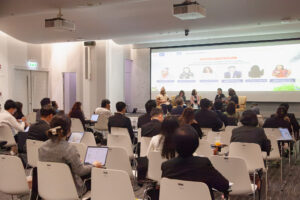
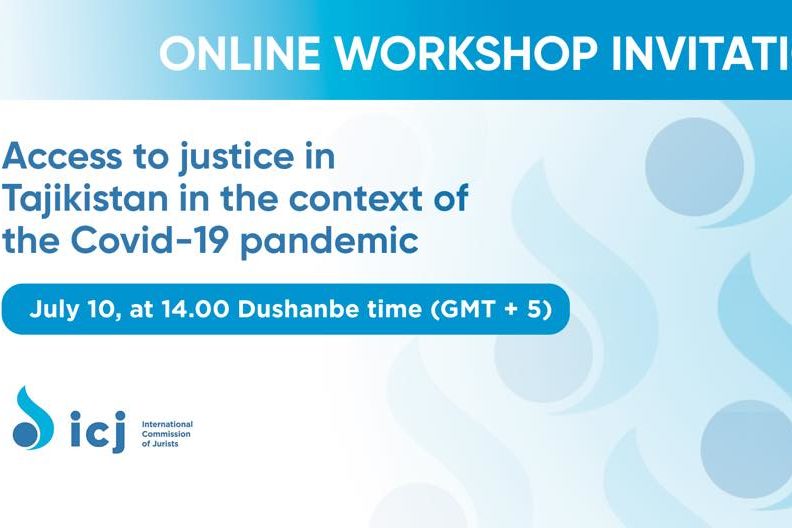
The ICJ is holding an online discussion for lawyers and other representatives of civil society in Tajikistan on access to justice in the context of the Covid-19 pandemic. The discussion is held on 10 July 2020 from 14.00 to 17.00 Dushanbe Time (GMT + 5) on the GoToMeeting platform
The discussion aims to raise some of the main issues that lawyers face in providing legal representation both in and outside of courts.
The event will present an opportunity for practicing lawyers, NGOs and IGOs to discuss the recent challenges that the legal profession faced in Tajikistan as well as seek some of the solutions based on international law and best practices of other countries.
During the discussion, relevant international law and standards as well as comparative examples from the Central Asian countries and Azerbaijan will be discussed.
To participate in the discussions registration is required on the following link : https://forms.gle/QRywqBFPSxfR5eyk7
Working languages of the event are Russian and Tajik.
Contact:
Dilshod Juraev, t: +992 77 700 18 34 ; e: Dilshod.jurayev(a)icj.org
Jul 9, 2020 | News
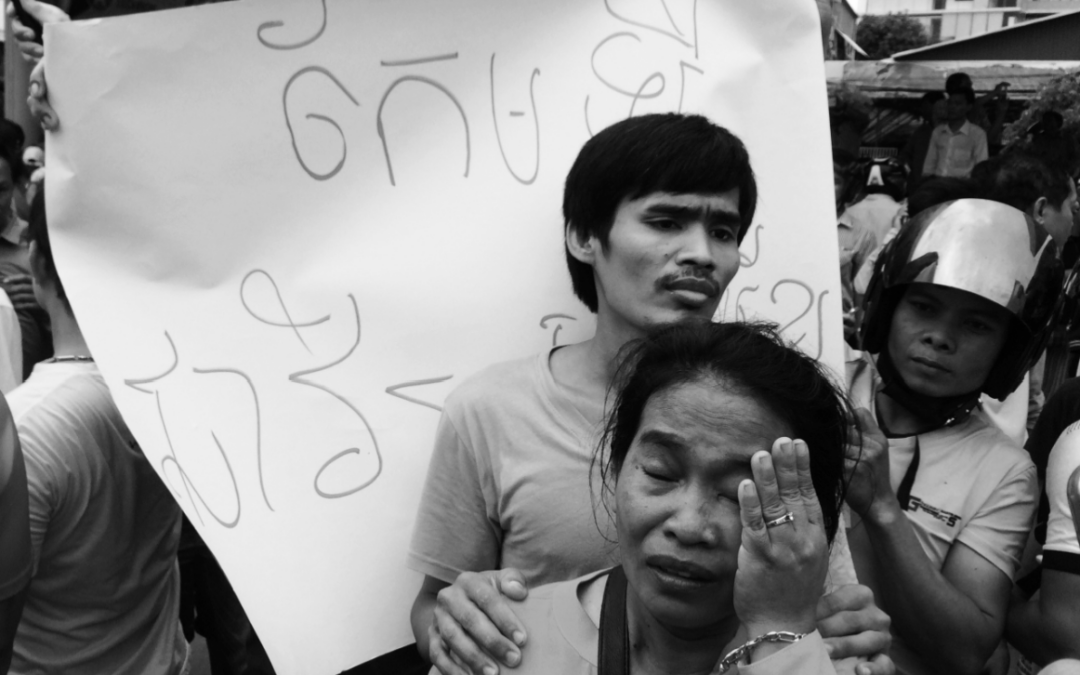
Today, in advance of the fourth anniversary of the killing of prominent political commentator and human rights defender Kem Ley, the ICJ and 29 other organizations called on Cambodian authorities to create an independent Commission of Inquiry to conduct an effective and impartial investigation that is long overdue into Kem Ley’s death.
The organizations further urged Cambodian authorities to cease intimidation and harassment of persons peacefully commemorating his passing.
On 10 July 2016, Kem Ley was shot and killed at a petrol station in central Phnom Penh. Without conducting a prompt, thorough, and independent investigation, and following a half-day trial which was widely criticized for failure to meet international fair trial standards, in March 2017, Oeuth Ang was found guilty of the murder of Kem Ley and sentenced to life imprisonment.
Since 2016, many international and domestic human rights organizations have consistently called on the Cambodian government to set up an independent Commission of Inquiry to conduct a prompt, impartial, and effective investigation into this killing, with emphasis on examining the potential criminal responsibility of persons other than the direct perpetrator, in line with international standards set out in the International Covenant on Civil and Political Rights (ICCPR).
The UN Principles on the Effective Prevention and Investigation of Extralegal, Arbitrary and Summary Executions as well as the revised Minnesota Protocol on the Investigation of Potentially Unlawful Death reinforce the duty of governments to investigate unlawful deaths and to establish an independent commission of inquiry when states, like Cambodia, lack effective procedures to conduct such an investigation in accordance with international standards.
The Cambodian government, has to date, failed to take any steps towards the establishment of such an independent and impartial investigative body. Given the government’s unwillingness to conduct an independent investigation into Kem Ley’s killing, and civil society’s highly warranted lack of trust and confidence in Cambodia’s justice system which lacks the requisite levels of independence to adjudicate cases involving public officials, this body should be established under the auspices of the United Nations and composed of independent experts.
Following the killing of Kem Ley, the Cambodian authorities have continually monitored, harassed, and ultimately disrupted and prohibited planned anniversary memorials of his death. These actions constitute arbitrary restrictions on the rights to freedom of expression and peaceful assembly. The organizations condemned such attempts to stifle free speech and reiterated their call to the Cambodian government to stop such harassment.
The joint statement is available here.
Contact
Frederick Rawski, ICJ Asia and Pacific Regional Director, frederick.rawski(a)icj.org
See also
ICJ, ‘Cambodia: three years and still no effective investigation into Dr. Kem Ley’s killing’, 9 July 2019
ICJ, ‘Cambodia: Commission of Inquiry into killing of Kem Ley should be established without further delay’, 9 July 2018
ICJ, ‘Cambodia: request to create a commission of inquiry into the killing of Kem Ley’, 7 July 2017
ICJ, ‘Cambodia: Kem Ley’s killing demands immediate credible and impartial investigation’, 13 July 2016
Jul 8, 2020 | News
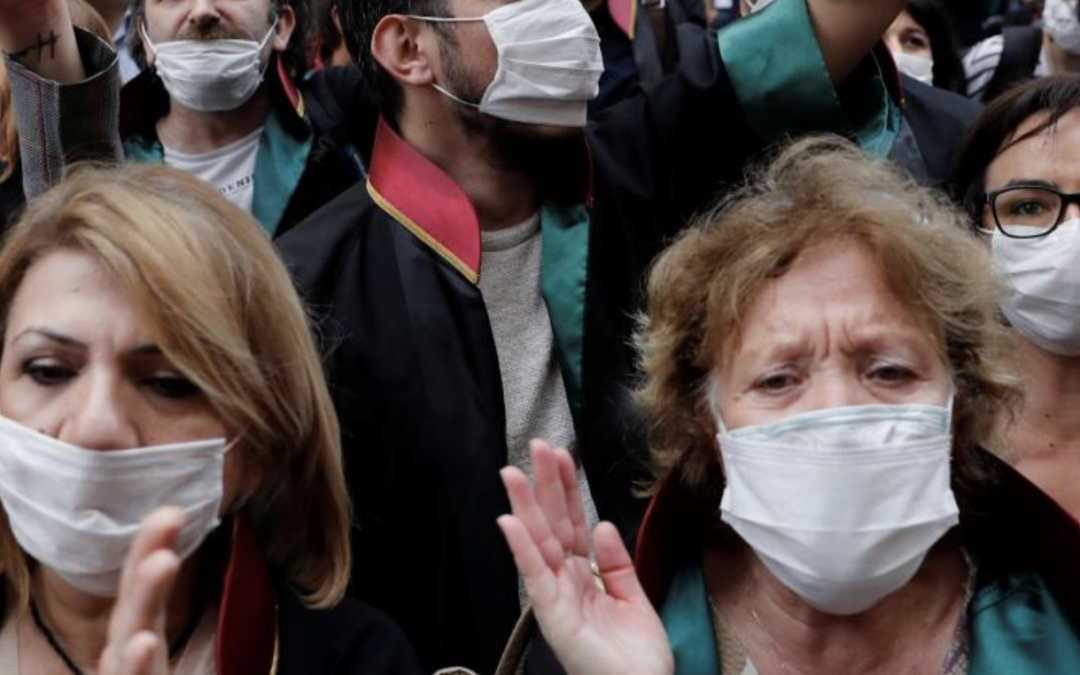
Draft law reduces leading bar associations’ authority, leads to creation of rival groups, the ICJ and Human Rights Watch said today. The Turkish government’s plan to allow for multiple bar associations appears calculated to divide the legal profession along political lines and diminish the biggest bar associations’ role as human rights watchdogs, they added.
The current bar associations have not been consulted, and 78 bars out of 80 signed a statement opposing the plan.
The ICJ and Human Rights Watch have published a question and answer document explaining the draft law, scheduled for a vote in parliament in the coming days. The document outlines the government-led effort to reduce the influence of leading bar associations, reflecting the executive’s growing dissatisfaction with the bar associations’ public reporting on Turkey’s crisis for human rights and the rule of law.
“Turkey’s prominent bar associations play a key role in defending fair trial rights and scrutinizing human rights at a time when flagrant violation of rights is the norm in Turkey,” said Hugh Williamson, Europe and Central Asia director at Human Rights Watch.
“The government move to create multiple bars and dramatically cut leading bars’ representation at the national level is a clear divide-and-rule tactic to diminish the bar associations’ authority and watchdog role,” he added.
The proposed amendments provide that in provinces with over 5,000 lawyers, a group of at least 2,000 lawyers can establish alternative bar associations.
In big cities such as Istanbul, Ankara, and Izmir, several bar associations could be established. The amendments would also greatly reduce the representation of the largest bar associations at the national level within the Union of Turkish Bars, the Ankara-based umbrella body with significant financial resources it controls and distributes to provincial bars.
The fact that the vast majority of elected legal profession representatives oppose the move and that the likely impact will be to greatly diminish the authority of leading provincial bars that have been critical of certain government initiatives demonstrates that the aim of the proposed change is to shield the government from justified criticism, the ICJ and Human Rights Watch said.
Drastically cutting the number of delegates from large bar associations representing thousands of lawyers to the national Union of Turkish Bar Associations would reduce the influence of the large bar associations in electing the national group’s president and participating meaningfully in other decision-making functions.
A provincial bar association with fewer than 100 lawyers, such as Ardahan in northeastern Turkey, for example, would be represented by 4 delegates, compared with 3 at present.
But a bar association such as Izmir in western Turkey, with over 9,500 lawyers, which sends 35 delegates, would be entitled to only 5. Istanbul, Ankara, and Izmir Bar, which represent 55 percent of the lawyers in Turkey, would be entitled to only 7 percent of all delegates within the national union.
The atmosphere of conflict in which the draft law has been introduced, its timing, and the lack of consultation with the bar associations themselves provides credible grounds for great concern and skepticism over the government’s motives, the groups said.
Over the past year, Turkey’s presidency and government have made public statements strongly criticizing leading bar associations in response to the bars’ legitimate expression of concerns about Turkey’s rule of law crisis and executive interference in the justice system.
The government has reacted strongly against the bars’ scrutiny of its failure to uphold human rights obligations through bar association publication of reports on torture, enforced disappearances, and other rights abuses ignored by the authorities.
For these reasons, the government’s proposed amendments are clearly designed to achieve a political purpose unrelated to an effort to advance or strengthen standards in the legal profession, the ICJ and Human Rights Watch said.
The government’s move is politically divisive and will contribute to undermining the appearance of independence and impartiality in the justice system.
“The government should immediately withdraw the current proposed amendment and embark on a process of full consultation with bar associations,” said Róisín Pillay, Director of ICJ’s Europe and Central Asia Programme.
“The government’s plan as it stands will only deepen mistrust in Turkey’s justice system as lacking independence by dividing the legal profession along political lines. This could have disastrous long-term consequences for upholding the role and function of lawyers and for fair trial rights.”
Contact:
Róisín Pillay, Director of ICJ’s Europe and Central Asia Programme, t: +32-2-734-84-46 ; e: roisin.pillay(a)icj.org
Massimo Frigo, Senior Legal Adviser, ICJ’s Europe and Central Asia Programme, t: +41-79-749-99-49 ; e: massimo.frigo(a)icj.org ; Twitter: @maxfrigo
Download
Turkey-Q and A on the bar associations-Advocacy-2020-ENG (Q & A, in PDF)
Turkey-Q and A on the bar associations-News-Press releases-2020-TUR (Story in Turkish, PDF)
Turkey-Q and A on the bar associations-Advocacy-2020-TUR (Q & A in Turkish, PDF)
Jul 5, 2020 | News
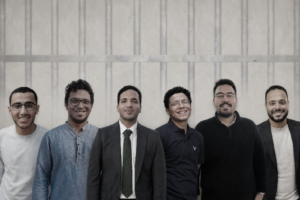
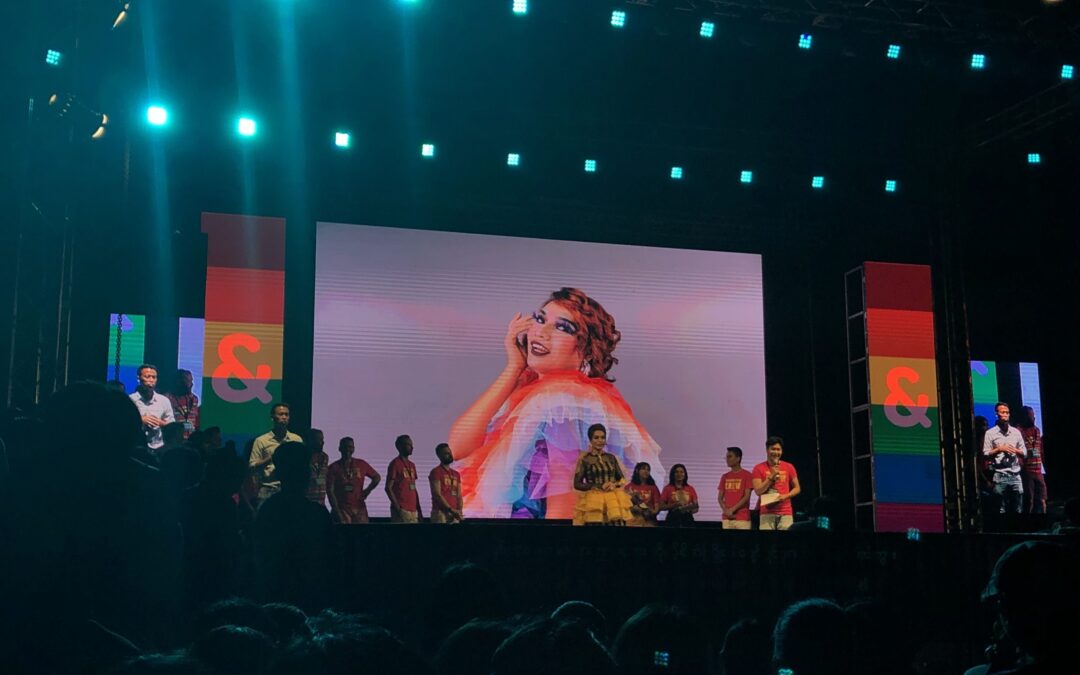
The ICJ hosted live interviews with human rights defenders from Asia, Africa and Latin America to mark Pride Month, which is celebrated during the month of June in various parts of the world. The interviews took place from 22 June to 3 July 2020.
In total, 13 human rights defenders from 11 countries spanning three continents, who are working to uphold the human rights of of lesbians, gay, bisexual, transgender (LGBT) individuals, were interviewed.
The interviews discussed existing legal systems that discriminate on the basis of sexual orientation, gender identity and expression (SOGIE) and the impacts of COVID-19 on existing activism, .
The interviews aimed to provide quick snapshots of different country and regional contexts and a platform for LGBT activist voices on the varied and devastating impacts of COVID-19 on LGBT people.
Debunking cultural myths
In many countries around the world where people are criminalized or stigmatized as a result of harmful steretypes and prejudice on the grounds of their real or imputed SOGIE, public discourse tend to cast LGBT relationships and identities as threats to culture, religion or beliefs and the future of the nation. These interviews endeavoured to interrogate and debunk cultural and regional myths surrounding SOGIE identities as ‘Western’ constructs.
In a response to homosexuality being said to be ‘unAfrican’, Kutlwano Pearl Magashula, executive officer for program functions at the Other Foundation from Botswana, said:
“Utterances that suggest that homosexuality is unAfrican enforce stigma and violence and serve to carve deep roots in the consciousness of people around the world that breed discrimination and treating people differently.”
Devastating impacts of COVID-19 on LGBT people
Important impacts of COVID-19 on LGBT people were highlighted by different speakers, ranging from a loss of livelihood, vulnerability to violence at home and in public spaces, as well as challenges in accessing healthcare.
“There is violence against transgender women sex workers. The police arrest them, yell at them and shoot at them with rubber bullets. This is a recent episode here in Colombia and it is terrible. If they don’t work, they don’t have money to buy food and pay the rent. It is a difficult scenario,” Dejusticia researcher Santiago Carvajal Casas from Columbia said.
Pre-existing inequalities and landmark wins
Personal experiences of ‘life after’ important wins from around the world were shared. Some important gains from the decriminalization of consensual same-sex sexual relationships in Botswana and India, as well as the recent legalization of same-sex marriage in Taiwan must be celebrated. However, many of these wins may remain illusory for people who have been discriminated against on the basis of class, caste and other status inequality, or are without social support, especially in the face of COVID-19.
“What we really need is social protection, we need a safety-net for all those who are close to the poverty line and who are likely to go below the poverty line because of disasters like the COVID-19 epidemic or catastrophic out of pocket healthcare expenditures. We definitely need accessible healthcare for everyone and livelihood.” – Dr. L Ramakrishnan, public health professional and Vice-President of SAATHII, India
Watch the Facebook lives below:
Kutlwano Pearl Magashula, Executive Officer for Program Functions at the Other Foundation, on the board of LEGABIBO as the vice-chairperson and co-founder of the autonomous feminist collective Black Queer DocX (Botswana)
Busisiwe Deyi, Commissioner of CGE/ Lecturer of Jurisprudence (South Africa)
Letlhogonolo Mokgoroane, lawyer activist and podcaster (South Africa)
Lini Zurlia, advocacy officer at ASEAN SOGIE Caucus (ASEAN/Indonesia)
Yee Shan, member of Diversity Malaysia (Malaysia)
Sirasak Chaited, human rights campaigner, LGBT+ and sex worker rights activist (Thailand)
Santiago Carvajal Casas, Dejusticia researcher (Colombia)
Sih-Cheng (Sean) Du, Director of Policy Advocacy at Taiwan Tongzhi (LGBTQ+) Hotline Association (Taiwan)
Neeli Rana, transgender activist (Pakistan)
Riska Carolina, The Indonesian Plan Parenthood Association (IPPA) member (Indonesia)
Hla Myat Tun, Deputy Director from Colors Rainbow and Co-Director at &PROUD (Myanmar)
Dr. L Ramakrishnan, Vice President Saathii, activist, public health professional (India)
Nigel Mpemba Patel, Associate editor at the South African Journal on Human Rights and research consultant at ILGA World (Malawi)
***
Cover photo by Violaine Biex-Colors Rainbow, Myanmar.
Jul 3, 2020 | News
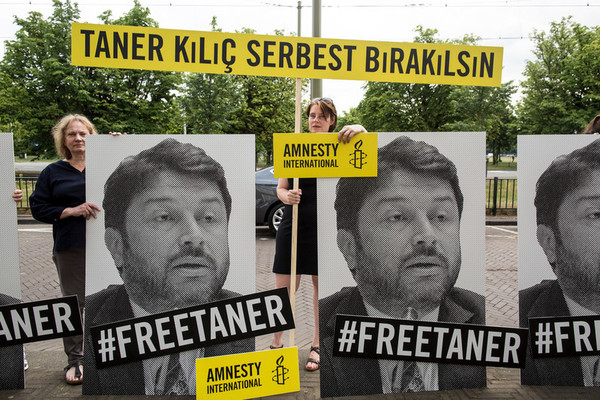
The ICJ deplores today’s conviction of former Amnesty International Turkey President Taner Kılıç, and former Chair of Human Rights Agenda Association Günal Kurşun, former Director of Amnesty International Turkey İdil Eser and human rights defender Özlem Dalkıran by the Istanbul 35th Heavy Penal Court, on clearly unfounded terrorism charges.
“These convictions, which were clearly revealed to be baseless during the trial, are an alarming setback to efforts to restore the rule of law in Turkey,” said Massimo Frigo, Senior Legal Adviser for the ICJ Europe and Central Asia Programme.
“This prosecution and conviction constitute harassment of human rights defenders, in violation of a number of Turkey’s international legal obligations. The Turkish authorities should be protecting human rights and supporting the important work of human rights defenders, but instead we have witnessed a continuing pattern of arrests on human rights defenders in the country,” he added.
Taner Kılıç has been sentenced to six years and three months of imprisonment for “membership of a terrorist organization. Günal Kuşun, İdil Eser and Özlem Dalkıran were sentenced to one year and 13 months of imprisonment for “assisting a terrorist organisation”. This decision was taken by majority, with one dissenting opinion that called for their acquittal.
The Court acquitted the other defendants in the case: Nalan Erkem, İlknur Üstün, Ali Gharavi, Peter Steudtner, Veli Acu, Nejat Taştan et Şeyhmus Özbekli.
On 6 June 2017, Taner Kiliç, then President of Amnesty International Turkey was arrested on spurious terrorism charges. The other human rights defenders were arrested while attending a training in Istanbul on digital security and information management; also reported arrested were two trainers (reportedly a German and a Swedish national) and the owner of the training venue.
In Turkey, anti-terrorism offences are oftentimes abused and are applied in over-extensive terms to charge and prosecute human rights defenders and political dissenters, as it occurred in this case. The ICJ has highlighted this problem in several reports, including in its submission to the UN Human Rights Council on the universal periodic review of Turkey.