Sep 12, 2017 | Comunicados de prensa, Informes, Noticias, Publicaciones
Hoy la Comisión Internacional de Juristas lanza un nuevo informe sobre la grave ruptura del Estado de Derecho: El Tribunal Supremo de Justicia de Venezuela: un instrumento del Poder Ejecutivo.
A través de diferentes sentencias emitidas desde diciembre de 2015, el máximo órgano de la Judicatura venezolana fue progresivamente desmantelando el Estado de Derecho, socavando los derechos humanos y dejando sin aplicación la Constitución política de ese país.
En sus decisiones Nos. 155 y 156 de marzo de 2017, el Tribunal Supremo de Justicia (TSJ) daría una estocada final al Estado de Derecho, arrogándose las facultades legislativas, despojando a la Asamblea Nacional de sus facultades constitucionales y otorgando amplísimos y arbitrarios poderes al Ejecutivo.
En su Sentencia No. 155 de 27 de marzo de 2017, el TSJ se pronunció sobre un recurso de nulidad presentado por un Diputado oficialista contra un acto de la Asamblea Nacional, que pedía la reactivación del proceso de aplicación de la Carta Democrática Interamericana de la Organización de los Estados Americanos, para una resolución pacífica de la crisis y la reinstauración del orden constitucional en Venezuela.
En su Sentencia No. 156 de 28 de marzo de 2017, el TSJ se pronunció sobre una demanda de interpretación sobre Ley Orgánica de Hidrocarburos, que cercenó las facultades constitucionales de la Asamblea Nacional.
“Estas decisiones constituyen un verdadero Golpe de Estado al orden constitucional y han dado inicio del reino de la arbitrariedad”, declaró Sam Zarifi, Secretario General de la CIJ.
El informe de la CIJ analiza, a la luz de estándares internacionales y de los principios del Estado de Derecho así como de la Constitución venezolana, la jurisprudencia emitida desde diciembre de 2015 por el TSJ en relación con las funciones y facultades constitucionales del Poder Legislativo, el control parlamentario, los estados de excepción y la amnistía.
El TSJ – una institución totalmente cooptada por el Poder Ejecutivo e integrada mayoritariamente por del Partido Socialista Unido de Venezuela (PSUV) y/o ex funcionarios del Gobierno- se convirtió en un apéndice del Gobierno y un instrumento político del régimen para enfrentar la cada vez más creciente oposición política y social.
Invocando arbitrarias interpretaciones de la Constitución, omitiendo el análisis de otras normas constitucionales, otorgando rango supraconstitucional a normas de inferior jerarquía y obviando el debido proceso y el sistema de contradicción judicial, el TSJ fue despojando y vaciando a la Asamblea Nacional de sus funciones constitucionales en materia legislativa, de control parlamentario, de reglamentación y de administración interna, para favorecer políticamente al Gobierno.
“Los fallos no se han proferido con imparcialidad, de conformidad a los hechos y el derecho, como lo prescriben el principio 2 de los Principios básicos relativos a la independencia de la judicatura pero más bien están en flagrante violación de la Constitución venezolana. El TSJ ha proferido sus decisiones basado en consideraciones políticas y lealtades partidistas e ideológicas con el Poder Ejecutivo”, declaró Sam Zarifi.
Asimismo, el informe relaciona las recomendaciones sobre administración de justicia que han venido formulando a Venezuela, desde hace varios años, distintos órganos y procedimientos internacionales de protección de los derechos humanos, tanto en el ámbito de las Naciones Unidas como del Sistema Interamericano.
Ninguna de esas recomendaciones ha sido acatada por las autoridades venezolanas, incluso las órdenes de reparación decretadas por la Corte Interamericana de Derechos Humanos, las cuales son de obligatorio cumplimiento.
“Esa posición de las autoridades venezolana es violatoria de su obligación internacional de cooperar de buena fe con órganos y procedimientos internacionales de protección de los derechos humanos”, declaró Sam Zarifi.
Finalmente, el informe concluye que el TSJ ha socavado el Estado de Derecho, vulnerado el principio de separación de poderes y conculcado las funciones constitucionales y la autonomía del Poder Legislativo.
El TSJ, como consecuencia de sus decisiones basadas en imponer los intereses políticos del Poder Ejecutivo, ha perdido sus atributos esenciales de un genuino Poder Judicial, tales como: independencia, imparcialidad, autonomía, y legitimidad.
“El TSJ ha asumido un rol de dar apariencia de legitimidad jurídica a las acciones políticas arbitrarias emanadas del Poder Ejecutivo, convirtiéndose en un apéndice del Poder Ejecutivo y dejando de ejercer su función constitucional de garante del Estado de Derecho y de los derechos humanos y libertades fundamentales”, declaró Sam Zarifi.
Contactos:
Sam Zarifi: Secretario General de la CIJ; t +41 79 726 44 15 ; e sam.zarifi@icj.org
Federico Andreu-Guzmán: Representante para Suramérica de la CIJ; t + 57 311 481 8094; e federico.andreu@icj.org
Venezuela-Tribunal Supremo-Publications-Reports-Thematic reports-2017-SPA (el informe en PDF)
Venezuela-Actualización-Advocacy-Analysis brief-2017-SPA (mas información en PDF)

Sep 12, 2017 | News, Publications, Reports, Thematic reports
The Venezuelan Supreme Court has ceased to act as an independent court upholding the rule of law, but has become an arm of an authoritarian executive, the ICJ said in a new report released today.
The ICJ report The Supreme Court of Justice: an instrument of executive power says that through a series of rulings issued since December 2015, the Venezuelan Supreme Court has progressively dismantled the rule of law, undermined human rights and failed to faithfully apply key elements of the country’s Constitution.
In rulings on 27 and 28 March 2017 (Sentencias 155 and 156), the Supreme Court of Justice (SCJ) delivered a blow to the rule of law, effectively claiming legislative powers for itself, depriving the National Assembly of its Constitutional powers and granting sweeping arbitrary powers to the executive, the ICJ notes.
“These decisions amount to a coup d’état against the Constitutional order and have ushered in a new reign of arbitrary rule,” said Sam Zarifi, the ICJ Secretary General.
The report analyses SCJ jurisprudence issued since December 2015 in the light of international law and standards, rule of law principles and the Venezuelan Constitution, and in relation to the Constitutional functions and faculties of the legislative power, parliamentary oversight, states of emergency and the amnesty.
It finds that:
- The SCJ has been decisively co-opted by the Venezuelan executive;
- The Court’s members are mainly from the United Socialist Party of Venezuela (Partido Socialista Unido de Venezuela) and/or ex-Government officials; and
- It has become a political instrument increasingly used against the political and social opposition.
The report also says the Court has interpreted the Constitution in an arbitrary manner, omitting to analyse key Constitutional standards while granting a supra-Constitutional status to standards of lesser rank.
It has abrogated due process and judicial review and so stripped the National Assembly of its Constitutionally mandated functions with regard to legislative matters, parliamentary oversight, regulation and internal administration in order to benefit the government politically, the ICJ adds.
“The rulings have not been issued with impartiality on the basis of facts and in accordance with law, as required under rule of standards,” Zarifi said.
“They are in flagrant violation of the Venezuelan Constitution. The SCJ has issued its decisions based on political considerations and ideological and party loyalties to the executive power,” he added.
The report also outlines key recommendations on the administration of justice which various UN and Inter-American procedures and bodies have made to Venezuela going back a number of years.
None of these recommendations appear to have been taken into account by the Venezuelan authorities. These include reparations ordered by the Inter-American Court of Human Rights, which are binding on Venezuela as a matter of law.
“The Venezuelan authorities are in breach of its international obligation to cooperate in good faith with international human rights bodies and procedures,” Zarifi said.
Finally, the report concludes that the SCJ has undermined the rule of law by violating the principle of the separation of powers and infringing upon the Constitutional functions and autonomy of the legislative power.
As a consequence of its decisions based on the political interests of the executive power, the SCJ has lost the essential attributes of an authentic judicial power, such as independence, impartiality, autonomy and legitimacy.
“The SCJ has assumed the role of giving an appearance of judicial legitimacy to the arbitrary political actions of the executive thus abandoning the exercise of its Constitutional function as the guarantor of the rule of law, human rights and fundamental freedoms,” Zarifi added.
Contact:
Sam Zarifi, ICJ Secretary General, t +41 79 726 44 15 ; e sam.zarifi@icj.org
Federico Andreu-Guzman, ICJ South America Representative, t +57 311 481 8094 ; e federico.andreu@icj.org
Download the report:
Venezuela-Suprem Court-Publications-Reports-Thematic reports-2017-ENG (in PDF)
Further readings:
Venezuela: rule of law and impunity crisis deepens
Venezuela: dismissal of Attorney General a further blow to the rule of law and accountability
Venezuela: Human rights and Rule of Law in deep crisis
Strengthening the Rule of Law in Venezuela
Sep 11, 2017 | News
The Government of Myanmar must do everything in its power to respect and protect human rights during military operations in northern Rakhine State, said the ICJ today.
These military operations have reportedly resulted in widespread unlawful killing and the displacement of more than 200,000 people in response to attacks attributed to ARSA.
The ICJ called on Myanmar’s government to act as swiftly as possible to address the root causes of violence, discrimination and under-development in Rakhine, as well as for enhanced engagement by the international community in efforts to effectively address the situation, and to take measures to ensure that security operations are conducted in accordance with international human rights standards.
The military operations follow attacks by ARSA on August 25 on police posts and a military base in which at least 12 police, military and government officials were killed, along with a large number of attackers (according to government figures).
In the wake of the attacks on 25 August, the military launched what it has termed as a “clearance operation,” and the government announced that parts of northern Rakhine State have been designated as a “military operations area.”
“The attacks attributed to ARSA constitute serious crimes for which individual perpetrators should be brought to account through fair trials conducted in accordance with international standards,” said Sam Zarifi, ICJ’s Secretary General.
“But ‘clearance operations’ carried out by the Tatmadaw (Myanmar’s military) in an unlawful manner, and allegations of serious human rights violations, many amounting to crimes under international law, are on an entirely different scale and cannot be justified in the name of security or countering terrorism. These allegations must be promptly investigated in light of the Tatmadaw’s decades-long record of grave human rights violations and impunity throughout Myanmar,” he added.
“The Tatmadaw is responsible for the conduct of security operations in Rakhine as in other parts of the country, but the entire government remains responsible for upholding its international legal obligations to protect the rights of everyone living in Rakhine State – including the Rohingya Muslim communities that constitute the overwhelming majority of the population in the areas most affected by the violence,” Zarifi said.
“We also urge the State Counsellor Aung San Suu Kyi to use her immense electoral popularity and moral stature to push for full respect for human rights for the Rohingya as well as all others in Rakhine State.”
In the wake of the attacks on 25 August, the military launched what it has termed as a “clearance operation,” and the government announced that parts of northern Rakhine State have been designated as a “military operations area.”
These terms are not clearly prescribed in Myanmar’s laws, but in practice seem to be used to grant the military authority to ignore legal protections afforded under the country’s constitution and international standards.
“Whatever descriptive cover may be used to describe security operations, they must scrupulously respect international standards on the use of force.” Zarifi said.
“Myanmar’s government has the right, indeed the obligation, to protect all people in its jurisdiction from attacks by armed groups, but it must do so in conformity with international law. Experience from around the world has shown that greater respect for rule of law and human rights is the most effective response to terrorism,” he added.
This was unfortunately not the case following the arrests and detentions carried out during the military operations that followed attacks in October 2016.
Many of these arrests appear arbitrary and unlawful, as detainees were not given access to legal counsel, and deaths in custody have not been properly investigated.
Similar violations by the military have been documented recently in Shan and Kachin States.
Government authorities must ensure that arrest and detention in the context of the current operations in Rakhine State be conducted in accordance with national and international law, and respect the rights to liberty, freedom from arbitrary detention and a fair trial.
The most effective way for the government to respond to allegations of abuse by the security forces both in Rakhine and elsewhere in the country would be to take well-founded allegations seriously, and ensure that they are promptly, impartially and thoroughly investigated and those responsibility are brought to justice.
It is an unfortunate fact that investigations and prosecutions of human rights violations are rarely undertaken in regular courts, as national laws shield security forces from public criminal prosecutions, often by using military or special police courts.
Zarifi further said: “Ending the military’s impunity would establish much needed confidence in the government’s commitment to upholding the rule of law.”
“One immediate way to illustrate this commitment would be to cooperate with the UN Fact Finding Mission, which the ICJ and other organizations called for earlier in the year, to investigate allegations of human rights violations and abuses in Myanmar.”
“There are paths forward for the government to both respond to allegations of rights violations, and to show its commitment to finding solutions to the unacceptable state of affairs in Rakhine State.”
Myanmar-RakhineStateCrisis-PressReleases-2017-ENG (full press release)
Sep 8, 2017 | News
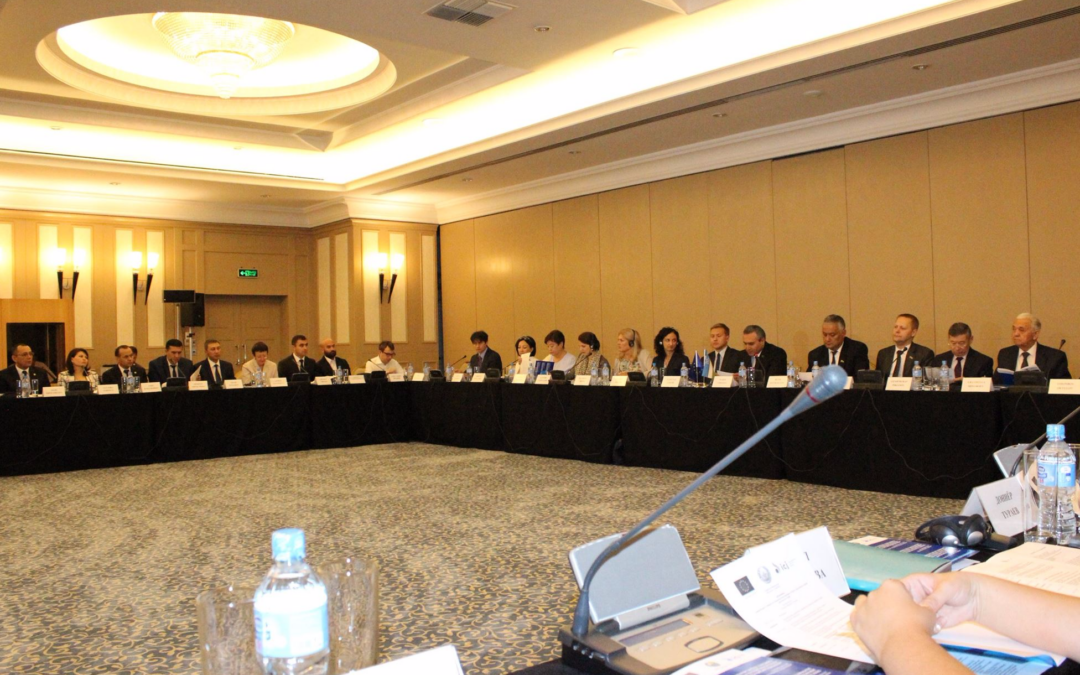
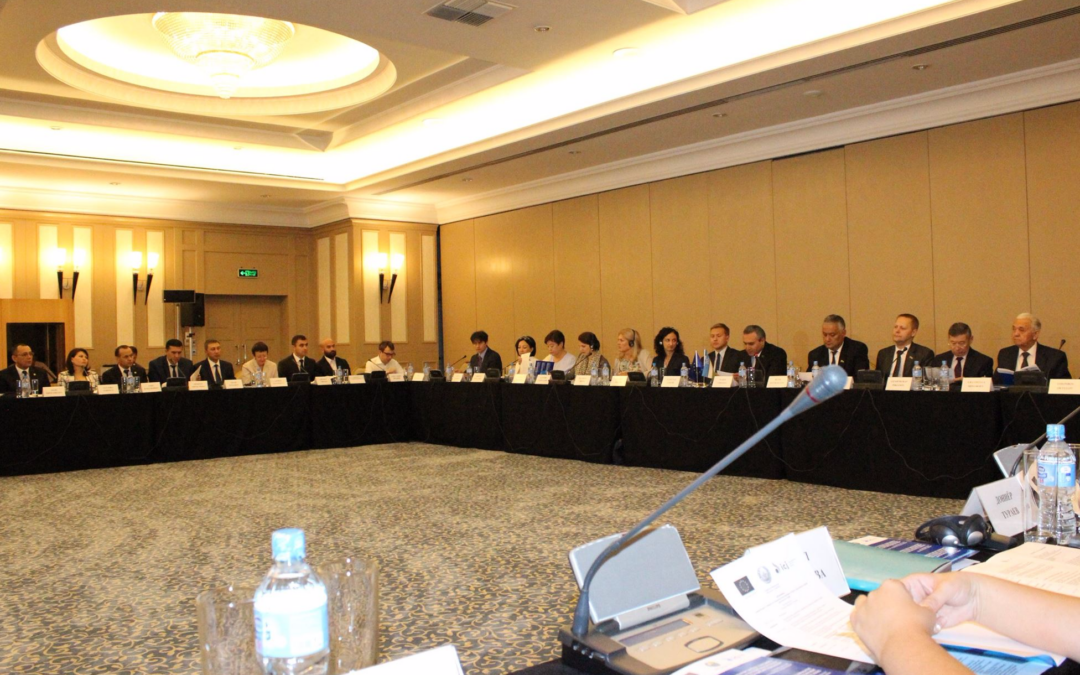
Today, 8 September, the ICJ and the Supreme Judicial Council of the Republic of Uzbekistan (SJC) hold a joint International Seminar on Comparative Approaches to Selection, Appointment and Evaluation of Judges.
The seminar will address issues related to the institutions and procedures on appointment and selection of judges as well as assessment of judicial performance. International standards and national comparative examples will be discussed, including experiences of Uzbekistan, Austria, Germany, Kazakhstan, the Kyrgyz Republic and Serbia. The European and Central Asian perspectives will allow the participants to identify common challenges and find ways to address them.
A Press Release about the event is available to download:
In English, in Russian, or in Uzbek.
Sep 8, 2017 | Новости
Сегодня, 8 сентября, Международная комиссия юристов (МКЮ) и Высший судейский совет Республики Узбекистан (ВСС) проводят совместный Международный семинар на тему «Сравнительные подходы к отбору, назначению и оценке деятельности судей».
Семинар проходит при поддержке Европейского Союза (ЕС) в рамках проекта «Обучение и обмен в сфере международного права в целях совершенствования национальных систем правосудия в Центральной Азии». В мероприятии принимает участие Управление ООН по наркотикам и преступности.
Пресс-релиз о событии можно загрузить:
На английском, русском или узбекском языках.