Mar 22, 2019 | Advocacy, Non-legal submissions
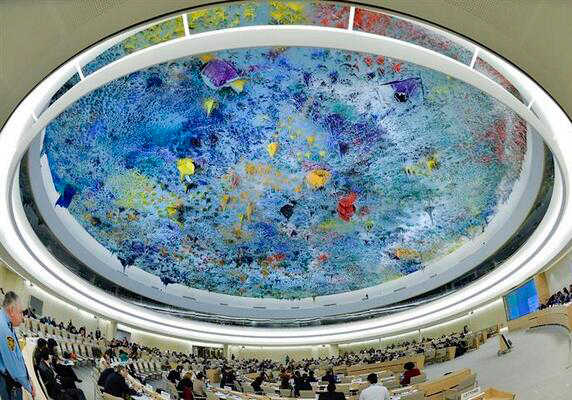
The ICJ has joined with ten other leading human rights organisations to highlight the key outcomes of the 40th regular session of the UN Human Rights Council in Geneva, at its conclusion on 22 March 2019.
The joint NGO statement, delivered at the end of the session, reads as follows:
“We welcome the positive step the Council has taken in the direction to effectively protect environmental human rights defenders (EHRDs) from the grave reality they face every day. By adopting the resolution by consensus, the Council has collectively and explicitly recognized the vital role of EHRDS, including in attaining the SDGs sustainable development goals and ensuring that no-one is left behind, and called for their protection. We also welcome the call on States to provide a safe and empowering context for initiatives organised by young people and children to defend human rights relating to the environment. We, however, regret that the resolution does not squarely address the obligations of international financial institutions and investors.
We welcome South Africa’s leadership to put on the Council’s agenda emerging human rights issues, in bringing attention to the multiple and intersecting forms of discrimination that women and girls face in the field of sports, especially on the basis of race and gender.
The Council has ensured its continued attention to grave rights violations across the globe.
While we welcome the extension of Council attention on Sri Lanka for another two years, a concrete, transparent, and time-bound action plan is urgently needed to implement its commitments under resolution 30/1 in collaboration with OHCHR. Given the lack of progress and political will to implement these commitments, in the absence of immediate progress, the Council should consider additional measures or mechanisms for ensuring victims’ rights to truth, justice and reparations. Individual States need not wait to exercise universal jurisdiction.
We welcome the resolution on Myanmar and its strong focus on ending impunity and ensuring accountability, and we call for the swift operationalisation of the Independent Investigative Mechanism (IIM). We welcome steps taken to review the UN’s involvement in Myanmar. We urge the UN Secretary-General to ensure that it is independent and transparent, and present the findings and recommendations at the Council’s 43rd session.
We welcome the renewal of the mandate of the Commission on Human Rights in South Sudan, a vital mechanism for human rights reporting and evidence gathering. It sends the right message to the government and all parties to the conflict: There can be no lasting peace without justice.
The Council continued this session to initiate action on country situations based on objective criteria through resolutions and joint statements.
By adopting a resolution on Nicaragua, the Council sent a signal to victims of the current crisis that the international community will not allow impunity for the serious ongoing violations to prevail. We look forward to robust reporting from the OHCHR and we urge the Nicaraguan government to fully engage with the Office to ensure the victims’ rights to truth, justice and reparation.
The Council sent a strong message of support to human rights defenders in Saudi Arabia through the joint statement by 36 States, led by Iceland, calling for the release of detained women human rights defenders and called on the Saudi government to fully cooperate with the Special Rapporteur on extrajudicial, summary or arbitrary executions in her investigation into the killing of journalist Jamal Khashoggi. We urge the Saudi authorities to respond fully to these calls, and States to follow up with a resolution at the June session to maintain attention to the situation until meaningful progress, including the release of defenders, is made.
LGBT people in Chechnya are being abducted, locked up in secret detention sites, tortured and sometimes killed purely because of their sexual orientation. We welcome the joint statement on Chechnya delivered by more than 30 States and join the call on the Russian authorities for the persecution to stop: for the immediate and unconditional release of all detained for their actual or perceived sexual orientation or gender identity, and for swift, thorough, and impartial investigations.
We welcome the Cameroon joint statement which advances both Council membership standards and its prevention mandate, and urge the Council to keep the matter under scrutiny.
While we have welcomed the Council’s attention to several situations of gross rights violations, we remain concerned about the lack of consistent and principled leadership by States, in particular by Council members.
We are disappointed that even though the demands of several EU and WEOG States to move the resolution on accountability for crimes committed in the Occupied Palestinian Territories from item 7 to item 2 was met, they still failed to support the resolution. This suggests that no matter the item number, some WEOG members continue in failing to protect the human rights of Palestinians, effectively shielding Israel from accountability.
We regret that States have yet again failed to initiate Council action on the Philippines amidst continued unlawful killings in the government’s so-called war on drugs, and increased targeting of independent media, civil society organisations, and human rights defenders. We reiterate our call on the Council to take action to mandate an independent investigation to establish the facts of human rights violations including extrajudicial executions and attacks against media and civil society, address impunity, and take steps towards justice and reparations for the victims and their families, and hope action will be taken in this regard at the next Council session.
We are deeply disappointed that the resolution adopted on Libya again lacks any meaningful accountability mechanism or mandate, despite the impunity for the widespread and systematic violations of international humanitarian and human rights law that prevail there.
We deplore that despite credible reports of the detention of up to 1 million Uyghurs and other Turkic Muslims in western China, the Council has yet again given a pass to China, permitting impunity for widespread and severe human rights violations. The efforts China has made to keep States silent, exemplified by intimidation and threats on the one hand and whitewashing the situation on the other, demonstrate the degree to which Council action could have had meaningful results if States had instead called clearly and collectively for an independent, unrestricted fact-finding mission.
On the resolution on the rights of the child, we regret the Council’s inability to emphasize the empowerment, autonomy and capacity of children with disabilities, and including to ensure that their sexual and reproductive health and rights must be respected, protected and fulfilled.
We applaud Mexico and other States’ resolve to safeguard the independence of the mandate of the Special Rapporteur on the promotion and protection of human rights while countering terrorism and to resist any attempts to dilute, distract or distort its essential focus, ensuring that the Rapporteur can continue to have positive impacts both in preventing and responding to human rights violations committed in the name of countering terrorism and in relation to the human rights of victims of terrorism. We urge States to remain vigilant to resist future attempts to undermine the Special Procedures system- the eyes and ears of the Council.
We welcome the Council’s renewal of the mandates of the Special Rapporteur on Iran and the Commission of Inquiry on Syria, so that both can continue to perform their vital work fulfilling their respective mandates and addressing the dire human rights situations in both countries. We urge the Iranian and Syrian authorities to change their posture of noncooperation with the respective mandate .
Several of our organisations have urged the UN High Commissioner to publish the database on businesses in Israeli settlements and were alarmed at its further delay. We urge the High Commissioner to release the database with all due haste.
We welcome the renewal of the Special Rapporteur on freedom of religion or belief mandate, and the maintenance of consensus on the Council resolution 16/18 framework for addressing religious intolerance . Rising intolerance and hate is a global concern, and States must move beyond rhetoric to action in implementing these standards.
The High Commissioner’s update on Venezuela during this session reflected the dire human rights situation in Venezuela. We urge all States to consider what more the Council can do to address the worsening human rights crisis in the country and to support all victims.
We note the highly disturbing report by the Special Rapporteur on adequate housing concerning grave reprisals by the Egyptian government against those who cooperated with her during her recent visit to the country and urge this Council to take action to address these attacks.
We welcome the passage of the resolution on Georgia and the continued attention devoted to the importance of full and unimpeded access for the Office of the High Commissioner and international and regional human rights mechanisms.”
Signatories:
- Amnesty International
- ARTICLE 19
- Asian Forum for Human Rights and Development (FORUM-ASIA)
- DefendDefenders (East and Horn of Africa Human Rights Defenders Project)
- Center for Reproductive Rights
- CIVICUS
- Human Rights House Foundation
- Human Rights Watch
- International Commission of Jurists
- International Federation for Human Rights (FIDH)
- International Service for Human Rights
Mar 20, 2019 | News
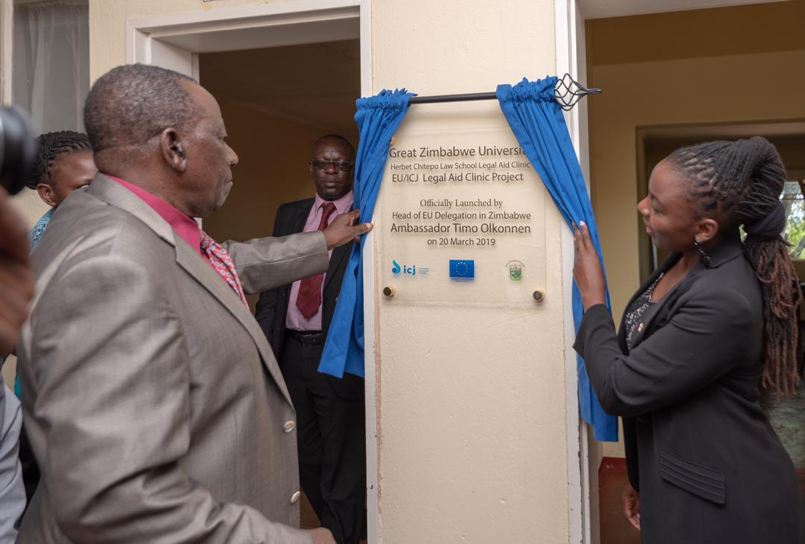
Today, the ICJ launched a legal aid clinic project in collaboration with Great Zimbabwe University, Herbert Chitepo Law School to help facilitate the establishment of a legal aid clinic at the University’s Mucheke campus.
The clinic is located at the Mucheke Campus of University in a high-density suburb in Masvingo, thereby making the services offered by the legal aid clinic more accessible for persons from disadvantaged or marginalized groups in the community.
The project, supported by the European Union, aims to improve access to justice for communities by offering free legal assistance at the University legal aid clinic, while also providing an opportunity for students to develop critical skills that will enhance their work as legal practitioners. The activity is part of a wider initiative to develop and improve University legal aid clinics in Zimbabwe.
Arnold Tsunga, the ICJ Africa Regional Director, remarked that the launch of the legal aid clinics is a building block towards greater access to justice for the people of Zimbabwe and a positive step towards attainment of SDG 16 which speaks to the importance of peace, justice and strong institutions.
Francisca Midzi, a representative of the European Union delegation to Zimbabwe, stated in her remarks that “as the law students encounter real legal problems faced by the people, [the initiative] will teach them to have a social and professional responsibility to pursue justice in society. Herbert Chitepo Law School is injecting and inculcating a spirit of service in their students and they will carry it wherever they go to practice law and gradually this will transform Zimbabwe’s legal system to be more concerned about a court user who has limited knowledge and means to fully access justice.”
Professor R.J. Zvobgo, the Vice Chancellor of Great Zimbabwe University, commended this milestone achievement and stated that it provides an opportunity for the students to give back to the community by improving the ability of persons from affected groups to access justice.
“The free legal aid assists in eradicating the notion that a university is an ivory tower, divorced from the realities of the community in which it is located,” he said.
Contact:
Brian Penduka, e: brian.penduka(a)icj.org, t: +263772274307
Elizabeth Mangenje, e: elizabeth.mangenje(a)icj.org, t: +263774742420
Mar 19, 2019 | News
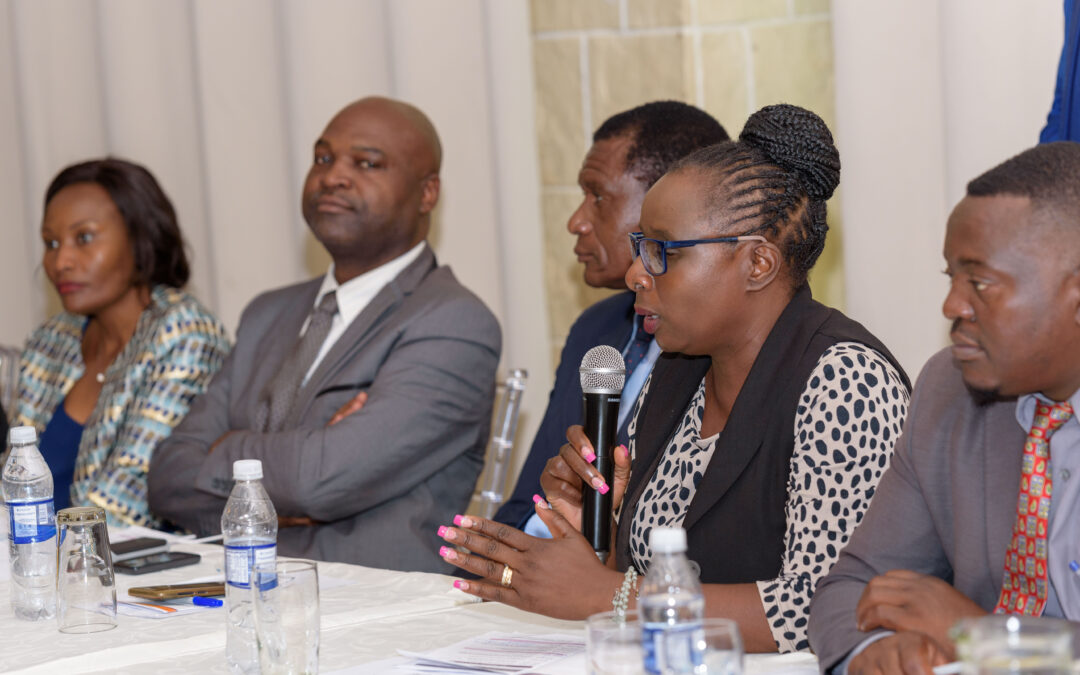
The ICJ in partnership with the National Prosecuting Authority (NPA) convened a two day training workshop to build the capacity of Chief prosecutors and Senior management to effectively investigate corruption cases.
The training workshop took place at the Wild Geese Lodge, Harare on 18 – 19 March 2019.
The new government under President Mnangagwa, saw a shift in government priorities evidence of this is the launch of the Transitional Stabilisation Programme in October 2018. The Transitional Programme seeks to propel the country towards stabilisation and economic development as well eradicate corruption.
Through this programme, the government has established institutions to deal with corruption, this has seen the establishment of Special Anti-Corruption Courts, which has resulted in an increase in high level arrests on corruption charges. Additionally a new Anti-Corruption Prosecution Unit was established within the Office of the President and Cabinet to improve efficiency in the fight against all forms of graft and to strengthen the effectiveness of national mechanisms for the prevention of corruption.
This anti-corruption training workshop therefore becomes relevant in the government’s fight against corruption. The main objective of the workshop is to enhance the capability of prosecutors to handle corruption cases effectively.
Presentations focused on understanding corrupt practices; defining white collar crime and financial crimes in Zimbabwe; domestic, regional and international framework on corruption; seizure, freezing and confiscation of the proceeds of corruption; and the practical steps to combatting corruption. It is hoped that at the end of the two day meeting, prosecutors will effectively implement legal frameworks and policies in the prosecution of corruption cases.
Prosecutor General Hon K. Hodzi in his opening speech remarked that the NPA is proud of their partnership with the ICJ in their fight against corruption. He was grateful for the continued support from the ICJ. The Prosecutor General noted that corruption is a lived experienced by everyone in this country because it has direct impact on the socio-economic welfare of the people of Zimbabwe. He noted that this was an important workshop which would serve as a toolkit that would help renew the NPA’s approach to in the prosecution of corruption in this country.
The Prosecutor General hoped that the workshop would enable the prosecutors to share knowledge and experience as well meaningful discourse bordering around challenges in the prosecution of corruption cases. This approach would enable the NPA to contribute to effectively eliminating corruption in the improvement of justice in Zimbabwe. He urged prosecutors to show that corruption does not pay and can be defeated.
Present at the training workshop was the Prosecutor General of NPA, senior prosecutors and senior management, representatives from the Judicial Service Commission, Solomon Mhlanga from Office of the President and Cabinet, Mr. Shana from the Judicial College of Zimbabwe, Mr. Zowa from the Law Development Commission representatives from Transparency International Zimbabwe, and representatives from the Reserve Bank of Zimbabwe. There were a total of 45 (forty-five) delegates; 29 (twenty-nine) male and 16 (sixteen) female delegates.
Contact:
Brian Penduka, e: brian.penduka(a)icj.org, t: +263772274307
Vimbai Mutandwa, e: vimbai.mutandwa(a)icj.org, t: +263773517733
Mar 15, 2019
Today the ICJ issued a Legal Brief note in order to help in understanding the offence of Subverting a Constitutional Government under Zimbabwe law.
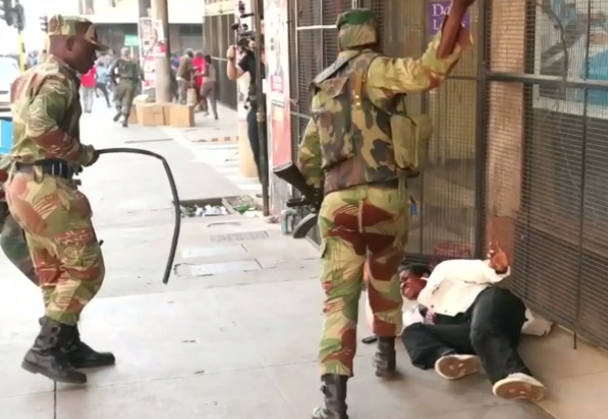
Following protests that occurred in most major cities and towns in Zimbabwe in January 2019, a number of activists, human rights defenders, civil society leaders and opposition leaders have been arrested and charged with ‘subverting constitutional government’ as provided for under section 22 of the Criminal Law (Codification and Reform) Act [Chapter 9:23] (hereinafter referred to as the Criminal Code).
This legal briefing note seeks to provide an explanation of the elements of the crime and how it has been construed by Zimbabwean courts, and whether and to what the resort to section 22 has accorded with international law and standards, including African regional standards.
Under Zimbabwe’s existing laws, a person may be charged with an offence known as ‘subverting constitutional government’.
This is a crime akin to but less serious than treason. It is nonetheless an offence which attracts a sentence of up to 20 years in prison.
Various protesters have been arrested on the allegations that their public statements amounted to inciting the commission of this crime.
Following the January 2019 protests, more than 5 protesters and MDC opposition members have been charged with this crime.
Despite the high number of arrests based on this charge in the past few years, there have been no convictions.
Where the basis of the charge are public statements made, the question of what exceeds legitimate exercise of the right to freedom of expression arises.
As such, there is need to interrogate where the line is drawn between legitimate and illegitimate exercise of the right to freedom of expression.
International human rights law, pursuant both universal and African regional standards, protects for the rights of persons to freedom of opinion and expression (Article 9 ACHPR; article 19 ICCPR), freedom of assembly (article 11 ACHPR;21 ICCPR) article, freedom of association (article 10 ACHPR; article 22 ICCPR), and the right to political participation (article 25 ICCPR).
These provisions in these international instruments impose an obligation on all state parties to respect the rights of persons under their jurisdiction.
Zimbabwe as a member state is bound by these provisions and similar provision under sections 58 (freedom of assembly and association), section 59 (freedom to demonstrate and petition), section 60 (freedom of conscience) and section 61 (freedom of expression).
These rights and fundamental freedoms, when exercised by human rights defenders, have been accorded heightened protection in international standards in particular through the UN Declaration on the Right and Responsibility of Individuals, Groups and Organs of Society to Promote and Protect Universally Recognized Human Rights and Fundamental Freedoms (Declaration on Human Rights Defenders), adopted in 1999 by consensus of the General Assembly
While these freedoms are not absolute, under international law, any restrictions must be (i) legitimate, provided by law which is clear and accessible to everyone and formulated with sufficient precision to enable an individual to regulate his or her conduct; (ii) proven strictly necessary to protect the rights or reputation of others, national security or public order, public health or morals and (iii) proven to be the least restrictive and proportionate means to achieve the purported aim.
Contact
Elizabeth Mangenje, e: elizabeth.mangenje@icj.org
Brian Penduka, e: brian.penduka@icj.org
Arnold Tsunga, e: arnold.tsunga@icj.org
Zimbabwe-Subverting Constitutional Gvt-Advocacy-Analysis Brief-2019-ENG (full legal brief in PDF)
Feb 5, 2019 | News
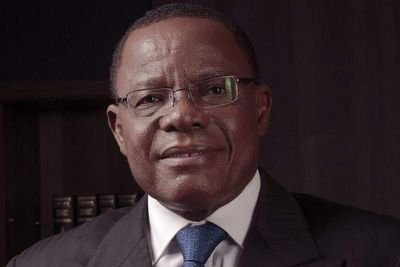
The ICJ expressed its grave concern today at the arrest, detention and criminal charges brought against Maurice Kamto, leader of the opposition party Cameroon Renaissance Movement (CRM), and other CRM activists.
The ICJ called for the immediate release of Maurice Kamto, who is also former Commissioner of the ICJ.
The arrest of Maurice Kamto, on 28 January, came following the violent breakup by the security forces of opposition demonstrations on 26 January.
Maurice Kamto is said to face charges of sedition, insurrection and inciting violence.
There are reports that he and other arrested persons have begun a hunger strike.
The ICJ is concerned that Maurice Kamto and other opposition leaders may be prosecuted for the exercise of rights protected under international law, including the rights to freedom of expression, association, assembly and political participation
The ICJ called on the Cameroon authorities to fully safeguard the human rights of Maurice Kamto and the other detainees, including the rights to liberty, fair trial, and freedom from ill-treatment, guaranteed under Cameroonian and international law.
Contact:
Arnold Tsunga, ICJ Africa Director; t: +27716405926, or +254 746 608 859 ; e: arnold.tsunga(a)icj.org
Solomon Ebobrah, Senior Legal Adviser, ICJ Africa Regional Programme, t: +234 8034927549 ; e: solomon.ebobrah(a)icj.org