Feb 12, 2019 | Comunicados de prensa, Noticias
Según comienza el juicio a los doce líderes separatistas catalanes ante el Tribunal Supremo de España hoy en Madrid, la CIJ advierte que el juicio en base a la amplia definición de delitos como la rebelión y, posiblemente, la sedición restringen excesivamente los derechos a la libertad expresión, asamblea y asociación.
Los doce líderes políticos – incluyendo altos cargos del Gobierno catalán – han sido acusados en conexión a su participación en un referéndum sobre la independencia de Cataluña que tuvo lugar el 1 de octubre de 2017. Este referéndum se llevó a cabo a pesar de haber sido declarado ilegal por el Tribunal Constitucional.
El proceso de votación durante el referéndum fue parcialmente reprimido por la policía, según informes fidedignos de uso innecesario y desproporcionado de la fuerza suponiendo una violación de las obligaciones de derecho internacional de España.
A la CIJ le preocupa que la Fiscalía, y el Tribunal Supremo, admitiendo la imputación en el caso, han atribuido un significado excesivamente amplio al delito de rebelión bajo el artículo 472 del Código Penal. Según este artículo, el delito requiere de una insurrección violenta para derogar, suspender o modificar el orden constitucional.
Sin embargo, no se acusa a los organizadores del referéndum de utilizar o fomentar la violencia. Se les está juzgando en base a que deberían haber previsto el riesgo de intervención y uso de la fuerza por parte de la policía.
Por lo tanto, se presume que los acusados son penalmente responsables de la violencia que resultó de su decisión de seguir adelante con el referéndum, a pesar de haber sido declarado ilegal.
“La muy amplia definición del delito de rebelión que se está aplicando en este caso amenaza con interferir de forma innecesaria y desproporcionada con los derechos a la libertad expresión, asamblea y asociación,” dijo Róisín Pillay, Directora de la CIJ para Europa y Asia Central.
“La interferencia con la protesta y expresión política pacífica debe estar justificada como estrictamente necesaria y proporcionada según el derecho internacional de los derechos humanos. Cuando manifestaciones pacíficas o acciones políticas, aunque hayan sido declaradas como ilegales por las autoridades, provocan una respuesta excesiva de la policía, lo únicos responsables por el uso de la violencia son la policía y otras autoridades estatales”.
“Es crucial que el Tribunal Supremo, en su consideración de estos cargos, tome plenamente en cuenta las obligaciones de España bajo el derecho internacional de los derechos humanos,” añadió.
A pesar de que el Tribunal Supremo ha sostenido que el uso de la fuerza de las autoridades policiales durante la represión del referéndum del 1 de octubre de 2017 fue “legítima y, por tanto proporcionada”, observadores internacionales han concluido que dicho uso de la fuerza fue excesiva y desproporcionada.
De acuerdo con el derecho internacional de los derechos humanos, el mero hecho de que el uso de la fuerza sea considerado legal bajo la legislación nacional, no significa que por sí mismo pueda ser considerado como necesario o proporcionado.
El Tribunal Supremo ha aceptado también que, si los supuestos presentados por la Fiscalía son probados, podría incluirse el delito de sedición, el cual es cometido por aquellos que se alcen pública y tumultuariamente por la fuerza o fuera de las vías legales, para impedir la aplicación de las leyes y resoluciones gubernativas y judiciales.
“Delitos como sedición o rebelión definidos de una manera ambigua y amplia pueden suponer una violación del principio de legalidad, así como una interferencia arbitraria y desproporcionada con los derechos humanos,” dijo Róisín Pillay.
“En un caso altamente sensible y politizado, tal y como es el referéndum catalán, podría sentar un peligroso precedente de persecución a movimientos pacíficos de independencia y disidencia política, no sólo en España sino a nivel internacional,” añadió.
Varios de los acusados han sido retenidos en prisión preventiva durante largos periodos de tiempo, agravando aún más la interferencia con los derechos a la libertad de expresión, asociación y asamblea, y poniendo en duda la proporcionalidad de la respuesta.
Antecedentes
Las doce personas que están siendo juzgadas en conexión con el referéndum de Octubre de 2017: Oriol Junqueras, ex-vicepresidente de la Generalitat catalana; Carme Forcadell, ex-presidenta del Parlament catalán; ocho ex-consejeros del Gobierno catalán – Jordi Turull, Raül Romeva, Joaquim Forn, Santi Vila, Meritxel Borràs, Dolors Bassa, Josep Rull, Carles Mundó -; Jordi Sànchez, ex-líder de la Asamblea Nacional Catalana (ANC), y Jordi Cuixart, ex-líder de la organización independentista Òmnium Cultural.
El juicio, que comienza el 12 de febrero en el Tribunal Supremo de Madrid, se espera que dure varios meses.
España tiene obligación de proteger la libertad de expresión, incluyendo la expresión política, bajo el artículo 10 de la Convención Europea de Derechos Humanos (ECHR, por sus siglas en inglés) y el artículo 19 del Pacto Internacional de Derechos Civiles y Políticos (ICCPR, por sus siglas en inglés), y la libertad de asamblea y asociación pacíficas bajo el artículo 11 de ECHR y los artículos 21 y 22 de ICCPR. El Comentario General sobre libertad de expresión del Comité de Derechos Humanos afirma que Los Estados partes deben procurar con el mayor cuidado que las leyes sobre traición y las disposiciones similares que se refieren a la seguridad nacional, tanto si se califican de leyes sobre secretos de Estado o sobre sedición, o de otra manera, estén redactadas y se apliquen de conformidad con las condiciones estrictas del párrafo 3 del artículo 19 del ICCPR, lo cual requiere que las restricciones en la libertad de expresión estén legisladas y que sean necesarias en base a propósito legítimo, como la seguridad nacional o el orden público. El derecho a participar en la vida pública está protegido bajo el artículo 25 de ICCPR.

Feb 12, 2019 | News
As the trial of twelve Catalan separatist leaders begins before the Spanish Supreme Court today in Madrid, the ICJ warns that their trial on broadly defined offences of rebellion and, possibly, sedition unduly restricts rights of freedom of expression, assembly and association.
“The very broad definition of the offence of rebellion being applied in this case risks unnecessary and disproportionate interference with rights of freedom of expression, association and assembly,” said Róisín Pillay, ICJ Europe and Central Asia regional Director.
The twelve political leaders – including high-ranking Catalan government officials – have been charged in connection with their part in the administration on 1 October 2017 of a referendum on Catalonian independence.
The referendum was conduced despite having been declared illegal by the Constitutional Court.
The voting process during the referendum was partially suppressed by the police, with credible reports of the use of unnecessary and disproportionate force in breach of Spain’s international law obligations.
“Interference with peaceful political expression and protest must be justified as strictly necessary and proportionate under international human rights law. Where peaceful protests or political actions, even if declared unlawul by the authorities, provoke an excessive response by the police, it is solely the police and other state authorities who should be held responsible for the violence,” Pillay said.
“It is crucial that the Supreme Court, in its consideration of these charges, takes full account of Spain’s obligations under international human rights law,” she added.
The ICJ is concerned that prosecutors, and the Supreme Court in admitting the indictment in the case, have ascribed an unduly broad meaning to the offence of “rebellion” under article 472 of the Criminal Code.
According to that article, the offence requires violent insurrection to subvert the constitutional order.
But the referendum organizers are not accused of using or advocating violence.
Rather, they are being tried on the basis that they should have foreseen the risk of intervention and the use of force by the police.
It is therefore alleged that the defendants were criminally responsible for the violence that ensued from their decision to carry on with the referendum, despite it being declared illegal.
Although the Supreme Court has held that the use of force by Spanish law enforcement authorities during the repression of the referendum of 1 October 2017 was “legitimate and, as such proportionate”, international observers have concluded that such use of force was excessive and disproportionate.
In accordance with international human rights law, the mere fact that the use of force is considered to be legal under national law, does not of itself mean that it can be considered to be necessary and proportionate.
The Supreme Court has further already accepted that, if the facts alleged by prosecutors are proven, they could amount to the offence of sedition, which is committed by those that that rise up publicly and in a tumultous way, by force or by unlawful means, to impede the implementation of laws or of authorities’ orders.
“Vague, broadly defined offences of sedition or rebellion risk violation of the principle of legality, as well as arbitrary and disproportionate interference with human rights,” said Róisín Pillay.
“In a highly sensitive and politicised case such as that of the Catalonian referendum, they would set a dangerous precedent for the targeting of peaceful independence movements and political dissent, not only in Spain but internationally,” she added.
Several of the accused have already been held in pre-trial detention for lengthy periods, further exacerbating the severity of the interference with rights to freedom of expression, association and assembly, and casting doubt on the proportionality of the response.
Contact
Róisín Pillay, Director, ICJ Europe Programme, t: +32 476 974263 ; e: roisin.pillay(a)icj.org
Background
The 12 people on trial in connection with the October 2017 referendum include Oriol Junqueras (photo), former Catalan vice-president; Carme Forcadell, former Catalan parliament speaker; eight former ministers in the Catalan government – Jordi Turull, Raül Romeva, Joaquim Forn, Santi Vila, Meritxel Borràs, Dolors Bassa, Josep Rull, Carles Mundó -; Jordi Sànchez the former leader of the Catalan National Assembly (ANC); and Jordi Cuixart, former head of the independence organisation Òmnium Cultural.
The trial, which begins on 12 February in the Supreme Court in Madrid, is expected to last for several months.
Spain has obligations to protect freedom of expression, including political expression, under Article 10 of the European Convention on Human Rights (ECHR) and Article 19 of the International Covenant on Civil and Political Rights (ICCPR); and freedom of peaceful assembly and association under Article 11 ECHR and Article 21 and 22 ICCPR.
The Human Rights Committee in its General Comment on freedom of expression has affirmed that: “extreme care must be taken by States parties to ensure relating to national security, whether described as official secrets or sedition laws or otherwise, are crafted and applied in a manner that conforms to the strict requirements of paragraph 3 of article 19 ICCPR, which requires that restrictions on freedom of expression be provided for by law and must be necessary for a legitimate purpose, such as national security or public order .) Rights to participate in public life are protected under Article 25 ICCPR.
Feb 4, 2019 | News
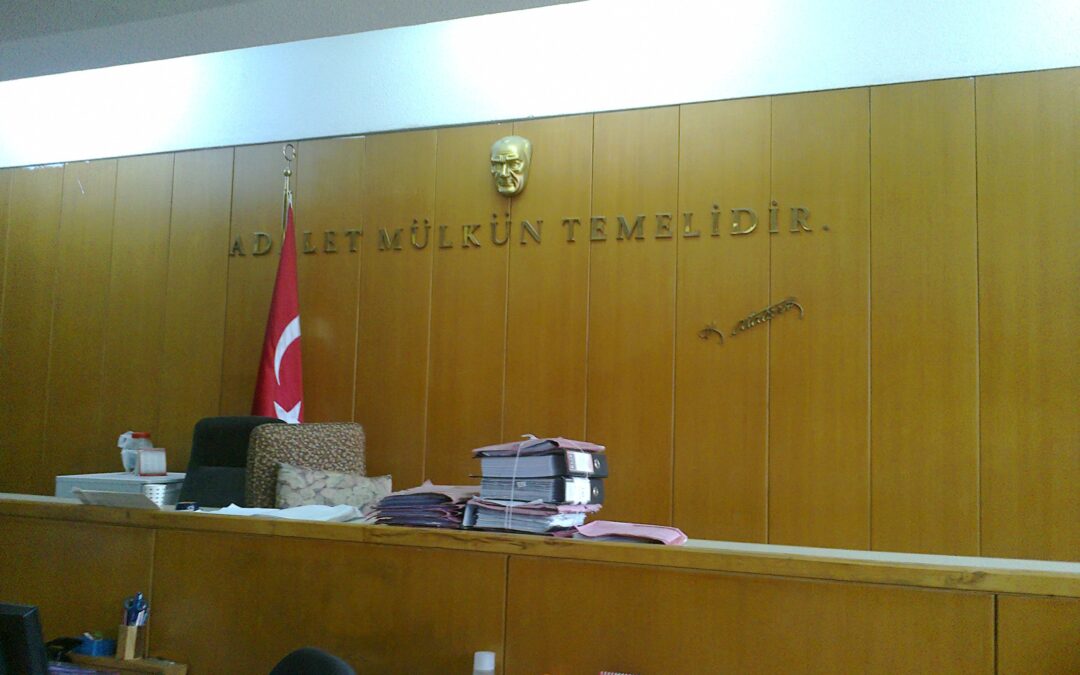
The ICJ is concerned that the dismissal of 17 judges and prosecutors by Turkey’s Council of Judges and Prosecutors on 10 January, for alleged membership of or connections with the “Fetullahist Terrorist Organisation” (FETÖ) did not respect their right to a fair trial.
The decision by the Council of Judges and Prosecutors (CJP) is particularly problematic because it lacks any reasoning on the individual situation of each judge and prosecutor.
The ICJ points out that international law provides that judges may be dismissed only through a fair hearing before an independent authority. The lack of individual reasoning in dismissal decisions strikes at the heart of the right to a fair hearing.
Furthermore, the ICJ recalls its conclusions in the 2018 report Justice Suspended that, within the current constitutional framework, the Council of Judges and Prosecutors (CJP) is not provided with the guarantees necessary to ensure its institutional independence.
Despite the state of emergency having been lifted since last July 2018, extraordinary powers given to the Council of Judges and Prosecutors to dismiss judges and prosecutors during the State of Emergency were extended for 3 years by Law no. 7145. It is unacceptable in a State governed by the rule of law that judges and prosecutors – whatever charges may be against them – be dismissed without respect for the right to a fair procedure, in disregard of international standards.
Considering that the Council of State has not delivered a single decision about dismissed judges and prosecutors during the state of emergency, in more than two years now, it seems likely that it would take at least two years before the recent decision of the CJP is reviewed by an independent judicial authority. Until then, absent further action by the CJP, the reasons for the dismissals will not be known by the purged judges and prosecutors, or by the general public.
The ICJ calls on the CJP to revoke its order and re-examine the cases under the ordinary dismissal procedures and on the Turkish Government and Parliament to modify the constitutional rules on the CJP to ensure its full independence.
Finally, the ICJ expresses concern at the conviction of the former head of the judges’ organisation YARSAV, Mr Murat Arslan, for alleged membership of FETÖ. There are credible reports of violations of the right to a fair trial in the proceedings, including four changes of judges during the proceedings, often without reasons given and without re-examination of witnesses, significant limitations to the defence access to evidence before trial and use of witnesses with undisclosed identity. The ICJ considers that these allegations of violations of the right to a fair trial should be thoroughly re-examined in appeal before an independent court and in full respect of Mr Arslan’s fair trial rights.
Background
On 10 January, the Council of Judges and Prosecutors made use for the first time of special powers to dismiss judges and prosecutors without complying with the ordinary procedure, invoking extraordinary powers enacted by Law No 7145 of 31.07.2018. This legislation inserted into ordinary law several powers that had previously existed under the state of emergency legislation.
One of the amendments made by Law No 7145 of 31.07.2018 was to the Decree Law No 375 dated 1989. A Temporary Article (Article 35) was added to the Decree. On the basis of this article, the General Assembly of the Constitutional Court, the Presidency Councils of Court of Appeal, the Council of State, the General Assembly of the Council of Judges and Prosecutors, a Commission set up by the Ministry of National Security, and the Presidency of the Court of Audit, were each authorised to take dismissal decisions for public officials/judges and prosecutors under their mandate for three years from the date of the endorsement of the law No 7145.
Based on this amendment, on 10 January 2019 the Council of Judges and Prosecutors took its first decision (Decision No. 2019/1) by dismissing 17 judges and prosecutors (6 Public prosecutors, 3 Members of Administrative Court, 7 judges of of Tax Court) based on the allegation of membership to FETÖ.
International law and standards provide that disciplinary proceedings should be conducted by an independent authority or a court with all the guarantees of a fair trial and provide the judge with the right to challenge the decision and sanction. Disciplinary sanctions should be proportionate.
The UN Basic Principles on the independence of the judiciary set out international standards for discipline, suspension and removal of judges, including in order to ensure impartiality and independence of courts and tribunals as required by international law (including the International Covenant on Civil and Political Rights and the European Convention on Human Rights). The Basic Principles state that a:
“charge or complaint made against a judge in his/her judicial and professional capacity shall be processed expeditiously and fairly under an appropriate procedure. The judge shall have the right to a fair hearing. The examination of the matter at its initial stage shall be kept confidential, unless otherwise requested by the judge. …
The Consultative Council of European Judges (CCJE) adds that “a Head of State, Minister of Justice or any other representative of political authorities cannot take part in the disciplinary body.”
Contact
Massimo Frigo, ICJ Senior Legal Adviser for the Europe and Central Asia Programme, t: +41 22 979 3805, e: massimo.frigo(a)icj.org
Jan 31, 2019 | Multimedia items, News, Video clips
For the past two years the ICJ and its partners Refugee Rights Turkey (RRT), the European Council on Refugees and Exiles (ECRE) and Mülteci-Der (MD) have provided trainings and training materials for Turkish lawyers on international human rights law relating to migration and asylum as part of the project Fostering Access to Rights for Migrants, Refugees and Asylum-Seekers in Turkey.
The project has worked to enhance access to justice for migrants, refugees and asylum-seekers, through establishing, equipping and supporting a well-informed group of lawyers and civil society organizations in Turkey and link them with their counterparts in EU Member States to defend the rights of migrants, refugees and asylum-seekers.
In a public event on the 17 December 2019 hosted in Ankara to mark the conclusion of the project, the ICJ and its partners presented a promotional video describing the work conducted throughout the project.
Watch video here:
(Rough Turkish subtitles available but will be revised at a later stage | Turn the Turkish subtitle by clicking on CC.)
The project “Fostering Access to Rights for Migrants, Refugees and Asylum-Seekers in Turkey” is funded by the European Instrument for Democracy and Human Rights (EIDHR) of the European Union.
Jan 31, 2019
Today the ICJ has published four training modules on Migration and Asylum Law. The modules are based on the trainings and training materials for Turkish lawyers provided on international human rights law relating to migration and asylum as part of the project Fostering Access to Rights for Migrants, Refugees and Asylum-Seekers in Turkey. Each module is covering different topic:
The modules can be found and downloaded in Turkish by clicking on the module name above.
The project “Fostering Access to Rights for Migrants, Refugees and Asylum-Seekers in Turkey” is funded by the European Instrument for Democracy and Human Rights (EIDHR) of the European Union.