Jul 18, 2018 | Communiqués de presse, Nouvelles, Publications, Rapports
La CIJ a salué aujourd’hui la levée de l’état d’urgence en vigueur en Turquie depuis presque deux ans, qui devrait être effective à partir de minuit. La CIJ a toutefois ajouté que les autorités devaient désormais instaurer une série de mesures visant à rétablir l’état de droit dans le pays.
La prise de position de la CIJ coïncide avec la publication de son rapport Justice Suspended – Access to Justice and State of Emergency in Turkey (disponible en anglais seulement) qui décrit comment les mesures prises en vertu de l’état d’urgence, notamment la révocation massive de magistrats et les arrestations et poursuites arbitraires d’avocats et de défenseurs des droits de l’Homme, ont érodé les institutions et les mécanismes judiciaires du pays.
Le rapport préconise, entre autres, l’abrogation de ces mesures, le rétablissement de l’indépendance du système judiciaire et la réforme des lois antiterroristes du pays.
“Avec la fin de l’état d’urgence, nous appelons au retrait immédiat des notifications de dérogations à la Convention européenne des droits de l’homme et au Pacte international relatif aux droits civils et politiques,” a déclaré Massimo Frigo, conseiller juridique principal pour le programme Europe et Asie centrale de la CIJ.
“Nous sommes préoccupés par le fait que la plupart de ces mesures d’exception restent ancrées dans la loi turque, avec des des conséquences pernicieuses à long terme sur la jouissance des droits de l’Homme élémentaires et les bases de l’Etat de droit dans le pays,” a-t-il ajouté.

Jul 18, 2018 | News, Publications, Reports
The ICJ welcomed today the lapse of Turkey’s nearly two-year state of emergency, which is expected to be effective as of midnight, but said that the authorities needed now to take a range of measures to repair the rupture to the rule of law in the country.
The ICJ’s comments came as it released its report Justice Suspended – Access to Justice and State of Emergency in Turkey, outlining how measures undertaken pursuant to a state of emergency, including the mass dismissal of judges and arbitrary arrests and prosecutions of lawyers and human rights defenders had eroded the justice institutions and mechanisms in the country.
The report recommends a number of measures including the repeal of measures enacted under the state of emergency, the restoral of the independence of the judiciary and the reform of the country’s anti-terrorism legislation.
“With the end of the state of emergency we call for the immediate withdrawal of the notifications of derogations to the European Convention on Human Rights and the International Covenant on Civil and Political Rights,” said Massimo Frigo, ICJ Senior Legal Adviser for the Europe and Central Asia Programme.
“We remain concerned that many of the emergency measures have been given permanent effect in Turkish law and will have pernicious and lasting consequences for the enjoyment of human rights and for the rule of law in Turkey,” he added.
These measures include the dismissals of hundred of thousands of people from their job, including judges and prosecutors.
Constitutional amendments, introduced during the state of emergency, permanently enshrine executive and legislative control of the governing institutions of the judiciary, contrary to international standards on judicial independence, the ICJ says.
Many of those charged with vaguely-defined offences under the state of emergency face trial before courts that are not independent and cannot guarantee the right to a fair trial, the Geneva-based organization adds.
Crucially, most of the people affected by emergency measures, including summary dismissals, have not yet had the opportunity to obtain a remedy before an effective and independent court or tribunal.
The ICJ report illustrates how the mechanisms which should address and remedy human rights violations in Turkey lack effectiveness and independence and that these deficiencies extend both to the courts and the state of emergency complaints commission.
It further finds that the ordinary functions of lawyers and activities civil society, key actors in ensuring access to justice, have been considerably curtailed.
“The Turkish Government says that they want their actions to respect the rule of law. Effective and independent remedies and reparations for human rights violations must be available to all if this principle is to have any reality in practice,” said Massimo Frigo.
Contact
Massimo Frigo, ICJ Senior Legal Adviser for the Europe and Central Asia Programme, t: +41 22 979 3805, e: massimo.frigo@icj.org
Download
Full ICJ report in PDF in English: Turkey-Access to justice-Publications-Reports-2018-ENG
Full ICJ report in PDF in Turkish: Turkey-Access to justice-Publications-Reports-2018-TUR
Jul 11, 2018 | Новости, Статьи
Сегодня МКЮ выразила озабоченность принятием нового закона об адвокатах в Казахстане.
Закон «Об адвокатской деятельности и юридической помощи», подписанный 10 июля 2018 года, противоречит международному праву и стандартам, касающихся независимости юридической профессии, позволяя исполнительным органам власти оказывать влияние или контролировать адвокатов через допуск к адвокатской профессии, а также существенно влиять на дисциплинарное производство в отношении адвокатов.
Закон негативно отразится на защите прав человека и верховенстве права в Республике Казахстан.
«Некоторые ключевые положения принятого закона подрывают независимость юридической профессии, которая является краеугольным камнем верховенства права», сказал сегодня Тимур Шакиров, старший правовой советник Европейской программы МКЮ.
«Закон не только ослабляет юридическую профессию, но и, к сожалению, посылает сигнал обществу о том, что в результате, права человека, включая право на справедливое судебное разбирательство, будет сложнее защитить в рамках правовой системы», добавил г-н Шакиров.
МКЮ особенно озабочена тем, что согласно новому закону, сокращена роль независимой адвокатуры в формировании состава дисциплинарных комиссий.
Кроме непосредственно адвокатов, дисциплинарные комиссии будут включать в свой состав «представителей общественности», предлагаемых Министерством Юстиции.
В то время как закон не устанавливает, как именно будут отбираться эти члены дисциплинарных комиссий, отбор будет производиться Министерством Юстиции.
Не исключено, что так же будут выбираться члены комиссий из числа судей в отставке, которые, согласно закону, тоже должны входить в состав дисциплинарных комиссий.
Хотя многие из предусмотренных процедур неясны, очевидно, что эти положения дают Министерству Юстиции значительное влияние на дисциплинарные комиссии, учитывая, что закон явно не требует от этих членов исполнять их обязанности независимо от указаний Министерства Юстиции.
Влияние исполнительных органов власти на дисциплинарные процедуры адвокатуры противоречит принципам независимости адвокатов.
Основные принципы ООН, касающиеся роли юристов, предусматривают, что дисциплинарные меры в отношении юристов должны рассматриваться беспристрастным дисциплинарным комитетом, создаваемым юристами, в независимом органе, предусмотренном законом, или в суде и подлежат независимому судебному контролю.
Более того, закон продолжает наделять Министерство Юстиции полномочиями по контролю над доступом к профессии.
Закон требует от будущего адвоката, по завершении профессионального обучения, пройти процедуру аттестации, в комиссиях, создаваемых территориальными органами юстиции.
Эти комиссии состоят из семи членов, из которых только трое являются представителями адвокатуры. Состав комиссии и правила их работы утверждаются Министерством Юстиции Республики Казахстан.
Таким образом, закон сохраняет прежнюю процедуру по допуску к профессии, которая ранее уже подвергалась критике со стороны МКЮ и согласно которой, аттестация и выдача адвокатских лицензий находятся в исключительной компетенции Министерства Юстиции Республики Казахстан.
В то же время, многие права защитников в законе ограничены или могут быть подорваны формулировками, которые указывают на необходимость дальнейшего регламентирования таких прав на уровне подзаконных актов, включая то, что принятый закон не позволит адвокатам свободно и без вмешательства собирать доказательства в защиту своих клиентов или то, что адвокатские запросы могут игнорироваться на основе того, что запрашиваемая информация имеет «ограниченный доступ».
МКЮ отмечает, что Основные принципы ООН, касающиеся роли юристов предусматривают, что «компетентные органы обязаны обеспечивать юристам достаточно заблаговременный доступ к надлежащей информации, досье и документам, находящимся в их распоряжении или под их контролем, с тем чтобы юристы имели возможность оказывать эффективную юридическую помощь своим клиентам. Такой доступ должен обеспечиваться, как только в этом появляется необходимость» (Принцип 21).
Прочитать весь текст вы можете здесь
Jul 11, 2018 | Адвокаси, Неюридические заявления
Сегодня МКЮ присоединилась к другим организациям гражданского общества, призывая к тому, чтобы уважение прав человека, защита гражданского общества и участие в нем, играли более активную роль в Глобальной контртеррористической стратегии ООН.
Совместное заявление организаций последовало за принятием Генеральной Ассамблеей ООН 26 июня 2018 года резолюции 72/284, посвященной рассмотрению Глобальной контртеррористической стратегии Организации Объединенных Наций. Глобальная контртеррористическая стратегия ООН, впервые принятая в 2006 году, содержит план действий для ООН и государств-членов на глобальном, региональном и национальном уровнях для борьбы с терроризмом.
Организации подчеркивают ценность глобальной контртеррористической стратегии, в которой права человека являются важным компонентом. Они отмечают, что резолюция Генеральной Ассамблеи в значительной степени подтверждает обязательства государств соблюдать международное право, в том числе международные права человека в условиях борьбы с терроризмом, и что права человека являются «существенной основой борьбы с терроризмом».
В совместном заявлении выражается обеспокоенность в связи с тем, что государства не смогли адекватно устранить нарушения прав человека в отношении мер по борьбе с терроризмом. В нем также выражается обеспокоенность по поводу того, что государства не предоставили благоприятные условия для организаций гражданского общества, в том числе тех, которые касаются женщин, для значительного участия в обзоре Стратегии.
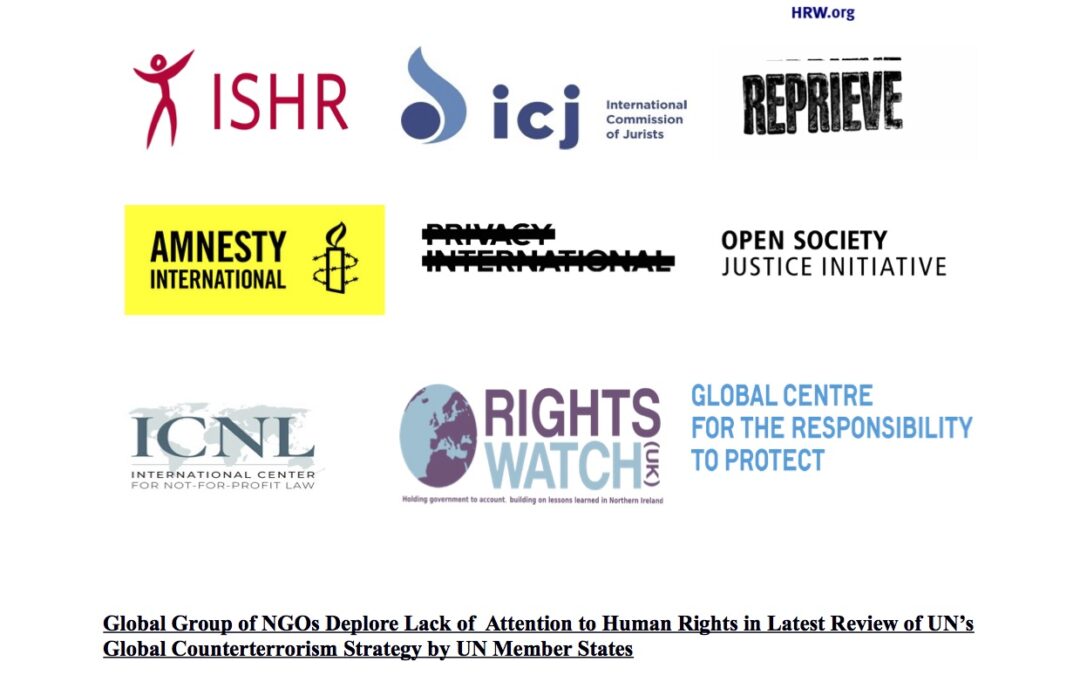
Полное заявление и список присоединяющихся к нему организаций можно скачать на английском в формате PDF здесь: UN-Advocacy-JointStatement-CounterTerrorismStrategy-2018
Jul 11, 2018 | Advocacy, News, Open letters
Twenty-two senior judges from across the globe wrote today to Polish President Andrzej Duda to condemn the recent attacks on the independence of the judiciary.
The judges, all Commissioners or Honorary Members of the International Commission of Jurists, criticized the forced resignation of 27 of 72 judges of Poland’s Supreme Court as a severe blow to the independence of the Polish judiciary in violation of international standards.
The letter was organized by the ICJ and its Centre for the Independence of Judges and Lawyers in consultation with jurists from 17 countries.
“The Polish government’s assault on the country’s judiciary is a major blow to the rule of law in Poland,” said Sam Zarifi, ICJ Secretary General.
He added:
“The situation in Poland is of concern to judges in the country, as well as in the European Union and around the world.”
“The ICJ and jurists everywhere will speak out against this surge of attacks on the judiciary that is increasingly a pattern in many countries, including several that until recently were at least rhetorically champions of the rule of law.”
“This letter shows that the commitment to the rule of law and judicial independence is not limited to just one part of the world or one legal system, but rather reflects the views of the global community of jurists.”
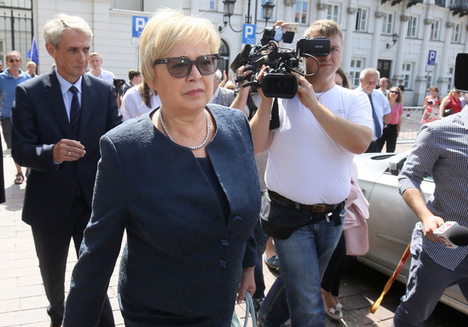
In their letter, the ICJ senior judges “condemn the recent forced retirement of 27 out of 72 Polish Supreme Court justices, including its President Małgorzata Gersdorf (photo), and urge President Duda to act immediately to restore the independence of the judiciary by reinstating them in office.”
They express grave concern “that the effective dismissal of one third of the Supreme Court, coupled with the broad discretion given to the President’s office to make exceptions, has taken place in contravention of international human rights law and standards, including the right to a fair hearing, and is contrary to basic principles of the rule of law.”
Finally, the “undersigned jurists urge the President of the Republic of Poland to act immediately to restore the independence of the judiciary by reinstating the Supreme Court justices forced into retirement, follow the recommendations of the European Commission on judicial reform, and take action to repeal the law on the Supreme Court that strikes at the very core of judicial independence.”
The signatories
- Justice Adolfo Azcuna, former Associate Justice of the Supreme Court of the Philippines
- Justice Solomy Balungi Bossa, Ugandan Judge on the International Criminal Court
- Justice Ian Binnie, retired Justice of the Supreme Court of Canada
- Justice Azhar Cachalia, Judge of the Supreme Court of Appeal of South Africa
- Dame Silvia Cartwright, former Judge of the High Court in New Zealand and of the Extraordinary Chambers in the Courts of Cambodia
- Justice Moses Chinhengo, Judge of the High Court of Botswana
- Justice Martine Comte, former President of the Orleans Court of Appeal, France
- Justice Radmila Dracigevic-Dicic, Acting President of the Supreme Court of Appeals, Judge of the Supreme Court of Serbia
- Justice Elizabeth Evatt, former Chief Justice of the Family Court of Australia
- Justice Claire L’Heureux-Dubé, former Justice of the Supreme Court of Canada
- Justice Paul J. G. Kapteyn, former Judge of the European Court of Justice
- Justice Michael Kirby, former Justice of the High Court of Australia and former President of the International Commission of Jurists
- Justice Kalthoum Kennou, Judge of the Tunisian Cassation Court
- Justice Ketil Lund, former Justice of the Norwegian Supreme Court
- Justice Qinisile Mabuza, Judge of the High Court of Swaziland
- Justice Egbert Myjer, former Judge of the European Court of Human Rights
- Justice Michèle Rivet, former President of the Quebec Human Rights Tribunal
- Justice Kalyan Shrestha, former Chief Justice of the Nepalese Supreme Court
- Justice Philippe Texier, Judge of the French Court of Cassation
- Justice Lillian Tibatemwa-Ekirikubinza, Justice of the Supreme Court of Uganda
- Justice Stefan Trechsel, former ad litem Judge at the International Criminal Tribunal for the former Yugoslavia
- Dr Rodrigo Uprimny Yepes, former Assistant Justice of the Constitutional Court of Colombia
Poland-Reinstate forcibly retired judges-Advocacy-Open letters-2018-ENG (full text of letter in PDF)