Aug 27, 2018 | Nouvelles, Plaidoyer
Aujourd’hui, la CIJ a publié une note d’information juridique sous la forme d’un questions-réponses (uniquement disponible en anglais) dans laquelle elle énonce ce qui est requis pour pouvoir prouver un génocide, et en particulier, l’élément d’«intention génocidaire».
La note d’information de la CIJ sort au moment où la Mission internationale indépendante d’établissement des faits au Myanmar (FFM) appelle à enquêter les crimes commis au regard du droit international, y compris le génocide.
Le génocide est un crime particulièrement odieux dont la genèse en tant que crime de droit international réside dans la politique d’extermination du régime nazi pendant la Seconde Guerre mondiale.
En vertu du droit international coutumier et de la Convention pour la prévention et la répression du crime de génocide de 1948 («convention sur le génocide»), tous les États ont le devoir de prévenir et de punir le génocide.
Les agences des Nations Unies et des experts indépendants ont rapporté des informations crédibles et cohérentes selon lesquelles des crimes graves en vertu du droit national et international ont été commis contre les musulmans Rohingya au Myanmar, y compris les crimes contre l’humanité de déportation, viol et meurtre.
Un certain nombre d’experts et d’autorités ont également suggéré qu’un génocide avait été commis et ont demandé des enquêtes à ce sujet.
Aujourd’hui, la FFM a demandé l’ouverture d’une enquête sur un génocide dans le nord de l’État de Rakhine, ainsi que sur des crimes contre l’humanité et des crimes de guerre dans les États de Rakhine, Kachin et Shan.
Cette annonce fait suite à la déclaration du Haut-Commissaire des Nations Unies aux droits de l’Homme, Zeid Ra’ad al-Hussein, en décembre 2017, selon laquelle “des éléments de génocide pourraient exister”.
Et en mars 2018, le Rapporteur spécial des Nations Unies sur la situation des droits de l’Homme au Myanmar, Yanghee Lee, et le Conseiller spécial des Nations Unies pour la prévention du génocide, Adama Dieng, ont évoqué la possibilité que le traitement des Rohingyas par le Myanmar puisse constituer un génocide.
Les Rohingyas constituent la grande majorité des plus de 700’000 personnes déplacées à la suite d’opérations de sécurité commandées par l’armée du Myanmar dans le nord de l’État de Rakhine, à la suite d’attaques perpétrées le 25 août 2017 par l’Armée Arakan Rohingya (ARSA).
Le génocide est un crime complexe qui, dans de nombreux cas, peut être difficile à établir au-delà du doute raisonnable dans un procès.
L’un des domaines qui s’est révélé particulièrement difficile est la nécessité de prouver «une intention spéciale» ou une «intention génocidaire», qui est un élément constitutif et distinctif essentiel du crime de génocide.
La note d’information juridique devrait aider ceux qui examinent si un génocide a été commis contre la population Rohingya et, dans l’affirmative, si quelqu’un peut être tenu individuellement pénalement responsable.
La note d’information juridique répond aux questions suivantes:
1. Quelle est la définition du génocide?
2. Que signifie légalement une “intention génocidaire”?
3. Quelles sont les similitudes et les différences entre les crimes relevant du droit international en matière de persécution et de génocide?
4. Comment les différentes juridictions ont-elles abordé les intentions génocidaires de manière factuelle?
5. Dans quelle mesure l’élément d’intention des crimes sous-jacents contre l’humanité en matière de de déportation ou de transfert forcé à l’intention génocidaire est-il pertinent?
Contact
Kingsley Abbott, ICJ Senior Legal Adviser, t: +66 (0)94 470 1345 ; e: kingsley.abbott(a)icj.org
Download
Universal-Genocide Q & A FINAL-Advocacy-analysis brief-2018-ENG (PDF en anglais)
Jul 16, 2018 | Multimedia items, News, Video clips
Changes within the Commission enhance the organization’s capacity to respond to increased threats to rights protection via erosion of the rule of law, particularly in relation to the independence of the judiciary.
The ICJ is pleased to announce new leadership at the ICJ as Professor Robert K. Goldman (US) has been elected President of the organization and Justice Radmila Dragicevic-Dicic (Serbia) has been elected Vice-President, a role she will undertake jointly with Professor Carlos Ayala (Venezuela) who was also appointed Vice-President earlier in the year.
Professor Robert K. Goldman served as Acting President of the ICJ following the sad passing of former President Professor Sir Nigel Rodley in 2017.
The President and Vice-Presidents are supported by the Executive Committee, which has also been bolstered by new members Justice Sir Nicolas Bratza (UK), former President of the European Court of Human Rights; Dame Silvia Cartwright (New Zealand), former Governor-General of New Zealand; and Shawan Jabarin (Palestine), prominent human rights activist and Director General of Al-Haq, an independent Palestinian non-governmental human rights organization.
“I am honoured to have been elected President of the ICJ and to be able to work with such proficient and inspiring jurists amongst ICJ leadership and in the wider Commission itself, without whom the ICJ could not provide the expertise and leadership it does on such a wide range of human rights issues,” said Professor Robert K. Goldman, ICJ President.
“Those that have taken on a new role in ICJ leadership will help guide the organization in augmenting efforts to defend the rule of law amidst the current political backdrop of increasing antipathy and hostility towards rights protections,” he added.
In addition to these changes in the senior leadership of the ICJ, the organization is also pleased to welcome five new members:
Justice Chinara Aidarbekova (Kyrgyzstan), judge of the Constitutional Chamber of the Supreme Court of Kyrgyzstan; Gamal Eid (Egypt), prominent lawyer and human rights defender; Jamesina Essie L. King (Sierra Leone), Commissioner of the African Commission on Human and Peoples’ Rights; Michael Sfard (Israel), prominent human rights lawyer who has represented many Israeli and Palestinian individuals and organizations; and Ambiga Sreenevasan, former President of the Malaysian Bar Council.
“The ICJ is alarmed by the increasing volume of worldwide attacks on the institutions that uphold human rights both at an international level, where UN mechanisms are constantly condemned rather than supported and enhanced to maximize their efficacy; and also on the local level, for example when we see the independence of the judiciary, an essential element of maintaining rights protections, coming under attack in places like Guatemala, Poland and South Korea,” said Saman Zia-Zarifi, ICJ Secretary-General.
“The ICJ relies on its global advocates of human rights to advance and defend the rights of others through the culmination of their vast and varied expertise and I am pleased to welcome our newest Commissioners to help in this regard, ” said Zia-Zarifi.
A further nine Commissioners were elected to serve additional terms on the Commission:
Professor Roberto Garreton (Chile), Professor Robert K. Goldman, Hina Jilani (Pakistan), Professor Jose Antonio Martin Pallin (Spain), Justice Sanji Monageng (Botswana), Tamara Morschakova (Russia), Dr Jarna Petman (Finland), Belisario dos Santos Jr (Brazil) and Justice Philippe Texier (France).
Hina jilani (Pakistan) and Belisario dos Santos Jr (Brazil) were both also re-elected to the Exectuive Committee and Professor Marco Sassoli (Italy/Switzerland) and Justice Stefan Trechsel (Switzerland) were re-elected as Alternates to the Executive Committee.
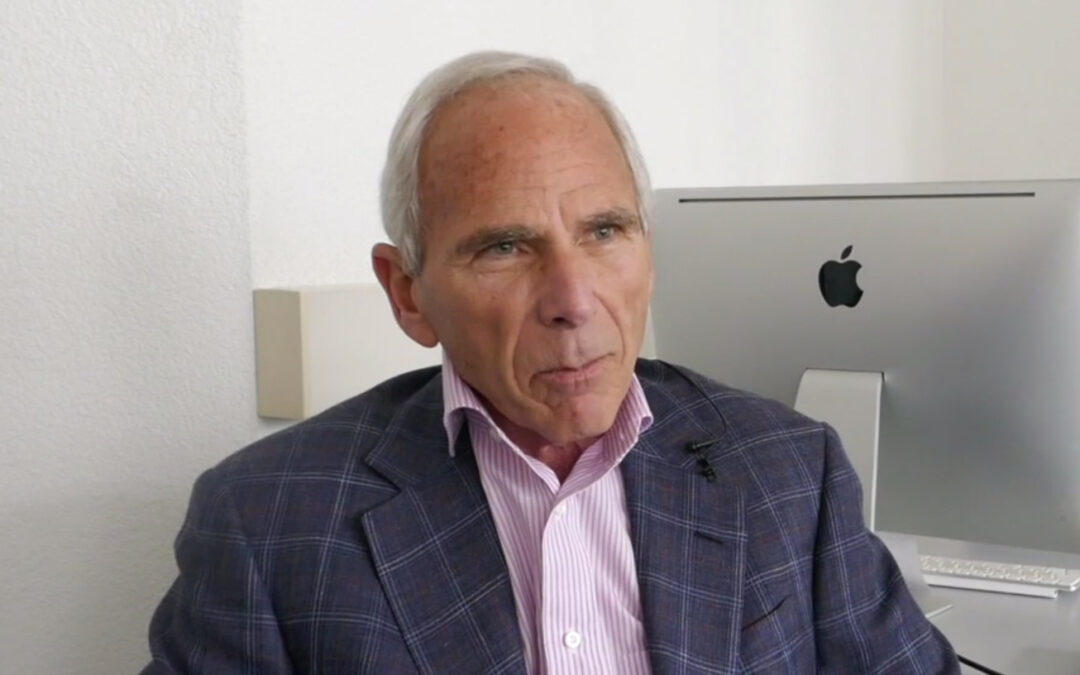
On video: Bob Goldman talks about the ICJ and the Rule of Law
Jul 11, 2018 | Advocacy, Non-legal submissions
The ICJ today joined other civil society organizations in calling for respect for human rights, and protection of and participation by civil society, to have a greater role in the UN Global Counter-terrorism Strategy.
The joint statement by the organizations followed adoption by the UN General Assembly on June 26th, 2018 of Resolution 72/284, reviewing the United Nations Global Counter-Terrorism Strategy. The UN’s Global Counterterrorism Strategy, first adopted in 2006, sets out a plan of action for the UN and member states at the global, regional, and national level to counter-terrorism.
The organizations emphasise the value of a global counter-terrorism strategy where human rights are an essential component. It notes that the General Assembly resolution importantly reaffirms states’ obligations to comply with international law, including international human rights law, while countering terrorism and that human rights are the “fundamental basis of the fight against terrorism.”
The joint statement expresses concern at States’ failure to adequately address human rights abuses in relation to counter-terrorism measures. It also sets out concerns about member states’ failure to provide an enabling environment for civil society entities, including those relating to women, to be meaningfully engaged in the Strategy review.
The full statement and list of organizations joining it can be downloaded in PDF format here: UN-Advocacy-JointStatement-CounterTerrorismStrategy-2018
Jul 10, 2018 | Advocacy, Non-legal submissions
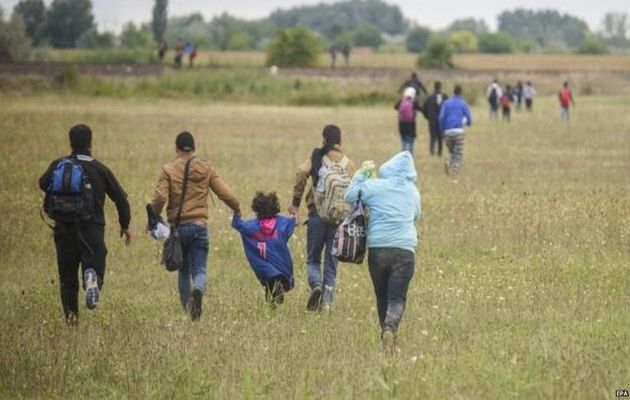
The ICJ has joined almost 180 other organizations in calling for the final draft of the UN Global Compact on Migration (GCM) to reflect strong legal protections for human rights.
Recognizing the potential of the GCM to protect migrants in irregular and/or vulnerable situations, civil society organizations are calling on all States to ensure that the final document truly lives up to the spirit of the New York Declaration for Refugees and Migrants.
The statement was presented to Member States and the GCM Co-Facilitators (the governments of Switzerland and Mexico) in an informal dialogue on Tuesday, 10 July.
The statement calls on States to address the following issues:
- Regular vs. irregular: The GCM must not include a distinction between migrants with regular status and those whose status is irregular which falls below human rights law, international labor standards and other international obligations.
- Non-Refoulement: The GCM must explicitly mention the principle of non-refoulement, which prohibits returning a person to a place where her/his life would be in danger. Including it is fundamental to ensure that migrants are provided with full live-saving protection.
- Vulnerable situations: The GCM must address the situation of vulnerable migrants, and it must not weaken protection for victims of natural disasters and climate change, who are not adequately addressed in the Global Compact for Refugees.
- Right to privacy: The final document must protect migrants’ right to privacy of personal information. Otherwise, the GCM risks preventing them from accessing certain social services and discouraging them from participating in data collection efforts, which are vital for migration management.
- Criminalization of migrants and those who assist them: The GCM must avoid all provisions and language that criminalizes migrants crossing an international border in search of safety or of people and organizations that support to them.
- Detention of migrant children: The GCM must include provisions towards ending the practice of detaining migrant children by explicitly mentioning the availability and accessibility of non-custodial and community-based alternatives.
- Implementation, review, and follow-up mechanisms: The Compact needs robust implementation, review, and follow-up mechanisms to ensure accountability and transparency in achieving its goals. Civil society organizations ask for a fully mandated partnership role in implementation and monitoring the GCM.
To be effective, the statement concludes, migration management must be credible not only to States, but also to migrants.
The statement is available in PDF format here: UN-Advocacy-JointStatement-Migrants-2018

Jul 5, 2018 | Advocacy, Non-legal submissions
The ICJ and other NGOs today highlighted the need for the next UN High Commissioner for Human Rights to continue to maintain a strong voice and independent voice for human rights.
The statement was delivered by International Service for Human Rights (ISHR), on behalf of a number of NGOs, during a general debate at the UN Human Rights Council in Geneva. It read as follows:
“Thank you Mr. President,
We want to highlight key features for the next High Commissioner – the world’s premier human rights defender – whose mandate includes providing technical assistance and capacity building to States, as well as standing up for universal human rights and those who defend them.
The work of the next High Commissioner, and of human rights defenders more broadly, is essential to justice, fairness and dignity for all. Defenders contribute to sustainable and inclusive development. They combat corruption and the misuse of power. They promote good government, transparency and accountability. They seek to ensure that no-one gets left behind.
Despite this, around the world, defenders face mounting attacks and criminalisation for standing up to power, privilege, prejudice and profit. Their work has never been more important, nor more imperiled.
Mr President, it is in this context we say that the next UN High Commissioner needs to be a dedicated human rights defender. They need to be committed to working with and for human rights defenders; consulting and partnering with them, supporting their causes, and speaking out and protecting them when they are threatened or attacked.
The next High Commissioner needs to build strategic alliances with States, civil society, academics and business enterprises with a shared interest in human rights and the rule of law. They need to be fiercely independent, but also collaborative and capable of building influential partnerships and coalitions.
With the promotion, protection and realisation of human rights being linked to the attainment of peace, security and sustainable development, the next High Commissioner needs to be strongly supported by the UN Secretary-General and key UN agencies. Mr President, while the High Commissioner may be the UN’s premier human rights defender, it is time for the entire organisation to put human rights defenders up front.”
International Service for Human Rights
Cairo Institute for Human Rights Studies
Human Rights House Foundation
The International Lesbian, Gay, Bisexual, Trans and Intersex Association (ILGA)
CIVICUS
Peace Brigades International Switzerland
International Federation for Human Rights Leagues (FIDH)
Conectas Direitos Humanos
Asian Forum for Human Rights and Development (FORUM-ASIA)
West African Human Rights Networks
International Commission of Jurists (ICJ)