Apr 10, 2018 | News
The ICJ and its partner the Democracy Governance and Rights Unit (DGRU) of the University of Cape Town are holding a panel discussion on selection and appointment of judges within the auspices of the Launch of the Global Judicial Integrity Network.
This new Network is being launched by the UN Office on Drugs and Crime (UNODC) in Vienna, Austria on today.
The panel is aimed at discussing the implementation and monitoring of guidelines on the best practice for the appointment of judges (“guidelines”).
The Southern Africa Chief Justices’ Forum (SACJF) mandated the development of these guidelines through its Concluding Communiqué during the 2015 Annual Conference of East and Southern Africa Chief Justices, held at Victoria Falls in Zimbabwe.
The ICJ and the DGRU have been working on developing the guidelines, together with a subcommittee of the SACJF, with the aim of seeing them adopted at the SACJF’s annual general meeting to be held this year between August and September in Malawi.
“The UNODC Judicial Integrity Network launch in Vienna, Austria 9-10 April 2018 gives us an excellent opportunity to start thinking a bit further down the line, and identify, anticipate and develop responses to problems that may be experienced in implementing the guidelines at a national level,” said Arnold Tsunga, Africa Director of the ICJ.
While many very good standards have been developed and adopted in Africa in the field of human rights, rule of law, and good governance, a major challenge has been to see the standards implemented in practice.
“In addition to highlighting relevant global standards, the ICJ will also present its experiences from around the world in monitoring and overcoming obstacles to implementation of such guidelines,” said Matt Pollard the Director of the Centre for Independence of Judges and Lawyers at the ICJ.
“This should contribute to planning for effective implementation of the Southern African guidelines, and be of interest to the broader audience at the launch of the UNODC global network on judicial integrity.”
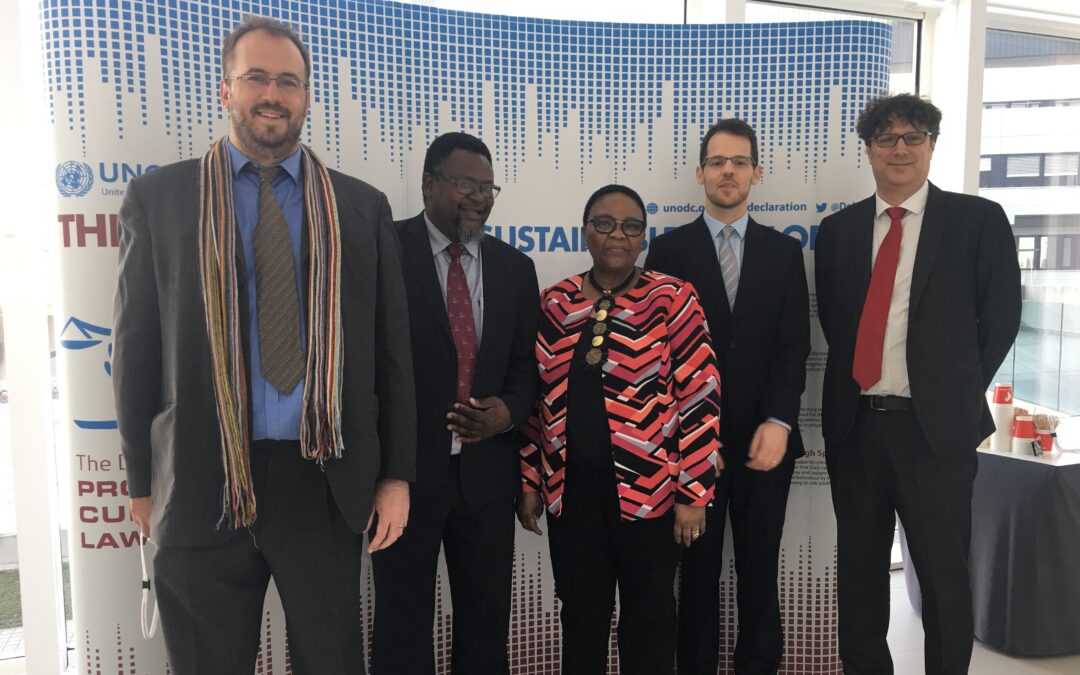
The panel to be moderated by Arnold Tsunga includes Hon. Sanji Monageng, ICJ Commissioner and Justice, International Criminal Court; Mr. Jan van Zyl Smit, Associate Senior Research Fellow, Bingham Centre for the Rule of Law; Mr. Christopher Oxtoby, Senior Researcher, Democratic Governance and Rights Unit, University of Cape Town; Mr Matt Pollard, Senior Legal Adviser and Director, CIJL, ICJ.
Fore more information contact Arnold Tsunga on arnold.tsunga@icj.org (+27716405926) or Matt Pollard on <matt.pollard@icj.org> (+41 79 246 54 75)
Universal – Vienna Panel on Selection – News – Webstory – ENG – 2018 (Further information in PDF)
Apr 3, 2018 | Events, News
The ICJ will present a panel discussion on the continued role of the rule of law in the 70th anniversary year of the Universal Declaration of Human Rights on Monday 16 April, 18.30-20.00, Room C1, Maison de la Paix, Geneva.
In a global context where pushback against rights protection is becoming increasingly more pronounced this panel discussion, organized in co-ordination with the Graduate Institute and supported by the Permanent Mission of Germany, will address critical areas of concern for the rule of law in upholding the universal rights set out in the UDHR 70 years ago.
The event, composed of diplomats, academics and legal experts from around the world, will look at issues around the realisation of rights set out in the UDHR, particularly in relation to gender and women’s rights, and will consider how these have been implemented domestically as well as how breaches of the UDHR have been treated as international crime.
Panellists will also comment on the role of the rule of law as set out in the Sustainable Development Goals in ensuring rights protection as an essential element of sustainable development.
The event will also assess how problems in human rights frameworks can be addressed in a way that strengthens the rule of law and human rights and will consider the increasing role of developing countries in taking ownership of the international rights framework initiated by the UDHR.
Introduction:
- Saman Zia-Zarifi, Secretary General of the ICJ
Panellists:
- Carlos Ayala, ICJ Vice-President and former Chair of the Inter-American Commission on Human Rights
- Andrew Clapham, Professor of Public International Law, The Graduate Institute, Geneva; Member of the UN Commission on Human Rights in South Sudan
- Luis Gallegos, Permanent Representative of Ecuador to the United Nations in Geneva
- Sanji Monageng, ICJ Commissioner and Judge at the International Criminal Court, The Hague
- Patricia Schulz, Member of the UN Committee on the Elimination of Discrimination against Women
Moderator:
- Robert Goldman, Acting ICJ President and Professor of Law, Washington College of Law, American University, Member of Eminent Jurists Panel on Terrorism, Counter-terroism and Human Rights
Sign up to the event via the link on the Graduate Institute’s website.
Universal – Rule of Law UDHR 70 – News – Events – 2018 – ENG (Event flyer in PDF)
Mar 14, 2018 | News
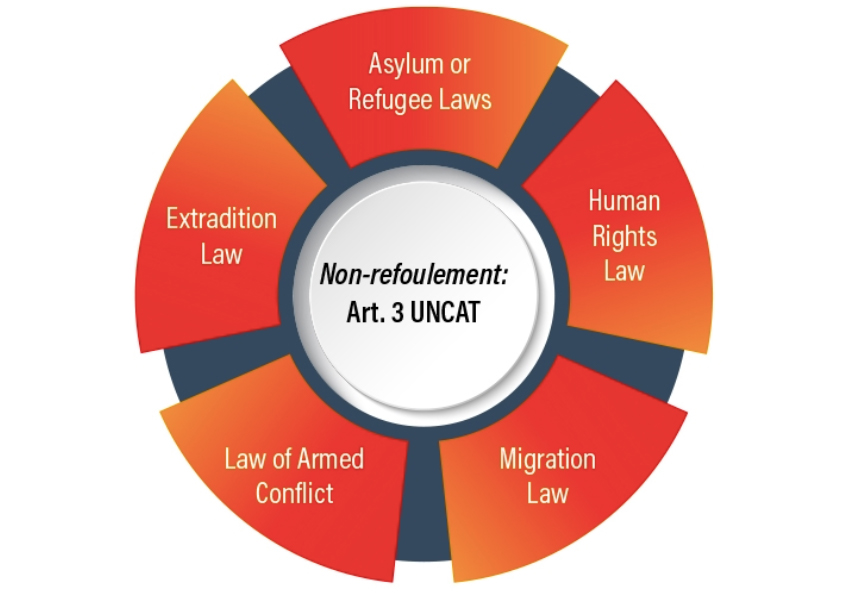
The new CTI tool on non-refoulement covers:
- constitutional and legislative provisions;
- national procedures;
- procedural rights to be guaranteed to those facing deportation or expulsion;
- training; and
- visa and stay arrangements for when return is prohibited.
There is also a section on non- refoulement in the extradition context.
The purpose of this and other CTI Implementation Tools is to inspire other States to take action through exchanges of good practices.
The tool also provides timely and practical information and advice for States in light of the recently released UN Committee against Torture’s General comment on the implementation of Article 3 of the Convention in the context of Article 22.
Some of the laws mentioned in this tool detail the powers that can be exercised by State authorities to remove a person and the constraints on those powers, as well as the relevant administrative and judicial procedures to be followed. National legislation has also detailed the rights of persons within those procedures (photo).
The tool was developed for the CTI by the ICJ with the support of the University of Bristol’s Human Rights Implementation Centre.
CTI’s series of UNCAT Implementation Tools are available here.
Mar 14, 2018 | Events, Multimedia items, News, Video clips
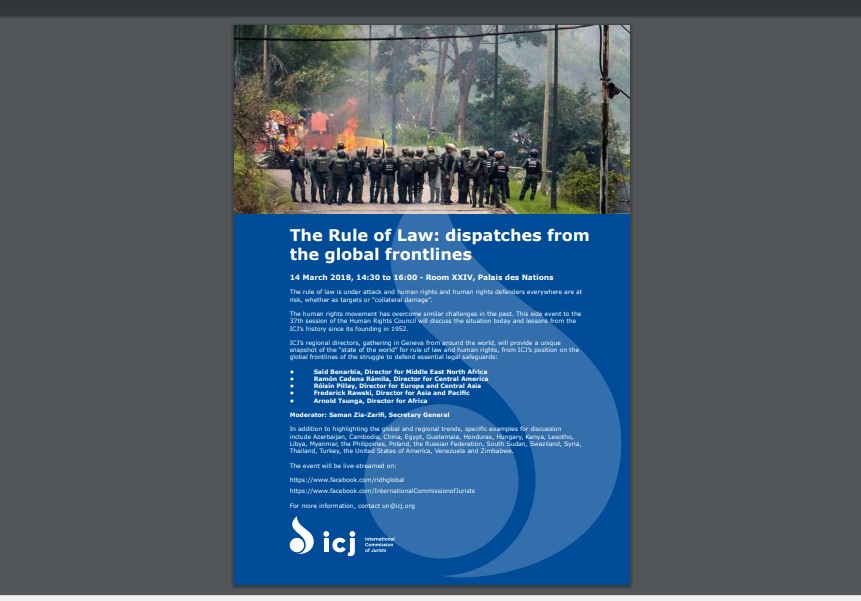
Today, the ICJ highlighted threats to and defenders of the rule of law around the world, at a side event to the UN Human Rights Council, at the Palais des Nations in Geneva.
The rule of law is under attack and human rights and human rights defenders everywhere are at risk, whether as targets or “collateral damage”.
The human rights movement has overcome similar challenges in the past. This side event to the 37th session of the Human Rights Council discussed the situation today and lessons from the ICJ’s history since its founding in 1952.
ICJ’s regional directors, gathering in Geneva from around the world, provided a unique snapshot of the “state of the world” for rule of law and human rights, from ICJ’s position on the global frontlines of the struggle to defend essential legal safeguards:
• Saïd Benarbia, Director for Middle East North Africa
• Ramón Cadena Rámila, Director for Central America
• Róisín Pillay, Director for Europe and Central Asia
• Frederick Rawski, Director for Asia and Pacific
• Arnold Tsunga, Director for Africa
Moderator: Saman Zia-Zarifi, Secretary General
In addition to highlighting the global and regional trends, specific examples for discussion included Azerbaijan, Cambodia, China, Egypt, Guatemala, Honduras, Hungary, Kenya, Lesotho, Libya, Myanmar, the Philippines, Poland, the Russian Federation, South Sudan, Swaziland, Syria, Thailand, Turkey, the United States of America, Venezuela and Zimbabwe.
For more information, contact un@icj.org
Watch the video:
https://www.facebook.com/ridhglobal/videos/10157996747579616/
Universal – Rule of law frontlines – News – Event – 2018 – ENG (Event flyer in PDF)
Mar 9, 2018 | Advocacy, Non-legal submissions
The ICJ today delivered an oral statement to the UN Human Rights Council, highlighting the need for substantive discussions towards a treaty on business and human rights to be transparent, broad-based with clear timelines.
The statement, which was made during the General Debate on item 3 with the Human Rights Council, read as follows:
Mr President,
Regarding the “Report on the third session of the open-ended intergovernmental working group on transnational corporations and other business enterprises with respect to human rights” (A/HRC/37/67), the ICJ notes with satisfaction the holding of the third session and congratulates the participants, especially the wide participation of civil society groups. The ICJ calls on States from all regions to engage meaningfully in the important work of the OEWG.
The discussions during the third session confirm the need for an international treaty in the area of business and human rights to fill the existing normative and legal protection gaps. Recent years have seen little improvement in this area despite the growing State and business discourse about policies and commitments. Harassment and attacks on human rights defenders that work in the area of corporate accountability have increased and the difficulties for victims of abuse to have access to an effective judicial remedy persist, especially at the transnational level.
The ICJ calls for a transparent and broad-based consultation process with clear timelines to move in the direction of a draft treaty on the basis of the document “Elements for a treaty” presented by the Chairperson –Rapporteur. The ICJ calls on all States and stakeholders to engage responsibly in this process to enable the fourth session of the Working Group to focus on substantive negotiations overcoming divisions on procedure and politics.
Thank you.