Sep 25, 2020 | Advocacy, Non-legal submissions
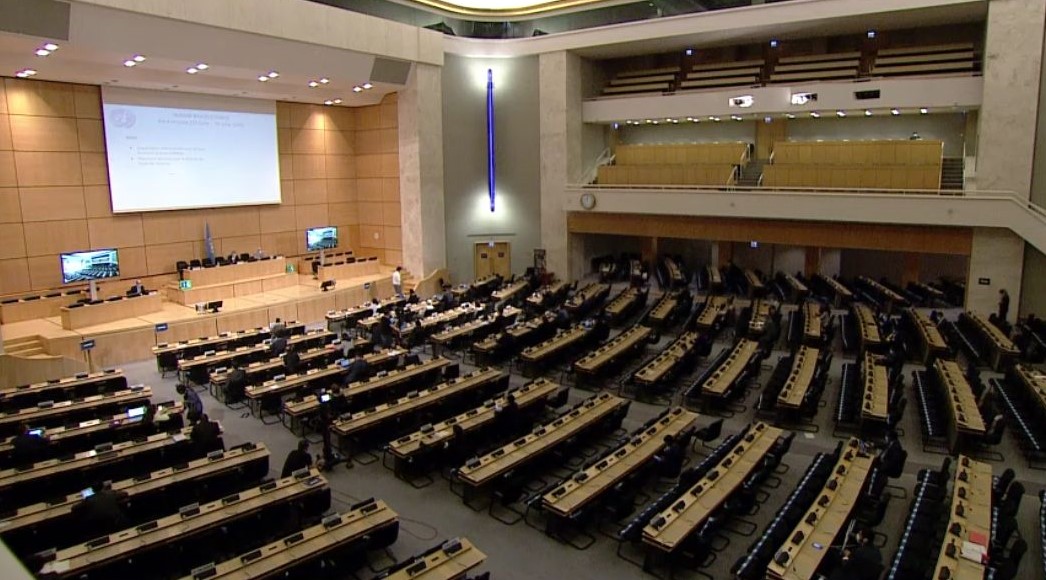
At the UN Human Rights Council, the ICJ and other NGOs have highlighted the joint civil society call for an international human rights monitoring mechanism on China.
The oral statement was delivered on behalf of the group of NGOs by Human Rights Watch, during the general debate on country situations. The statement builds on a joint open letter by more than 300 civil society organizations, including the ICJ, issued earlier this month.
The statement to the Human Rights Council read as follows:
“We join together to call for an international mechanism to address the Chinese government’s human rights violations, and urge the Human Rights Council to take decisive action to achieve this goal.
On 26 June 2020, an unprecedented 50 United Nations experts called for ‘decisive measures to protect fundamental freedoms in China.’ They highlighted China’s mass human rights violations in Hong Kong, Tibet, and Xinjiang, suppression of information in the context of the Covid-19 pandemic, and attacks on rights defenders, journalists, lawyers and critics of the government across the country.
Our organizations are also concerned about the impact of China’s rights violations world-wide. China has targeted human rights defenders abroad, suppressed academic freedom in countries around the world, and engaged in internet censorship and digital surveillance. We deplore China’s promotion of rights-free development and the ensuing environmental degradation at the hands of government-backed extractive industries, as well as the racist treatment of people in China, or by Chinese state actors in other parts of the world.
We are dismayed at China’s efforts to distort the mandate of the UN Human Rights Council by promoting ‘cooperation’ over accountability, and opposing initiatives to bring scrutiny of serious rights violations and international crimes in countries around the world. It has used its seat on the UN’s NGO Committee to baselessly deny accreditation to nongovernmental organizations (NGOs), while accrediting government-organized NGOs (GoNGOs). It has sought to deny access to human rights defenders to UN premises, denounced speakers on NGO side events as ‘terrorists,’ and threatened delegates to deter them from attending UN side events on rights violations, including abuses in Xinjiang.
When the UN High Commissioner for Human Rights, Special Procedures, and dozens of states urged China to comply with international human rights standards, China contended that they were ‘improper remarks’ that ‘grossly interfered’ with China’s sovereignty.
A state that tries to hold itself above any kind of scrutiny presents a fundamental threat to human rights. That China—a state with extraordinary global power—expects such treatment affects us all.
We therefore endorse the call by UN experts for a Special Session or Urgent Debate at the Human Rights Council to evaluate the range of violations by China’s government, and to establish an impartial and independent UN mechanism to closely monitor, analyze, and report annually on that topic. We urge the UN Secretary-General to appoint a Special Envoy, consistent with his Call to Action on Human Rights, and we call on the High Commissioner for Human Rights to fulfil her independent mandate to monitor and publicly report on China’s sweeping rights violations. We support the call that UN member states and UN agencies use all interactions with Chinese authorities to insist that the government comply with its international human rights obligations.
In the spirit of global solidarity and partnership, we urge the Council swiftly to counter and remediate grave human rights violations committed by Chinese authorities. No state should be above the law.”
Sep 7, 2020 | News
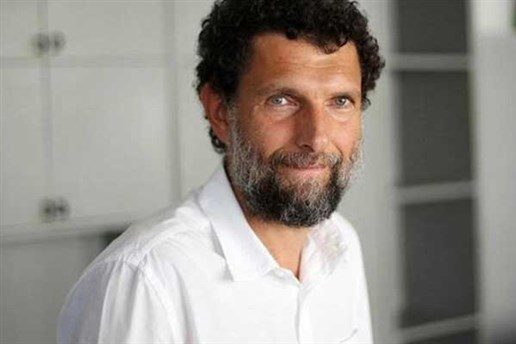
Turkish authorities should immediately release human rights defender Osman Kavala, in compliance with the Council of Europe Committee of Ministers’ decision of 3 September 2020, the International Commission of Jurists (ICJ), Human Rights Watch and the Turkey Human Rights Litigation Support Project said today.
The decision followed a Committee of Ministers hearing to assess the execution of the judgment of the European Court of Human Rights in the case of Osman Kavala. The Committee, acting in its supervisory capacity for Court Judgments, ordered the Turkish authorities, “to ensure the applicant’s immediate release,” pointing to, “a strong presumption that his current detention is a continuation of the violations found by the Court.”
“After the finding by the European Court of Human Rights that Kavala’s detention is unlawful, the Committee of Ministers has affirmed that Turkey is continuing to violate his rights by keeping him in detention” said Roisin Pillay, director of the Europe and Central Asia Programme at the International Commission of Jurists. “European Court rulings are binding, and Osman Kavala should be released immediately.”
Despite the unlawful detention and an acquittal by the Turkish criminal court presiding over his trial, Osman Kavala has been kept behind bars under a newly issued charge of “espionage” since March 2020. His lawyers are currently challenging the lawfulness of the detention before Turkey’s Constitutional Court. However, the Committee of Ministers indicated in its decision that Turkey should not wait for a ruling of the Constitutional Court but should release Kavala immediately.
In June, the ICJ, Human Rights Watch and the Turkey Human Rights Litigation Support Project made a detailed submission to the Committee of Ministers of the Council of Europe, which oversees enforcement of European Court of Human Rights judgments. The submission argued that the sequence of events and repeated local court decisions to ensure Kavala’s detention subsequent to the European Court’s ruling in December 2019 demonstrated that Turkey was prolonging the violations found by the European Court.
The European Court judgment in Kavala v. Turkey (Application no. 28749/18) found violations of the following provisions of the European Convention on Human Rights: Article 5(1) (right to liberty and security), Article 5(4) (right to a speedy decision on the lawfulness of detention), and the rarely used Article 18 (limitation on use of restrictions on rights) taken together with Article 5(1). The Court required Turkey to release Kavala and said that any continuation of his detention would prolong the violations and breach the obligation to abide by the judgment in accordance with Article 46(1) of the Convention.
The judgment on Osman Kavala’s case is particularly significant because it is the first final ruling of the European Court of Human Rights against Turkey in which the Court determined that, in interfering with an individual’s rights, Turkey acted in bad faith and out of political motivations, violating Article 18 of the European Convention on Human Rights. The Court said that by detaining Kavala since November 2017 and prosecuting him, the Turkish authorities had “pursued an ulterior purpose, namely to silence him as human rights defender.”
Kavala has been held in detention since November 2017, initially on bogus allegations that he used the 2013 Istanbul Gezi Park protests as a pretext for an attempt to overthrow the government, and that he was involved in the July 15, 2016 attempted military coup. On February 18, 2020, Kavala and his eight co-defendants were acquitted on charges of “attempting to overthrow the government by force and violence” in the Gezi Park trial.
But Kavala was not released, and a court ordered his detention again immediately on one of the grounds for his initial detention on 1 November 2017, namely the charge of “attempting to overthrow the Constitution by force and violence” because of the ongoing July 15, 2016 coup attempt-related investigation against him. Turkey’s President Recep Tayyip Erdoğan had publicly criticized his acquittal just before he was detained again. Weeks later a court ordered his detention a second time on another charge (“espionage”) but under the same investigation file on the coup attempt and relying on the same evidence.
“The decision by the Council of Europe Committee of Ministers confirms our submission that political considerations are behind the court orders prolonging Osman Kavala’s detention , and that there has been a concerted official effort to prevent Kavala’s release,” said Emma Sinclair-Webb, Turkey director at Human Rights Watch.
“Instead of complying with the European Court’s judgment, Turkey has continued to violate Kavala’s human rights.”
The targeted harassment in Turkey of rights defenders is part of a wider practice of arbitrary detentions and abusive prosecutions of journalists, elected politicians, lawyers, and other perceived government critics. This practice has been well-documented in many reports by the Council of Europe, the European Union, and human rights organizations.
“The campaign of persecution against Osman Kavala and the failure to release him and drop all charges have perpetuated a chilling environment for all human rights defenders in Turkey,” said Ayşe Bingöl Demir, co-director of the Turkey Human Rights Litigation Support Project.
“Ending this blatantly unlawful detention, which has been ongoing for over 1000 days, will not only play a role in preventing further violations to Osman Kavala’s rights, it will also give a strong signal to the human rights defenders community that the oversight mechanisms in place to ensure Turkey’s compliance with its international human rights obligations can still be effective.”
Contact:
Róisín Pillay, Director of ICJ’s Europe and Central Asia Programme, t: +32-2-734-84-46 ; e: roisin.pillay(a)icj.orgMassimo Frigo, Senior Legal Adviser, ICJ’s Europe and Central Asia Programme, t: +41-79-749-99-49 ; e: massimo.frigo(a)icj.org ; Twitter: @maxfrigo
Türkiye: Osman Kavala Serbest Bırakılmalı
Yetkililer, Avrupa Konseyi’nin İnsan Hakları Savunucusunu Serbest Bırakma Kararına Uymalıdır
(Cenevre, 7 Eylül 2020) Uluslararası Hukukçular Komisyonu (ICJ), İnsan Hakları İzleme Örgütü ve Türkiye İnsan Hakları Davalarına Destek Projesi, yaptıkları açıklamada Türkiye makamlarının insan hakları savunucusu Osman Kavala’yı Avrupa Konseyi Bakanlar Komitesinin 3 Eylül 2020 tarihli kararına uygun olarak derhal serbest bırakması gerektiğini ifade etti.
Bu karar, Osman Kavala davasında Avrupa İnsan Hakları Mahkemesi’nin kararının uygulanmasını değerlendiren Bakanlar Komitesi oturumunu müteakiben alındı. Mahkeme kararlarının uygulanmasını denetleme yetkisi olan Komite, Türk makamlarına “başvuranın derhal serbest bırakılmasını sağlama” talimatı vererek “mevcut tutukluluğunun mahkeme tarafından tespit edilen ihlallerin devamı olduğuna dair güçlü bir karine bulunduğuna” işaret etti.
Uluslararası Hukukçular Komisyonu Avrupa ve Orta Asya Programı Direktörü Roisin Pillay,” Avrupa İnsan Hakları Mahkemesi’nin, Kavala’nın tutukluluğunun hukuka aykırı olduğunu tespit etmesinden sonra, Bakanlar Komitesi, Türkiye’nin Kavala’nın tutukluluğunu sürdürerek onun haklarını ihlal etmeye devam ettiğini doğruladı” dedi. Pillay, “Avrupa Mahkemesi kararları bağlayıcıdır ve Osman Kavala derhal serbest bırakılmalıdır” dedi.
Hukuka aykırı tutukluluğuna ve davasının görüldüğü Ceza Mahkemesinin verdiği beraat kararına rağmen, Osman Kavala yeni ileri sürülen bir “casusluk” suçlaması nedeniyle Mart 2020’den bu yana parmaklıklar ardında tutulmaya devam ediliyor. Kavala’nın avukatları, Türkiye’nin Anayasa Mahkemesi önünde tutukluluğun hukuksuz olduğuna ilişkin itirazlarda bulunuyorlar. Ancak Bakanlar Komitesi, kararında Türkiye’nin Anayasa Mahkemesinin vereceği bir kararı beklemeksizin Kavala’yı derhal serbest bırakması gerektiğini işaret ediyor.
Haziran ayında, ICJ, İnsan Hakları İzleme Örgütü ve Türkiye İnsan Hakları Davalarına Destek Projesi, Avrupa İnsan Hakları Mahkemesi kararlarının uygulanmasını denetleyen Avrupa Konseyi Bakanlar Komitesi’ne ayrıntılı bir bildirim sundu. Bildirim, Avrupa Mahkemesi’nin Aralık 2019’daki kararının ardından Kavala’nın alıkonmasını sağlamak için gelişen olaylar serisinin ve tekrarlanan yerel mahkeme kararlarının, Türkiye’nin Avrupa Mahkemesi tarafından tespit edilen ihlalleri devam ettirdiğini gösterdiğini savundu.
Avrupa Mahkemesi, Kavala/Türkiye kararında (Başvuru no. 28749/18), madde 5/1 (özgürlük ve güvenlik hakkı), madde 5/4 (alıkonmanın yasaya uygunluğuna ilişkin ivedi karar alma hakkı) ve nadiren kullanılan madde 18 (haklara getirilecek kısıtlamaların sınırlanması) ile birlikte madde 5/1’in ihlal edildiğine karar vermiştir. Mahkeme, Türkiye’nin Kavala’yı tahliye etmesini zorunlu kılmış, tutukluluğunun devam etmesinin ihlalleri devam ettireceğini ve Sözleşmenin 46(1) maddesi uyarınca AİHM kararlarına uyma yükümlülüğünü ihlal edeceğini belirtmiştir.
Osman Kavala kararı, Türkiye’nin kötü niyetle ve siyasi amaçlarla bir bireyin haklarına müdahale ettiğini ve Avrupa İnsan Hakları Sözleşmesi’nin 18. maddesini ihlal ettiğini tespit eden Türkiye aleyhindeki ilk nihai karar olduğundan özel bir önem taşımakta. AİHM, Osman Kavala’yı Kasım 2017’den bu yana alıkoyup yargılayan Türk makamlarının “başvuranın bir insan hakları savunucusu olarak susturulmasını sağlamak için örtülü bir amaç taşıdığını” tespit etmişti.
Kavala, Kasım 2017’den bu yana, 2013 İstanbul Gezi Parkı protestolarını, hükümeti devirme girişimi için kullandığı ve 15 Temmuz 2016 askeri darbe girişimine müdahil olduğu yönündeki asılsız iddialarla tutuklu. 18 Şubat 2020’de Kavala ve diğer sekiz sanık, Gezi Parkı davasında “cebir ve şiddet kullanarak hükümeti ortadan kaldırmaya teşebbüs” suçlamasından beraat etmiştir.
Ancak Kavala cezaevinden tahliye edilmemiş ve bir hakim kararıyla 2016 darbesiyle ilgili devam eden bir soruşturmayla ilişkili olarak “anayasal düzeni cebir ve şiddet kullanarak ortadan kaldırmaya teşebbüs” suçlamasıyla tekrar tutuklanmıştır. Tekrar tutuklanmasından kısa bir süre önce Cumhurbaşkanı Recep Tayyip Erdoğan halka açık şekilde Kavala’nın beraatini eleştirmiştir. Kavala haftalar sonra, yine bu delillere ve soruşturma dosyasına dayanan bir başka suçlama ile (casusluk) bir kez daha tutuklanmıştır.
İnsan Hakları İzleme Örgütü Türkiye Direktörü Emma Sinclair-Webb,” Avrupa Konseyi Bakanlar Komitesi’nin kararı bildirimimizi doğrulamakta, Osman Kavala’nın tutukluluk halini uzatan mahkeme kararlarının arkasında siyasi değerlendirmelerin olduğunu ve Kavala’nın serbest bırakılmasını önlemek için ortak bir resmi çabanın bulunduğunu ortaya koymaktadır” dedi.
Sinclair-Webb, “Avrupa Mahkemesi’nin kararına uymak yerine, Türkiye, Kavala’nın insan haklarını ihlal etmeye devam etmiştir” dedi.
Türkiye’de insan hakları savunucularına yönelik baskı, daha genel olarak gazetecilere, seçilmiş siyasetçilere, hukukçulara, hükümeti eleştirdiği düşünülenlere yönelik keyfi alıkoymalar ve yargısal tacizin bir parçasıdır. Bu uygulama Avrupa Konseyi, Avrupa Birliği ve insan hakları örgütlerine ait birçok raporla belgelendirilmiştir.
Türkiye İnsan Hakları Davalarına Destek Projesi Eş Direktörü Ayşe Bingöl Demir “Kavala’ya karşı yürütülen yıldırma kampanyası, onun tahliye edilmemesi ve hakkındaki suçlamaların düşürülmemesi, Türkiye’deki tüm insan hakları savunucuları için baskı ortamının sürmesine sebep olmuştur” dedi.
“1000 gün boyunca devam eden açıkça hukuka aykırı olan tutukluluğun sona ermesi, yalnız Osman Kavala’nın haklarının daha fazla ihlal edilmesini önlemek konusunda değil, aynı zamanda insan hakları savunucuları topluluğuna Türkiye’nin uluslararası insan hakları yükümlülüklerine uyumunu denetleyen mevcut gözetim mekanizmalarının hala etkili olabileceği yönünde güçlü bir sinyal verecektir.”
İnsan Hakları İzleme Örgütü’nün Türkiye ile ilgili diğer raporları için tıklayınız:
https://www.hrw.org/europe/central-asia/turkey
Daha fazla bilgi için :
İstanbul’da, Emma Sinclair-Webb (İngilizce, Türkçe): +90-538-972-4486 (Whatsapp); ya da sinclae@hrw.org. Twitter: @esinclairwebb
Cenevre’de, Massimo Frigo (İngilizce, Fransızca, İspanyolca ve İtalyanca): +41-79-749-99-49; ya da massimo.frigo@icj.org. Twitter: @maxfrigo
Brüksel’de, Róisín Pillay (İngilizce, Fransızca): +32-2-734-84-46 (cep telefonu); ya da roisin.pillay@icj.org
New York’ta, Aisling Reidy (İngilizce) +1-917-378-3178 (cep telefonu); ya da reidya@hrw.org
Jul 1, 2020 | News
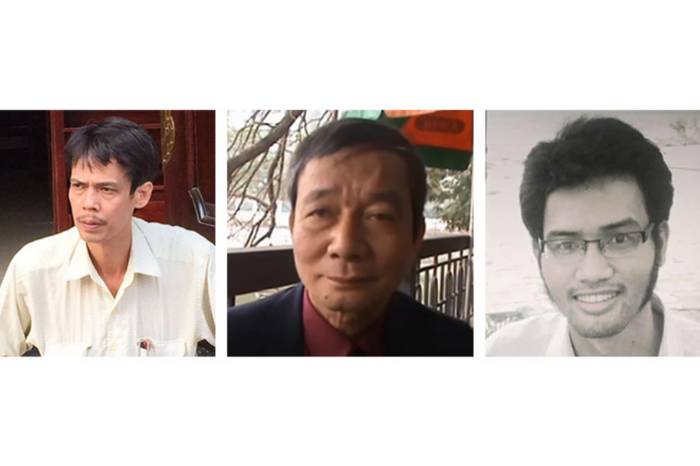
On 30 June, the ICJ and five other organizations sent open letters to the Prime Minister of Vietnam and the European Union (EU) calling for the immediate and unconditional release of human rights defenders, Dr. Phạm Chí Dũng, Nguyễn Tường Thụy and Lê Hữu Minh Tuấn.
The ICJ, Boat People SOS, Human Rights Watch, International Federation for Human Rights, VETO! Human Rights Defenders’ Network and Vietnam Committee on Human Rights in their address to the Prime Minister, urged the Vietnamese government to cease all harassment of other activists from the Independent Journalists Association of Vietnam (IJAVN).
In November 2019, Dr. Phạm Chí Dũng, founding member and Chairman of IJAVN, was arrested in Ho Chi Minh City for allegedly “making, storing, distributing or disseminating materials” that “oppose the State” in violation of article 117 of Vietnam’s Penal Code. He has since been held in incommunicado detention.
Following Phạm’s arrest, a number of persons were subjected to various forms of harassment up to and including arrest and prosecution in connection with their IJAVN membership. In May and June 2020, two IJAVN members, journalist Nguyễn Tường Thụy and law student Lê Hữu Minh Tuấn, were arrested in Hanoi and Quang Nam provinces on similar charges.
In their letters, the ICJ and other organizations raised concerns that Phạm had been targeted and arrested for his human rights advocacy. From 2013 till his arrest, Phạm wrote independently on key rights issues in Vietnam, including on freedom of expression, labour rights, detention of human rights defenders, and harassment of independent civil society. In July 2012, he was arbitrarily arrested under charges of “conducting propaganda against the State” and released in February 2013 after months in prison without trial. In 2014, he was prevented by Vietnamese authorities from travelling to Geneva to participate in a United Nations Human Rights Council side-event connected to the Universal Periodic Review of Vietnam, following which his passport was confiscated.
The organizations noted that the arrest and arbitrary detention of Phạm, Nguyễn Tường Thụy and Lê Hữu Minh Tuấn contravened article 19 of the International Covenant on Civil and Political Rights (ICCPR) which guarantees the right to freedom of expression, as they appeared to have been politically motivated to curtail the rights of the three individuals to freely express their opinions and share information relating to domestic affairs.
In a 2019 ICJ report on freedom of expression and information online across Southeast Asia, national security-related provisions in Vietnam’s Penal Code, including article 117, were shown to have often been abused to curtail free speech and access to information online.
The organizations further noted that the prolonged incommunicado detention of Phạm constituted a violation of the prohibition on torture and other ill-treatment, the right to liberty and the right to be treated with dignity under articles 7, 9 and 10 of the ICCPR.
They further called on Vietnam to protect and facilitate the work of human rights defenders in line with the UN Declaration on the Right and Responsibility of Individuals, Groups and Organs of Society to Promote and Protect Universally Recognized Human Rights and Fundamental Freedoms (Human Rights Defenders Declaration).
The letter to the Prime Minister of Vietnam by the ICJ, Human Rights Watch and VETO! Human Rights Defenders’ Network is available here.
The letter to the European Union by the ICJ, Boat People SOS, Human Rights Watch, International Federation for Human Rights, VETO! Human Rights Defenders’ Network and Vietnam Committee on Human Rights is available here.
Contact
Frederick Rawski, ICJ Asia and Pacific Regional Director, e: frederick.rawski(a)icj.org
See also
ICJ, ‘Dictating the Internet: Curtailing Free Expression, Opinion and Information Online in Southeast Asia’, December 2019
May 12, 2020 | Advocacy, Non-legal submissions
The ICJ has written to the Commissioner for Human Rights and the Rapporteurs on Turkey of the Parliamentary Assembly to alert them to the continued detention of Selahattin Demirtaş and Osman Kavala despite rulings by the European Court of Human Rights.
The International Commission of Jurists recalled that in both the Demirtaş and Kavala cases the European Court of Human Rights, in finding a violation of article 18 ECHR, determined that the detention of the applicants had been ordered in pursuance of an ulterior purpose than those allowed by article 5.1 ECHR.
That purpose was silencing of human rights and other activists, stifling pluralism and limiting freedom of political debate and utilizing pre-trial detention as a method of arbitrary punishment.
The Turkish government is however not releasing the applicants on the ground that the Chamber judgments have not yet become final.
Meanwhile, the authorities have initiated new investigations against both Demirtas and Kavala, and issued new detention orders on similar though not identical charges as those reviewed in the Court’s judgments, with the apparent intent not to implement the ECtHR judgments.
The ICJ considers that these developments may be seen as integral to the ulterior purpose identified by the Court in its Kavala and Demirtaş decisions. Under these conditions, both Kavala and Demirtaş may expect their arbitrary detention to be continued for an unlimited period of time through arrest orders based on fabricated investigations.
The ICJ further reiterated the importance of enabling access to alternatives to detention for all pre-trial detainees who may be at risk because of COVID-19 if they do not pose a current threat to public safety, regardless of the nature of the offences with which they have been charged. It stressed that, since Mr. Demirtaş and Kavala, along with many politicians and human rights defenders accused of security related offences in Turkey, do not pose a threat to public safety, they should be released as soon as possible.
ICJ-Letter-DemirtasKavala-PACERapporteurs-2020-eng (download the letter to the PACE Rapporteurs)
ICJ-Letter-KavalaDemirtas-CommissionerHR-2020-eng (download the letter to the Commissioner for Human Rights)
Sep 16, 2019 | Advocacy, News
Antonio Guterres should publicly condemn China’s widespread violations of the rights of its Muslim minority citizens, especially in Xinjiang Province, the ICJ demanded in a joint letter submitted along with Amnesty International, the International Federation for Human Rights (FIDH), Human Rights Watch, and the World Uyghur Congress.
The joint letter urged the UN Secretary-General to call for an end to widespread arbitrary detention of Muslim and minority communities through the immediate closure of Xinjiang’s ‘political education’ camps. Reports by the United Nations and human rights organizations have estimated that more than one million Muslims have been interned in extra-legal ‘political education’ detention camps.
“In the past few years, China’s violations in Xinjiang, including arbitrary detention, ill-treatment, pervasive surveillance and political indoctrination of Turkic Muslims, have intensified, and continue to worsen,” said Sam Zarifi, ICJ’s Secretary General.
“Quiet diplomacy has not worked. Mr. Guterres must exercise the full extent and power of his mandate as leader of the United Nations to demand and ensure protection of the rights of everyone in China, including all individuals in Xinjiang.”
The joint letter urged the UN Secretary-General to publicly support the creation of a UN fact-finding mission to assess the scale and nature of crimes under international law and human rights violations in Xinjiang. It further called on the UN Secretary-General to refrain from unqualified praise of China’s ‘Belt and Road’ Initiative – an investment initiative in which Xinjiang is a centerpiece – and to meet with representatives from the Uyghur community to hear first-hand of their plight.
“China has exerted immense and often inappropriate political pressure on individuals, governments and organizations criticizing its human rights violations,” said Zarifi. “The United Nations must push back against China’s political pressure and provide principled and steadfast leadership to end China’s political and cultural repression, and ongoing human rights violations in Xinjiang.”
Public criticism of China’s actions in Xinjiang has been growing. In August 2018, a member of the UN Committee on the Elimination of Racial Discrimination noted that China’s treatment of its Muslim minority citizens in Xinjiang had turned the region into a “‘no rights’ zone” with individuals being treated as “enemies of the State based on nothing more than their ethno-religious identity”. In March 2019, the UN High Commissioner for Human Rights, Michelle Bachelet, highlighted the need for her office to gain full access to facilitate independent and impartial investigation into ‘wide patterns of enforced disappearances and arbitrary detentions’ in the region. On 10 July 2019, 25 countries issued a joint statement calling on China to refrain from subjecting Uyghurs and other Muslim and minority communities in Xinjiang to arbitrary detention, surveillance and restrictions on freedom of movement.