Sep 12, 2017 | News, Publications, Reports, Thematic reports
The Venezuelan Supreme Court has ceased to act as an independent court upholding the rule of law, but has become an arm of an authoritarian executive, the ICJ said in a new report released today.
The ICJ report The Supreme Court of Justice: an instrument of executive power says that through a series of rulings issued since December 2015, the Venezuelan Supreme Court has progressively dismantled the rule of law, undermined human rights and failed to faithfully apply key elements of the country’s Constitution.
In rulings on 27 and 28 March 2017 (Sentencias 155 and 156), the Supreme Court of Justice (SCJ) delivered a blow to the rule of law, effectively claiming legislative powers for itself, depriving the National Assembly of its Constitutional powers and granting sweeping arbitrary powers to the executive, the ICJ notes.
“These decisions amount to a coup d’état against the Constitutional order and have ushered in a new reign of arbitrary rule,” said Sam Zarifi, the ICJ Secretary General.
The report analyses SCJ jurisprudence issued since December 2015 in the light of international law and standards, rule of law principles and the Venezuelan Constitution, and in relation to the Constitutional functions and faculties of the legislative power, parliamentary oversight, states of emergency and the amnesty.
It finds that:
- The SCJ has been decisively co-opted by the Venezuelan executive;
- The Court’s members are mainly from the United Socialist Party of Venezuela (Partido Socialista Unido de Venezuela) and/or ex-Government officials; and
- It has become a political instrument increasingly used against the political and social opposition.
The report also says the Court has interpreted the Constitution in an arbitrary manner, omitting to analyse key Constitutional standards while granting a supra-Constitutional status to standards of lesser rank.
It has abrogated due process and judicial review and so stripped the National Assembly of its Constitutionally mandated functions with regard to legislative matters, parliamentary oversight, regulation and internal administration in order to benefit the government politically, the ICJ adds.
“The rulings have not been issued with impartiality on the basis of facts and in accordance with law, as required under rule of standards,” Zarifi said.
“They are in flagrant violation of the Venezuelan Constitution. The SCJ has issued its decisions based on political considerations and ideological and party loyalties to the executive power,” he added.
The report also outlines key recommendations on the administration of justice which various UN and Inter-American procedures and bodies have made to Venezuela going back a number of years.
None of these recommendations appear to have been taken into account by the Venezuelan authorities. These include reparations ordered by the Inter-American Court of Human Rights, which are binding on Venezuela as a matter of law.
“The Venezuelan authorities are in breach of its international obligation to cooperate in good faith with international human rights bodies and procedures,” Zarifi said.
Finally, the report concludes that the SCJ has undermined the rule of law by violating the principle of the separation of powers and infringing upon the Constitutional functions and autonomy of the legislative power.
As a consequence of its decisions based on the political interests of the executive power, the SCJ has lost the essential attributes of an authentic judicial power, such as independence, impartiality, autonomy and legitimacy.
“The SCJ has assumed the role of giving an appearance of judicial legitimacy to the arbitrary political actions of the executive thus abandoning the exercise of its Constitutional function as the guarantor of the rule of law, human rights and fundamental freedoms,” Zarifi added.
Contact:
Sam Zarifi, ICJ Secretary General, t +41 79 726 44 15 ; e sam.zarifi@icj.org
Federico Andreu-Guzman, ICJ South America Representative, t +57 311 481 8094 ; e federico.andreu@icj.org
Download the report:
Venezuela-Suprem Court-Publications-Reports-Thematic reports-2017-ENG (in PDF)
Further readings:
Venezuela: rule of law and impunity crisis deepens
Venezuela: dismissal of Attorney General a further blow to the rule of law and accountability
Venezuela: Human rights and Rule of Law in deep crisis
Strengthening the Rule of Law in Venezuela
Sep 12, 2017 | Advocacy, Non-legal submissions
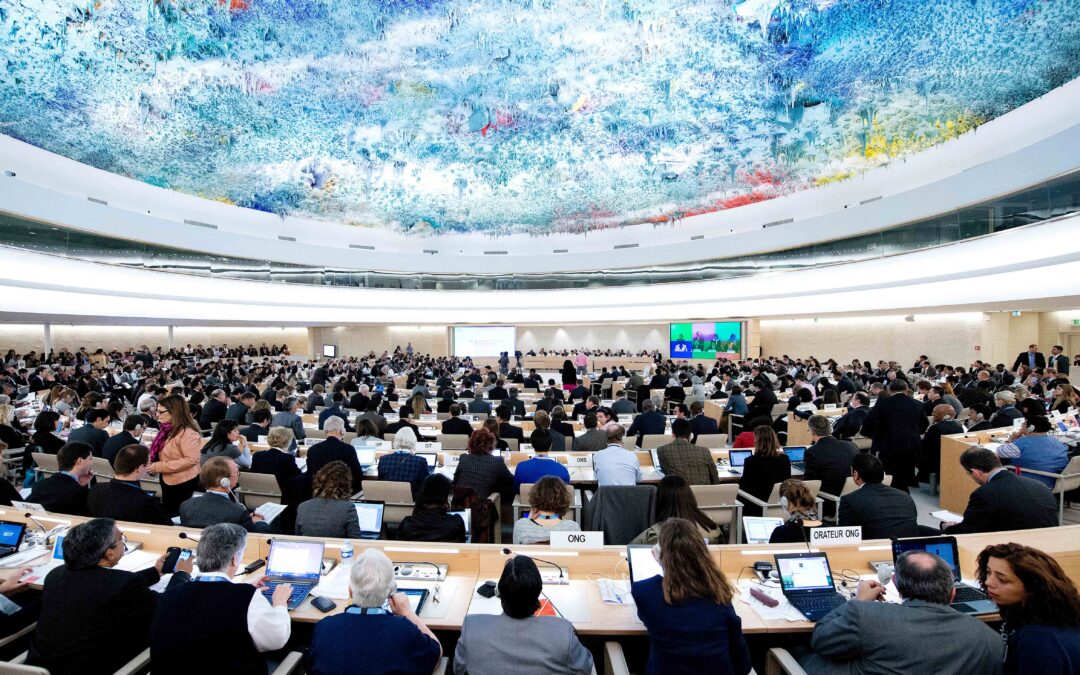
The ICJ today made an oral statement to the UN Human Rights Council, on the crisis for human rights and the rule of law in Venezuela.
The statement was made in general debate under item 2 on the oral update delivered by the High Commissioner for Human Rights.
The ICJ statement read as follows:
“The ICJ welcomes the efforts of the High Commissioner and his Office to document and draw attention to the situation in Venezuela, including through the report published on 30 August. As the High Commissioner highlighted, the situation only continues to worsen and the ICJ fully supports his call for the Council to establish an international investigation into human rights violations in Venezuela.
The deep human rights crisis and the breakdown of the rule of law in Venezuela is undoubtedly the most worrying situation in the American hemisphere.
Arbitrary detentions, extrajudicial and arbitrary executions, military trials of civilians and persecutions and harassments of opponents, dissidents and human rights defenders have become systematic and widespread practices.
The combined action of the Supreme Court of Justice, the Government and the National Constituent Assembly has destroyed the rule of law, suppressing the separation of powers, delivering a fatal blow to the Legislative, and seriously undermining independence and impartiality of the Judiciary.
The 1999 Constitution has de facto ceased to be in force and the road to arbitrary exercise of power has begun.
The ICJ considers that it is imperative that the Human Rights Council take action on this serious situation.”
The High Commissioner, in his oral update on 11 September, had stated as follows in relation to Venezuela:
“Last month my Office issued a report on Venezuela, highlighting excessive use of force by security officers, and multiple other human rights violations, in the context of anti-Government protests. There is a very real danger that tensions will further escalate, with the Government crushing democratic institutions and critical voices – including through criminal proceedings against opposition leaders, recourse to arbitrary detentions, excessive use of force, and ill-treatment of detainees, which in some cases amounts to torture. Venezuela is a Member State of this Council, and as such has a particular duty to “uphold the highest standards in the promotion and protection of human rights”, in the words of Resolution 60/251. My investigation suggests the possibility that crimes against humanity may have been committed, which can only be confirmed by a subsequent criminal investigation. While I support the concept of a national Truth and Reconciliation Commission, the current mechanism is inadequate. I therefore urge that it be reconfigured with the support and involvement of the international community. I also urge this Council to establish an international investigation into the human rights violations in Venezuela.”
The ICJ also launched today a new report on Venezuela, and convened a side event to discuss the need for action by the Human Rights Council.
Aug 22, 2017 | News, Publications, Reports, Thematic reports, Video clips
The institutional political crisis in Venezuela has brought the rule of law to near collapse and severely obstructed accountability for those responsible for gross human rights violations, the ICJ concluded in a report released today.
The ICJ’s report Achieving Justice for Gross Human Rights Violations in Venezuela found that the authorities led by President Nicolás Maduro have undertaken a sustained campaign to take control of the Supreme Court of Justice and, with the Supreme Court’s support, suspend the constitutional powers of the former National Assembly and subvert efforts to hold the executive to account within a rule of law framework.
“Rule of law in Venezuela has been replaced by rule of arbitrary executive power,” said Alex Conte, ICJ’s Global Accountability coordinator.
“The Constitution is disregarded, the judiciary cannot exercise its independent function, and the separation of powers is non-existent,” he added.
The ICJ’s report concludes that the human rights situation in Venezuela has deteriorated rapidly in recent years, particularly since 2014.
Extrajudicial and arbitrary executions, the practices of torture and ill-treatment, arbitrary detention, the trial of civilians by military courts and the criminalization and prosecution of political and social dissent have only increased.
“The political context of extreme polarization and the breakdown of the rule of law, along with the judiciary’s lack of independence, have severely obstructed accountability for those responsible for gross human rights violations,” said Conte.
“Victims and their families are left without justice.”
This situation has been further exacerbated by the recent dismissal of Venezuela’s Attorney General, described by the ICJ as a politically motivated act that violates international standards and removes one of the last institutional checks on executive authority and destroys one of the few glimmers of hope for an end to impunity for human rights violations.
Also troubling is the establishment by the new Consituent National Assembly of a ‘Truth Commission’, which the ICJ fears will be a politically manipulated instrument aimed at entrenching impunity for the executive and, when combined with President Maduro’s declaration that legal immunity will be stripped from National Assembly members that have opposed him, a tool to silence Government opposition, rather than to help discharge Venezuela’s duty to promptly, independently and effectively investigate allegations of gross human rights violations.
“Venezuela’s situation of entrenched impunity cannot be resolved without the establishment of an independent judicial authority that can address human rights violations, deter further violations and help bring back the rule of law,” Conte added.
Contact:
Alex Conte, ICJ Global Redress and Accountability Initiative, t: +41 79 957 27 33; e: alex.conte(a)icj.org
Federico Andreu Guzman, ICJ Senior Legal Adviser, Americas, e: Federico.andreu(a)icj.org
Venezuela-GRA Baseline Study-Publications-Reports-Thematic reports-2017-ENG (full report, PDF)
Read also:
ICJ Position Paper on the Dismissal of the Attorney General of Venezuela (August 2017)
ICJ Report, Venezuela: The Sunset of the Rule of Law (October 2015)
ICJ Report, Strengthening the Rule of Law in Venezuela (November 2014)
Jul 25, 2017 | News
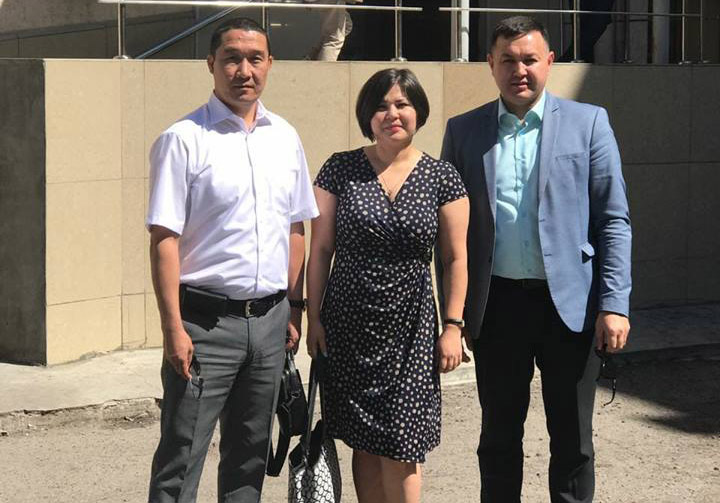
Today the ICJ expressed concern about the real threat of criminal prosecution against lawyers Yerlan Gazimzhanov, Amanzhol Mukhamedyarov and Assel Tokayeva (photo) in Kazakhstan.
The ICJ said the action against lawyers was aimed at their discharging of their professional functions on behalf of clients, and not for any genuine criminal misconduct.
The ICJ called on the responsible authorities of Kazakhstan to discontinue the proceedings against the lawyers, which are contrary to international law and standards on the role of lawyers and the rule of law in the administration of justice.
On 22 June, in a court hearing in the criminal case, judge Ubasheva issued interim rulings against the lawyers seeking their prosecution for a number of acts, which on their face do not consist of criminal misconduct. The conduct for which prosecution is sought includes lodging a complaint alleging unethical conduct by the judge with the Commission on Judicial Ethics and Judicial Jury of the Supreme Court of the Republic; filing a motion for recusal of the judge; stating that the crime for which their clients had been accused had in fact been committed by another defendant; and participating in an international conference, rather than attending a court hearing to defend clients.
The various legal procedures used by the lawyers, including their complaint against the judge and the request for the judge’s recusal, are not prohibited by law. On the contrary, acts such as filing motions for recusal, lodging ethics complaints through officially prescribed channels, and performing standard criminal defence functions they constitute regular procedures prescribed in legislation Kazakhstan. They are also fundamental pursuant to the proper administration of justice under the rule of law.
The interim rulings of the court did not provide an analysis of the legal provisions allegedly violated by the lawyers. Certain of the lawyers were said by the court to have “demonstrated superiority over other actors in criminal proceedings.” It was also alleged that the information posted on a Facebook page about the proceedings in which one of the lawyers took part was false. However, the ruling failed to cite any specific details or conduct of the lawyers which would support these conclusions.
Regarding the charge that two of the lawyers had chosen to participate in an international conference rather than appear at the court hearing, this at most would fall under disciplinary procedures governing the conduct of members of the bar, and not the criminal law. The ICJ notes these charges should normally be made to competent disciplinary body, the Collegium of Lawyers, and not the Ministry of Justice through the request of the judge.
In addition to the criminal prosecution, judge Ubasheva asked the Ministry of Justice to take measures against the lawyers for a breach of professional ethics, causing unjustified delays in criminal trial, and contempt of court, and asked the Ministry of Interior to undertake an inquiry to determine whether the conduct of the lawyers constituted an offence punishable under Article 407 of the Criminal Code of Kazakhstan (obstruction of justice).
On 20-21 July 2017, the Criminal Chamber of Appeals examined the lawyers’ appeals against the conviction and interim appeals against the interim rulings.
The appeal proceedings before the Astana City Court were attended by Gulnora Ishankhanova, ICJ Commissioner acting as an ICJ observer.
Kazhakstan-Trial observation 3 lawyers-News-web story-2017-RUS (story in Russian, PDF)
Jul 25, 2017 | News
The ICJ is concerned with the passing of Constitutional Amendment no. 1 of 2017 by the House of Assembly of Zimbabwe on 25 July 2017.
The House of Assembly voted with over two-thirds majority for the amendment of the Zimbabwean Constitution.
The amendment grants the President the right to appoint to office, the Judge President of the High Court, the Deputy Chief Justice and the Chief Justice of Zimbabwe.
Before this amendment the Judicial Services Commission (JSC) spearheaded the process of selection and appointment of judges with the President merely appointing from candidates recommended to him by the JSC.
The enactment of this Bill to law is likely to have a negative effect on the public’s perception of the judiciary. It also has the potential to affect the impartiality and the independence of the judiciary.
“The amendment to the 2013 Constitution will negatively affect public confidence in the judiciary. Not only is this a departure from a position that was in line with international standards and best practices; the amendment is likely to have a ripple effect on the judiciary,” said Arnold Tsunga, the ICJ Africa Director.
“In the short term the executive now has a carrot, which it can dangle in front of judicial officers. If a judge wants to be promoted to Judge President, Deputy Chief Justice or Chief they may have to align themselves with the thinking of the executive. Over time, given the central roles that these three office bearers play in the appointment process and thought leadership, Zimbabwe is likely to have a very executive minded bench,” he added.
To this end the ICJ calls upon the government of Zimbabwe to reconsider its decision to amend the Constitution in the manner proposed in the bill.
The procedure in section 180 of the constitution had distinguished Zimbabwe’s appointment procedures as exemplary in the region.
It is unfortunate that through this amendment the country has failed to consolidate this leadership position.
The amendment would be regressive and poses a real risk of undermining the essential role of the judiciary in securing the rule of law in Zimbabwe.
Zimbabwe-Constitutional Amendment-News-web stories-2017-ENG (full statement, in PDF)