Sep 20, 2019 | News
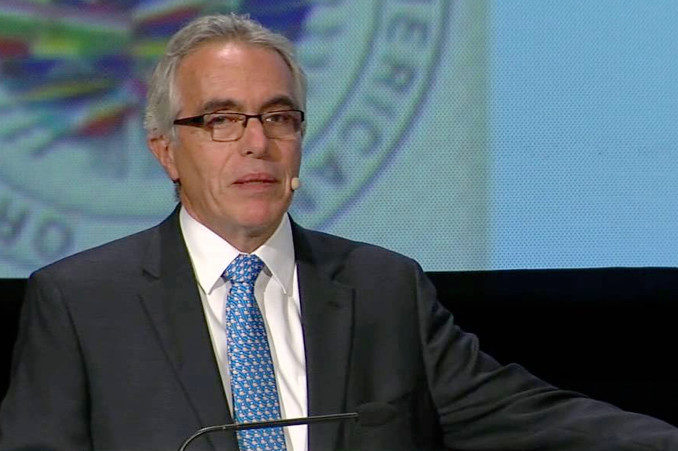
The ICJ welcomes this week’s visit to Uzbekistan of the UN Special Rapporteur on the independence of judges and lawyers, Diego García-Sayan, during which he will assess reforms of the judicial system, the independence of the judiciary and the independence and role of lawyers.
“The visit of the Special Rapporteur to Uzbekistan, at the invitation of the government, is an indication that the Uzbekistan authorities are serious about the ongoing reforms of the justice system. This visit is only a starting point for the deep reforms needed to establish an independent and fair justice system in Uzbekistan. Realising these reforms will require sustained commitment of all institutions of government, lawyers and civil society,” said Temur Shakirov, Senior Legal Adviser of the ICJ Europe and Central Asia Programme.
The ICJ, along with other NGOs and IGOs, met with the Special Rapporteur in Tashkent yesterday on the first day of his visit, and drew his attention to issues concerning the independence of judges and lawyers in Uzbekistan.
“The visit will be followed by the report of the Special Rapporteur containing findings and recommendations. These recommendations should be effectively implemented and the ICJ is committed to provide expert and other support in the Uzbekistan’s effort to bring its justice system in line with the recommendations,” Shakirov added.
Background
The visit of the UN Special Rapporteur on independence of judges and lawyers takes place from September 19-25, 2019.
The Special Rapporteur will hold meetings with representatives of the government, judiciary, prosecutors, lawyers and civil society and is expected to issue a report analyzing the independence of judges and lawyers in Uzbekistan, following his visit.
The Special Rapporteur on the independence of judges and lawyers is one of the special procedures of the United Nations Human Rights Council, appointed as an independent expert to monitor the compliance of UN Member States with international standards on the independence of judges and lawyers.

Aug 5, 2019 | News
The ICJ today raised concerns that the proposed Zambian Constitutional Amendment Bill 2019 may negatively impact the independence of the judiciary in Zambia.
The proposed amendments to provisions regarding disciplinary measures and processes against judges and the composition of the Supreme Court and Constitutional Court are particularly concerning, according to a statement by a group of organisations including the ICJ.
“The ICJ implores the President of Zambia and the Zambian legislature to ensure the alignment of all constitutional amendments with international human rights standards on the independence of the judiciary, the rule of law and the separation of powers,” said Arnold Tsunga, the ICJ’s Africa Director.
The joint statement calls upon the President of Zambia and the Zambian legislature to ensure that the proposed constitutional changes are in line with international human rights standards.
According to such standards, individual judges ‘may be dismissed only on serious grounds of misconduct or incompetence, in accordance with fair procedures ensuring objectivity and impartiality set out in the constitution or the law’. Examples include ‘incapacity or behaviour that renders them unfit to discharge their duties’ and ‘physical or mental incapacity that prevents them from undertaking their judicial duties.’
Moreover, disciplinary proceedings regarding judicial officers must be held by an institution independent of the executive and the legislature to secure the independence of the judiciary.
Article 143 (a) of the Zambia Constitution currently provides that ‘a judge shall be removed from office on the following grounds: (a) a mental or physical disability that makes the judge incapable of performing judicial functions; (b) incompetence; (c) gross misconduct; or (d) bankruptcy.’
However, the Amendment Bill worryingly replaces subsection (a) and allows for removal when a judicial officer is ‘legally disqualified from performing judicial functions.’
Furthermore, the proposed amendment does not set out the circumstances or infractions that could lead to the ‘legal disqualification’ leaving the provision open to abuse and in violation of the principle of legal certainty and the rule of law.
“The amendment introduces unnecessary obscurity and vagueness to the Constitution, which, in turn, increases the risk of judges being removed on politically motivated grounds and threatens the rule of law,” Tsunga added.
Another worrying aspect of the proposed amendment is the suggested changes to Article 144 of the Constitution transferring the authority to determine whether judicial officers are removed from the Judicial Complaints Commission to a Tribunal Appointed by the President.
The amendment allows for the possibility of a Tribunal staffed by members of the executive and the legislature, further heightening concerns about threats to judicial independence.
“It is vital that the processes and procedures for the removal of judicial officers in Zambia are constrained in terms of tightly defined constitutional provisions, overseen by independent decision makers without improper influence by the executive and the legislature,” said Tsunga.
The full statement is available here.
The statement is signed by:
Commonwealth Lawyers Association (CLA)
Commonwealth Magistrates’ and Judges’ Association (CMJA)
International Bar Association’s Human Rights Institute (IBAHRI)
International Commission of Jurists (ICJ)
Judges for Judges (J4J)
Lawyers’ Rights Watch Canada (LRWC)
Southern Africa Litigation Centre (SALC)
Jun 25, 2019 | News
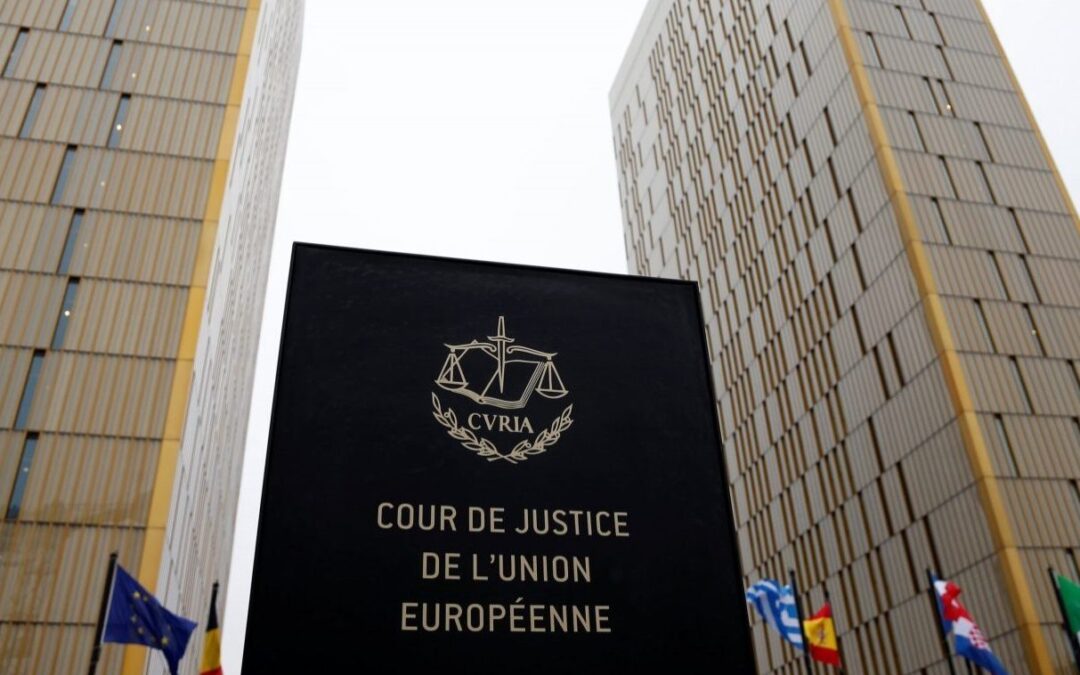
The ICJ welcomes yesterday’s judgment of the Court of Justice of the EU (CJEU) which ruled that forcing the retirement of Polish Supreme Court judges by lowering their mandatory retirement age, violated EU law.
Following the judgement, the security of tenure of these judges must now be permanently ensured, the ICJ said.
“The independence of the judiciary in Poland has been systematically undermined by the Polish executive and legislative authorities in recent years. This is a landmark decision that should herald a return to the rule of law in Poland, including legal, institutional and practical protection for judicial independence,” said Róisín Pillay, Europe and Central Asia Programme Director at the ICJ.
“This decision should be fully complied with. But it should also prompt the Polish authorities to reverse the wider damage that has been done to the rule of law, to restore the independence of the institutions of the judiciary, and end the harassment of judges through unjustified disciplinary proceedings,” she added.
In its decision issued on 24 June, the CJEU found that the lowering of the retirement age for judges, without transitional arrangements for those already in office, was not justified by any legitimate objective and therefore undermined the principle of irremovability of judges, which is central to judicial independence. It therefore violated the principle of effective judicial protection in Article 19(1) of the Treaty of European Union.
The Court also considered the discretionary power of the President to allow a judge to remain in office following the mandatory retirement date.
It found that, although this power was based on the opinion of the National Council of the Judiciary, such opinions were in practice given without any reasons, and therefore did not provide an effective safeguard.
The Court found that the President’s discretionary power gave rise to reasonable doubts that judges could be subject to external influence, in violation of the principle of effective judicial protection under Article 19(1) TEU.
Background
A law on the Supreme Court, which entered into effect in July 2018, attempted to force the “retirement” of 27 of the 72 Supreme Court judges, including the First President, by lowering the mandatory retirement age for its judges from 70 to 65 years.
The ICJ has repeatedly condemned the “forced retirement” of the 27 Supreme Court Justices as violating the security of tenure of judges in direct contravention of the principle of judicial independence, as expressed in international law and standards.
These include the UN Basic Principles on the Independence of the Judiciary, Council of Europe standards, the European Court of Human Rights’ jurisprudence and the rule of law principles enshrined in article 2 of the Treaty on European Union.
An ICJ letter of 11 July 2018, signed by 22 senior judges from all regions of the world, urged the Polish government to act immediately to reinstate the forcibly retired judges in office.
Proceedings against Poland under Article 258 TFEU were launched by the European Commission in October 2018, alleging infringement of Article 19(1) TEU (the principle of effective judicial protection) together with Article 47 of the EU Charter of Fundamental Rights (the right to a fair hearing and an effective remedy).
Following an interim decision of the CJEU in December 2018, the judges who were forcibly retired were reinstated in office, under a Law on the Supreme Court that came into force in January 2019.

Mar 26, 2019 | News
The ICJ condemns the sentencing of Venezuelan Judge Maria Lourdes Afiuni to a further five years of imprisonment.
On 21 March, a court in Caracas sentenced Judge Afiuni on unfounded charges of “corruption”.
“This further five-year sentence against Judge Afiuni is both the latest in a long series of severe violations of her human rights, and also illustrates the grave extent to which independence of the judiciary in Venezuela has been more broadly undermined,” said Matt Pollard, ICJ Senior Legal Adviser and UN Representative.
Judge Afiuni was arbitrarily arrested and detained in 2009 after then-President Hugo Chavez publicly demanded she be imprisoned for 30 years, as she had released an accused person citing a decision by the UN Working Group on Arbitrary Detention that his detention was unlawful.
While in detention, she was subjected to torture and other ill-treatment.
In 2010, the UN Working Group on Arbitrary Detention issued an opinion declaring Judge Afiuni Mora’s detention arbitrary.
She was held in prison for 14 months before being transferred to house arrest for health reasons in 2011.
In 2013 she was granted parole but ordered not to leave the country or to use social media.
The UN Special Rapporteur on the Independence of Judges and Lawyers reacted earlier today to the latest sentencing by reaffirming the arbitrariness of her deprivation of liberty and the fact that her treatment amounts to reprisals for having implemented the UN Working Group’s decision.
The Rapporteur also said that the ruling “underscored his serious concerns about the independence of the judiciary in Venezuela, the impartiality of judges and prosecutors and the pressures they faced in handling politically sensitive cases.”
Further background on the situation for the judiciary in Venezuela, and Judge Afiuni’s case, is available here.
Mar 12, 2019 | Advocacy, Non-legal submissions
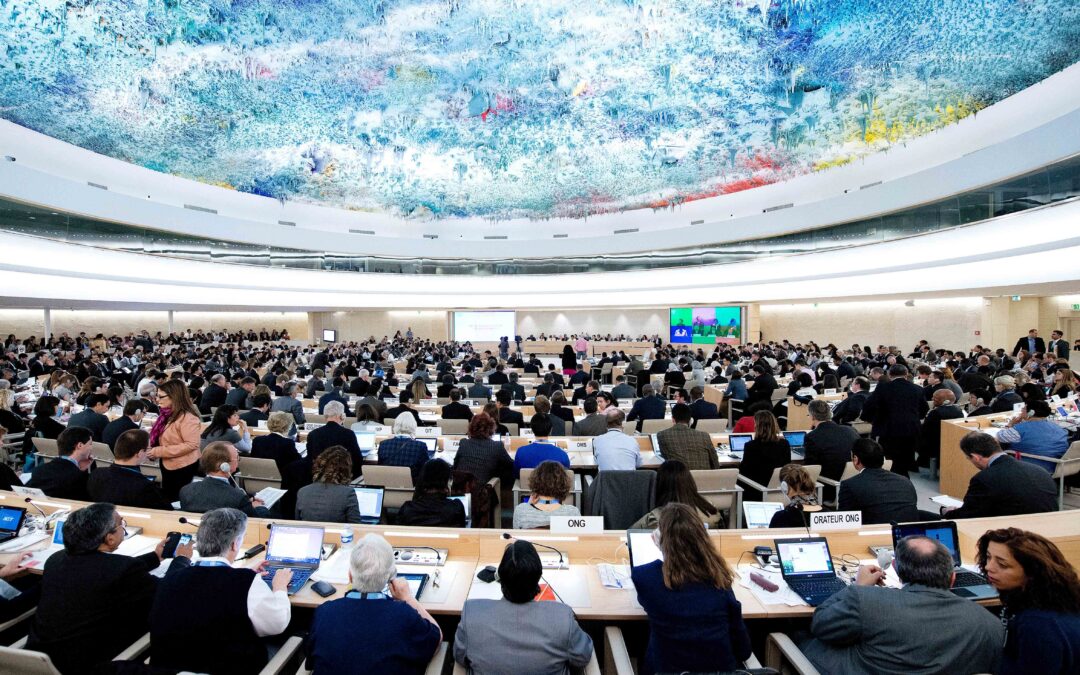
The ICJ today highlighted threats to the rule of law in Turkey, Poland, Hungary and Azerbaijan, and the need to address corporate complicity in South Sudan, at the UN Human Rights Council in Geneva.The statement, delivered during general debate, read as follows:
“The situation remains grave for the rule of law and legal protection of human rights in Turkey and Poland.
In Turkey, constitutional reforms in 2017 that undermined the independence of the judiciary should be abolished. Civil society members are prosecuted under overbroad and vague terrorism offences.
In Poland, the Legislature is trying arbitrarily to remove one third of the Supreme Court, a measure that is on hold only temporarily. Unjustified disciplinary proceedings are also being pursued against Polish judges for having sought a ruling of the Court of Justice of the EU.
Elsewhere, in Hungary civil society is ostracized and subject to legislation that risks criminalizing their legitimate activities. In Azerbaijan, as one example of a broader pattern of interference with lawyers and other human rights defenders, lawyer Elchin Sadigov was reprimanded for advising in a confidential manner to his client in detention to complain about torture to which he allegedly had been subjected.
The ICJ is also concerned at the findings by the Commission on Human Rights in South Sudan (A/HRC/40/69, A/HRC/40/CRP.1) that point to the oil industry as a “major driver” in the continuation of the armed conflict and resulting human rights violations. Potential corporate complicity with crimes under international law demand investigation and a strong monitoring mechanism for the use of oil revenues should be established.”