Jun 20, 2018 | News
The Trump administration’s broader rejection of multilateralism and rule of law, its actual practices, and paralysis of other States, are the real issues, says the ICJ.
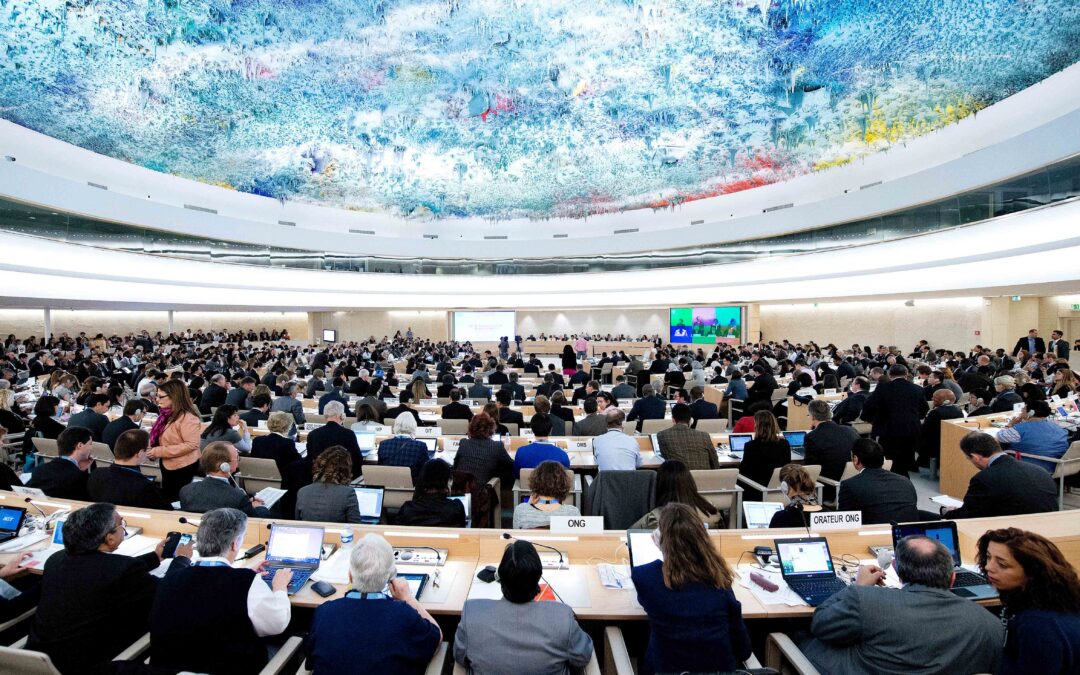
On the evening of 19 June, the United States of America announced it was formally abandoning its membership of the UN Human Rights Council.
“The withdrawal of the United States from the United Nations Human Rights Council is symptomatic of its broader rejection of multilateralism and rule of law, and how it acts in practice, both at home and abroad,” said ICJ Secretary General Sam Zarifi in reaction.
The inhuman caging of thousands of migrant and refugee children, and turning a blind eye to the grave human rights violations in North Korea, are but two recent and glaring examples, along with a recent highly critical report by the UN Special Rapporteur on extreme poverty and human rights, Philip Alston, following his visit to the US last year.
Even more concerning, the US retreat comes at the same time as openly racist and nationalist authoritarianism rises across Europe. Even where they are not immediately succeeding in coming to power, such movements are slowly paralyzing Europe at exactly the time its moderating or progressive influence on world affairs in general, and human rights in particular, is most needed.
The US in fact is cooperating in New York with the very same countries it publicly condemns, to cut the funding and mandate for the day-to-day human rights work of the UN – whether through the Office of the High Commissioner for Human Rights, the Secretary General’s Rights up Front Initiative, or UN country offices. And many many other countries are complicit in that exercise by their silence.
With moves by other powerful States to seize and dilute the UN’s human rights machinery, it has never been more important for other States sincerely committed to defending human rights and the rule of law to step into the empty seats the US is leaving behind.
Jun 20, 2018 | Advocacy, News
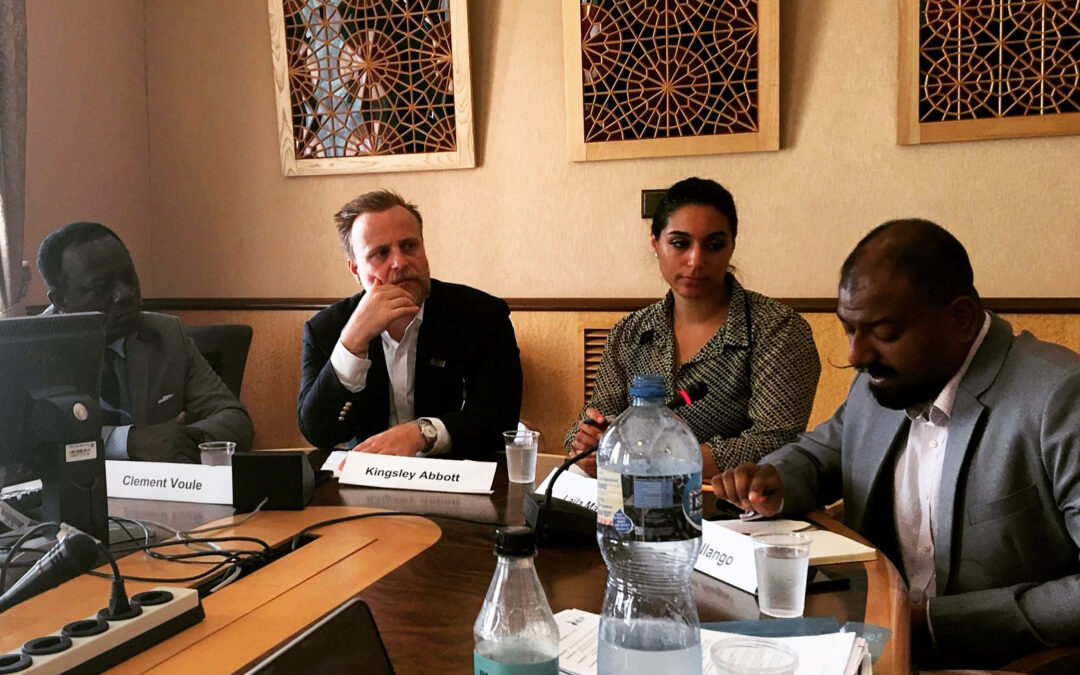
Today, the ICJ held a joint side event at the 38th Regular Session of the Human Rights Council on freedoms of expression, association and assembly in the context of elections in Asia.
The event was co-organized by the ICJ, in collaboration with Forum Asia and Human Rights Watch.
Kingsley Abbott, ICJ Senior Legal Adviser, spoke at the event, highlighting the regression in human rights and the rule of law in the Southeast Asian region, focusing on Thailand and Cambodia in the lead up to elections.
He identified recent developments in the misuse of the law to violate human rights in Thailand and Cambodia, and called for a necessary push back against the weaponization of the law and the misuse of the principle of the ‘rule of law’ in both countries.
Other speakers at the event included Iniyan Ilango, from Forum Asia, who spoke about fundamental freedoms in the context of elections in Bangladesh and the Maldives and other countries in Asia; and UN Special Rapporteur on the rights to freedom of peaceful assembly and of association, Clément Nyaletsossi Voule, who addressed the event more broadly on the protection and promotion of freedom of assembly and association in the context of elections.
The event was moderated by by Laila Matar, Deputy Director, United Nations, Human Rights Watch.
Contact
Kingsley Abbott, Senior Legal Adviser, ICJ Asia Pacific Regional Office, t: +66 94 470 1345, e: kingsley.abbott(a)icj.org
Thailand-Cambodia-Side-event-HRC38-Freedoms-of-Expression-Advocacy-2018-ENG (full speech in PDF)
Jun 19, 2018 | Advocacy
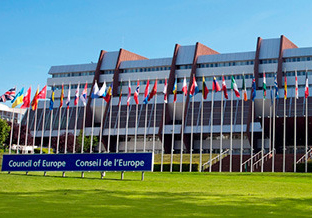
The ICJ welcomes the proposal of the Parliamentary Assembly of the Council of Europe (PACE) in its Recommendation 2121(2018) calling for the development of a Council of Europe Convention on the Profession of Lawyer.
The ICJ believes that such a Convention could make an important contribution to strengthening the rule of law and the protection of human rights in the Council of Europe region, building on existing Council of Europe standards and jurisprudence of the European Court of Human Rights.
The ICJ particularly welcomes PACE’s call for an effective control mechanism to be put in place under a new Convention, as recent developments in a number of Council of Europe Member States show a significant gap in implementation of Council of Europe standards on the independence and security of lawyers.
Lawyers, along with judges and prosecutors, are one of the pillars on which protection of the rule of law and human rights through the justice system rests.
Recognizing this, the ICJ, since its foundation in 1952, has worked to protect lawyers under threat and to develop international standards for the independence, role and integrity of the profession.
Successive ICJ Declarations, adopted by leading jurists from all regions of the world, have affirmed that the role of the legal profession is “paramount in safeguarding human rights and the Rule of Law” (2008 Declaration on Upholding the Rule of Law and the Role of Judges and Lawyers in Times of Crisis (ICJ 2008 Declaration).
In any legal system, the legal profession plays a pivotal role in ensuring access to justice and effective remedies and accountability for violations of human rights, as well as upholding the right to fair trial, right to liberty and freedom from torture and other ill-treatment in the criminal justice process.
In defending criminal cases, in advising and representing victims of human rights violations and their relatives or in challenging before the courts national legislation or policy that is contrary to human rights , lawyers give practical effect to human rights guarantees and rule of law principles.
The importance of this role has been recognized by international standards as well as in the jurisprudence of the European Court of Human Rights, which has emphasized the “specific status of lawyers [having] a central position in the administration of justice as intermediaries between the public and the courts”.
It is thus of fundamental importance that lawyers are able to fulfill their professional duties without interference. As the European Court of Human Rights has held, “persecution and harassment of members of the legal profession strikes at the very heart of the Convention system.”
Full text in ENG (PDF): Europe-Drafting-a-EU-Convention-on-the-Profession-of-Lawyer-2018-ENG
Jun 18, 2018 | News
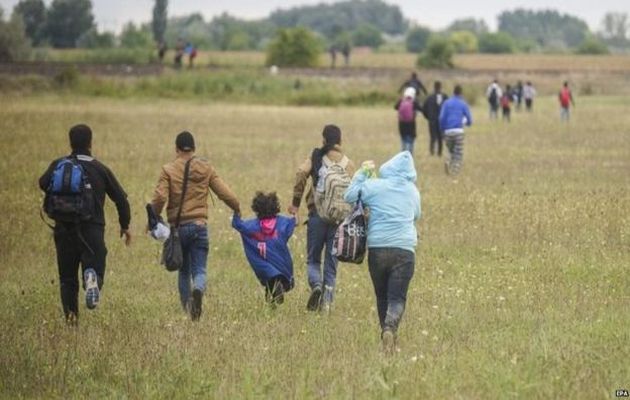
The ICJ today called on the Hungarian National Assembly to reject Bill No. T/333 that, if approved, would risk criminalizing the work of civil society, lawyers and other human rights defenders and lead to violations of the rights of migrants, especially refugees.
The National Assembly of Hungary is considering today Bill No. T/333 tabled by the Hungarian Government that amends immigration and criminal law.
“This draft law would effectively punish activities that aim to apply legal procedures” said Massimo Frigo. “This attack on the work of lawyers and human rights defenders does not constitute a legitimate aim that would allow for a permissible restriction on the rights of freedom of expression, assembly and association consistent with international human rights law.”
The ICJ warned that the draft law, if approved, would, in contravention of international standards, open the way to arrest, prosecute and convict lawyers or representatives of civil society who assist asylum seekers in filing their application for international protection. It would also make funding of such activities a crime.
The law would effectively prevent lawyers and civil society organizations, under threat of criminal punishment, from providing assistance to asylum-seekers unless they can verify that the person is entitled to international protection, even before the person has begun the refugee status determination procedure.
It would further criminalize any activity aimed at regularizing the position of an irregular migrant who had, for example, married a Hungarian citizen or became a parent of Hungarian children.
“This draft law should be rejected because it could in practice deny legal assistance to any asylum seeker, preventing them from defending their rights, ” said Massimo Frigo.
Bill T/333 has been criticized by UNHCR, the Council of Europe Commissioner for Human Rights and several national and international civil society organisations. An opinion of the Venice Commission on the law is expected to be published shortly.
Background
If approved in the current form, section 11 of the draft law would insert in the Criminal Code the offence of “facilitating illegal immigration”, as new section 353/A. This provision, if approved, would make it a criminal offence to carry out organized activities to facilitate the initiation of an asylum procedure for persons “who are not persecuted” in their country of origin or in a third country that they passed through, or “do not have a well-founded reason to fear direct persecution.”
This provision would also make it a criminal offence to carry out these activities to assist a person entering illegaly or residing illegally in Hungary to obtain a residence permit.
The draft law would also make it a criminal offence to provide financial means to carry out these activities.
Full Document in English (PDF): Hungary-Statement-National-Assembly-Criminalizing-Assistance-to-Migrants-Law-2018-ENG
May 30, 2018 | News
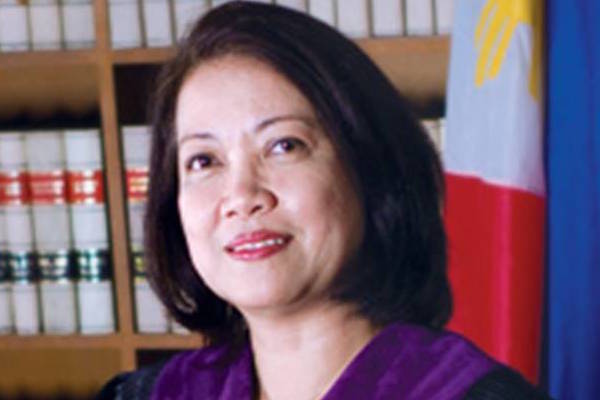
As Chief Justice Maria Lourdes Sereno filed a motion today to reconsider the Supreme Court’s 11 May 2018 decision to remove her from the Court, the ICJ expressed its grave concern that the proceedings in the case had contributed to an overall deterioration in the rule of law in the country.
Sereno’s removal comes on the heels of a series of public statements by President Rodrigo Duterte attacking the Chief Justice, including direct threats to seek her removal from the Court.
The ICJ and other national and international observers have repeatedly and publicly condemned these attacks.
Her removal, through the contrivance of a judicial ruling by a sharply divided Court, adds to the perception that the government institutions are unable or unwilling to safeguard the rule of law, and will attack the institutions that protect it.
“Preserving the independence of the judiciary in the Philippines is crucial at a time when the government is credibly alleged to have been engaged in widespread and systematic human rights violations, amounting to crimes under international law,” said Frederick Rawski, Asia Pacific Director for the ICJ.
“Given the perception of political interference and the potential impact of this case on the credibility of the judiciary as a whole, it is imperative that the Court swiftly and fairly consider the Chief Justice’s motion for reconsideration,” he added.
The removal decision came in response to a quo warranto petition filed by the Solicitor General, the government’s foremost counsel.
The petition sought to nullify her appointment on the grounds that she had failed to comply with disclosure requirements, despite the fact that her qualifications had already been certified as sufficient by the Judicial and Bar Council when her name was included in the short-list submitted to the president for consideration.
The decision superseded ongoing impeachment proceedings in the Congress.
The ICJ raised concerns that the decision could open the floodgates to similar attacks, not only against members of the Court, but to members of the judiciary and other bodies, such as the Philippine Commission on Human Rights.
It called on the Supreme Court to take care to ensure that any proceedings are conducted in line with the highest standards of judicial ethics, as reflected in the international standards such as the Bangalore Principles of Judicial Conduct.
The ICJ also reminded the government of the Philippines that under international standards – including the UN Basic Principles on the Independence of the Judiciary – the judiciary, including individual judges, must be able to conduct itself without “improper influences, inducements, pressures, threats or interferences, direct or indirect… for any reason.”
It is a responsibility of both the judiciary and the political branches of government to ensure that this principle is respected.
Contact
Emerlynne Gil, Senior International Legal Adviser for Southeast Asia, t: +662 619 8477 (ext. 206) ; e: emerlynne.gil@icj.org