Apr 17, 2018 | Events, Multimedia items, News, Video clips
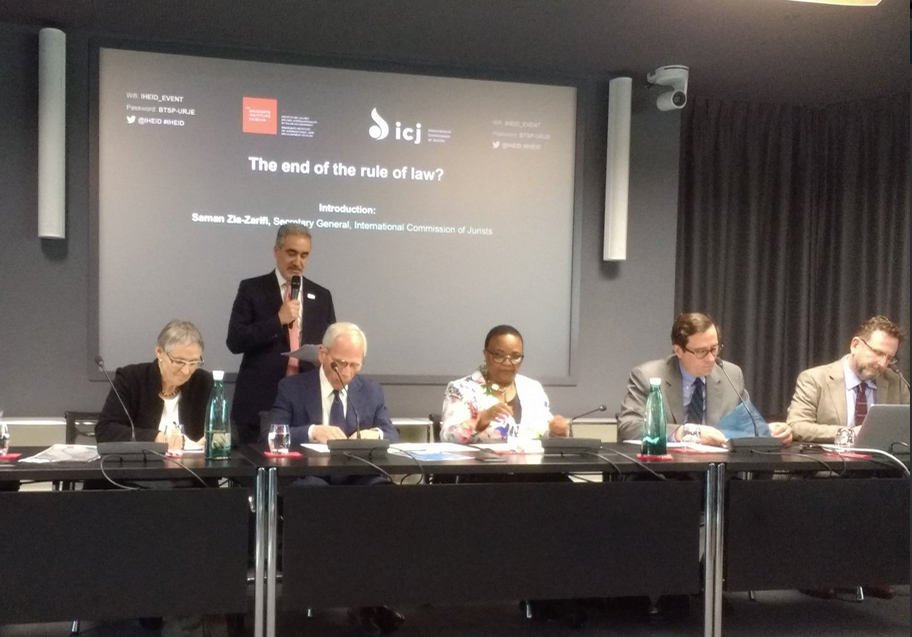
International commitment to the rule of law is under assault around the world, said a global panel of eminent academics, diplomats, and jurists.
The panelists, speaking at a public event by the ICJ and the Geneva Graduate Institute, commented that this assault is threatening to reverse the progress made over the last 70 years since the Universal Declaration of Human Rights(UDHR) came into force.
The panelists addressed progress in asserting the rule of law since the UDHR, for instance through the development of the International Criminal Court and greater awareness and commitment to rights, but also highlighted current challenges at the national level, such as in Venezuela, and at the global level, with ongoing discrimination and violence against women.
“The rule of law is a principle that helps the world and also helps individuals,” said ICJ Secretary General Saman Zia-Zarifi, in his introductory remarks.
“It is a principle that elevates democracy from mob rule and is necessary to harness the energy of democracy and give it a direction and progression towards the protection and promotion of human rights and sustainable development for the betterment of the lives of people around the world,” he added.
Professor Carlos Ayala, ICJ Vice-President and former President of the Inter-American Commission on Human Rights, spoke about the importance of having regional rights frameworks that were accessible to individuals when the rule of law has been eradicated at a national level.
Speaking in relation to Venezuela, Professor Ayala explained that the rule of law cannot be simply overturned by a political party, even with a majority, as the erosion of the rule of law puts all human rights at risk and these rights must be safeguarded regionally and internationally.
Next Patricia Schulz, member of the UN Committee on the Elimination of Discrimination against Women, pointed out that in many countries, the rule of law has been weak or never even properly existed.
She addressed failings where access to justice is undermined by systems that are gender discriminatory and explained that in almost all countries, even where the rule of law seems strong, there is a lack of will and/or means to fight gender-based violence.
Professor Andrew Clapham, Professor of Public International Law at the Graduate Institute and member of the UN Commission on Human Rights in South Sudan, evaluated issues of accountability and the rule of law in the context of international criminal law.
He noted the important role international criminal law and its operational mechanisms have in holding individuals to account, but warned that focusing on prosecution and focusing on issues such as genocide and the use of chemical weapons ran the risk of undermining the universality of ideas enshrined in the UDHR.
His Excellency Luis Gallegos, the Permanent Representative of Ecuador to the United Nations, raised concerns about the politicization of human rights and the capacity of UN mechanisms to address transnational rights issues such as migration.
He said that addressing the rule of law was not a simple question but that states had to come together to consistently and systematically address the rights violations that arose from a break-down in the rule of law.
Final panelist, Sanji Monageng, ICJ Commissioner and Justice of the International Criminal Court, spoke about the need for international organizations to rethink their approach to the rule of law and the way they apply this to cases, to avoid focusing narrowly on singular issues when rights violations need to be addressed homogenously.
Justice Monageng explained that for victims, sexual violence, for instance, is rarely a singular incident but part of broader array of rights violations that have far-reaching impacts.
In his concluding remarks, Professor Robert Goldman, who moderated the event, said that “the rule of law deals with a central tenet of any just society, not only equal protection and equal access but it is something that protects the vulnerable.”
He explained that the treat to the rule of law today is endemic and it is global, but the ICJ is uniquely placed to robustly address these difficult questions and to continue to use the rule of law to defend and advance rights protections.
The event, which took place at the Graduate Institute at the Maison de la Paix, promoted by the Permanent Mission of Germany, was attended by 150 persons including academics, diplomats, lawyers and representatives of civil society and international rights mechanisms. The event was also streamed online by RIDH Global.
You can watch the full event here.
https://www.facebook.com/ridhglobal/videos/10158134493084616/UzpfSTQ3MTQ2NzA4NjIyMTM3MzoxOTk5MjM0NDc2Nzc3OTUy/
https://www.youtube.com/watch?v=ije_iAegxFs&feature=youtu.be
Apr 3, 2018 | Events, News
The ICJ will present a panel discussion on the continued role of the rule of law in the 70th anniversary year of the Universal Declaration of Human Rights on Monday 16 April, 18.30-20.00, Room C1, Maison de la Paix, Geneva.
In a global context where pushback against rights protection is becoming increasingly more pronounced this panel discussion, organized in co-ordination with the Graduate Institute and supported by the Permanent Mission of Germany, will address critical areas of concern for the rule of law in upholding the universal rights set out in the UDHR 70 years ago.
The event, composed of diplomats, academics and legal experts from around the world, will look at issues around the realisation of rights set out in the UDHR, particularly in relation to gender and women’s rights, and will consider how these have been implemented domestically as well as how breaches of the UDHR have been treated as international crime.
Panellists will also comment on the role of the rule of law as set out in the Sustainable Development Goals in ensuring rights protection as an essential element of sustainable development.
The event will also assess how problems in human rights frameworks can be addressed in a way that strengthens the rule of law and human rights and will consider the increasing role of developing countries in taking ownership of the international rights framework initiated by the UDHR.
Introduction:
- Saman Zia-Zarifi, Secretary General of the ICJ
Panellists:
- Carlos Ayala, ICJ Vice-President and former Chair of the Inter-American Commission on Human Rights
- Andrew Clapham, Professor of Public International Law, The Graduate Institute, Geneva; Member of the UN Commission on Human Rights in South Sudan
- Luis Gallegos, Permanent Representative of Ecuador to the United Nations in Geneva
- Sanji Monageng, ICJ Commissioner and Judge at the International Criminal Court, The Hague
- Patricia Schulz, Member of the UN Committee on the Elimination of Discrimination against Women
Moderator:
- Robert Goldman, Acting ICJ President and Professor of Law, Washington College of Law, American University, Member of Eminent Jurists Panel on Terrorism, Counter-terroism and Human Rights
Sign up to the event via the link on the Graduate Institute’s website.
Universal – Rule of Law UDHR 70 – News – Events – 2018 – ENG (Event flyer in PDF)
Mar 27, 2018 | Advocacy, News
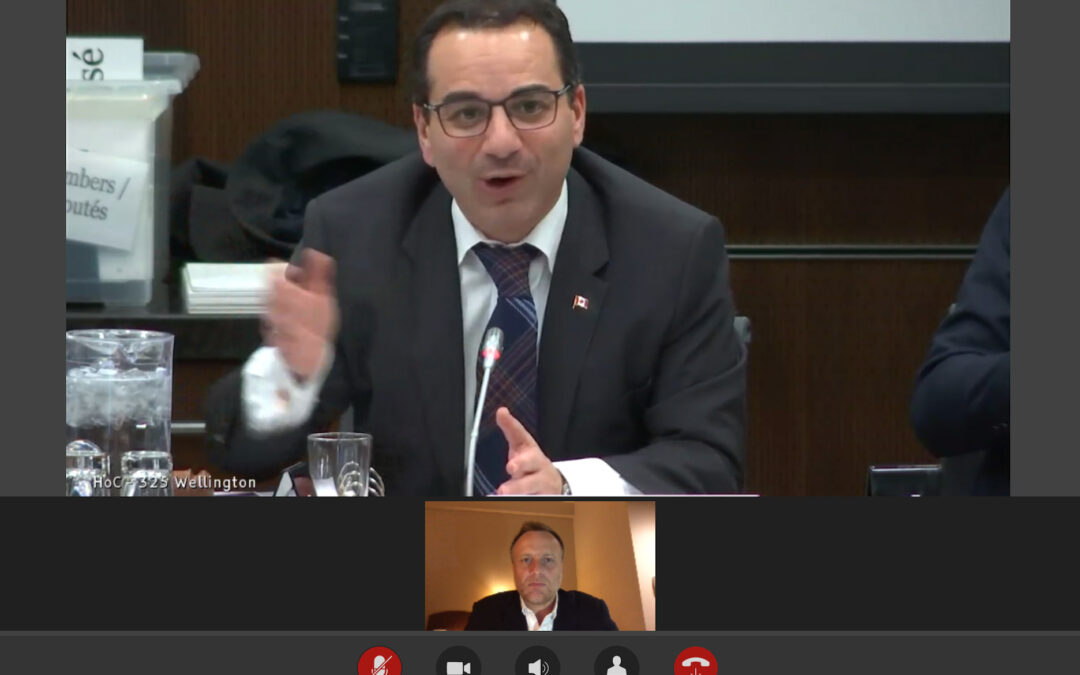
Today, the ICJ testified before the Canadian House of Commons Subcommittee on International Human Rights on the human rights and rule of law crisis in Cambodia.
Kingsley Abbott, ICJ Senior International Legal Adviser, addressed the Subcommittee on two key issues:
- The misuse of the law in Cambodia under the pretext of the “Rule of Law”; and
- The lack of an independent and impartial judiciary.
Other witnesses were former members of the Cambodian Parliament for the main opposition party, the CNRP, before its dissolution in November 2017, Mu Sochua and Kong Sophea.
Kingsley Abbott also requested that the ICJ’s October 2017 Baseline Study on the state of the rule of law and human rights in Cambodia be added to the record.
Contact:
Kingsley Abbott, ICJ Senior International Legal Adviser for Southeast Asia, e: kingsley.abbott(a)icj.org
Thailand-SDIR-Statement-ABBOTT-Advocacy-2018-ENG (Full opening statement ENG, PDF)
Mar 16, 2018 | News
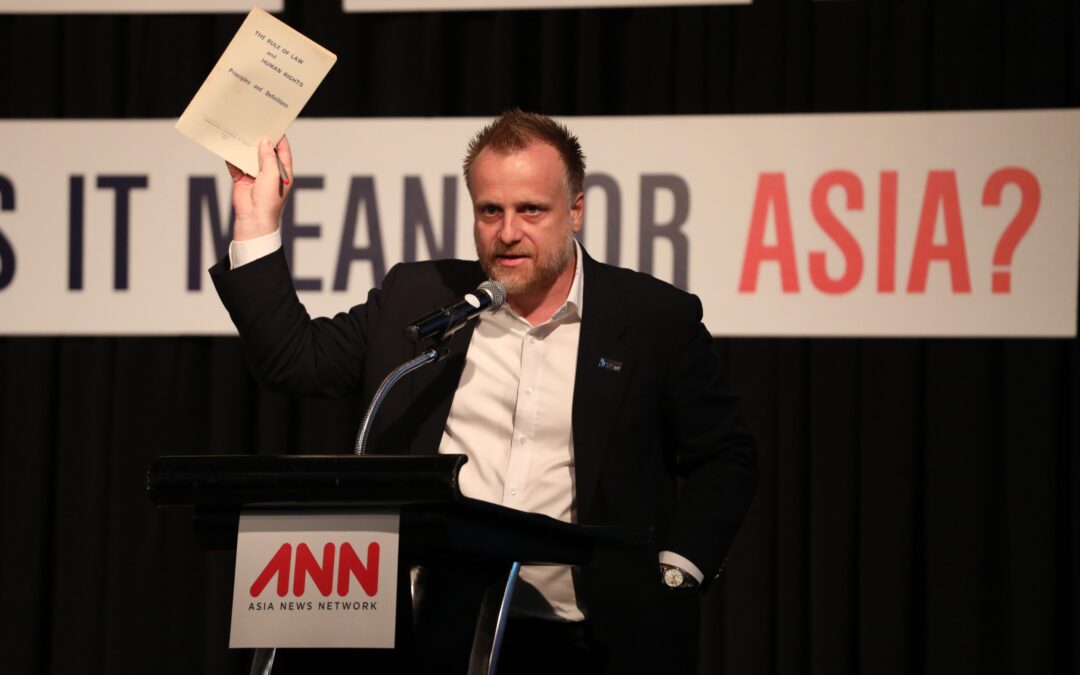
Today, Kingsley Abbott, ICJ’s Senior International Legal Adviser, gave the keynote address on the human rights and rule of law situation in Asia at the Asia News Network’s (ANN) international symposium on upcoming elections in Asia.
The event, held at a hotel in Bangkok, Thailand, was attended by nearly 300 diplomats, business leaders, academics and members of civil society.
ANN is an alliance of 24 leading media in 20 Asian countries.
The full speech can be downloaded here:
Asia-ANN Speech-News-web story-2018-ENG
Mar 14, 2018 | Events, Multimedia items, News, Video clips
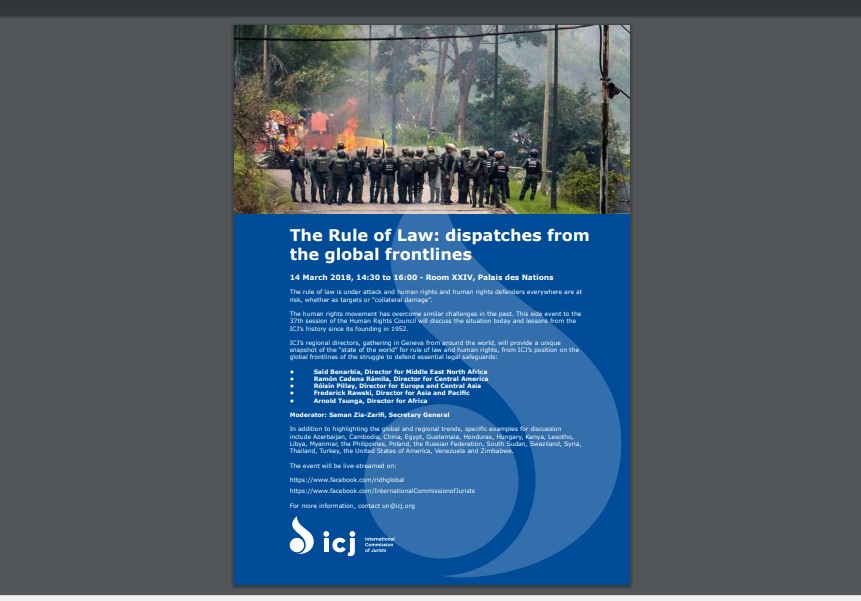
Today, the ICJ highlighted threats to and defenders of the rule of law around the world, at a side event to the UN Human Rights Council, at the Palais des Nations in Geneva.
The rule of law is under attack and human rights and human rights defenders everywhere are at risk, whether as targets or “collateral damage”.
The human rights movement has overcome similar challenges in the past. This side event to the 37th session of the Human Rights Council discussed the situation today and lessons from the ICJ’s history since its founding in 1952.
ICJ’s regional directors, gathering in Geneva from around the world, provided a unique snapshot of the “state of the world” for rule of law and human rights, from ICJ’s position on the global frontlines of the struggle to defend essential legal safeguards:
• Saïd Benarbia, Director for Middle East North Africa
• Ramón Cadena Rámila, Director for Central America
• Róisín Pillay, Director for Europe and Central Asia
• Frederick Rawski, Director for Asia and Pacific
• Arnold Tsunga, Director for Africa
Moderator: Saman Zia-Zarifi, Secretary General
In addition to highlighting the global and regional trends, specific examples for discussion included Azerbaijan, Cambodia, China, Egypt, Guatemala, Honduras, Hungary, Kenya, Lesotho, Libya, Myanmar, the Philippines, Poland, the Russian Federation, South Sudan, Swaziland, Syria, Thailand, Turkey, the United States of America, Venezuela and Zimbabwe.
For more information, contact un@icj.org
Watch the video:
https://www.facebook.com/ridhglobal/videos/10157996747579616/
Universal – Rule of law frontlines – News – Event – 2018 – ENG (Event flyer in PDF)