Mar 5, 2018 | News
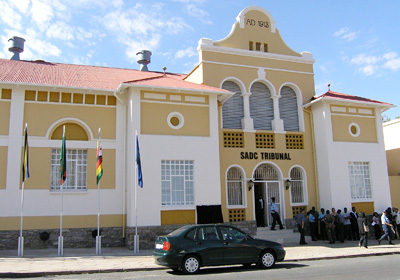
The ICJ has welcomed last Thursday’s judgment of the Pretoria High Court which declares the South Africa’s involvement in shutting down the South African Development Community Tribunal “unlawful, irrational, arbitrary and therefore unconstitutional”.
ICJ’s Africa Director, Arnold Tsunga described the judgment as a “triumph for the rule of law in Southern Africa and an opportunity for governments in the SADC region to commit to immediate restoration of the Tribunal”.
The SADC Tribunal has been inactive since 2012, when SADC Member States suspended its operations and removed individual access to the Tribunal, including in cases involving human rights violations.
The action was widely seen as a backlash for several judgments against Zimbabwe in relation to land programmes implemented during the administration of former President Robert Mugabe.
In a unanimous judgment delivered by High Court Judge President D Mlambo, the Court held that “any act which detracted from the SADC Tribunal’s exercise of its human rights jurisdiction at the instance of individuals, was inconsistent with the SADC Treaty itself and violated the rule of law”.
Describing former President Zuma’s decision to sign the replacement 2014 Protocol of the SADC Tribunal as one such act, the Court held that the rule of law in South Africa’s constitutional dispensation required prior Parliamentary approval for the Executive to lawfully participate in a decision to curb the powers of the Tribunal or withdraw South Africa from its obligations under the SADC Treaty and the Protocol establishing the Tribunal.
“A restoration of the SADC Tribunal to its original character will facilitate individual access to a much needed accountability mechanism and greatly enhance regional confidence in human rights and the rule of law”, said Arnold Tsunga.
In line with articles 14 and 15 of its 2000 Protocol, the SADC Tribunal had exercised supervisory jurisdiction over the human rights commitments of SADC Member State under the SADC Treaty.
The ICJ called on the governments of Southern Africa’s other 14 SADC Member States to take immediate and concrete steps to restore the SADC Tribunal and recommit to rebuilding, staffing and funding it to ensure its effectiveness.
Contact
Arnold Tsunga, ICJ Africa Director; t: +27716405926, or +254 746 608 859 ; e: arnold.tsunga(a)icj.org
Solomon Ebobrah, Senior Legal Adviser, ICJ Africa Regional Programme, t: +234 8034927549; e: solomon.ebobrah(a)icj.org
Mar 1, 2018 | Events, News
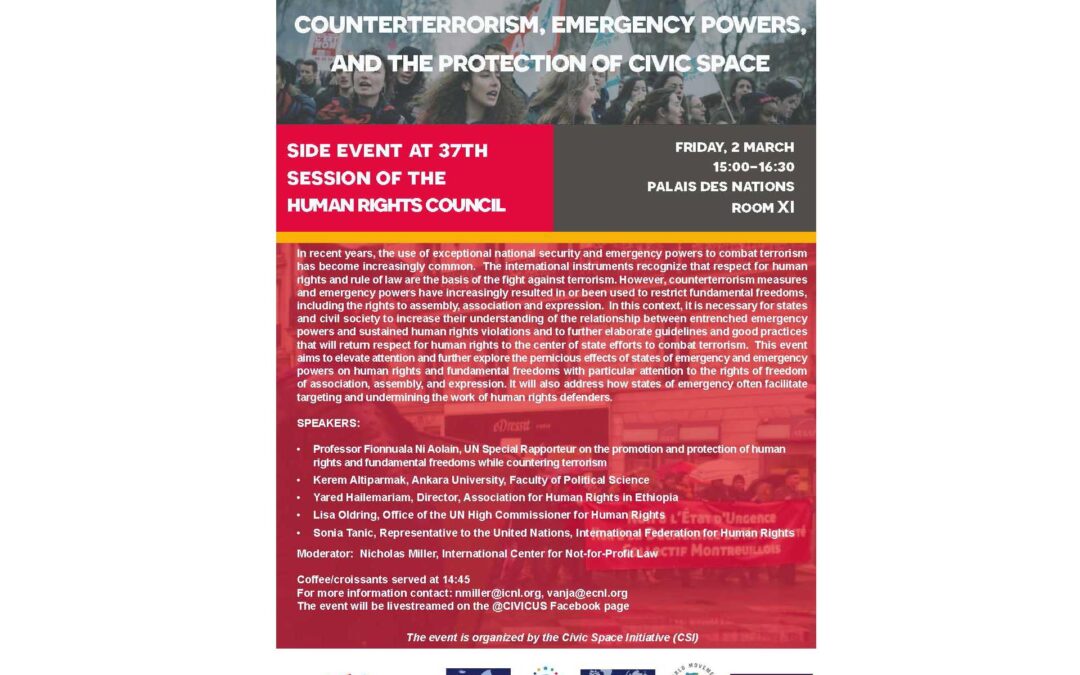
This side event at the 37th session of the Human Rights Council takes place on Friday, 2 march, 15:00-16:30, room XI of the Palais des Nations. It is organized by the Civic Space Initiative (CSI) and co-sponsored by the ICJ.
In recent years, the use of exceptional national security and emergency powers to combat terrorism has become increasingly common.
The international instruments recognize that respect for human rights and rule of law are the basis of the fight against terrorism.
However, counterterrorism measures and emergency powers have increasingly resulted in or been used to restrict fundamental freedoms, including the rights to assembly, association and expression.
In this context, it is necessary for states and civil society to increase their understanding of the relationship between entrenched emergency powers and sustained human rights violations and to further elaborate guidelines and good practices that will return respect for human rights to the center of state efforts to combat terrorism.
This event aims to elevate attention and further explore the pernicious effects of states of emergency and emergency powers on human rights and fundamental freedoms with particular attention to the rights of freedom of association, assembly, and expression. It will also address how states of emergency often facilitate targeting and undermining the work of human rights defenders.
Speakers:
- Professor Fionnuala Ni Aolain, UN Special Rapporteur on the promotion and protection of human
rights and fundamental freedoms while countering terrorism
- Kerem Altiparmak, Ankara University, Faculty of Political Science
- Yared Hailemariam, Director, Association for Human Rights in Ethiopia
- Lisa Oldring, Office of the UN High Commissioner for Human Rights
- Sonia Tanic, Representative to the United Nations, International Federation for Human Rights
Moderator:
- Nicholas Miller, International Center for Not-for-Profit Law
Coffee/croissants served at 14:45
For more information contact: nmiller@icnl.org, vanja@ecnl.org
The event will be livestreamed on the @CIVICUS Facebook page
Universal – Counterrorism and Civic Space – News – Events – 2018 – News (Event flyer in PDF)
Feb 6, 2018 | News
The ICJ today condemned the Maldivian Government’s assault on the Supreme Court and its judges and the suspension of human rights protections under the state of emergency.
“President Yameen and his Government have dealt a grave blow to the rule of law and independence of the judiciary in the Maldives,” said Ian Seiderman, ICJ’s Legal and Policy Director.
“The actions by the government are a wildly unjustifiable and disproportionate response to the decision of the Supreme Court”, he added.
On 5 February, the Maldivian Government declared a 15-day state of emergency under Article 253 of the Constitution, suspending a range of human rights protections.
The declaration of emergency followed a Supreme Court judgment on 1 February that ordered the release of at least nine members of opposition parties, who were in detention on a number of charges.
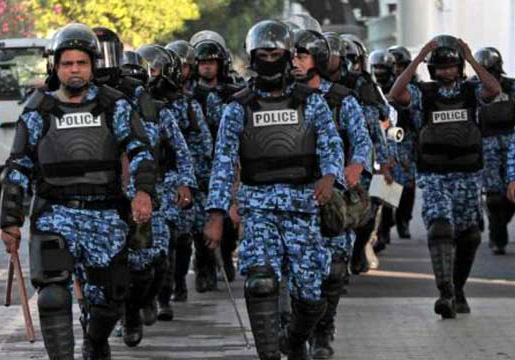
The Government, however, refused to implement the Supreme Court’s judgment, which resulted in the outbreak of protests in the country.
The national defense forces also reportedly entered the premises of the Supreme Court and arrested at least two senior judges, including Chief Justice Abdulla Saeed.
“Summarily suspending basic rights protections and arresting judges whose decisions the President disagrees with is itself a display of sweeping lawlessness in the country,” Seiderman said.
According to the President’s office, the state of emergency was imposed because the Supreme Court order resulted in “disruption of the functions of the executive power, disruption of the functions of the state institutions…and infringement of national security and public interest.”
According to an unofficial translation of the emergency decree received by the ICJ, the constitutionally and internationally protected rights that have been suspended in part or in full during the state of emergency include, among others, the right to liberty; the right to freedom of assembly; the right to privacy; and the right to obtain remedy from the courts.
Basic safeguards surrounding arrest, detention, search and seizures have also been suspended.
In addition, laws providing certain immunities to judges and the right of judges to be informed if any action is taken against them have also been suspended.
“The complete suspension of constitutional protections for human rights such as the right to liberty and right to free assembly goes far beyond anything that could be justified by the alleged grounds cited by the government,” Seiderman added.
The ICJ notes that international law strictly regulates attempts by governments to suspend or otherwise derogate from human rights on the grounds of emergency.
The International Covenant on Civil and Political Rights (ICCPR), to which the Maldives is a State Party, expressly permits derogations only for certain human rights, and then only ‘in time of public emergency which threatens the life of the nation’.
Measures of derogation may only be taken to the extent necessary to meet a specific threat to the life of the nation.
“Maldivian authorities have not even come close to explaining how the current situation constitutes a threat to the ‘life of the nation’, the high threshold set by international law for the derogation of rights in times of emergency,” Seiderman said.
The ICJ urges the Government to immediately lift the state of emergency, release judges of the Supreme Court, implement the ruling of the Supreme Court and ensure the independence of the judiciary.
Contact
Ian Seiderman, ICJ Legal and Policy Director, T: +41 22 979 38 37 ; e: ian.seiderman@icj.org
Reema Omer, ICJ International Legal Adviser for South Asia (London), t: +447889565691; e: reema.omer@icj.org
Additional information
Under international standards, including the UN Basic Principles on the Independence of the Judiciary, it is the duty of all governmental and other institutions to respect and observe the independence of the judiciary.
This means that there shall not be any inappropriate or unwarranted interference with the judicial process and judges shall be free to decide cases without any restrictions, pressures, threats or interferences.
In August 2015, following a joint fact-finding mission to the Maldives, the ICJ and South Asians for Human Rights (SAHR) documented the breakdown of the rule of law and human rights in the Maldives in a 35-page report, Justice Adrift: Rule of Law and the Political Crisis in the Maldives.
Jan 25, 2018 | News
Myanmar’s publication in state media of lists with the names and accompanying photographs of more than 1,400 men, women and children under the heading “Members of ARSA Terrorist Group” constitutes an assault on human rights and contravenes key principles of the rule of law.
Authorities have not explained why or how listed persons were identified, if they are currently in detention, or if they are wanted for prosecution or for questioning pursuant to criminal investigations. Some or all persons listed appear to have been “accused” outside any formal judicial process.
Given the lack of publicly available information as to the basis of ascribing membership of a prescribed terrorist organization to the persons in the photos, and the manner in which their information has been publicized, the ICJ is concerned that the stated accusations may be arbitrary.
To the extent that there may be any credible basis for ascribing criminal conduct, the authorities have an obligation to administer justice through due process and fair trials, and not name calling and public shaming.
Authorities should cease publishing such material and take effective protective measures to ensure the safety and security of the people named in these publications and their families.
Serious crimes, including alleged acts of terrorism as well as human rights violations, necessitate investigations that are prompt, independent, impartial, effective and transparent in line with international standards.
As with other crimes, the investigation and prosecution of alleged acts of terrorism should conform to applicable national laws, including Myanmar’s Code of Criminal Procedure, to the extent these do not violate applicable international standards.
If any of the listed individuals have been detained, they must be brought promptly before a judge and charged with a cognizable offense or else released.
Accused persons must be afforded legal protections, and if properly charged, they must be brought to justice through fair trials.
State authorities have a duty to respect and ensure the presumption of innocence.
Authorities must refrain from making public statements that are defamatory in nature, that violate fair trial rights by affirming or implying the guilt of persons accused of crimes, and that violate the principle of judicial independence and the separation of powers, all of which are recognized in national and international law.
Particularly given the heightened tensions prevailing in northern Rakhine State, persons included in these lists and their families are at great risk of extra-judicial reprisals, which violates their right to security of the person.
In addition, the potentially defamatory publication of these photos by the government constitutes a violation of their right to privacy.
It also seriously undermines the government’s stated commitments to facilitating the safe return of refugees, and its responsibility to safeguard the physical security and integrity of all individuals from all communities in Myanmar.
Background
From 17 to 23 January 2018, Myanmar authorities published lists with the names, photos and identifying information of more than 1,400 men, women and children who they summarily accuse in the publications of involvement in or association with terrorism-related acts in Rakhine State.
These lists contain photos accompanied by captions with information variously including the name, age, village, alleged transgression, and other identifying information.
Most individuals are identified as “the terrorist” while others are characterized as a “family member of terrorists” or having “sympathized with the terrorist groups.”
The lists have run as supplements in the daily Burmese-language Myanmar Alinn newspaper and in the daily English-language Global New Light of Myanmar newspaper, published by the Ministry of Information.
Extracts have been published by the Office of the President of the Union, and by the Ministry of Foreign Affairs, which on 16 January requested Bangladesh authorities to extradite “accused” persons to Myanmar.
The ICJ has previously expressed concern that during and following security operations in Rakhine State, authorities have systematically failed to respect the rights of detainees in accordance with national and international law and standards.
Authorities have also so far failed to hold to account members of security forces, including soldiers and police, who appear to have perpetrated crimes against both Rohingya and Rakhine inhabitants of Rakhine State.
More than 650,000 inhabitants of northern Rakhine State, the vast majority of whom are Rohingya Muslims, have been displaced as a result of security operations commanded by Myanmar’s military, the Tatmadaw, following attacks on police posts by the Arakan Rohingya Salvation Army (ARSA) on 25 August 2017.
The government’s Counter-Terrorism Central Committee has declared ARSA as a ‘terrorist organization’ and stated that its supporters would be held responsible for acts of terrorism, pursuant to the 2014 Counter-Terrorism Law.
Myanmar-Terrorist Lists-News-web story-2018-BUR (story in Burmese, PDF)
Dec 12, 2017 | News
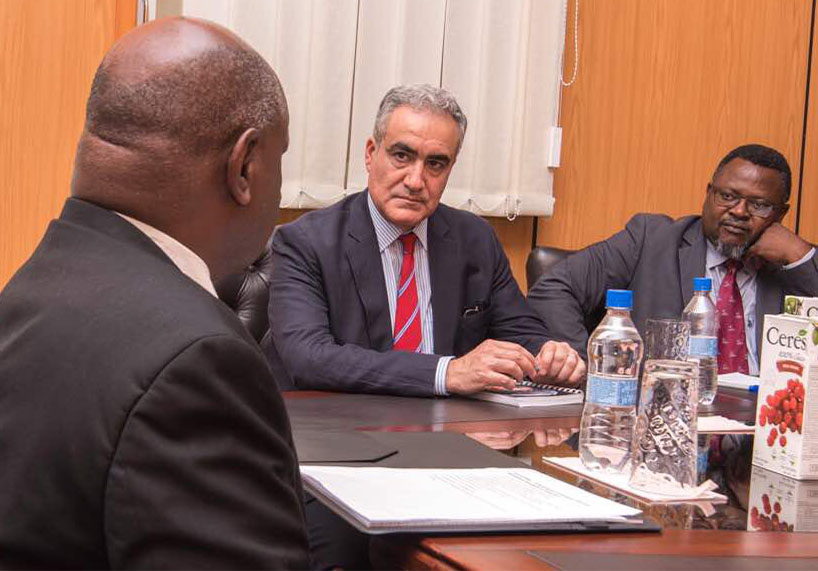
Zimbabwe’s new government must urgently restore the rule of law and ensure free and fair elections, said the ICJ at the conclusion of a visit by its Secretary General Sam Zarifi to the country.
After the recent military intervention in Zimbabwe that led to the ouster of former President Robert Mugabe, the government headed by Emmerson Mnangagwa is expected to remain in office until new elections, currently scheduled to be held before August 2018.
“The change in leaders in Zimbabwe presents an opportunity to reverse decades of damage to the rule of law and respect for human rights in the country,” said Zarifi, ICJ’s Secretary General.
“As an immediate matter, the new government must take concrete steps that demonstrate it is committed to observing the country’s obligations under international law, as well as the human rights protections of Zimbabwe’s own constitution,” he added.
The ICJ calls on the government of Zimbabwe to:
- ensure free and fair elections are held as scheduled, and the country’s electoral laws comply with the Constitution and international standards;
- accelerate measures to ensure compliance of all relevant laws with the country’s constitution and its international legal obligations;
- ensure the independence of the judiciary and the legal system;
- ensure all those arrested and detained during the military intervention are identified and brought immediately before an independent and impartial tribunal, and, where charged with recognized crimes, are given fair trials;
- investigate all allegations of unlawful deaths, torture or ill-treatment, and arbitrary arrest and detention;
- ensure the military acts within strict legal bounds, operates under civilian control, and does not engage in arrest and detention of civilians;
- ensure all security forces, including the police and the military, are subject to accountability and receive proper and adequate training in performing their duties in conformity with international human rights standards; and
- provide credible mechanisms to combat corruption in all branches of government, and ensure that anti-corruption efforts are not politicized.
“Zimbabwe’s military has played a central role in the country’s affairs for decades, while civilian institutions have suffered under intense political pressure, at great cost to the people of the country,” Zarifi said.
“Zimbabwe should grasp this opportunity to demonstrate that it can and will strengthen the rule of law and respect for human rights in order to improve the lives of all people in the country.”
Contact
Arnold Tsunga, ICJ-Director: Africa Regional Programme, t: +27716405926, e: arnold.tsunga(a)icj.org