Dec 4, 2017 | News
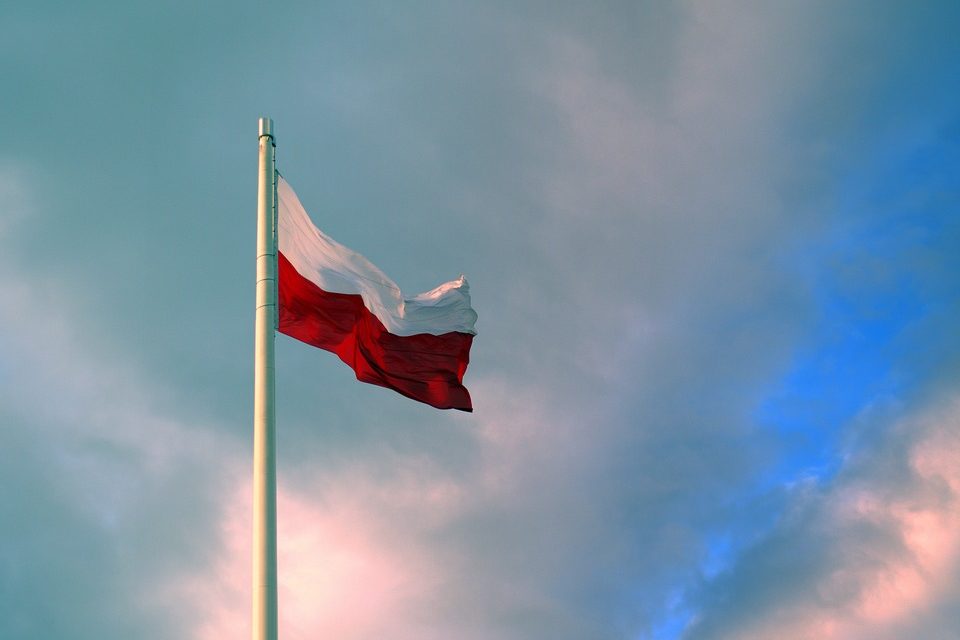
The ICJ called today on the Polish Parliament (Sejm) to reject two draft laws that, if approved, would significantly undermine the independence of the judiciary.
The Sejm is reportedly set to approve tomorrow draft bill no. 2002 that, among other measures, will allow Parliament and the Government to appoint a majority of the members of the National Judicial Council, the institution in charge of defending the independence of the judiciary and appointing judges.
This law gives the Polish legislature and executive, which have increasingly demonstrated deep disregard for human rights and the rule of law, undue influence over the judiciary.
Additionally, draft bill no. 2003, which will also come before the Parliament for approval, will lower the age of retirement for Supreme Court judges from 70 to 65 years and allow the President of the Republic to decide which judges are to be reinstated.
“These draft laws tabled by President Duda are a direct blow to the principle of separation of powers, the bedrock of the rule of law,” said Massimo Frigo, Senior Legal Adviser with the ICJ Europe Programme. “The changes made to the draft laws rejected by the President last July have not remedied in any way their adverse implications for judicial independence”.
In July, President Andrzej Duda vetoed two draft laws approved by Parliament that would have automatically dismissed all judges of the Supreme Court and entrusted the Minister of Justice with any decision on their reappointment.
The provision on the appointment of the members of the National Judicial Council was also included in the draft laws rejected in July and has changed only with regard to the parliamentary majority needed for such appointments.
“These series of legislative attacks on the independence of the judiciary in Poland must stop. These actions are inconsistent with the international obligations of Poland to ensure the independence of judges,” said Massimo Frigo.
“If these laws are approved and enter into force, this will be a decisive blow to the rule of law in Poland. A EU Member State that directly undermines the checks and balances of its own legal system threatens the founding values of the EU of the rule of law and respect for human rights, and makes it essential that the EU intervene through its article 7 procedure.” he added.
An article 7 procedure can lead to a State losing its voting rights within the EU decision-making processes. It is triggered by the European institutions, or one third of Member States, when they consider that there is a “clear risk of a serious breach by a Member State” of EU values, among which the rule of law and human rights. It is the European Council that then decides on the exclusion, if it determines that the breach of these values is “serious and persistent”.
Contact
Massimo Frigo, ICJ Senior Legal Adviser, t: +41 22 979 3805 ; e: massimo.frigo(a)icj.org
Poland-Draft law judiciary-News-Press releases-2017-ENG (full text in PDF)
Dec 4, 2017 | News
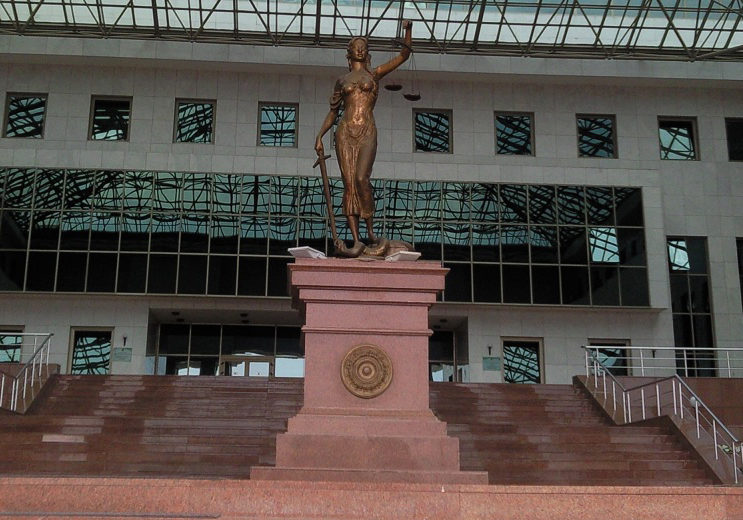
Today, the International Commission of Jurists (ICJ) began a two-day mission on the reform of the legal profession in Kazakhstan.
The ICJ mission will discuss comparative experiences and international standards on the role and independence of lawyers.
The ICJ mission will include representatives of the Bar Associations of Germany, the Netherlands and the United Kingdom.
The experts will have an opportunity to share their views on the reform and discuss their own country practices on the role of lawyers and institutional guarantees of the independence of the legal profession.
In Astana, the ICJ mission will meet, among others, with the Minister of Justice, the Supreme Court of Kazakhstan, members of the Parliament, the Kazakhstan Collegium of Lawyers and National Public Association of Commercial Lawyers “Kazakhstan Bar Association” (“KazBar”).
Contact:
Temur Shakirov, Senior Legal Adviser, ICJ Europe Programme, temur.shakirov(a)icj.org
Nov 30, 2017 | News
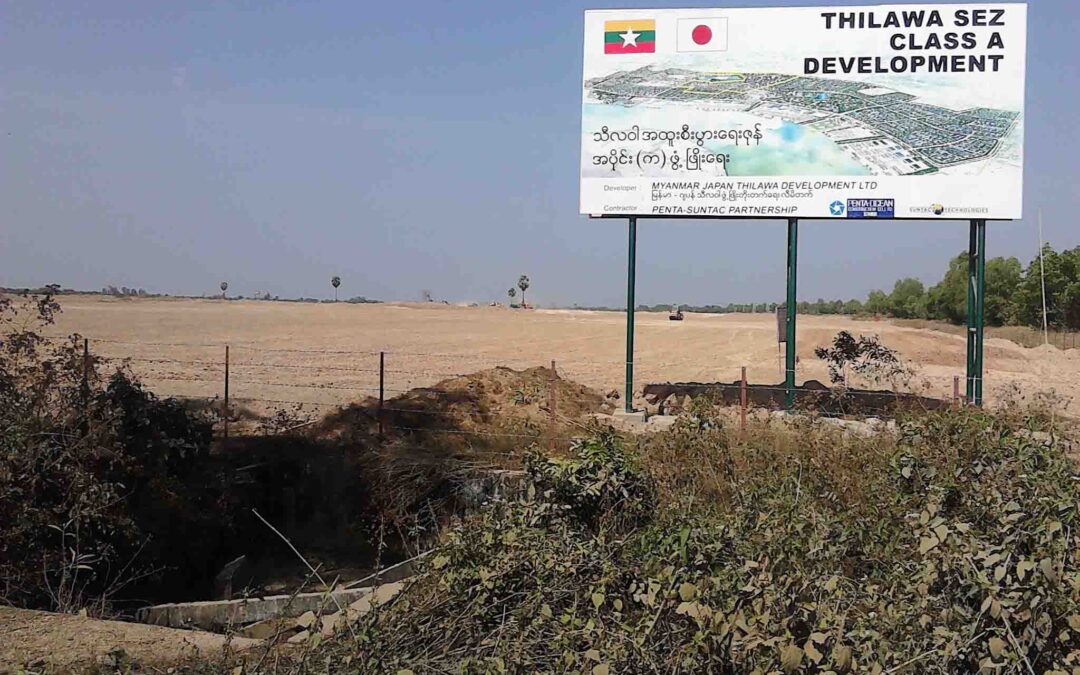
The ICJ addressed representatives of over 400 civil society organizations from all 14 states and regions of Myanmar at the MATA Forum held in the township of Pyin Oo Lwin, close to Mandalay.
Hosted from 28 to 30 November by the Myanmar Alliance for Transparency and Accountability (MATA), the Forum featured seminars and discussions on the ‘The Role of Civil Society Organizations related to Democracy, Federalism, Human Rights and Natural Resource Governance.’
MATA facilitated presentations and discussions by a range of actors on these topics – including by Sean Bain, an International Legal Adviser from the ICJ.
The ICJ’s presentation began with a reflection about key legal concepts, noting the differences between ‘rule by law’ and ‘rule of law’ as understood in the Myanmar context.
MATA members helped facilitate discussion on the application of law in Myanmar, and on key rule of law principles of democracy, human rights, accountability, transparency and justice.
Participants in the Forum were presented with an overview of Myanmar’s laws governing land and investment, assessed in relation to the State’s international legal obligations to respect and to protect human rights.
In particular, Myanmar ratified the International Covenant on Economic, Social and Cultural Rights in October 2017 and its obligations under this treaty will enter into force on 6 January 2018.
It was noted that many national laws – including a proposed new Land Acquisition Bill – fall short on fulfilling the State’s international human rights law obligations.
There was also discussion about how applying the principle of non-discrimination in law and practice is critical for Myanmar’s NLD-led government to meet its international obligations and fulfill its stated commitment to rule of law.
Historical examples were given of legal regimes in South Africa and Australia that legalized discriminatory practices of apartheid and the dehumanization of indigenous peoples. The law must no longer be used in Myanmar as a justification for discrimination.
The ICJ’s involvement in this Forum is part of ongoing engagement with civil society groups in Myanmar.
Nov 24, 2017 | News
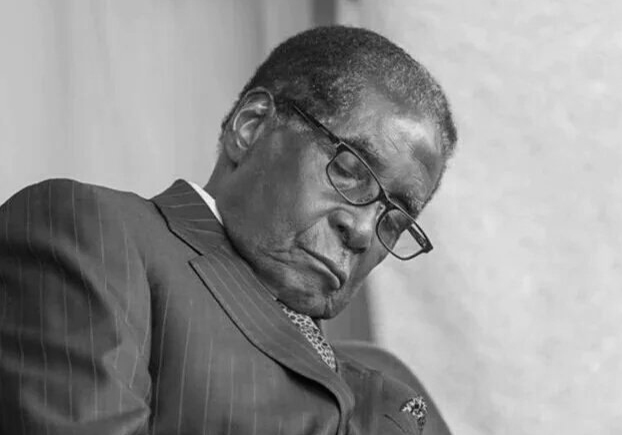
As Zimbabwe prepares to swear in Emmerson Mnangagwa following the resignation of long time Zimbabwe President Robert Mugabe, the ICJ today called on the incoming authorities to immediately act to restore the rule of law and ensure the full observance of human rights in the country.
“As the events of the past few days propel Zimbabwe away from decades of authoritarian rule replete with human rights violations, the incoming administration must side with the people of Zimbabwe and seize this unique opportunity to ground its governance in the rule of law,” said Arnold Tsunga, Director of ICJ’s African Regional Programme.
The ICJ indicated that it is particularly concerned at the intrusion of armed forces in the political process and governance, which is prohibited by the Zimbabwean Constitution and contravenes core rule of law principles concerning the respective functions of the military and civilian authorities.
Emphasizing that the rule of law and respect for the national Constitution remain paramount even as Zimbabweans decide on their future, the ICJ called on the Zimbabwean National Army (ZNA) to refrain from any further activity that intrudes into functions of governances that are within the proper purview of civilian authorities.
“It amounts to setting a dangerous precedent for Zimbabwe and the region to allow or excuse such incursions at the whim of armed forces,” Tsunga added.
Under the African Charter on Democracy, Elections, and Governance adopted by African Union Member States, Zimbabwe is required to “institutionalize constitutional civilian control over the armed and security forces to ensure the consolidation of democracy and constitutional order”.
The ICJ further expressed concern at emerging reports of usurpation of police duties by the ZNA, which has allegedly carried out a series of arbitrary arrests and detention of civilians.
“Due process guarantees and fair trial rights are particularly vulnerable when armed forces decide to assume police functions,” Tsunga said.
Recalling that international law does not allow or encourage impunity for serious human rights violations that constitute crimes, such as torture and extra-judicial killings, the ICJ stressed the importance of ensuring accountability for human rights violations as Zimbabwe transits to into a new era of governance.
Contact:
Arnold Tsunga, ICJ-Director Africa Regional Programme, t: +27716405926, or +254 746 608 859 ; e: arnold.tsunga(a)icj.org
Solomon Ebobrah, Senior Legal Advisor, ICJ Africa Regional Programme, t: +234 8034927549 ; e: Solomon.ebobrah(a)icj.org

Nov 20, 2017 | Advocacy
The ICJ, with 35 other human rights organizations, today called on members and observers of the UN Human Rights Council to convene a special session on the deteriorating human rights situation in Myanmar.
In open letter to member and observer States of the Human Rights Council, delegations are urged to support holding a special session of the Council against the backdrop of serious reports of human rights violations, including crimes against humanity, committed by Myanmar security forces in northern Rakhine state.
The letter also sets out key elements that should be included in the text of a resolution adopted by the Human Rights Council at such a session, considering action that should be taken by the Government of Myanmar, as well as by neighbouring and other States and by human rights mechanisms.
The ICJ on the same day released a briefing note, entitled Questions & Answers on Human Rights Law in Rakhine State, clarifying national and international law and standards applicable to the crisis.
Myanmar Joint Civil Society Letter 20 November 2017 (download open letter in PDF format)
For a copy of the ICJ’s Q&A briefing, go to ‘Myanmar: rule of law must drive responses to Rohingya crisis’