Oct 10, 2017 | Multimedia items, News, Video clips
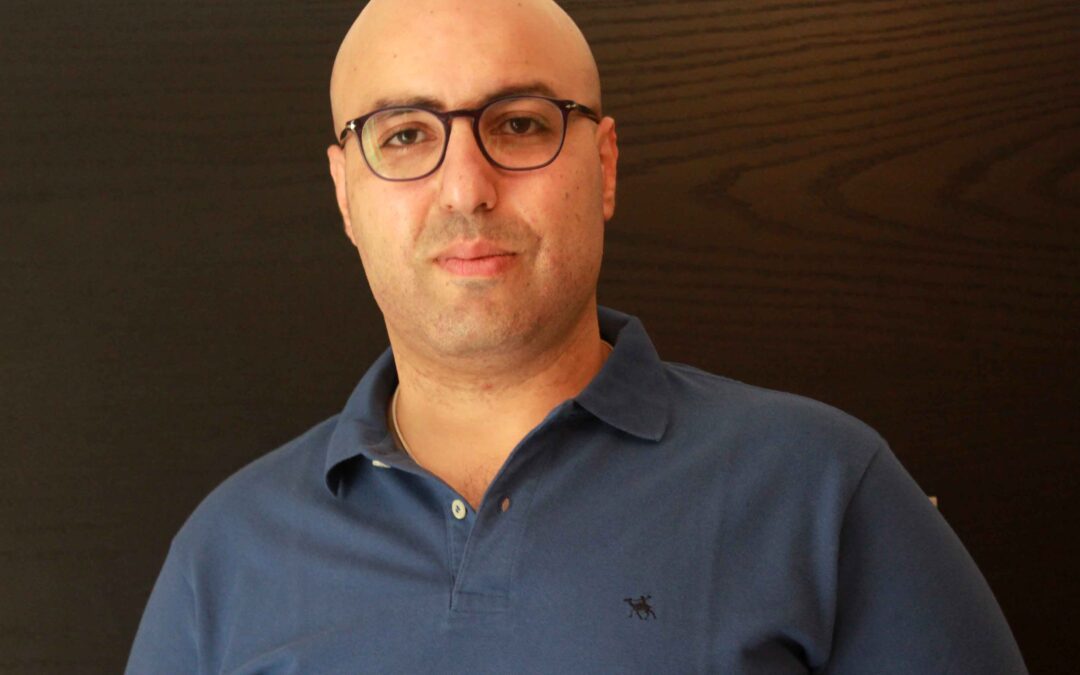
Selected by a jury of 10 global human rights organizations, including the ICJ, Mohamed Zaree is a devoted human rights activist and legal scholar whose work focuses on human rights advocacy around freedom of expression and association.
Mohamed Zaree is also known for his role as the Egypt Country Director of the Cairo Institute for Human Rights Studies (CIHRS), which works throughout the Arabic speaking world.
He assumed this role after government pressure on CIHRS prompted them to relocate their headquarters to Tunis in 2014.
The Egyptian government has been escalating its pressure on the human rights movement.
Human rights NGOs and defenders are confronted with a growing wave of threats, harassment, and intimidation, legal and otherwise.
Despite this, Mohamed Zaree is leading CIHRS’ research, human rights education, and national advocacy initiatives in Egypt and is shaping the media debate on human rights issues.
During this critical period for civil society, he is also leading the Forum of Independent Egyptian Human Rights NGOs, a network aiming to unify human rights groups in advocacy.
Zaree’s initiatives have helped NGOs to develop common approaches to human rights issues in Egypt.
Within the context of the renewed crackdown on Egyptian human rights organizations, he has become a leading figure in Egypt’s human rights movement.
He is currently facing investigation under the “Foreign Funding Case” and is at high risk of prosecution and life imprisonment. The “Foreign Funding Case” highly restricts NGO activities.
Despite this, Mohammed Zaree continues to engage the authorities in dialogue wherever possible, arguing that respect for human rights will increase stability in Egypt.
He has been under a travel ban since May 2016 but remains present and active in Egypt and represents CIHRS inside the country.
“Mohamed Zaree is a leading voice for justice in Egypt. Honoring him with the Martin Ennals Award is a recognition of the courageous and tireless work done by Egyptian human rights defenders, individuals and NGOs, in their fight against all forms of intimidation, harassment and repression waged by the Egyptian military and government against them,” said Said Benarbia, Director of the ICJ Middle East and North Africa Programme.
FreeThe5KH (Cambodia) and Karla Avelar, the two other finalists, received Martin Ennals Prizes.
FreeThe5KH are five Human Rights Defenders who were recently released after 427 days of pre-trial detention.
They are awaiting trial and are banned from travel.
There were widespread international calls for their unconditional release, and a stop to judicial harassment of human rights defenders in Cambodia.
This comes in the context of an increasingly severe crackdown on civil society and the political opposition in Cambodia.
Karla Avelar, a transgender woman in El Salvador, founded the country’s first organization of transgender women – COMCAVIS TRANS.
She grew up on the streets, suffering discrimination, violence, sexual exploitation, rape, and attempted murder.
She works to change national legislation and the authorities’ practices, by publicizing violations suffered by LGBTI people.
Her advocacy helped prompt the authorities to segregate LGBTI prisoners for their own safety, and provide HIV treatment.
Background
The “Nobel Prize of Human Rights”, the Martin Ennals Award for Human Rights Defenders (MEA) is a unique collaboration among ten of the world’s leading human rights organizations to give protection to human rights defenders worldwide.
Strongly supported by the City of Geneva, the award is given to Human Rights Defenders who have shown deep commitment and face great personal risk.
Its aim is to provide protection through international recognition.
The Jury is composed of the following NGOs: ICJ, Amnesty International, Human Rights Watch, Human Rights First, Int’l Federation for Human Rights, World Organisation Against Torture, Front Line Defenders, EWDE Germany, International Service for Human Rights, and HURIDOCS.
Contact:
Michael Khambatta, Director, Martin Ennals Foundation, t: +41 79 474 8208, e: khambatta(a)martinennalsaward.org
Olivier van Bogaert, Director, ICJ Media and Communications, and ICJ Representative on the MEA Jury, t: +41 22 979 38 08, e: olivier.vanbogaert(a)icj.org
The Award will be presented by the United Nations Deputy High Commissioner for Human Rights at 18.15 on 10 October at the University of Geneva. The ceremony can be watched live on Martin Ennals Award Facebook page
Watch the movie on Mohammed Zaree
Sep 27, 2017 | Advocacy, Non-legal submissions
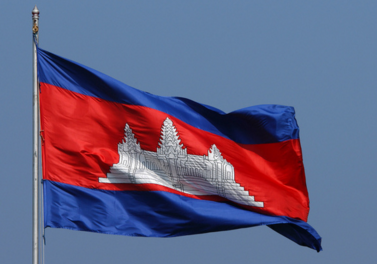
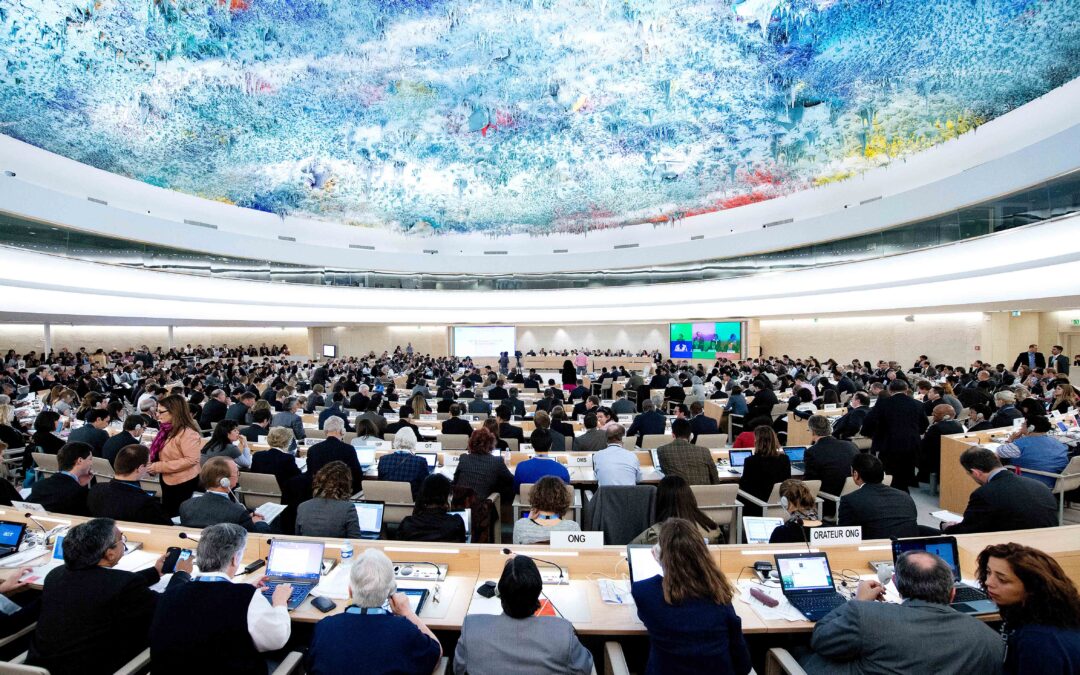
The ICJ today highlighted a sharp deterioration in the situation for human rights and the rule of law, in a statement to the UN Human Rights Council in Geneva.
The statement was delivered during the interactive dialogue with the Special Rapporteur on the situation of human rights in Cambodia, and read as follows:
“The International Commission of Jurists (ICJ) welcomes the report of the Special Rapporteur (UN Doc A/HRC/36/61) and strongly supports the renewal of her mandate.
Monitoring and action by the international community has seldom been more important for Cambodia since the Paris Peace Accords were signed in 1991.
Civil society, independent media and the political opposition are under sustained attack in what appears to be a carefully orchestrated effort to silence dissenting voices in the lead up to national elections in July 2018. Vague legal provisions in for instance the Law on Associations and Non-Governmental Organizations (LANGO) and the Law on Political Parties, are being weaponized to this end.
Human rights defenders and others, including the “ADHOC 4”, Ny Chakrya, Tep Vanny, Hun Vannak, Doem Kundy, and the President of the opposition party, Kem Sokha, face criminal charges with all the hallmarks of being politically motivated.
Prosecutors and judges lack independence and impartiality, and investigations routinely fall short of international standards, as in the case of the killing of political commentator Kem Ley.
Seeking to justify its actions, Cambodia frequently invokes the principle of the rule of law.
The ICJ, a global organisation of judges and lawyers, has worked for the rule of law for more than sixty years. The rule of law does not simply mean that laws exist and are enforced, but requires among other things: equal application of the law without discrimination, including due to political or other opinion, and ensuring that laws are only adopted and applied consistent with international human rights law.
What is happening in Cambodia today has nothing to do with the rule of law.
The ICJ would therefore ask the Special Rapporteur what further recommendations she has towards seeing the rule of law, as properly understood, truly reign in Cambodia.”
The Human Rights Council is expected to adopt a new resolution on Cambodia later this week. The ICJ and other non-governmental organisations have called for it to include additional monitoring and additional opportunities to discussion the situation at the Human Rights Council, before national elections scheduled for July 2018.
Sep 19, 2017 | Advocacy, Non-legal submissions
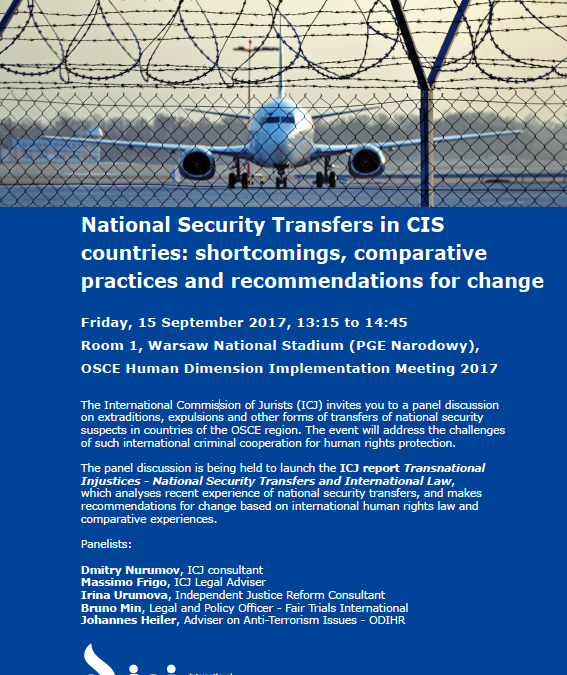
In a statement to the UN Human Rights Council today, the ICJ called for the appointment of a Special Rapporteur on the situation for human rights in Venezuela, given the ongoing human rights and rule of law crisis in the country.
The statement, which was delivered during a general debate on country situations of concern, read as follows:
“In Venezuela, extrajudicial and arbitrary executions, torture, arbitrary detention, prosecution of civilians by military tribunals, and persecution and attacks against opponents, dissidents and human rights defenders have become systematic and widespread practices.
Demonstrations and protests are violently suppressed by state security bodies and groups of armed civilians close to the government.
These gross human rights violations remain subject to impunity.
The possibility of exercising fundamental freedoms of expression and assembly, as well as political rights, is non-existent.
Following a series of decisions by the Supreme Court of Justice and the Government, the rule of law has ceased to exist, there is no separation of powers, the legislative branch has been stripped of its constitutional powers and the judiciary has become an instrument of the Executive Branch.
The National Constituent Assembly has usurped functions that do not belong to it, such as legislating and dismissing officials.
The International Commission of Jurists considers that, given the very serious human rights situation and the breakdown of the rule of law, it is imperative that the Human Rights Council appoint a Special Rapporteur on the situation of human rights in Venezuela.”
ICJ reports:
Venezuela: the Supreme Court of Justice has become an arm of an authoritarian executive
Venezuela: rule of law and impunity crisis deepens
Venezuela: dismissal of Attorney General a further blow to the rule of law and accountability
Venezuela: Human rights and Rule of Law in deep crisis
Strengthening the Rule of Law in Venezuela
Sep 14, 2017 | Events
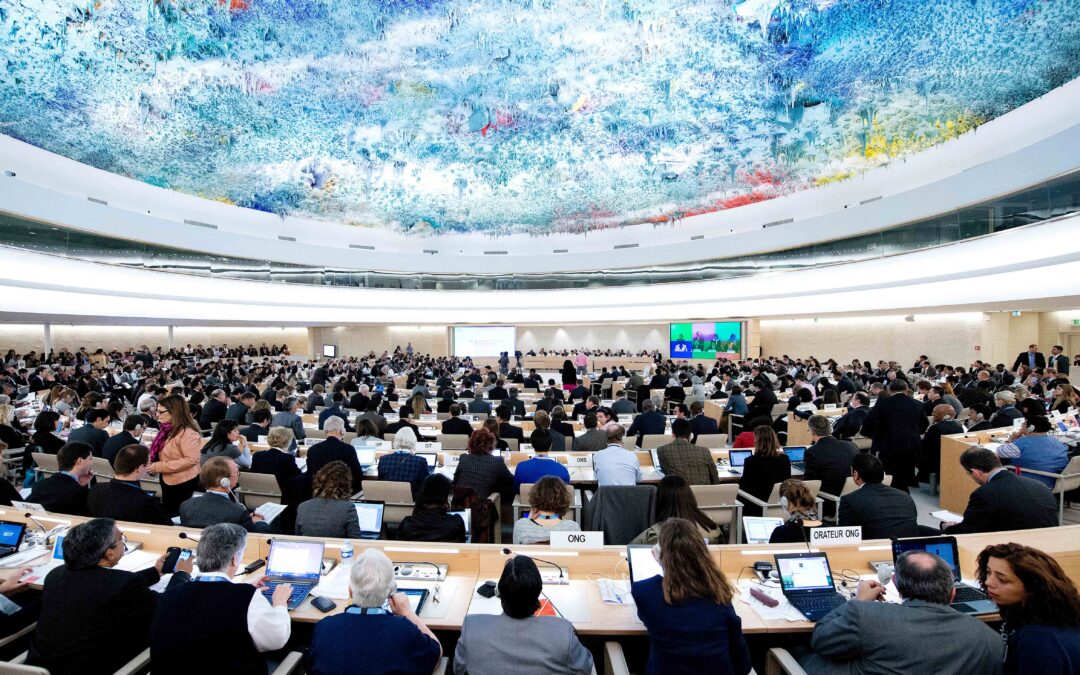
At a side event to the OSCE Human Dimension Implementation Meeting 2017, the ICJ will review the latest developments on extraditions, expulsions and other forms of transfers of national security suspects in countries of the OSCE region.
The event will address the challenges of such international criminal cooperation for human rights protection.
The panel discussion is being held to launch a new ICJ report which analyses recent experience of national security transfers, and makes recommendations for change based on international human rights law and comparative experiences.
The event will take place in Warsaw Friday 15 September at 13:15 – 14:45 at Room no. 1 at the OSCE HDIM 2017.
Panelists:
- Dmitry Nurumov, ICJ consultant
- Massimo Frigo, ICJ Legal Adviser
- Irina Urumova, Independent Justice Reform Consultant
- Bruno Min, Legal and Policy Officer – Fair Trials International
- Johannes Heiler, Adviser on Anti-Terrorism Issues – ODIHR
Working language: English and Russian (simultaneous translation provided)
A flyer for this event is available in PDF format by clicking here.
For more information, contact massimo.frigo(a)icj.org and/or dina.iskaliyeva(a)icj.org
Sep 12, 2017 | Advocacy, Non-legal submissions
The ICJ today made an oral statement to the UN Human Rights Council, on the crisis for human rights and the rule of law in Venezuela.
The statement was made in general debate under item 2 on the oral update delivered by the High Commissioner for Human Rights.
The ICJ statement read as follows:
“The ICJ welcomes the efforts of the High Commissioner and his Office to document and draw attention to the situation in Venezuela, including through the report published on 30 August. As the High Commissioner highlighted, the situation only continues to worsen and the ICJ fully supports his call for the Council to establish an international investigation into human rights violations in Venezuela.
The deep human rights crisis and the breakdown of the rule of law in Venezuela is undoubtedly the most worrying situation in the American hemisphere.
Arbitrary detentions, extrajudicial and arbitrary executions, military trials of civilians and persecutions and harassments of opponents, dissidents and human rights defenders have become systematic and widespread practices.
The combined action of the Supreme Court of Justice, the Government and the National Constituent Assembly has destroyed the rule of law, suppressing the separation of powers, delivering a fatal blow to the Legislative, and seriously undermining independence and impartiality of the Judiciary.
The 1999 Constitution has de facto ceased to be in force and the road to arbitrary exercise of power has begun.
The ICJ considers that it is imperative that the Human Rights Council take action on this serious situation.”
The High Commissioner, in his oral update on 11 September, had stated as follows in relation to Venezuela:
“Last month my Office issued a report on Venezuela, highlighting excessive use of force by security officers, and multiple other human rights violations, in the context of anti-Government protests. There is a very real danger that tensions will further escalate, with the Government crushing democratic institutions and critical voices – including through criminal proceedings against opposition leaders, recourse to arbitrary detentions, excessive use of force, and ill-treatment of detainees, which in some cases amounts to torture. Venezuela is a Member State of this Council, and as such has a particular duty to “uphold the highest standards in the promotion and protection of human rights”, in the words of Resolution 60/251. My investigation suggests the possibility that crimes against humanity may have been committed, which can only be confirmed by a subsequent criminal investigation. While I support the concept of a national Truth and Reconciliation Commission, the current mechanism is inadequate. I therefore urge that it be reconfigured with the support and involvement of the international community. I also urge this Council to establish an international investigation into the human rights violations in Venezuela.”
The ICJ also launched today a new report on Venezuela, and convened a side event to discuss the need for action by the Human Rights Council.