May 27, 2021 | Advocacy, Non-legal submissions
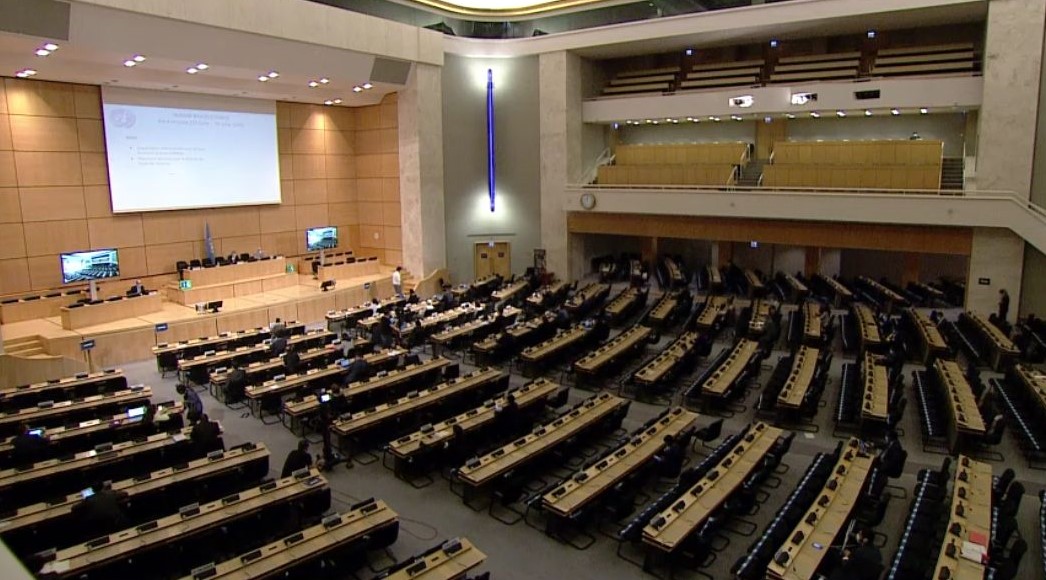
The ICJ today addressed an emergency Special Session of the UN Human Rights Council on the Occupied Palestinean Territories and Israel, calling for accountability for the serious violations of international humanitarian law and international human rights law committed by all parties.
The Special Session is expected to adopt a resolution to address this situation.
The ICJ statement read as follows:
“Madame President,
May 2021 has witnessed the commission of serious crimes under international law by Israel in occupied East Jerusalem and the West Bank, and by Israel and Palestinian armed groups in the context of the recent round of hostilities in the Gaza Strip. As in the past, the conflict exacted a heavy toll on civilians taking no part in hostilities, including more than 65 slain Palestinian children. Unlike the past, those responsible must be held criminally accountable for these crimes.
The International Commission of Jurists calls on the Council to establish a Commission of Inquiry to investigate serious violations of international humanitarian law and international human rights law committed by all parties with a view to:
- Establishing the facts, documenting, and reporting on alleged violations and abuses of international humanitarian law and international human rights law;
- Collecting and preserving evidence of crimes under international law committed in the West Bank, including East Jerusalem, Israel and in the context of the Gaza hostilities; and
- Identifying all those responsible for such crimes.
This Council should call on all States to cooperate with the ongoing investigation of the International Criminal Court. All States, and any mechanisms of this Council, should cooperate and share relevant information with the Commission of Inquiry.
Thank you.”
Contact:
Massimo Frigo, ICJ UN Representative, e: massimo.frigo(a)icj.org, t: +41797499949
Mar 24, 2021 | Advocacy, Non-legal submissions
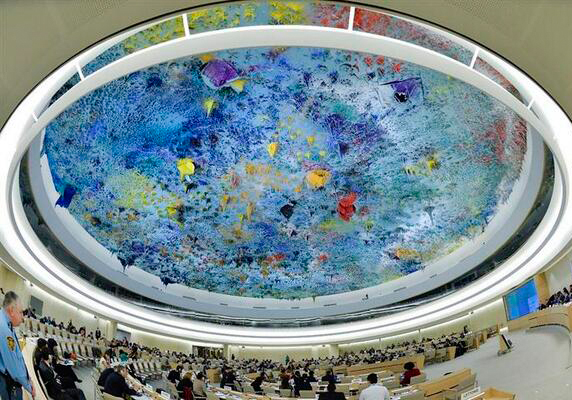
Today, at the close of the 46th regular session of the UN Human Rights Council in Geneva, the ICJ and other NGOs highlighted key achievements and failures.
The joint civil society statement, delivered by International Service for Human Rights (ISHR) on behalf of the group, outlines the main achievements and shortfalls of this last 46th regular session.
In the statement, the undersigned organisation comment on the engagement of civil society in online sessions, welcome the adoption of the resolution on vaccines and of resolutions to sustain scrutiny and accountability including in Belarus, Iran, Myanmar, Nicaragua, Sri Lanka, South Sudan and Syria. The NGOs have underlined the fact thatover 30 States have united in a long-overdue condemnation of Egypt’s misuse of counter-terrorism measures to imprison peaceful critics, and over 40 States raised concern over the shrinking civic space in Russia.
The civil society organisations have urged the Council to take prompt action on Algeria, Cameroon, China, India, and in Kashmir, and for the upcoming session, to set up an international accountability mechanism on the Philippines, and independent monitoring on pushbacks and other violations faced by migrants and refugees.
The statement is endorsed by:
- International Service for Human Rights;
- Franciscans International;
- Egyptian Initiative for Personal Rights (EIPR);
- International Commission of Jurists (ICJ);
- International Movement Against All Forms of Discrimination and Racism (IMADR);
- Asian Forum for Human Rights and Development (FORUM-ASIA);
- African Centre For Democracy And Human Rights Studies;
- International Federation for Human Rights Leagues (FIDH);
- MENA Rights Group;
- International Lesbian and Gay Association;
- Impact Iran;
- Ensemble contre la Peine de Mort (ECPM);
- Siamak Pourzand Foundation;
- Cairo Institute for Human Rights Studies (CIHRS);
- ARTICLE 19;
- CIVICUS: World Alliance for Citizen Participation.
Read the full statement: UN-JointStatement-UNHRC46-Advocacy-EndOfSession-ENG-2021
Contact:
Massimo Frigo, ICJ UN Representative, e: massimo.frigo(a)icj.org, t: +41797499949
Mar 22, 2021 | Advocacy, Non-legal submissions
The ICJ joined today seven other organisation in a statement before the UN Human Rights Council expressing concern at the systematic human rights violation and the persistent impunity in the Philippines and calling for more accountability.
The joint statement delivered by FORUM ASIA reads as follows:
“Madam President,
Nearly six months since its adoption, Human Rights Council resolution 45/33 offering technical assistance to the Philippines has proven to be utterly insufficient to address the systematic human rights violations and persistent impunity documented in the High Commissioner’s report. The Philippine Government’s policies and actions since the Resolution’s adoption have been completely at odds with the commitments outlined in it.
Extrajudicial killings in the so-called ‘war on drugs’ have continued. To date, the Government has made no tangible progress towards accountability against those most responsible for such killings. In December 2020, the Office of the Prosecutor of the ICC found that there is “reasonable basis to believe that the crimes against humanity” of murder, torture, the infliction of serious physical injury and mental harm, and other inhumane acts were committed between at least 1 July 2016 and 16 March 2019.
Human rights defenders pursuing legitimate work, especially those who advocate for international accountability, including lawyers, continue to be attacked and accused of belonging to terrorist groups. Rights defenders continue to be arrested and jailed. The draconian Anti-terrorism Act, passed last year, exacerbates risks to defenders. The killing of nine human rights defenders and activists on 7 March, two days after President Duterte ordered the police and military to “finish off” and “kill” those purported to be “communist rebels”, illustrates clearly the persistent killings and attacks faced by activists and defenders. It is very clear that no amount of technical assistance or capacity building will end the killings as the President and top government officials continue to incite murder and violence as official policy.
In this context, it is imperative that the Council set up an international accountability mechanism to end the cycle of violence and impunity in the Philippines.
Thank you.”
The statement was endorsed by:
- Amnesty International
- Asian Forum for Human Rights and Development (FORUM-ASIA)
- CIVICUS: World Alliance for Citizen Participation
- Human Rigths Watch
- International Commission of Jurists (ICJ)
- International Federation for Human Rights (FIDH)
- Philippines Alliance of Human Rights Advocates (PAHRA)
- World Organisation Against Torture (OMCT)
Contact:
Massimo Frigo, ICJ UN Representative, e: massimo.frigo(a)icj.org, t: +41797499949
Mar 22, 2021 | Advocacy, Non-legal submissions
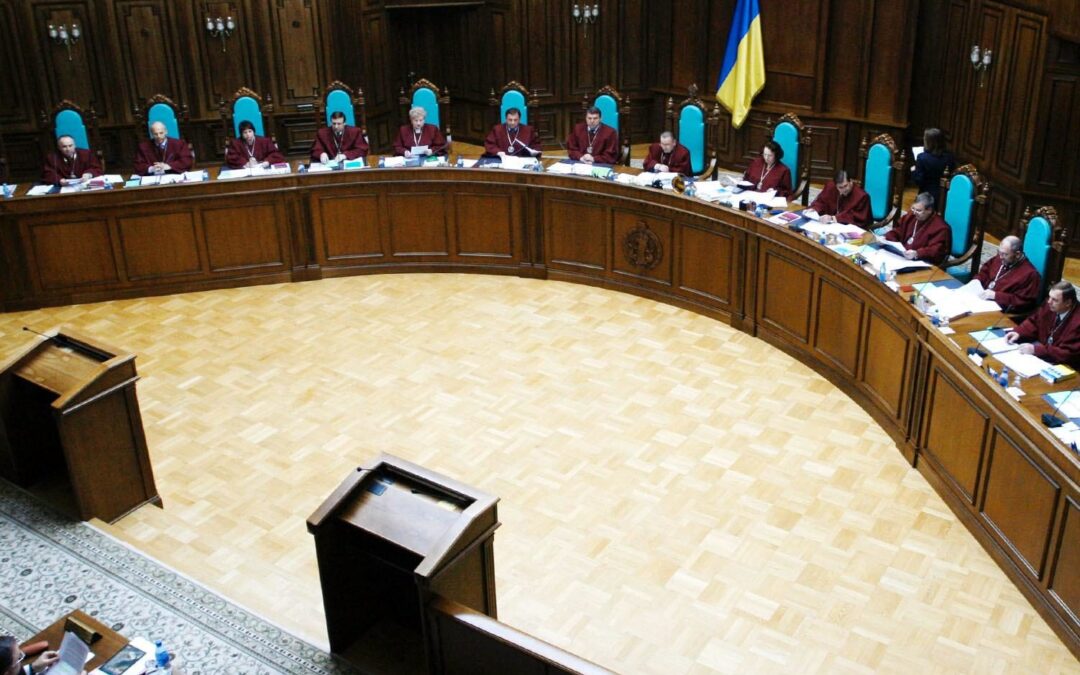
Today, before the UN Human Rights Council, the ICJ called on Ukrainian authorities to ensure the security of lawyers and the independence of the judiciary, essential elements to make effective any human rights technical assistance and capacity building.
The statement reads as follows:
“Madame President,
In Ukraine, a number of lawyers, including those who defend human rights, in and outside of courts, including to face threats, harassment, and other attacks on their security.
Lawyers continue to be associated with their clients and may face detrimental consequences for representing them.
For example, in November 2020, lawyer Nikolay Osipchuk was physically attacked by the local Prosecutor and several other people in the court room of a district court. A pattern of such attacks was identified by the ICJ in a report issued last year.
The ICJ is further concerned at recent the attempts of interference by the Government with the independence of the judiciary in Ukraine.
The ICJ welcomes the withdrawal of the presidential draft law by which all judges of the Constitutional Court would have been dismissed. However, it is concerning that, following a criminal case initiated against him, the President of the Constitutional Court was suspended by a decision of the President of Ukraine. This decision, on dubious legal grounds, undermines the independence of the judiciary.
The ICJ urges that Ukraine:
- Ensure prompt, thorough, impartial and independent investigations of all attacks on lawyers, leading where appropriate, to bringing those responsible to justice;
- refrain from any acts which interfere with the independence of the judiciary and annul the suspension of the President of the Constitutional Court.
I thank you.”
Contact:
Massimo Frigo, ICJ UN Representative, e: massimo.frigo(a)icj.org, t: +41797499949
Mar 18, 2021 | Advocacy, Non-legal submissions
Today, the ICJ and ARTICLE 19 called on the UN Human Rights Council and its Advisory Committee to adopt a human rights-centred approach in their work on “negative effects of terrorism”, during a general debate on human rights bodies.
The joint statement reads as follows:
“Madam President,
The ICJ and ARTICLE 19 have followed the Advisory Committee’s ongoing work on the negative effects of terrorism on human rights and understand that it still finalizing its report on the topic.
We consider that the efforts of the Committee and this Council on this topic should focus exclusively on preventing and addressing human rights violations resulting from counterterrorism measures and promoting and protecting the human rights of victims of terrorism.
The Committee’s earlier report instead dedicated much space to the macro-economic effects of terrorism which do not lead to concrete recommendations to States on the human rights dimensions.
This focus proposed by some States diverts the longstanding focus of the Human Rights Council away from core human rights concerns and from States’ duties to prevent, protect, investigate, and redress human rights abuses.
The ICJ and ARTICLE 19 point out that the existing and longstanding normative and institutional framework on counterterrorism and human rights is already sufficient to address relevant impacts of terrorism from a human rights perspective.
We call on the Committee and the Council to bear this in mind as they continue their engagement on this important topic.
Thank you.”
Contact:
Massimo Frigo, ICJ UN Representative, e: massimo.frigo(a)icj.org, t: +41797499949