Mar 8, 2013 | Events
 As a member of the International NGO Coalition for the OP to the ICESCR, the ICJ is co-convening a high-level event on the protection of economic, social and cultural rights March 13 at the Palais des Nations in Geneva.
This event is organized together with the Group of Friends of the Optional Protocol to the ICESCR, including Argentina, Belgium, Bolivia, Bosnia & Herzegovina, Ecuador, El Salvador, Finland, France, Senegal, Spain, Slovakia, Portugal and Uruguay; and the Office of the United Nations High Commissioner for Human Rights.
It will highlight the importance of OP-ICESCR to the full realization of human rights and the need to achieve widespread ratification of the OP-ICESCR to ensure access to justice for all.
Speakers will include the Deputy High Commissioner for Human Rights, the UN Special Rapporteur on the Right to Water and Sanitation, as well as the Permanent Representatives of Argentina, France, Portugal, Slovakia and Uruguay.
Parallel Event – OP-ICESCR-event-2013 (download the flyer, pdf)

Mar 5, 2013 | Advocacy, Legal submissions, Non-legal submissions
The ICJ today requested the UN Special Rapporteur on the situation of human rights defenders to call on Zimbabwe, Angola, the Democratic Republic of Congo and Swaziland to take effective measures to prevent and end attacks on and persecution of human rights defenders.
The ICJ delivered its oral statement today during an interactive dialogue with the Special Rapporteur as part of the Human Rights Council’s 22nd regular session (25 February to 22 March 2013).
The ICJ also noted the need for these States to:
- Ensure adherence to international standards on detention and fair trial in cases where human rights defenders have been arrested;
- Conduct prompt and impartial investigations and, where human rights abuses are criminal in character, prosecute all persons responsible; and
- Ensure that affected human rights defenders have access to effective remedies and reparation for such abuses.
Also addressed to the Special Rapporteur on the situation of human rights defenders was a written statement submitted earlier this month concerning legislative restrictions on ‘homosexual propaganda’ that threaten LGBT human rights defenders.
SouthernAfrica-HRC22-IDItem3-SRHRDs-Non-LegalSubmission-2013 (download oral statement in PDF)
For the written statement click here
Jan 17, 2013 | News
 The ICJ expresses great concern over the recent pattern of attacks on human rights defenders in Zimbabwe by the Law and Order Section of the Zimbabwe Republic Police (ZRP).
The ICJ says the systematic assault on human rights defenders has taken the form of arbitrary arrests of human rights practitioners, unjustifiable raids on their offices and interference with their meetings amongst other forms of harassment.
Such attacks have been a continuous source of international concern, including when raised by United Nations Human Rights Council in its Universal Periodic Review of Zimbabwe in 2011.
There has been a failure on the part of the Zimbabwe judiciary to exercise its responsibility of judicial oversight over these abuses, the ICJ adds.
“Government officials including the ZRP are using repressive laws to harass and intimidate human rights defenders and NGOs with the aim of causing them to abandon their work in promoting and defending human rights in Zimbabwe,” said Martin Masiga, Deputy Director of the Africa Regional Programme of the ICJ. “It is deplorable that the government has contrived to fabricate charges against its own citizens to discredit, delegitimize and frustrate their lawful civic activities.”
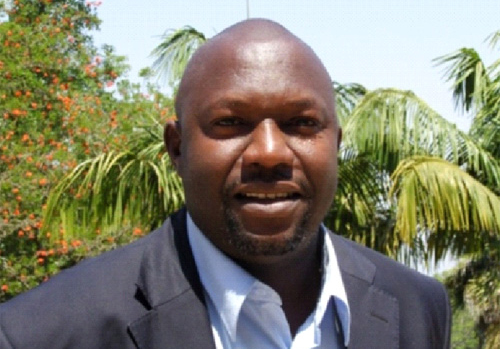
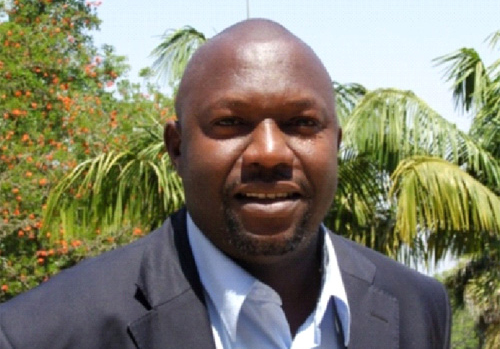
The ICJ underscores the reports of the arrest of Zimbabwe Human Rights Association (ZimRights) Director Okay Machisa (photo) on Monday, 14 January 2013 in Harare on charges of allegedly “conspiring to commit voter registration fraud and publishing or communicating falsehoods”.
The magistrate in this matter denied bail for reasons inconsistent with international fair trial standards and which appeared to be politically motivated.
The arrest of Okay Machisa follows the detention of his deputy, Leo Chamahwinya and three other staff members of ZimRights in December 2012 on the same charges.
These arrests occurred just a few weeks after ZimRights [publicly] denounced the trend of increasing police brutality across Zimbabwe and called for urgent action by competent authorities to address these human rights violations.
The Zimbabwean Constitution, the African Charter on Human and Peoples’ Rights and the International Covenant on Civil and Political Rights, to which Zimbabwe is a state party, guarantees the right to the freedom of opinion, expression and association.
The UN Declaration on Human Rights Defenders, which articulates universal standards for the protection of those working to protect human rights, affirms that “everyone has the right, individually and in association with others, to promote and to strive for the protection and realization of human rights and fundamental freedoms at the national and international levels “.
Accordingly, Zimbabwe has a legal obligation to protect those persons and organisations that strive for the protection and promotion of human rights.
Zimbabwe reportedly will hold national elections in 2013, the first since the formation of the Government of National Unity following the tragic events of the 2008 national election.
The ICJ insists it is essential for the people of Zimbabwe and for the advancement of Zimbabwe in the arena of constitutional democracy that State officials exercise their responsibility to protect human rights activists instead of attacking them.
The ICJ urges the Government of Zimbabwe to respect regional and international human rights standards, and to call upon its law enforcement agencies to cease the harassment and intimidation of HRDs in Zimbabwe.
The ICJ calls on the Zimbabwean judiciary to exercise its responsibility to uphold international fair trial standards and the constitutional provisions of Zimbabwe in adjudicating the matters relating to human rights defenders, including the officials of ZimRights.
Contact:
Martin Okumu-Masiga, Deputy Director of the ICJ Africa Regional Programme, t: +27110248268; e-mail: martin.okumu-masiga(at)icj.org
Oct 29, 2012 | Events
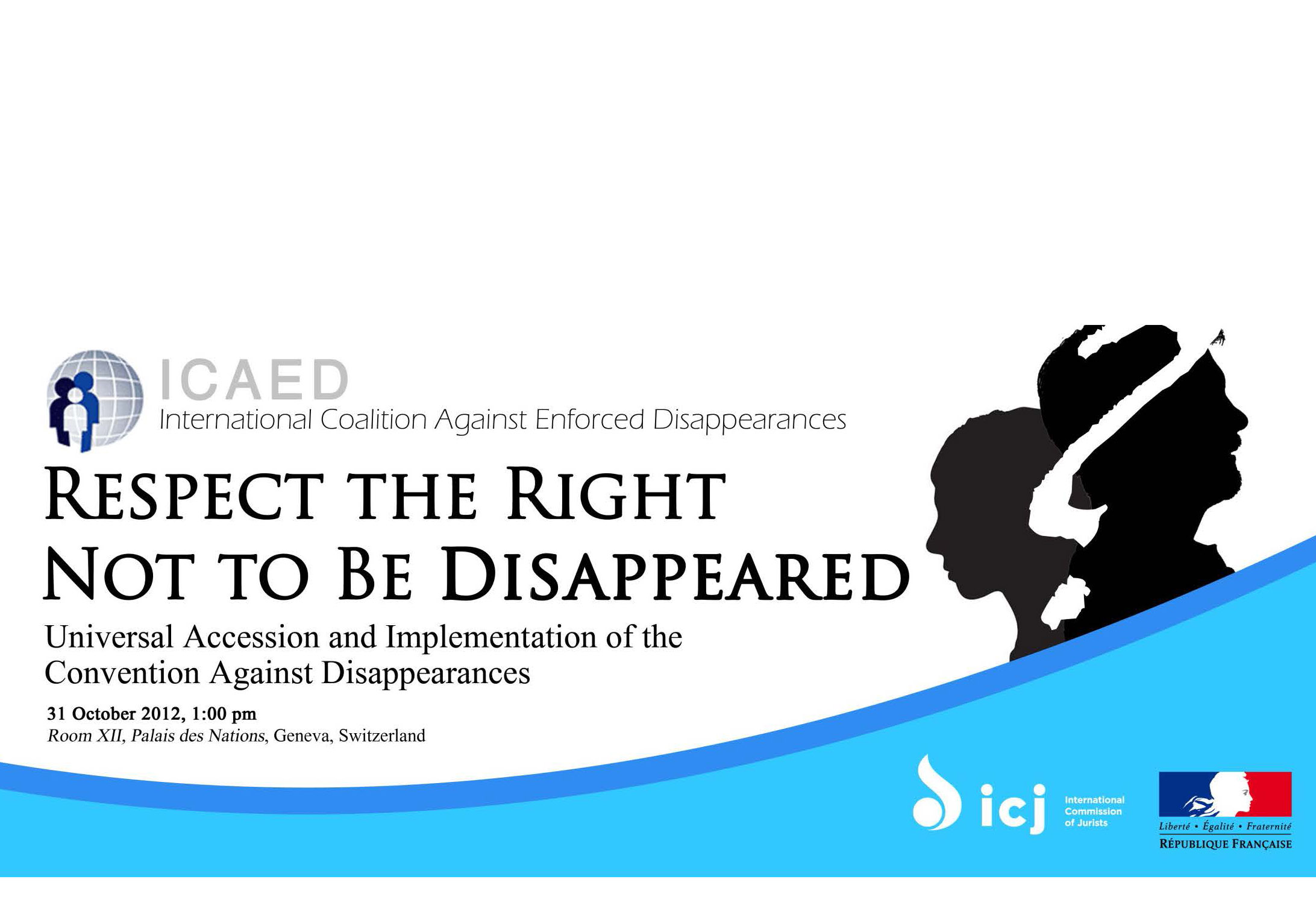 On 31 October the ICJ is co-sponsoring a side event with the Permanent Mission of France on “Respect the right not to be disappeared – Universal accession and implementation of the Convention against disappearances”.
This parallel event to the session of the Committee on Enforced Disappearance and the Working Group on Enforced and Involuntary Disappearances will take place at the Palais des Nations in Geneva, Room XII, from 1 to 3 PM (13.00-15.00).
UN-ICAED enforced disappearances – Event-2012
Oct 9, 2012 | Advocacy, Non-legal submissions
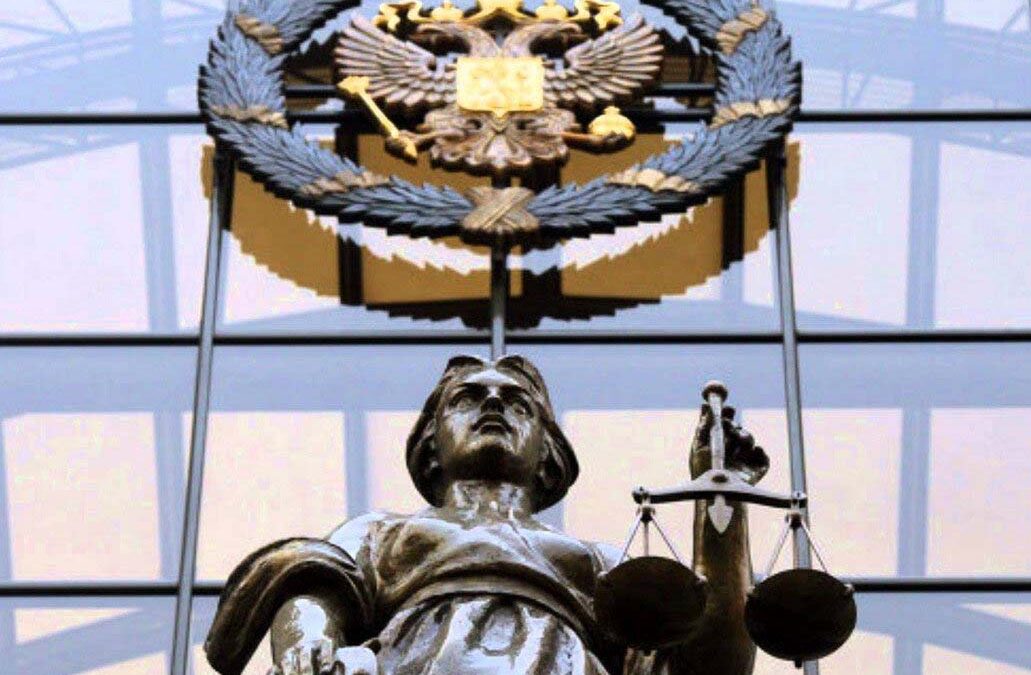
 The ICJ commented on the UPR of the Russian Federation, addressing issues including torture and ill-treatment, impunity, judicial independence, NGO laws and “homosexual propaganda” bans.
The International Commission of Jurists has brought to the attention of the Human Rights Council’s Working Group on the UPR and to the Human Rights Council issues concerning:
- prevention of torture and ill-treatment and other gross human rights violations;
- impunity for gross human rights violations;
- independence of the judiciary; amendments to NGO laws;
- non-refoulement; homosexual propaganda bans; and
- Russia’s engagement with international human rights instruments and mechanisms.
Russia-ICJ comments on UPR-non-legal-submission-2012 (download the ICJ submission)