Mar 22, 2019 | News
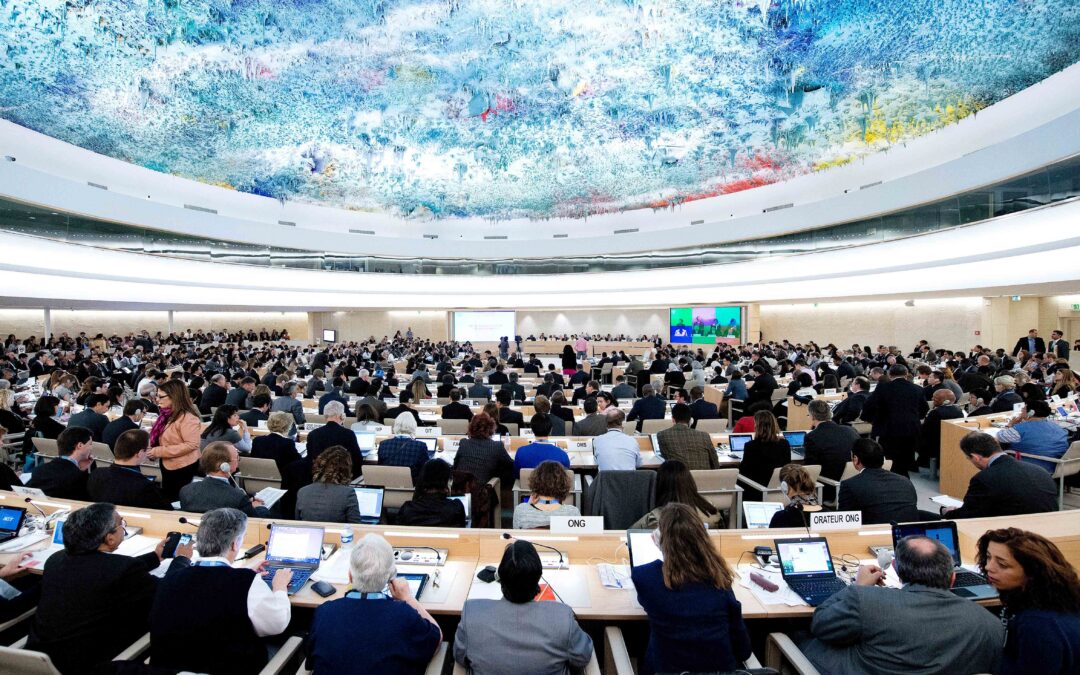
The ICJ today strongly welcomed the renewal of the key UN expert on counter-terrorism and human rights, on terms that maintain the mandate’s independence, integrity and its essential focus on human rights.
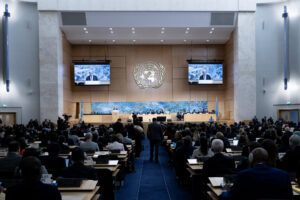
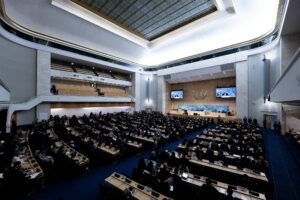
The renewal of the mandate of the Special Rapporteur on the promotion and protection of human rights and fundamental freedoms while countering terrorism, was enacted by a resolution adopted by consensus at the UN Human Rights Council in Geneva.
To acheive this successful outcome, Mexico (which leads the resolution) and other States had to defend the text of the resolution against attempts by Egypt and other States to insert language aimed at diluting, distorting or distracting the mandate from its current focus on preventing and responding to violations of human rights and on securing respect, protection and fulfilment of the human rights of victims of terrorism.
The Special Rapporteur delivers thematic reports to the Human Rights Council, carries out visits to countries, and acts on individual complaints. In the overall counter-terrorism architecture of the UN, the Special Rapporteur is also the only person with an exclusive independent mandate to remind States of their human rights obligations while countering terrorism, to advise them how to do so, and to draw public attention when they do not. So any dilution of the mandate would have also put the integrity and efficacy of the overall UN counter-terrorism strategy and architecture at risk.
Following the adoption of the mandate renewal resolution by the Council, the ICJ and other organisations expressed its deep appreciation for Mexico’s efforts, together with the strong support of numerous other States, to secure the future of the mandate.
The resolution text is available here: https://undocs.org/A/HRC/RES/40/16
Additional background is here.
Mar 21, 2019 | News
In a letter to Assistant Secretary-General for Human Rights, Andrew Gilmour, the ICJ, the American Civil Liberties Union (ACLU) and the International Service for Human Rights (ISHR) call on the UN to address a clear case of intimidation and threat of reprisal by U.S. Secretary of State Michael Pompeo.
In remarks to the press on 15 March 2019, Pompeo explicitly threatened to revoke or deny visas to International Criminal Court (ICC) personnel who attempt to investigate or prosecute alleged violations committed by American nationals or against citizens of U.S. allies.
The ASG is mandated to lead efforts within the UN system to end all intimidation and reprisals against those cooperating with the UN on human rights. In keeping with this mandate, the ACLU, ICJ and ISHR call on the ASG to take urgent action, including by publicly denouncing the comments, and urging U.S. representatives to refrain from adopting any legislation, policy or practice that has the effect of undermining unhindered access to and communication with the ICC and other international bodies.
The letter states that ‘The purpose of the visa restrictions is to block and deter legitimate criminal investigation into serious crimes under international law. Not only might they have a chilling effect on ICC personnel and others advocating for accountability, but they will set a dangerous precedent with serious implications on the overall fight for impunity, especially the right of victims and their legal representatives to seek justice and reparations without fear of retaliation.’
A similar communication has also been sent to three UN experts – the Special Rapporteurs on the situation of human rights defenders, on the independence of judges and lawyers, and on the promotion of truth, justice, reparation and guarantees of non-recurrence. The experts are similarly called on to publicly denounce the comments and send a formal communication to the U.S.
“The policy announced by Pompeo is part and parcel of a concerning attack by the current U.S. administration on multilateralism, international rule of law, and global and regional bodies mandated to monitor and investigate human rights violations and fight impunity,” said Sam Zarifi, Secretary General of the ICJ.
Pompeo’s announcement comes on the heels of threats made by U.S. National Security Advisor John Bolton in a 10 September 2018 speech to the Federalist Society.
In that instance, Bolton explicitly threatened ICC judges, prosecutors, and personnel if they proceed with an investigation into alleged war crimes committed by U.S. military and intelligence forces in Afghanistan, as well as any company or state that assists the ICC.
“This is an unprecedented attempt to skirt international accountability for well-documented war crimes. It reeks of the very totalitarian practices that are characteristic of the worst human rights abusers, and is a blatant effort to intimidate and retaliate against judges, prosecutors, and advocates seeking justice for victims of serious human rights abuses,” said Jamil Dakwar, Director of the ACLU’s Human Rights Program.
The letter cites Human Rights Council Resolution 36/21 and the UN Declaration on Human Rights Defenders, which reaffirm the right of everyone, individually and in association with others, to unhindered access to and communication with international bodies.
“This latest attack by the US demands the strongest response from the UN, which until now has remained silent on the US’ bullying of the ICC,” said Madeleine Sinclair, Legal Counsel and New York Director of ISHR.
“Pompeo’s threats are a blatant violation of the right to cooperate with the ICC, undermine the ICC’s effectiveness and credibility, and amount to an attack on the international system itself,” she added.
Contact:
Sam Zarifi, International Commission of Jurists, e: sam.zarifi@icj.org ; t: +41 22 979 38 00
Abdullah Hasan, American Civil Liberties Union, e: ahasan@aclu.org, t: +1-646-905-8879
Madeleine Sinclair, International Service for Human Rights, e: m.sinclair@ishr.ch, t: +1-917-544-6148
Mar 20, 2019 | News
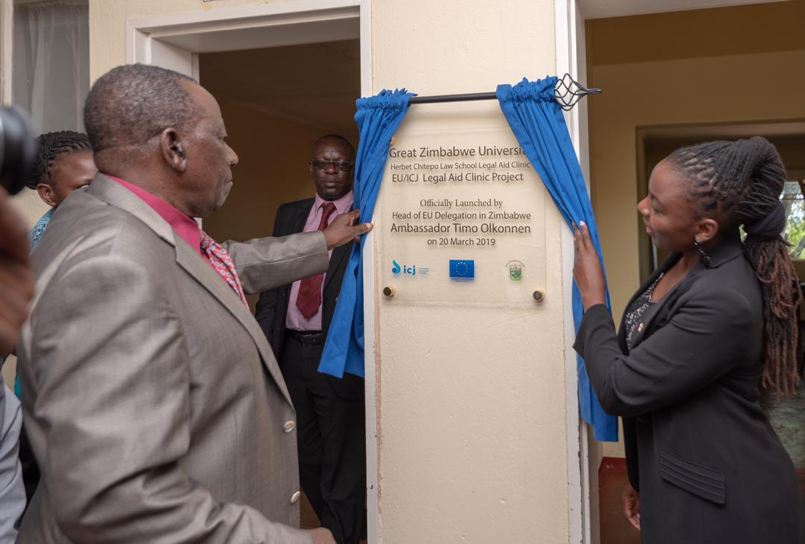
Today, the ICJ launched a legal aid clinic project in collaboration with Great Zimbabwe University, Herbert Chitepo Law School to help facilitate the establishment of a legal aid clinic at the University’s Mucheke campus.
The clinic is located at the Mucheke Campus of University in a high-density suburb in Masvingo, thereby making the services offered by the legal aid clinic more accessible for persons from disadvantaged or marginalized groups in the community.
The project, supported by the European Union, aims to improve access to justice for communities by offering free legal assistance at the University legal aid clinic, while also providing an opportunity for students to develop critical skills that will enhance their work as legal practitioners. The activity is part of a wider initiative to develop and improve University legal aid clinics in Zimbabwe.
Arnold Tsunga, the ICJ Africa Regional Director, remarked that the launch of the legal aid clinics is a building block towards greater access to justice for the people of Zimbabwe and a positive step towards attainment of SDG 16 which speaks to the importance of peace, justice and strong institutions.
Francisca Midzi, a representative of the European Union delegation to Zimbabwe, stated in her remarks that “as the law students encounter real legal problems faced by the people, [the initiative] will teach them to have a social and professional responsibility to pursue justice in society. Herbert Chitepo Law School is injecting and inculcating a spirit of service in their students and they will carry it wherever they go to practice law and gradually this will transform Zimbabwe’s legal system to be more concerned about a court user who has limited knowledge and means to fully access justice.”
Professor R.J. Zvobgo, the Vice Chancellor of Great Zimbabwe University, commended this milestone achievement and stated that it provides an opportunity for the students to give back to the community by improving the ability of persons from affected groups to access justice.
“The free legal aid assists in eradicating the notion that a university is an ivory tower, divorced from the realities of the community in which it is located,” he said.
Contact:
Brian Penduka, e: brian.penduka(a)icj.org, t: +263772274307
Elizabeth Mangenje, e: elizabeth.mangenje(a)icj.org, t: +263774742420
Mar 19, 2019 | News
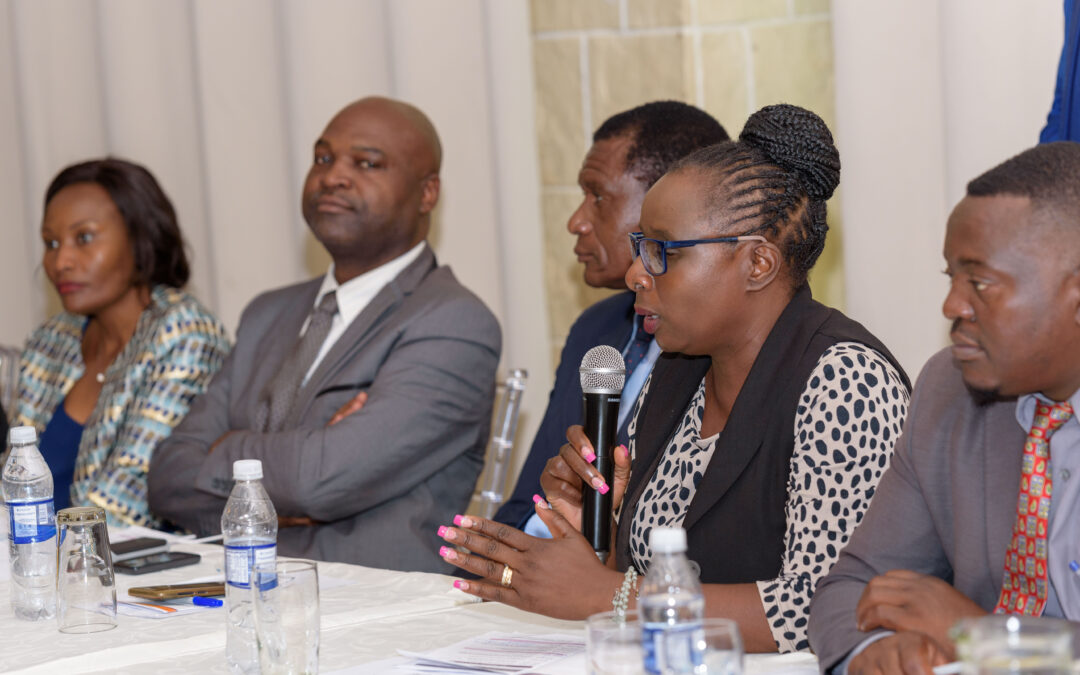
The ICJ in partnership with the National Prosecuting Authority (NPA) convened a two day training workshop to build the capacity of Chief prosecutors and Senior management to effectively investigate corruption cases.
The training workshop took place at the Wild Geese Lodge, Harare on 18 – 19 March 2019.
The new government under President Mnangagwa, saw a shift in government priorities evidence of this is the launch of the Transitional Stabilisation Programme in October 2018. The Transitional Programme seeks to propel the country towards stabilisation and economic development as well eradicate corruption.
Through this programme, the government has established institutions to deal with corruption, this has seen the establishment of Special Anti-Corruption Courts, which has resulted in an increase in high level arrests on corruption charges. Additionally a new Anti-Corruption Prosecution Unit was established within the Office of the President and Cabinet to improve efficiency in the fight against all forms of graft and to strengthen the effectiveness of national mechanisms for the prevention of corruption.
This anti-corruption training workshop therefore becomes relevant in the government’s fight against corruption. The main objective of the workshop is to enhance the capability of prosecutors to handle corruption cases effectively.
Presentations focused on understanding corrupt practices; defining white collar crime and financial crimes in Zimbabwe; domestic, regional and international framework on corruption; seizure, freezing and confiscation of the proceeds of corruption; and the practical steps to combatting corruption. It is hoped that at the end of the two day meeting, prosecutors will effectively implement legal frameworks and policies in the prosecution of corruption cases.
Prosecutor General Hon K. Hodzi in his opening speech remarked that the NPA is proud of their partnership with the ICJ in their fight against corruption. He was grateful for the continued support from the ICJ. The Prosecutor General noted that corruption is a lived experienced by everyone in this country because it has direct impact on the socio-economic welfare of the people of Zimbabwe. He noted that this was an important workshop which would serve as a toolkit that would help renew the NPA’s approach to in the prosecution of corruption in this country.
The Prosecutor General hoped that the workshop would enable the prosecutors to share knowledge and experience as well meaningful discourse bordering around challenges in the prosecution of corruption cases. This approach would enable the NPA to contribute to effectively eliminating corruption in the improvement of justice in Zimbabwe. He urged prosecutors to show that corruption does not pay and can be defeated.
Present at the training workshop was the Prosecutor General of NPA, senior prosecutors and senior management, representatives from the Judicial Service Commission, Solomon Mhlanga from Office of the President and Cabinet, Mr. Shana from the Judicial College of Zimbabwe, Mr. Zowa from the Law Development Commission representatives from Transparency International Zimbabwe, and representatives from the Reserve Bank of Zimbabwe. There were a total of 45 (forty-five) delegates; 29 (twenty-nine) male and 16 (sixteen) female delegates.
Contact:
Brian Penduka, e: brian.penduka(a)icj.org, t: +263772274307
Vimbai Mutandwa, e: vimbai.mutandwa(a)icj.org, t: +263773517733
Mar 19, 2019 | Events, Multimedia items, News, Video clips
Watch on video this side event held on 18 March 2019 at the Human Rights Council.
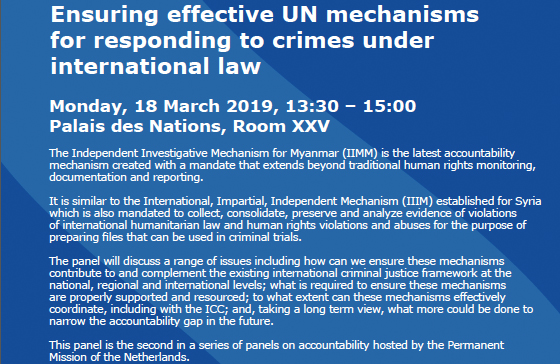
The Independent Investigative Mechanism for Myanmar (IIMM) is the latest accountability mechanism created with a mandate that extends beyond traditional human rights monitoring, documentation and reporting.
It is similar to the International, Impartial, Independent Mechanism (IIIM) established for Syria which is also mandated to collect, consolidate, preserve and analyze evidence of violations of international humanitarian law and human rights violations and abuses for the purpose of preparing files that can be used in criminal trials.
The panel discussed a range of issues including how can we ensure these mechanisms contribute to and complement the existing international criminal justice framework at the national, regional and international levels; what is required to ensure these mechanisms are properly supported and resourced; to what extent can these mechanisms effectively coordinate, including with the ICC; and, taking a long term view, what more could be done to narrow the accountability gap in the future.
This panel was the second in a series of panels on accountability hosted by the Permanent Mission of the Netherlands.
Opening Remarks:
- Ambassador Monique van Daalen, Permanent Representative to the UN of the Kingdom of the Netherlands
Moderator:
- Saman Zia-Zarifi, Secretary General, International Commission of Jurists
Panelists:
- Andrew Clapham, Member of the Commission on Human Rights in South Sudan
- Sanji Monageng, former Judge/Vice-President of the ICC, and Commissioner of the ICJ
- Stephen Rapp, Chair, Commission for International Justice & Accountability (CIJA), Distinguished Fellow, US Holocaust Memorial Museum, and former United States Ambassador-at-Large for Global Criminal Justice
- Amady Ba, Head, International Cooperation Section, JCCD, OTP, International Criminal Court (ICC)
- Kingsley Abbott, ICJ Senior Legal Adviser for Global Redress and Accountability
Side event ICJ NL Accountability No2 (side event flyer, in PDF)
Watch on video:
https://www.facebook.com/ridhglobal/videos/347634279184620/UzpfSTQ3MTQ2NzA4NjIyMTM3MzoyNDc4ODQxODc4ODE3MjA3/
Mar 19, 2019 | News
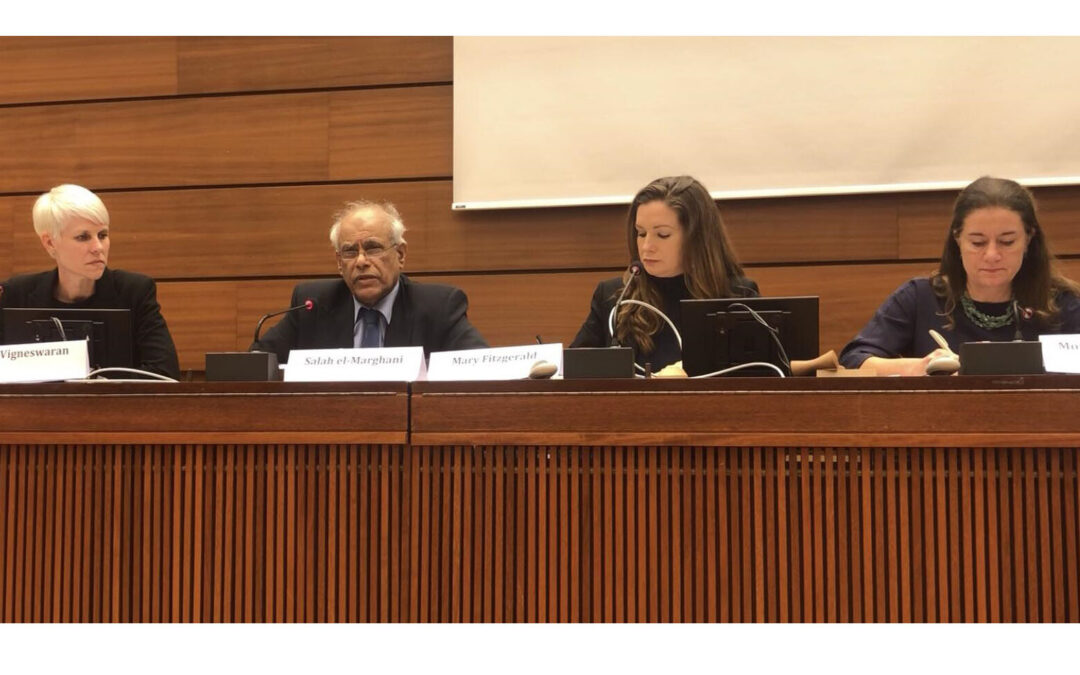
Today, the ICJ held a side event titled “Accountability for crimes under international law in Libya: Challenges and Prospects” during the 40th Session of the UN Human Rights Council in Geneva.
The event was co-hosted by the Permanent Mission of the Kingdom of Netherlands and the Permanent Mission of the Federal Republic of Germany.
A panel of renowned experts discussed a number of issues relating to accountability for crimes under international law in Libya, including shortcomings in Libyan law and practice, political and security challenges impacting prospects for reform, the role of the International Criminal Court, and the consequences for tackling human trafficking and abuse of migrants.
The panel included Monique van Daalen, Ambassador of the Permanent Mission of the Netherlands; Salah el-Marghani, former Justice Minister of Libya; Marwa Mohammed, Lawyers for Justice in Libya; Mark Kersten, Munk School of Global Affairs and Public Policy, University of Toronto, and Wayamo Foundation; Kate Vigneswaran, Senior Legal Adviser for the ICJ’s Middle East and North Africa Programme; and Mary Fitzgerald, Libya researcher and expert.
During the side event, the ICJ presented and distributed a briefing paper highlighting the key issues that hamper accountability for crimes under international law in Libya, including the definition of crimes under domestic law, amnesties and imunities, rights during arrest and detention, and rights at trial.
The paper included detailed recommendations to the Libyan authorities as well as the international community with a view to tackling the main obstacles to the achievement of accountability in Libya.
The briefing paper anticipates the publication of the forthcoming ICJ report on Libya’s criminal justice system.
Download:
Lybia-Accoutability challenges-Advocacy-Analysis brief-2019-ENG (Briefing paper, in PDF)
Libya HRC side event flyer – March 2019 (Event flyer, in PDF)