Apr 26, 2017 | News
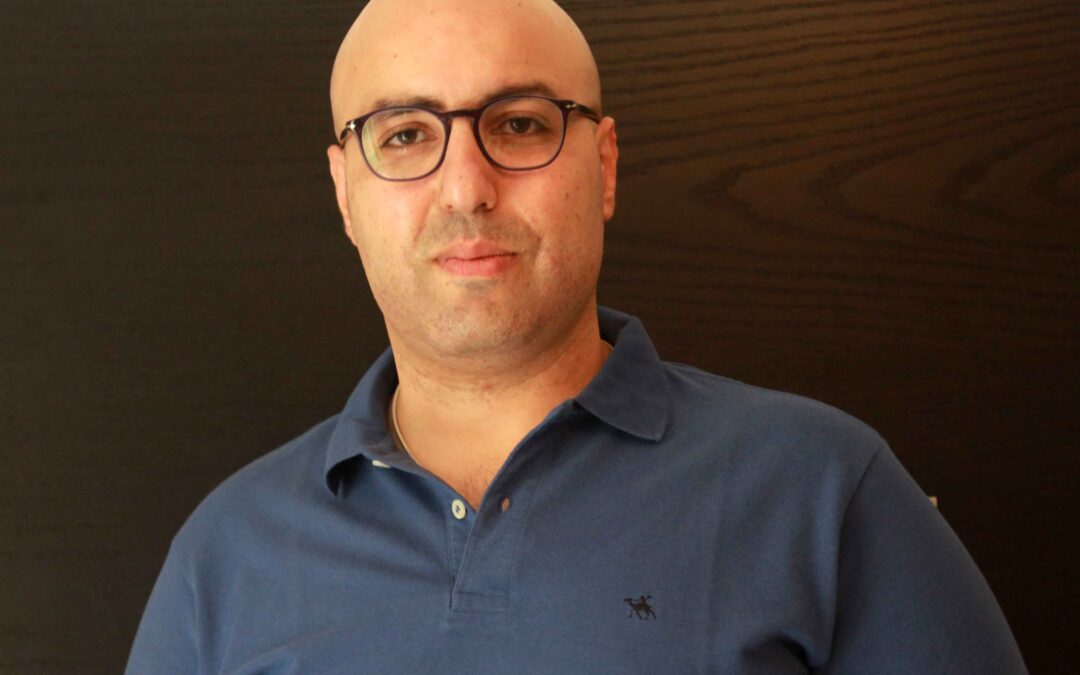
Mohamed Zaree (Egypt, photo), FreeThe5KH (Cambodia) and Karla Avelar (El Salvador) will compete for this prestigious award given to human rights defenders who have shown deep commitment and face great personal risk. The ICJ is member of the MEA Jury.
Selected by the International Human Rights Community (members of the jury are the ICJ, Amnesty International, Human Rights Watch, Human Rights First, International Federation for Human Rights, World Organisation Against Torture, Front Line Defenders, EWDE Germany, International Service for Human Rights and HURIDOCS), the final nominees for the Martin Ennals Award for Human Rights Defenders (MEA) are known:
- Mohamed Zaree is the Egypt Country Director for the Cairo Institute for Human Rights Studies (CIHRS), responsible for CIHRS’s legal research, media outreach and national advocacy. CIHRS’s work was influential in the Arab world particularly Egypt, which resulted in death threats to its director. This forced the CIHRS executive director and regional staff to move abroad to continue their work. Mohamed chose to stay and is now banned from travel. He is a legal scholar coordinating research to challenge laws designed to limit NGOs activities working on human rights, such as freedom of expression and assembly. He is widely seen a unifying figure bringing together the human rights community in Egypt to advocate with a common approach.
- FreeThe5KH are five Human Rights Defenders who have been in pre-trial detention for almost one year. This is linked to their work with the Cambodian Human Rights and Development Association (ADHOC). International bodies like the UN Working Group on Arbitrary Detention and UN Special Rapporteurs have repeatedly called for their immediate and unconditional release, and a stop to judicial harassment of human rights defenders in Cambodia based on their legitimate human rights work. This comes in the context of an increasingly severe crackdown on civil society and the political opposition in Cambodia.
- Karla Avelar, a transgender woman in El Salvador, grew up on the streets of San Salvador, suffering discrimination, violence, exploitation, and rape. She was imprisoned when she defended herself, and then regularly abused by fellow prisoners with the knowledge and even participation of the prison authorities. With three others, she founded COMCAVIS TRANS, which was created to represent, defend, and promote the human rights of LGBTI persons, with a focus on those living with HIV, as she does. She works to change legislation and the authorities’ practices, by holding them publicly to account.
Mohammed Zaree said: “Our hopes were high following the Egyptian revolution in 2011; we don’t know how the situation has instead deteriorated to such an extent. Today, we are battling human rights violations that are worse than before 2011, and challenging the normalization and acceptance of these atrocities.”
“Killing almost 1000 citizens in few hours, arresting almost 40,000 others, innocents dying in Egyptian prisons; is not the norm and we will not allow it to become so. We human rights defenders are fighting these abuses at risk of indefinite imprisonment,” he added.
The main award of the human rights movement, and as such labelled as the Nobel Price for human rights, the Martin Ennals Award aims to protect human rights defenders through increased visibility.
The Award will be presented on 10 October 2017 at a ceremony hosted by the City of Geneva.
Contact
Olivier van Bogaert, Director Media & Communications, ICJ representative in the MEA Jury, t: +41 22 979 38 08 ; e: olivier.vanbogaert(a)icj.org
Michael Khambatta, Director, Martin Ennals Foundation, t: +41 79 474 8208 ; e: khambatta(a)martinennalsaward.org
Background information
Egypt-MEA Finalists 2017 MZaree Bio-2017-ENG (Mohammed Zaree bio, in PDF)
Cambodia-MEA 2017 Finalists FreeThe5KH Bio-2017-ENG (FreeThe5KH backgrounder, in PDF)
Salvador-MEA 2017 Finalists KAvelar Bio-2017-ENG (Karla Avelar bio, in PDF)
Apr 12, 2017 | News
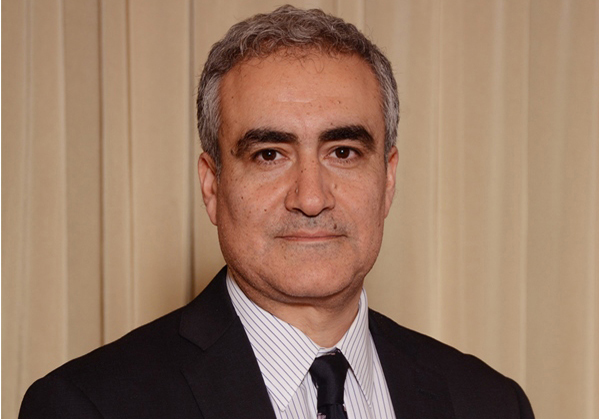
Saman Zia-Zarifi is the new Secretary General of the ICJ. He replaces Wilder Tayler who retired in March, the Geneva-based organization announced today.
An Iranian-American lawyer, Zarifi joined the ICJ in 2012 as Regional Director for the Asia & Pacific Region based in Bangkok, Thailand. Prior to joining the ICJ, he served as Amnesty International’s director for Asia and the Pacific from 2008 to 2012, and before that worked at Human Rights Watch from 2000.
“Wilder Tayler masterfully guided the ICJ for the past 10 years and expanded its reach across the world in perilous times,” said Prof Robert Goldman, the ICJ’s Acting President.
“The Commission is fully confident that Sam Zarifi will build on this legacy by bringing to the ICJ as a whole the energy and vision he deployed so successfully in the Asia Pacific region.”
The ICJ, founded in Berlin in 1952, is one of world’s oldest human rights organizations.
Composed of 60 accomplished jurists from all regions of the world, the ICJ has for 65 years devoted itself to promoting the observance of the rule of law and the legal protection of human rights.
The ICJ Secretary General leads the implementation of the Commission’s objectives through the ICJ’s International Secretariat.
The International Secretariat operates in locations around the world including Guatemala, Zimbabwe, South Africa, Tunisia, Belgium, Switzerland, Lebanon, Pakistan, India, Nepal, Myanmar, and Thailand.
“There is an urgent need to stand up against the recent attacks on the concept of rule of law and the international human rights legal framework that the ICJ was instrumental in building,” said Zarifi.
“We will challenge human rights violations and work with lawyers, judges and human rights defenders around the world to bring perpetrators to account and ensure victims receive justice,” he added.
The ICJ currently works globally and in all regions to protect human rights, defend the rule of law and strengthen the independence and accountability of judges and lawyers.
“Around the world, authoritarian rulers and demagogues are cynically using fearmongering and discriminatory language to justify erosion of the rule of law and weaken an independent judiciary,” Zarifi said.
“An increasing number of powerful politicians around the world attack international law when it suits them as a means of gaining more authority and hurting the most vulnerable segments of society.”
“The international legal framework has failed to address some very serious human rights crises and it has allowed gross economic inequalities to develop, but the answer is to fix the system and improve it, not just destroy it and allow the most powerful to rule without any legal restrictions,” Zarifi added.
The ICJ has been instrumental in developing many of the key universal and regional human rights legal standards, ranging from treaties on torture and enforced disappearances, the right to remedy and reparation, and most recently, seeking accountability for abuses by business entities.
It has provided both conceptual depth and practical advance to questions such as the justiciability of economic, social and cultural rights; human rights in states of emergency and other crises; and the fight against impunity.
“The ICJ’s experience over the past six decades has clearly shown that countries that respect the rule of law and protect human rights benefit from greater security and more sustainable economic development,” Zarifi said.
“There is greater demand than ever for the ICJ’s factual, law-based analysis of human rights problems and most important, how to improve the situation.”
Sam Zarifi was born and raised in Tehran, Iran. He moved to the United States in 1983 and completed a BA from Cornell University in 1990 and a Juris Doctor from Cornell Law School in 1993, and after a stint as a corporate litigator in Los Angeles, an Ll.M. in Public International Law from New York University School of Law in 1997.
He was Senior Research Fellow at Erasmus University Rotterdam from 1997 to 2000, where he co-edited Liability of Multinational Corporations under International Law (Kluwer 2000) as well as several other publications on the subject.
Contact
Sam Zarifi, ICJ Secretary General, t: +41 22 979 3825, c: +41 79 726 44 15 ; e: sam.zarifi@icj.org

Feb 13, 2017 | News
The ICJ today announces the establishment of an expert panel of jurists to study and provide guidance on the effectiveness of grievance procedures provided by businesses to address and remedy harms arising from their operations.
The Panel, composed of senior retired judges, academics and legal practitioners, will work with the support of a wider group of civil society organizations, lawyers, academic institutions and the legal profession.
Many large business enterprises and projects have their own internal procedures and mechanisms to address concerns affecting individuals and local communities that arise from their operations. Known as operational-level grievance mechanisms, these are an integral part of responsible business practices and a way to remedy real or perceived wrongs.
The use of operational-level grievance mechanisms is recommended by the United Nations Guiding Principles on Business and Human Rights and global institutions, such as the World Bank.
However, poor design and/or implementation of these grievance mechanisms can result in further problems, aggravating the harm to individuals and communities and impacting on the company’s or project’s own sustainability.
The ICJ initiative has been prompted by concerns about recent cases where people the mechanisms were meant to help have been unaware of their very existence, the procedures have been unfair or unclear and outcomes have been inadequate for the kind of harm experienced.
Most importantly some grievance mechanisms seem to stand in the way of meaningful access to justice for adversely affected people.
The panel members
The expert Panel is the think tank of the ICJ initiative. Besides holding wide consultations and site visits to specific projects, the Panel will advise the ICJ on preparation of a report and a guidance to support the work of practitioners and human rights defenders working in this field.
The members of the Panel, five of whom are ICJ Commissioners, are:
- Justice Ian Binnie (retired) formerly of Canada’s Supreme Court
- Sheila Keetharuth, Lawyer in Mauritius and currently UN special rapporteur on the human rights in Eritrea
- Justice John O’Meally (retired) formerly of the District Court of New South Wales and the Dust Diseases Tribunal in Australia
- Alejandro Salinas Rivera, lawyer and former legal advisor to the Government of Chile
- Professor Marco Sassoli, professor of international law at the University of Geneva
- Justice Ajit Prakash Shah (retired), formerly of the High Court of Delhi and presently Chair of the Law Commission in India
The Panel and the ICJ will receive advice for this work from a wider Consultative Group of practitioners and members of the legal profession.
The Consultative Group includes individuals of long-standing experience and recognised expertise on the functioning of grievance mechanisms at the project or operations level.
This initiative adds to the growing attention paid to remedy systems available to individuals and communities affected by business operations.
The final outcome of this initiative will be to provide guidance to making effective the remedial procedures systems available in cases of business-related human rights abuses in way that truly helps victims attain justice.
Feb 1, 2017 | News
The ICJ today launched a new global initiative focussed on redress and accountability for gross human rights violations.
In all regions of the world, perpetrators of gross human rights violations enjoy impunity while victims, especially the most vulnerable and marginalized, remain without effective remedies and reparation.
Governments of countries in transition and/or experiencing a wider rule of law crisis often seek to provide impunity for perpetrators of gross violations of human rights, or make no effort to hold them to account, or misuse accountability mechanisms to provide arbitrary, politically partial justice.
Yet international law requires perpetrators to be held accountable and victims to be provided with effective remedies and reparation, including truth and guarantees of non-recurrence.
This is reinforced by the 2030 Sustainable Development Agenda, which recognizes the need to build peaceful, just and inclusive societies that provide equal access to justice, are based on the rule of law and respect for human rights, and provide for accountability.
“Impunity and lack of redress dehumanizes victims and acts as an impediment to the cementing of democratic values and the rule of law”, said Alex Conte, coordinator of the ICJ initiative.
Lack of accountability and claims for justice dominate national debates, frequently leading to a paralysis or reduced functioning of the institutions of the State and detracting from the pursuit of other rule of law and development initiatives.
Impunity threatens a nascent democracy by rendering its constitution hollow, weakening its judiciary and damaging the political credibility of its executive.
Public institutions often act in ways that bring them into disrepute and undermine the public confidence in them that is required for sustainable transition, for example through the legislature enacting laws providing for impunity, through law enforcement and the judiciary acting on a selective basis or without independence, and/or through the executive ignoring rule of law based judgments by higher courts.
A failure to guarantee redress and accountability has too often also resulted in former structures of power, to the extent that they enjoy impunity, transforming into criminal and hostile elements that may perpetuate violence and conflict.
The ICJ’s new initiative, generously sponsored by the Finnish Ministry of Foreign Affairs, currently focuses on seven countries (Cambodia, Mozambique, Myanmar, Nepal, Tajikistan, Tunisia and Venezuela) aims to combat impunity and promote redress for gross human rights violations.
It concentrates on the transformative role of the law, justice mechanisms and justice actors, seeking to achieve greater adherence of national legal and institutional frameworks with international law and standards so as to allow for effective redress and accountability; more independent justice mechanisms capable of dealing with challenges of impunity and access to redress; and judges, lawyers, human rights defenders, victims and their representatives that are better equipped to demand and deliver truth, justice and reparation.
The initiative will commence with the production of baseline studies on the situation in each focus country concerning accountability, access to justice/redress and the independence and accountability of judges and lawyers.
These will form the basis for tailored plans of action for each country identifying interventions and capacity building activities that can best drive the brining to justice of perpetrators of human rights violations and the access of victims to effective remedies and reparation.
Implementation of those activities will follow, alongside the production of global manuals and guides on key challenges for redress and accountability.
GRA Initiative Factsheet
Jan 25, 2017 | News
The ICJ President Professor Sir Nigel Rodley passed away today in Colchester (UK) at the age of 75, following a short illness.
Elected President of the ICJ in 2012, he was serving his third term as such. He had been first elected to the Commission in 2003 and re-elected in 2008 and 2013. He served as a member of the Executive Committee from 2004-2006.
He was also a Council member of JUSTICE, the British Section of the International Commission of Jurists.
Professor Sir Nigel Rodley was a towering figure in the area of international human rights, playing many roles as an educator, as an academic, as an activist and as an advocate.
He established and expanded the first human rights law department at Amnesty International in the 1970s and 1980s, leading the organization’s work on the development and promotion on international legal standards.
He spent eight years, from 1993 to 2001, as the United Nations’ Special Rapporteur on Torture, visiting dozens of countries and working tenaciously toward the eradication of torture worldwide.
From 2001 to 2016 he served on the UN Human Rights Committee, including a period as it Chairman, where he often served as the intellectual author of the Committee’s most prominent accomplishments.
Thousands of students of international human rights law – many of today’s leading human rights defenders – were mentored by him at the University of Essex.
He published extensively in the human rights field, and was one of the world’s leading experts on the question of torture and the treatment of prisoners under international law.
“Sir Nigel was a stalwart of the human rights movement and his firm commitment to the promotion of human rights and rule of law has had a deep and lasting impact that will continue in his absence,” said Wilder Tayler, the ICJ Secretary General.