Nov 25, 2019 | Multimedia items, News, Video clips
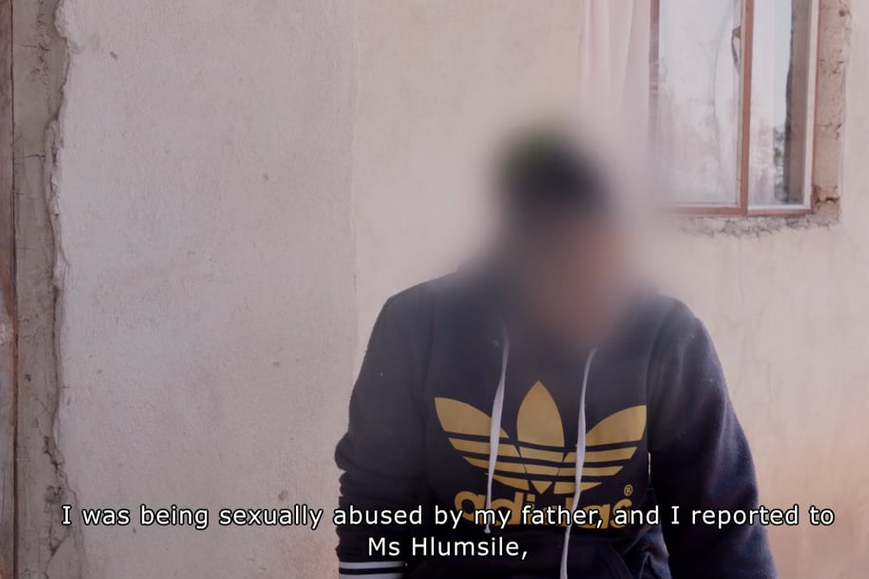
The ICJ just launched a 15 minute documentary showing contributions by the ICJ and local human rights defenders in bringing the Sexual Offences and Domestic Violence (SODV) Act to pass in Mbabane, Eswatini.
The documentary was launched at an SODV Act media training held with the Cooperation for the Development of Emerging Countries (Cospe) and the Editor’s Forum. The training was aimed at taking a human rights-based approach to understanding the Act, following pushback from those who have expressed the view that parts of the Act are an as an affront to Swazi tradition and culture.
In an effort to combat the various challenges presented by SGBV, the Kingdom of Eswatini introduced the Sexual Offences and Domestic Violence (SODV) Act in 2018. The Act complies with its commitments under international and regional human rights law to fight the scourge of SGBV in the country.
The documentary highlights the way in which the Act is expected to be instrumental in combatting the scourge of sexual and gender-based violence, as well as areas in which it has been contested. The documentary was well-received by participants of the training and opened up an engaging dialogue about its usefulness.
The media is at the forefront of informing public discourse about the Act and it is hoped that this training provided some much-needed clarity around the Act.
Watch the documentary:
Contact
Khanyo Farisè (Legal Associate): e: Nokukhanya.Farise(a)icj.org
Shaazia Ebrahim (Media Officer): e: shaazia.ebrahim(a)icj.org
Nov 22, 2019 | News
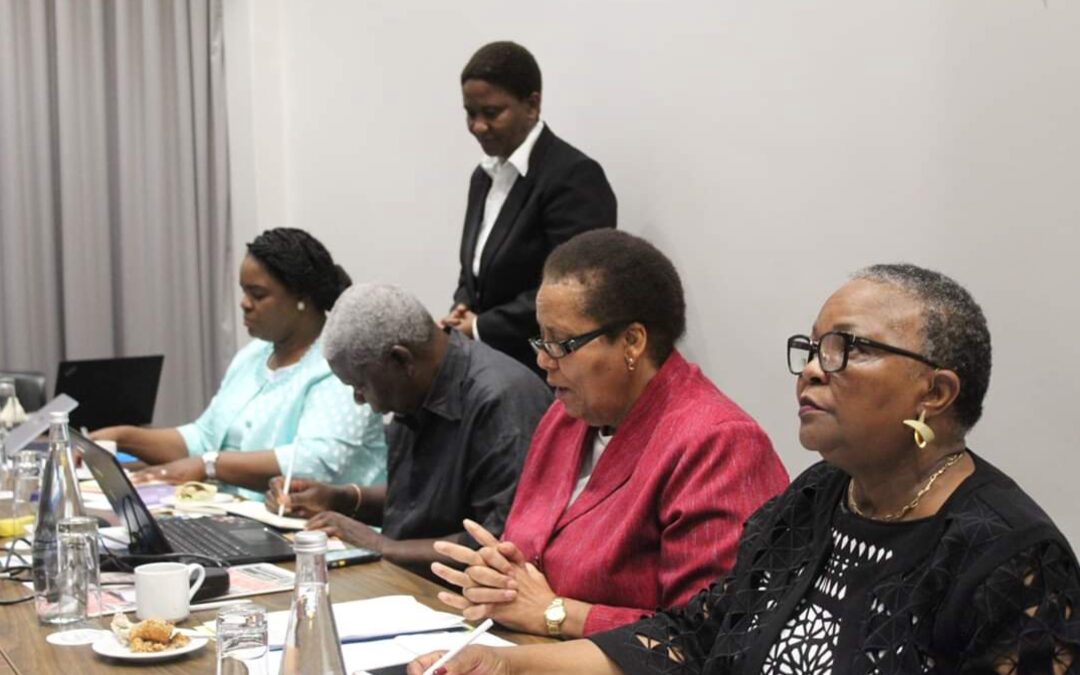
A wide range of stakeholders in Mbabane, Eswatini came together to discuss the challenges they face in combating sexual and gender-based violence (SGBV) in the country.
On 21 November, the ICJ hosted a symposium with representatives of the Attorney General, Ministry of Justice, police, Human Rights Commission and Law Society on cases involving economic, social, and cultural rights and SGBV. The event was followed by an integrated meeting involving State officials in the justice sector to discuss the implementation of the Sexual Offences and Domestic Violence (SODV) Act was discussed.
The Kingdom of Eswatini faces widespread instances of SGBV and it is hoped that new initiatives, such the enactment of the Sexual Offences and Domestic Violence (SODV) Act in 2018, will be effective in addressing the scourge of SGBV in the country.
The symposium was led by Justice Qinisile Mabuza, Principal Judge of the Eswatini High Court and ICJ Commissioner, accompanied by ICJ Commissioners Justice Sanji Monageng of Botswana and Professor Michelo Hansugule of the University of Pretoria, and Justice of the High Court in Zimbabwe Amy Tsanga. The ICJ’s Senior International Legal Adviser Emerlynne Gil gave a presentation on gender stereotypes and international legal standards on SGBV ICJ Africa legal associate Khanyo Farisè and ICJ consultant Mary Pais Da Silva also participated in the symposium.
Speakers emphasized the critical role of the judiciary and other justice sector actors in ensuring that Eswatini meets its legal obligations under international human rights law, including standards governing the African region, to protect survivors of SGBV.
“The judiciary is a critical component in the intervention against SGBV. The judges have to know about human rights, appreciate what SGBV actually entails, understand what those violations mean, and the international standards and local roles where they exist. Judges also should be able to use jurisprudence from other jurisdictions to justify their decisions,” Commissioner Monageng said.
The participants of the symposium, were subsequently joined by representatives from the Department of Public Prosecutions (DPP), the One Stop Care Centre for sexual violence survivors, and the Deputy Prime Minister’s Office, came together to discuss the implementation of the SODV Act. Recommendations included better collaboration with judicial actors, the training of law enforcement agencies on receiving report of sexual violence, better case management and the development of forensic laboratories were made.
Contact
Khanyo Farisè (Legal Associate): e: Nokukhanya.Farise(a)icj.org
Shaazia Ebrahim (Media Officer): e: shaazia.ebrahim(a)icj.org
Oct 16, 2019 | Multimedia items, News, Video clips
ICJ’s first ever fundraising gala took place on 14 October at the iconic setting of the Palais Eynard in Geneva.
Sami Kanaan, Counselor and former Mayor of the City of Geneva, which provided its generous support, opened the event by speaking of the importance of the ICJ cooperation with the local legal community.
Next, several speakers offered a few answers to the theme of the evening: ‘Geneva, the defense of the Rule of Law: what can I do?’.
Pierre de Preux, former Bâtonnier, explained the great value that can be brought to defending rule of law in the world by supporting the ICJ through missions, as he himself did in Tunisia in the 80s.
He was followed by ICJ Commissioners Sir Nicolas Bratza (former President of the European Court of Human Rights), who discussed backsliding on human rights in contemporary Europe; lawyer Reed Brody, who discussed his work in bringing powerful dictators to account for human rights atrocities; and Justice Martine Comte of France, who described her experience in leading ICJ missions in Central Asia.
The ICJ President Prof. Robert Goldman and ICJ Secretary General Sam Zarifi also addressed the attendees.
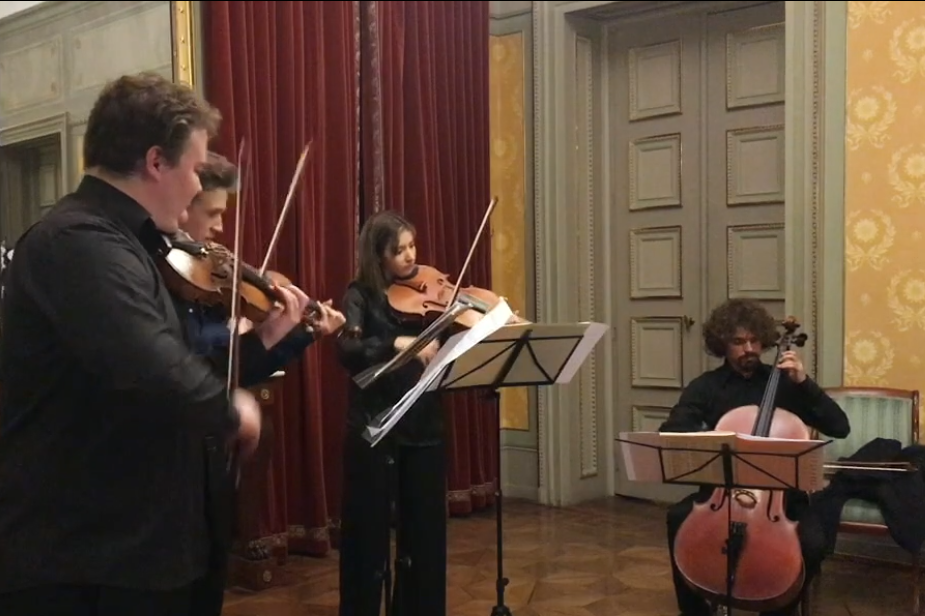
The exchange was then followed by an inspiring concert by the young virtuosi of the Menuhin Academy and a delicious Buffet cocktail provided by refugee Chefs Jena Hamza (Syrian Kurd) and Sritharan Tambithurai (Sri Lanka). All in all, a wonderful evening combining substance, beauty and friendship.
Watch the video here:

Sep 25, 2019 | Events, News
The ICJ is organizing its first fundraising Gala concert on Monday 14 October at 7:30pm in the Palais Eynard, 4 rue de la Croix Rouge, Geneva. The event will support the ICJ and its fight for the defense of the Rule of Law in the world and marks the end of the series of events we organized for our 60th anniversary in the city of human rights.
The theme of our Gala will be: “Geneva, the Defense of the Rule of Law: What can I do?”
After a welcome from the Mayor of Geneva and an introduction from Me Pierre de Preux, former Bâtonnier of the Geneva Bar, ICJ Commissioners including Sir Nicolas Bratza (former President of the European Court of Human Rights), Dame Silvia Cartwright (former Judge and Governor General of New Zealand), Professor Bob Goldman (ICJ President and former President of the Inter-american Commission on Human Rights) and Ms Roberta Clarke (ICJ Executive Chair, UN Women’s Office for the Caribbean, UN Women’s Regional Office for Asia and the Pacific) will give concrete answers to this question.
But the evening is also to enjoy a wonderful Concert of the ‘Soloists of the Menuhin Academy’ (photo) and the cocktail after that.
To reserve: Pascale.andris@icj.org
You cannot come but still want to make a donation: please click here
Download the invitation
Invitation Gala 14 Oct
Jul 23, 2019 | News
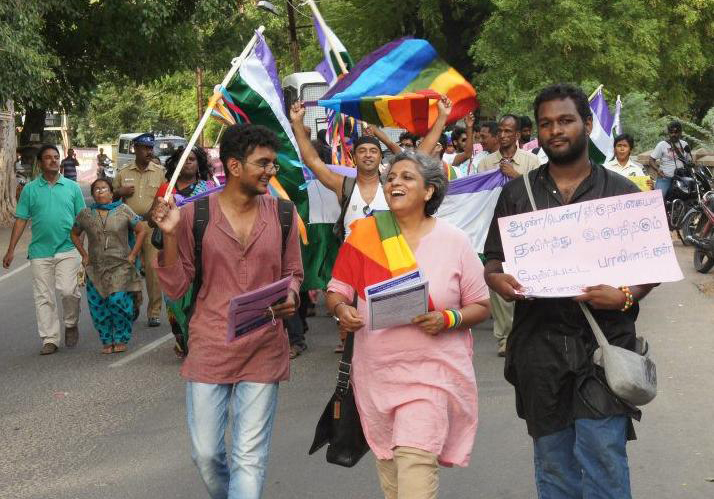
The Transgender Persons (Protection of Rights) Bill, 2019, does not adequately protect the rights of transgender people and should be revised to address the concerns of the transgender community and to conform with India’s international human rights obligations, the ICJ said today.
“The Transgender Bill as currently drafted still fails to fully protect the rights of transgender people including to self-identify, a right that has been upheld by the Indian Supreme Court,” said Frederick Rawski, ICJ’s Asia Pacific Director.
“If Parliament passes the Bill in its current form, it will miss an important opportunity to introduce a law that respects, protects and fulfills the human rights of transgender people as required by the Supreme Court’s decision in NALSA and India’s international obligations,” he added.
The Government introduced the Transgender Persons (Protection of Rights) Bill, 2019, before the Parliament on 19 July 2019.
The current draft, fails to address key concerns that have been repeatedly raised by the transgender community and human rights organizations.
Critically, the Bill continues to mandate sex reassignment surgery for transgender people who seek to identify as male or female.
This requirement clearly contravenes the Supreme Court’s judgment in NALSA v. UOI, which guarantees the right to self-identification, without any need for medical intervention. Nor does the Bill make provision for reservations in employment or education despite a mandate by the Supreme Court in NALSA.
Among the problematic provisions are those which set out lighter sentences for criminal offences when committed against transgender people (including “sexual abuse”, “physical abuse”, “verbal and emotional abuse”, “economic abuse” and denial of “passage to a public place”); inadequate or missing definitions of offences; the retention of provisions that could be used to target transgender people for criminal prosecution; and the absence of mechanisms to enforce prohibitions on discrimination in the law.
The ICJ acknowledges that the draft of the Bill contains improvements over the version passed by the Lok Sabha in 2018.
The new draft removes the requirement for a screening committee to review applications for the issuance of a gender identity certificate. It also no longer criminalizes “compel[ing] or entice[ing] a transgender person” to engage in begging
The ICJ and other human rights organizations have recommended the deletion of these provisions in light of the well-documented historical abuse that such laws enabled by making it possible to target transgender persons, and the resulting effect of creating a specter of criminality around transgender identities.
“The Bill does include some important improvements over its 2018 version, such as the elimination of screening committees for the issuance of identity documents, and problematic criminal provisions relating to begging. However, it still falls significantly short from a constitutional and an international human rights perspective,” said Rawski.
“We urge the Parliament to address the deficiencies that remain – such as provisions on mandatory sex reassignment surgery, which contravene human rights law – before passing it into law,” he added.
The current session of Parliament will close on July 26, 2019 and may be extended by two-three days. If passed by the Lok Sabha, this Bill will be introduced in the Rajya Sabha (Upper House of the Parliament) for consideration.
The ICJ urges the Lok Sabha to reconsider the Transgender Persons (Protection of Rights) Bill in accordance with the constitutional and international law obligations of the Indian state, and to ensure meaningful consultation with the transgender community in its lawmaking.
Contact
Frederick Rawski, ICJ Asia Pacific Region Director, e: frederick.rawski(a)icj.org, t: +66 644781121
Maitreyi Gupta (Delhi), ICJ International Legal Adviser for India, e: maitreyi.gupta(a)icj.org, t: +91 7756028369
Read also
ICJ Briefing Paper on India: Legal and Jurisprudential Developments on Transgender Rights, SAATHII Vistaara Coalition. The paper analyses in detail the domestic judicial developments on transgender rights as well as the legislative process undertaken until the Transgender Persons (Protection of Rights) Bill, 2018 was passed on 17 December 2018.
ICJ Briefing Paper on The Transgender Persons (Protection of Rights) Bill, 2016, analyzes the 2016 Bill, its shortcomings, and India’s international obligations, as it is the basis of the 2018 Bill.
ICJ Briefing Paper on Implementation of NALSA Judgment discusses the 2014 April NALSA decision that affirmed that transgender people have the right to decide their self-identified gender. The paper analyses the responsibilities placed on Indian authorities, gaps in implementation, and India’s relevant international law obligations.