Dec 15, 2016 | Advocacy
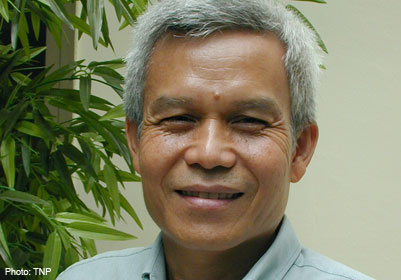
On the fourth anniversary of the enforced disappearance of prominent Lao civil society leader Sombath Somphone, the ICJ and other organizations condemn the government’s ongoing failure to conduct an effective investigation with a view to determining his fate.
The full statement can be downloaded here:
Laos-sombath4years-advocacy-2016-eng (in PDF)
Dec 15, 2016 | News
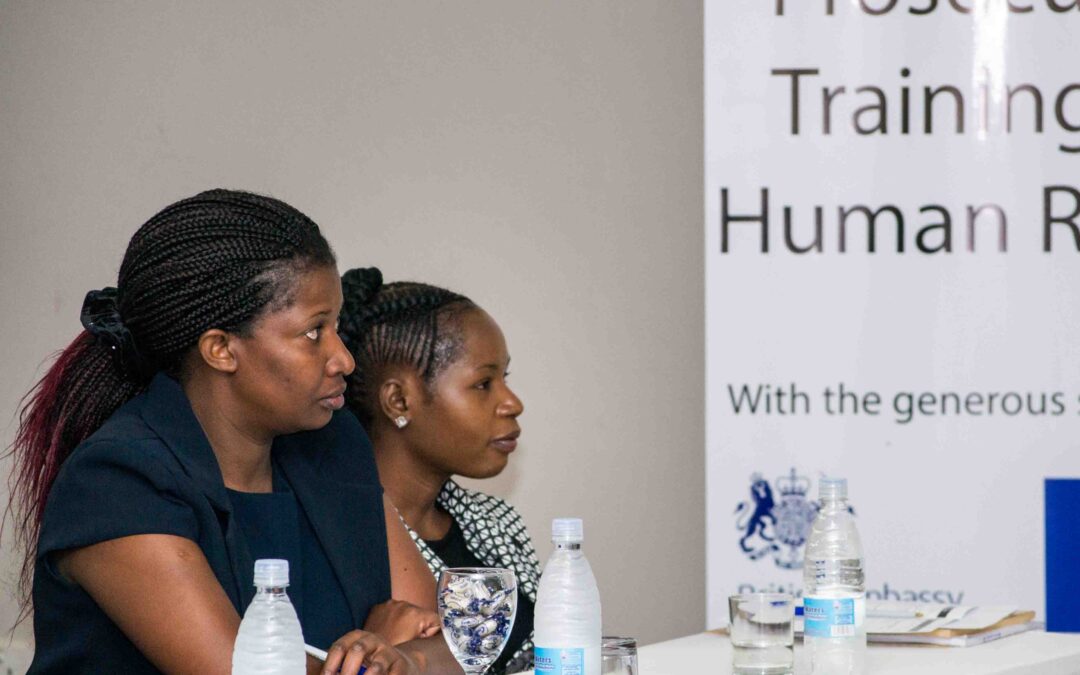
The ICJ and the Judicial College of Zimbabwe (JCZ) have assisted senior prosecutors in their role in strengthening the rule of law and protection of human rights in the country.
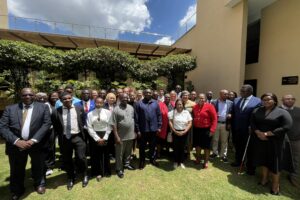
The Zimbabwe National Prosecuting Authority (NPA) held a pilot training of trainers for senior prosecutors on fair trial standards and human rights from 15-16 December 2016.
The NPA received substantive legal and technical support for this training from the Judicial College of Zimbabwe (JCZ) and the ICJ.
In consultation with the ICJ, the JCZ designed the training curriculum.
The JCZ has a statutory mandate to provide continuous professional development to various justice sector actors including the prosecution.
The content of the curriculum includes prosecutorial conduct in upholding the rule of law, constitutional and legislative protection of the rights of accused persons, general powers of the prosecutor general and his/her nominees, and the relationship with the other justice actors, such as the police.
In addition, the training focused on aspects relating to warrants for further detention, bail, right to remain silent, admissibility of statements obtained through illegal or abusive means, discharge at close of state case, sentencing and the prosecutors code of ethics.
The framing of the various topics is informed by universal, regional and domestic law and standards on the role, duties and mandate of the NPA, and individual prosecutors.
Fifty (50) senior prosecutors from different provinces and districts were selected to attend this inaugural intensive human rights training, facilitated by Mr. Shana, the JCZ principal, and Mr. Andrew Chigovera, former Attorney-General, former Commissioner, African Commission on Human and Peoples Rights.
Contact
Arnold Tsunga, ICJ Regional Director for Africa, t: +27 73 131 8411, e: arnold.tsunga(a)icj.org
Dec 14, 2016 | Advocacy, Non-legal submissions
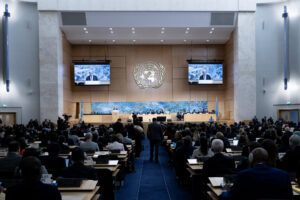
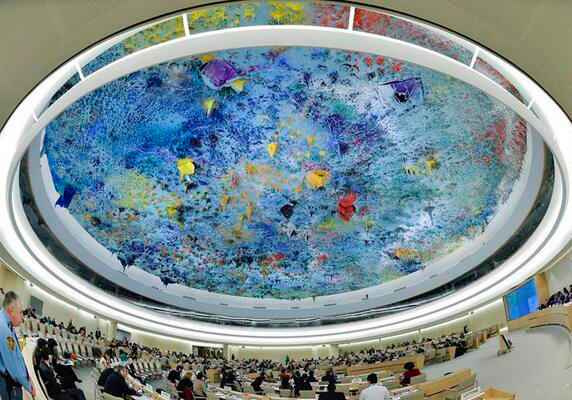
The ICJ today joined other NGOs in calling on the UN Human Rights Council to take bold and decisive action to address the grave situation in South Sudan.
The statement, made during a Special Session of the Human Rights Council, convened on an urgent basis to discuss the situation in South Sudan, underscores the negative consequences of continuing impunity and lack of accountability, and calls among other things for the Human Rights Council resolution to be adopted that would:
· Support a strengthened mandate and capacity of the UN Commission on Human Rights in South Sudan to investigate serious violations of human rights and humanitarian law and identify alleged perpetrators, with a special focus on sexual and gender based crimes.
· Request that the report of the UN Commission is transmitted to the UN Security Council for consideration and further action.
· Urge that all states encourage further concrete action to prevent a further escalation of violence and conflict, and to deter and address these on-going violations of international human rights and humanitarian law at the UN Security Council, including sanctions and the imposition of a comprehensive arms embargo.
· Urge the African Union to take immediate steps to establish the hybrid court for South Sudan provided for in the 2015 peace agreement.
The Human Rights Council ultimately adopted, without a vote (i.e. by consensus), a resolution that includes many of these elements (final text not yet available).
The full statement can be downloaded in PDF format here: un-jointstatementsouthsudan-advocacy-2016
It was delivered by Human Rights Watch on behalf of:
- Amnesty International
- Association for Human Rights in Ethiopia
- Defend Defenders
- Human Rights Watch
- Humanity United
- International Commission of Jurists
- International Refugee Rights Initiative
- International Service for Human Rights
- National Coalition of Human Rights Defenders Uganda
- Pan-African Human Rights Defenders Network
- South Sudan Human Rights Defenders Network
Dec 13, 2016 | News
The ICJ and Human Rights Commission of Pakistan (HRCP) urge the Pakistani authorities to fully engage with the UN human rights body by answering its questions comprehensively.
The call follows the recent adoption by the United Nations Human Rights Committee of a document raising a multiplicity of concerns about Pakistan’s human rights record.
“It is encouraging to see Pakistan’s increased engagement with United Nations human rights mechanisms in recent years”, said Sam Zarifi, ICJ’s Asia Director.
“But it is important that the Government does not stop here and now takes the additional constructive step of answering all the Committee’s questions truthfully and honestly,” he added.
In November 2016, during its 118th session, the Human Rights Committee adopted a document known as a List of issues in relation to Pakistan’s compliance with the International Covenant on Civil and Political Rights (ICCPR), in which the Committee asked multiple questions about the country’s human rights record, including:
- Fair trial concerns as a result of the expanded jurisdiction of military courts following the introduction/adoption of the 21st Amendment to the Constitution, including the criteria for and the process of selecting cases to be tried by military courts, the qualifications of judges presiding over those courts and their proceedings;
- Reintroduction of the death penalty and the wide scope of its application, including the mandatory death sentence for “blasphemy”;
- Broad and vaguely defined “blasphemy offences”, their disproportionate use against individuals belonging to religious minorities; the large number of “blasphemy” cases instituted on the basis of false accusations; and the lack of mechanisms to protect judges who hear “blasphemy” cases and those accused of blasphemy from intimidation and threats;
- Rights of Ahmadis, including their “right to profess, practice and propagate” their religion without interference;
- Repatriation of Afghan refugees, including information on the adoption of a draft national refugee law and a comprehensive policy on the voluntary repatriation and management of Afghan nationals;
- Rights of women, including steps taken by the Government to prevent and punish persistent violence (sexual and otherwise) against women, including so-called honour killings;
- Torture and other ill-treatment, extrajudicial killings, and enforced disappearances, including steps taken by the Government to implement the Supreme Court’s judgment in the Muhabbat Shah case, which held military authorities responsible for the enforced disappearance of at least 28 people from a Malakand internment centre.
This is the first time Pakistan’s human rights record is being reviewed by the Human Rights Committee, the treaty body that monitors implementation of the International Covenant on Civil and Political Rights by its State parties, since Pakistan ratified the Covenant in 2010.
The next step in the review process is for Pakistan to respond to the questions framed in the List of Issues.
The Human Rights Committee will undertake a comprehensive review Pakistan’s compliance with and implementation of the ICCPR and adopt concluding observations in July 2017.
“It is of the utmost importance to Pakistan to derive greater benefit from its engagement with the UN human rights mechanisms by making a sincere effort to answer the concerns of the Committee,” said I A Rehman, Secretary General of HRCP.
Background
Pakistan ratified the International Covenant on Civil and Political Rights (ICCPR) in June 2010. Following ratification/accession, every state party to the ICCPR is required to submit an initial “state report” containing information on the implementation of each provision of the treaty.
Pakistan submitted its initial state report to the Human Rights Committee in October 2015.
In light of the information provided in the State report, as well as information received from civil society, the Human Rights Committee then prepares a List of Issues containing particular issues of concern to the Committee, and asking whatever questions it sees fit in light of those concerns.
The answers provided by the State party to those questions, as well as other information submitted by civil society and others form the basis of the “review” of the State’s compliance with the treaty.
The State is not obligated to reply to the List of Issues in advance of the review session, but in practice most do.
The State replies are presented to the Committee at the beginning of the review and are the starting point for the interactive dialogue between the Committee and the State under review.
During the review, the Committee meets with State representatives who present answers to the List of Issues and respond to the Committee’s questions.
At the end of the session, the Committee adopts Concluding Observations, which highlight the Committee’s concerns and make recommendations to the State on improving the implementation of the ICCPR.
Pakistan’s ICCPR review is scheduled to take place in July 2017.
Contact
Sam Zarifi, ICJ Asia Pacific Regional Director (Bangkok), t: +66 807819002; email: sam.zarifi(a)icj.org
Pakistan-list-of-issues-advocacy-2016-eng (in PDF)
Dec 8, 2016
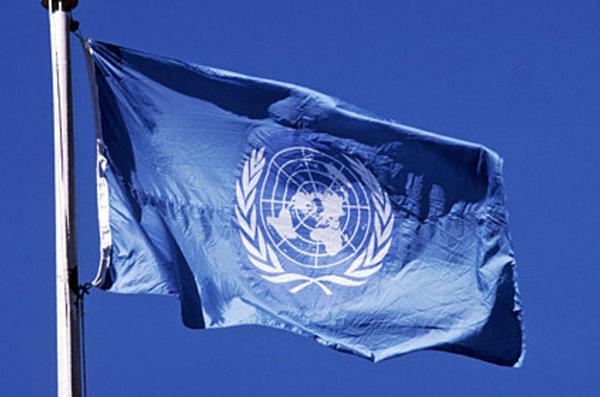
The ICJ is helping human rights lawyers from Myanmar, Cambodia, Thailand, Vietnam and Lao PDR, to understand how United Nations human rights mechanisms can help improve access to justice.
To build the awareness and capacity of human rights lawyers from these countries to make use of human rights mechanisms based in Geneva, the ICJ is organizing workshops with human rights lawyers in the region, as well as hosting practical mentorships for some of the participating lawyers with the ICJ’s office in Geneva. The ICJ has also prepared unofficial translations of key UN guides for use in the project, which are also being made available on the ICJ’s website for a wider audience.
The publications, originally produced in English by the UN Office of the High Commissioner on Human Rights (OHCHR) are:
- Working with the United Nations Human Rights Programme: A Handbook for Civil Society
Cambodia/Khmer – Laos – Myanmar/Burmese – Thai – Vietnamese (existing OHCHR official version)
- United Nations Human Rights Council – A Practical Guide for NGO Participants
Cambodia/Khmer – Laos – Myanmar/Burmese – Thai – Vietnamese
- Universal Periodic Review – A Practical Guide for Civil Society
Cambodia/Khmer – Laos – Myanmar/Burmese – Thai – Vietnamese
- How to Follow Up on United Nations Human Rights Recommendations – A Practical Guide for Civil Society
Cambodia/Khmer – Laos – Myanmar/Burmese – Thai – Vietnamese
Given the particular interest in the issue in the region, the ICJ also commissioned translation of the following additional OHCHR publication:
- Land and Human Rights: Standards and Applications
Laos – Myanmar/Burmese (word version)
Official UN versions of all of these documents, in English and other languages, are available on the OHCHR website here.
For more information about the project, please contact Matt Pollard, Senior Legal Adviser, at matt.pollard(a)icj.org .