Sep 23, 2015
An opinion piece by Daniel Aguirre, ICJ International Legal Adviser based in Yangon, Myanmar.
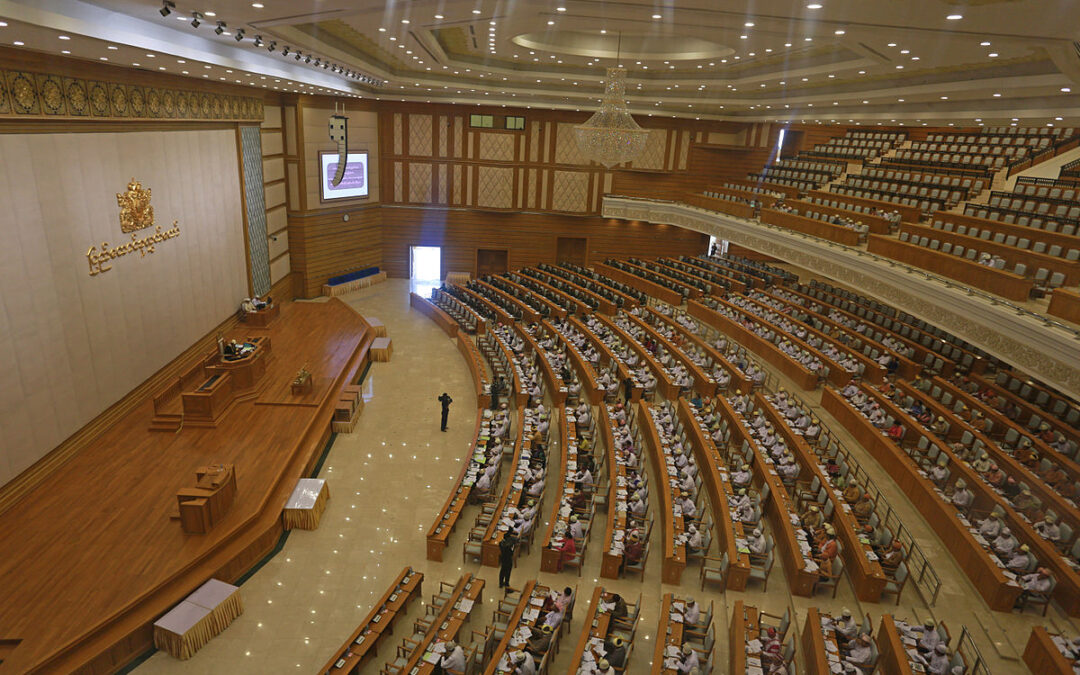
A newly drafted investment law – much awaited by investors eager to access Myanmar’s market – has been completed and will be submitted to the Hluttaw (photo) at its next session.
The much-improved draft goes a long way toward protecting the rights of people and the environment in Myanmar from foreign investments that may create and aggravate human rights and environmental problems.
The most significant improvements to this draft of the national investment law are that it does not give foreign investors recourse to international investor-State dispute mechanisms (ISDMs) and includes key provisions protecting the government’s ‘right to regulate’ in favour of human rights and the environment.
Civil society organizations, including the ICJ, have advocated for these changes to prevent foreign investors from using international arbitration as a means to challenge public policy designed to protect human rights and the environment.
This draft law stands in sharp contrast with the bilateral investment treaties (BITs) that Myanmar has signed with a number of major foreign investors (for example, China, India, Japan, Philippines and Thailand), all of which include troubling provisions that can undermine the government’s ‘right to regulate’ in favour of the environment and human rights.
That is why Myanmar’s lawmakers in the Hluttaw must now ensure that they adopt the latest draft of the investment law without diminishing it.
They should recognize civil society’s calls for the promotion of responsible investment as well as the protection of the environment and human rights.
Investment Law is a major factor in Myanmar’s efforts to ensure sustainable development.
It is also a means by which to ensure that Myanmar will be able to discharge its human rights obligations.
The national investment law, if adopted in present form, is also very important because it should serve as the basis for future BIT negotiations, for instance with the European Union and the United States.
It is a credit to the Directorate of Investment and Companies Administration (DICA) that it stood up to pressure from both international and domestic investors greedily eyeing Myanmar’s abundant resources.
Instead, DICA undertook a consultative process in which civil society was able to voice their concerns about the previous draft of the investment law.
There were a number of consultations and the process was by no means perfect.
But the adoption of a consultation process is an important step in Myanmar – one unheard of a few years ago – and has resulted in a better law put forward. Unfortunately, the same process has not been adopted during the negotiation of Myanmar’s BITs.
Economic investment should contribute to the rule of law and human rights.
But in order for this to happen, Myanmar must align policies with a vision of development based on local and national aspirations, placing people, and their rights, at the centre of the process.
As such, investment law, both in the national and international contexts, must be part of an overall development strategy.
It should refer to the various legal regimes, such as international human rights law, environmental conservation and BITs, with which it will interact. DICA has done its part to produce a draft in consultation with the public.
The decisions to be made now in the Hluttaw will shape Myanmar’s economic development and influence the protection of human rights and the environment for decades to come.
The much-criticized previous draft gave priority to investment protection over human rights.
Individual foreign investors could use arbitral panels to defeat government regulations if they hurt their profits – possibly even if such regulations were in line with Myanmar’s constitutional obligation to protect human rights.
The new draft of the national law, by contrast, refers to responsible investment and the protection of the environment.
It also sets out general exceptions to the protections for investors, allowing the government to regulate in favour of the environment and health.
It clarifies that Myanmar’s international legal commitments will be considered in arbitration.
This signals the government’s intention to regulate in these areas in the future. This intention should also be reflected in Myanmar’s BITs and the country should renegotiate old treaties that do not protect its ‘right to regulate’.
Myanmar has recently signed, though not yet ratified, the International Covenant on Economic Social and Cultural Rights, signaling its willingness to put in place policies to progressively achieve healthcare, education and social security.
These rights are also protected in Myanmar’s constitution. It is these types of rights that require the public policy regulation threatened by BITs.
Civil society’s concerns over the lack of human rights or environmental safeguards in investment law are not idle fears: investment protection can generate costly disputes – some arbitral awards run into the billions of dollars.
In effect, investors’ interests become legally protected, while the people of Myanmar must rely on the underdeveloped national legal system that does not provide adequate access to justice.
There are a growing number of international examples where new laws and regulations passed by democratically elected governments to protect economic, social and cultural rights have been challenged by foreign investors through BITs because they would decrease their profits.
For example, Phillip Morris Asia, a tobacco company, is using an ISDM to legally challenge the Australian government over its plain packaging regulations, which were designed to curb cigarette consumption.
Investment law should provide certainty to investors and protect their interests from random or discriminatory change to government regulations or policies.
But in Myanmar a wide range of laws and policies is missing or in nascent stages of development.
Improperly prioritizing protection for investors would dissuade Myanmar from adopting policies, such as strict environmental protection, public health or human rights standards.
Myanmar must ensure that it retains a right to regulate in both its national investment law and its international agreements.
These powers must be used for legitimate public policy rather than discriminatory protectionism.
Photo credit: Htoo Tay Zar
Sep 21, 2015
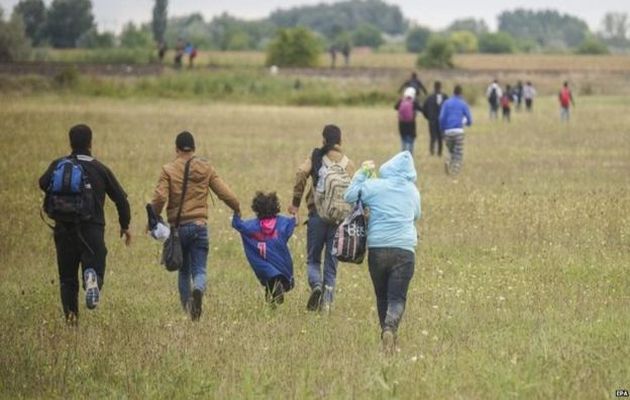
The ICJ today urged the European Council to mandate the EU institutions and Member States to take urgent co-ordinated action to protect the human rights of migrants and refugees who are now arriving in Europe on a large scale, to avoid exacerbating an already grave human rights crisis.
European Council President, Donald Tusk, has called for an extraordinary, informal meeting of heads of State and government for Wednesday 23 September, to discuss a common coordinated approach to address the situation.
The ICJ is following with extreme concern the latest developments in the refugee and migration emergency, with thousands of persons trying to reach the EU every day, including those fleeing war or persecution in Syria, Eritrea, Afghanistan and Ethiopia.
“The current situation represents an acid test for the EU’s identity as a legal order based on human rights and the rule of law,” said Róisín Pillay, Director of the ICJ Europe programme.
“In this rapidly developing human rights crisis, the EU institutions and Member States must respond in accordance with their international human rights and refugee law obligations, which are also founding principles of the EU,” she added.
The unprecedented number of refugees and other migrants – 9,000 persons crossed the Hungarian-Serbian border only on 14 September – has already seen numerous tragedies, including deaths by drowning in the Mediterranean Sea, the ICJ deplores.
It has also seen incidents raising serious human rights concerns, the Geneva-based organization says.
These include the numbering on their skin of refugees and migrants to the Czech Republic; ill-treatment of persons trying to cross the Greek-Macedonian border; and, most lately, deployment of the Hungarian army at the border with Serbia and allegations of ill-treatment, seizure and push-backs by the Hungarian authorities.
“The EU must urgently take co-ordinated action to provide adequate reception conditions and effective access to international protection for people fleeing war, persecution and other serious violations of human rights,” said Massimo Frigo, Legal Adviser of the ICJ Europe Programme.
The ICJ stresses that all refugees and other migrants, regardless of their status, are entitled to full protection of their human rights under international law.
The EU institutions and all EU Member State authorities have a duty to safeguard these rights at all times, including under the EU Treaties and the EU Charter of Fundamental Rights, the ICJ adds.
Contact:
Massimo Frigo, Legal Adviser, ICJ Europe Programme, t: +41 22 979 3805 ; e: massimo.frigo(a)icj.org
Europe-Migration statement-Advocacy-analysis brief-2015-ENG (full text in pdf)
Photo: EPA
Sep 21, 2015 | News
Today, the ICJ has started its mission to the Kyrgyz Republic on organisation and functioning of the legal profession.
During the mission, which will last from 21 to 25 September, the ICJ will assess the implementation of the new legislation unifying the legal profession under a single national bar association, including establishment of new structures and standards for the self-governance of the profession regarding qualification, disciplinary action and professional ethics.
A round table with independent lawyers will be held during the visit, other meetings with bodies of the Bar Association, State officials and other stakeholders that take part in the reform will be held.
The mission will include Jeroen Brouwer, former President of the Dutch Bar Association, Róisín Pillay, Director of the Europe Programme and Temur Shakirov, Legal Adviser of the Europe Programme.
The mission will be followed by a brief report with recommendations for reform.
Contact:
Róisín Pillay: roisin.pillay(a)icj.org
Temur Shakirov: temur.shakirov(a)icj.org
Sep 21, 2015 | Advocacy, Non-legal submissions
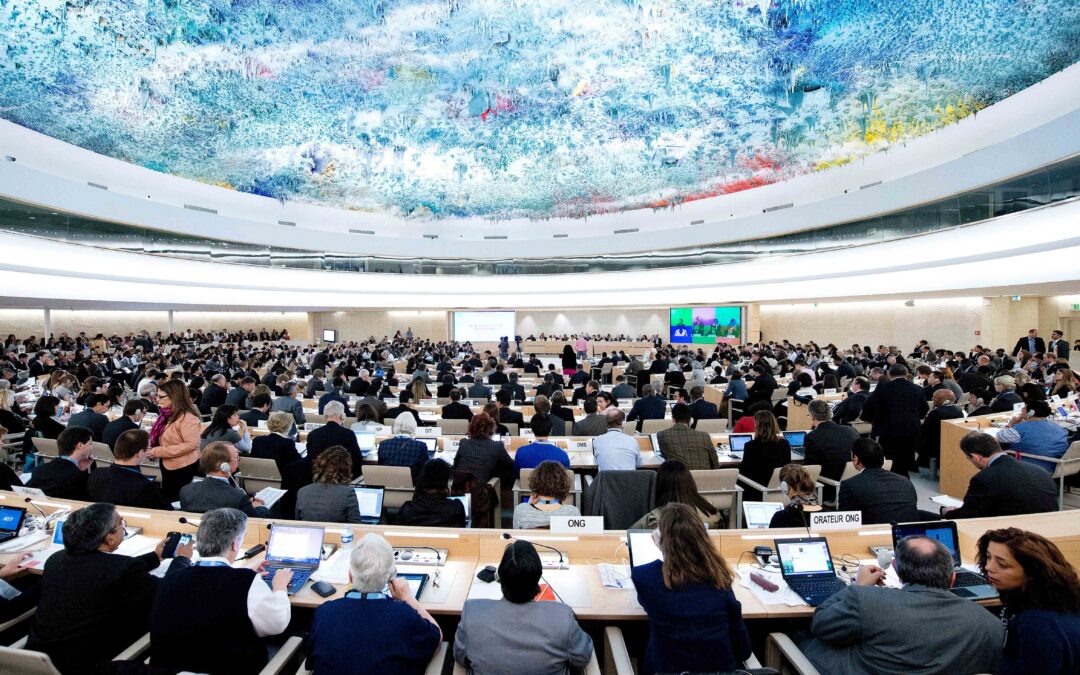
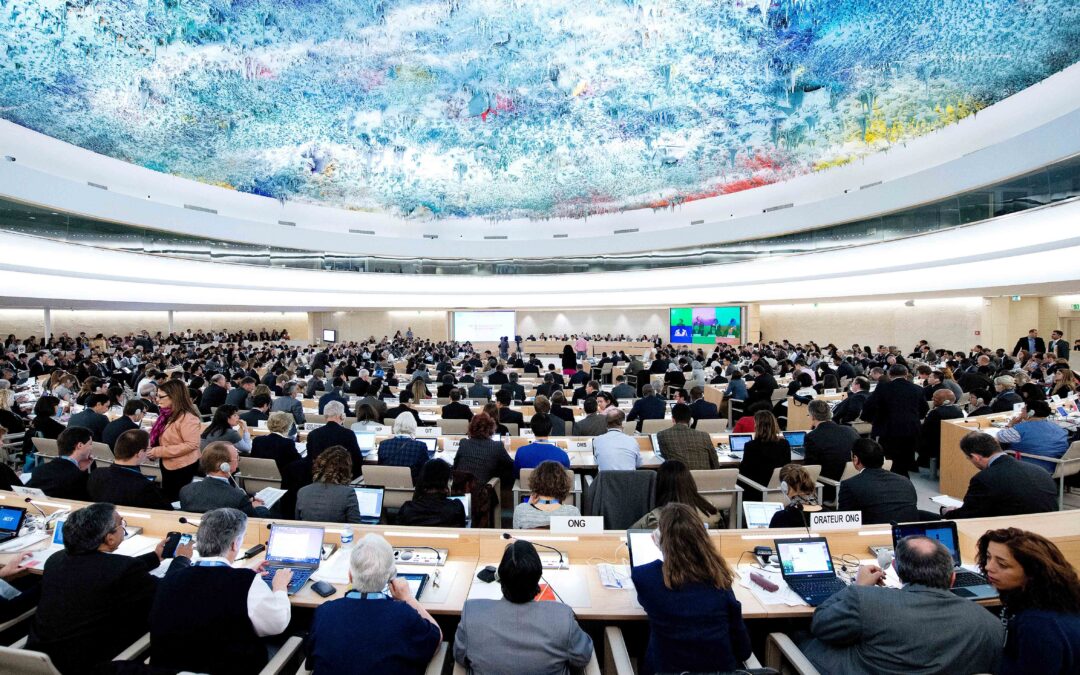
The ICJ today delivered an oral statement at the UN Human Rights Council during the Interactive Dialogue with the Commission of Inquiry on the Syrian Arab Republic concerning accountability and other measures to address the Syrian conflict.
In the statement the ICJ called upon the UN Human Rights Council and the Security Council to respond to the findings of the 10th report of the Syria Commission of Inquiry, including with a view to ensuring accountability for the serious violations of international law.
The ICJ also called upon all states to comply with their obligations under international law vis-à-vis the Syrian conflict, including by searching for all those responsible for international crimes committed in this conflict and bringing them before their own courts, and by protecting the rights of Syrian refugees and abiding by the principle of non-refoulement.
The full statement may be downloaded in PDF format, here: Syria-UN-HRC30-OralStatement-Advocay-non legal submission-2015-ENG