Jan 23, 2020 | News
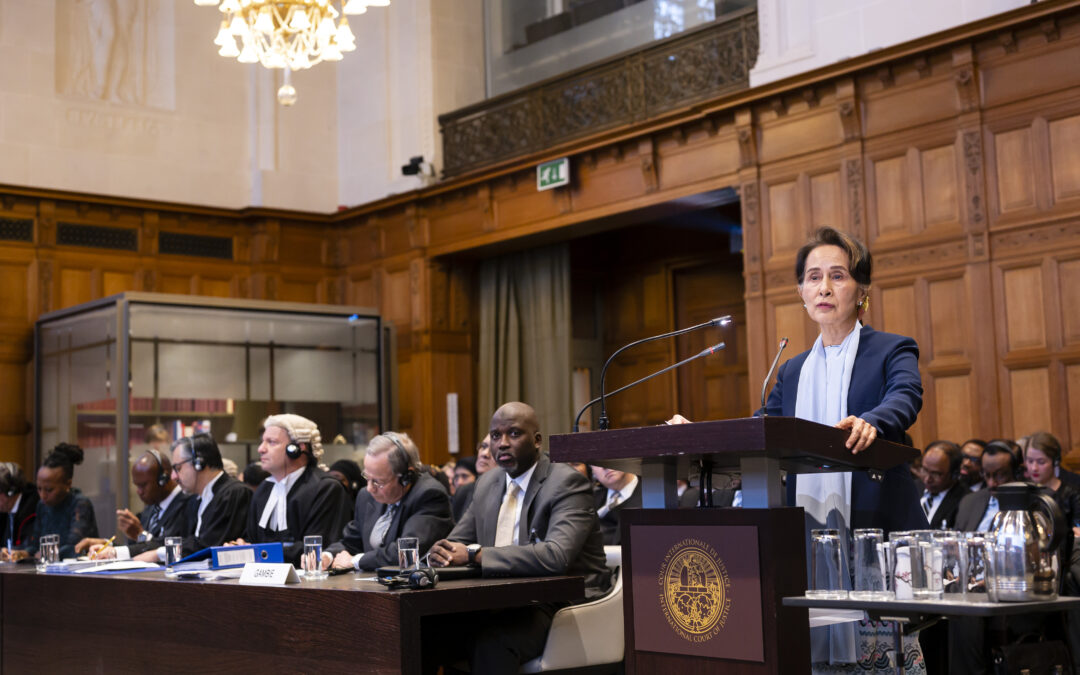
The ICJ welcomes today’s Order of the International Court of Justice (Court) in the case of The Gambia v Myanmar indicating provisional measures to protect the rights of the persecuted Rohingya minority under the Genocide Convention and calls on Myanmar to implement the Order without delay.
“The Order is a significant step towards justice for the Rohingya as it imposes specific, legally-binding, obligations on Myanmar to take critical steps to protect their rights under the Genocide Convention,” said Sam Zarifi, Secretary General of the International Commission of Jurists, currently in Yangon, Myanmar. “It is now incumbent on the whole international community, including States, civil society and UN agencies, to urge and assist Myanmar to fulfil its obligations under the Order.”
In its Order, delivered orally, the Court found it had prima facie jurisdiction over the case and indicated a series of provisional measures, including that Myanmar must:
- take all measures within its power to prevent the commission of all acts within the scope of the definition of genocide set out in Article II of the Genocide Convention;
- ensure that its military as well as any irregular armed units which may be directed or supported by it, and any organizations or persons which may be subject to its control, direction or influence do not commit acts of genocide, conspiracy to commit genocide, direct and public incitement to commit genocide, attempt to commit genocide, or complicity in genocide;
- take effective measures to prevent the destruction and ensure the preservation of any evidence related to allegations of acts within the scope of Article II of the Genocide Convention; and
- submit a report to the Court on all measures taken to give effect to the Order within four months as from the date of the Order and thereafter every six months until a final decision on the case is rendered by the Court. Every report will be communicated to the Gambia which will then have the opportunity to submit to the Court its comments thereon.
Provisional measures are orders the Court has the power to make aimed at preserving the rights of the Parties to a case pending the final decision of the Court in order to avoid irreparable damage to the rights which are the subject of the dispute, in this case the rights of the Rohingya.
A hearing on the merits of the case will be heard at a later date.
The role of the Court is to settle disputes submitted to it by States in accordance with international law – its role does not extend to determining the criminal responsibility of individuals for perpetrating serious human rights violations.
“As Myanmar is unwilling and unable to conduct investigations and, where appropriate, prosecutions of serious human rights violations domestically which meet international law and standards, the various processes underway around the world directed towards criminal accountability- including the investigation of the International Criminal Court – remain necessary and urgent,” added Zarifi.
In 2018, the International Commission of Jurists issued a baseline study of the obstacles to accountability for serious human rights violations in Myanmar identifying “systematic impunity” within the country as a result of the “lack of accountability of perpetrators of human rights violations; lack of access to effective remedies and reparation for victims; and ongoing challenges with the independence and accountability of justice actors.”
International processes underway around the world directed at criminal accountability for serious human rights violations in the Myanmar situation include:
To download the full statement with background information, click here.
Contacts
Sam Zarifi, ICJ Secretary General, t: +41 79 726 4415; e: sam.zarifi(a)icj.org
Kingsley Abbott, Coordinator of the ICJ’s Global Accountability Initiative, t: +66 94 470 1345; e: kingsley.abbott(a)icj.org
Jan 18, 2020 | Advocacy, News
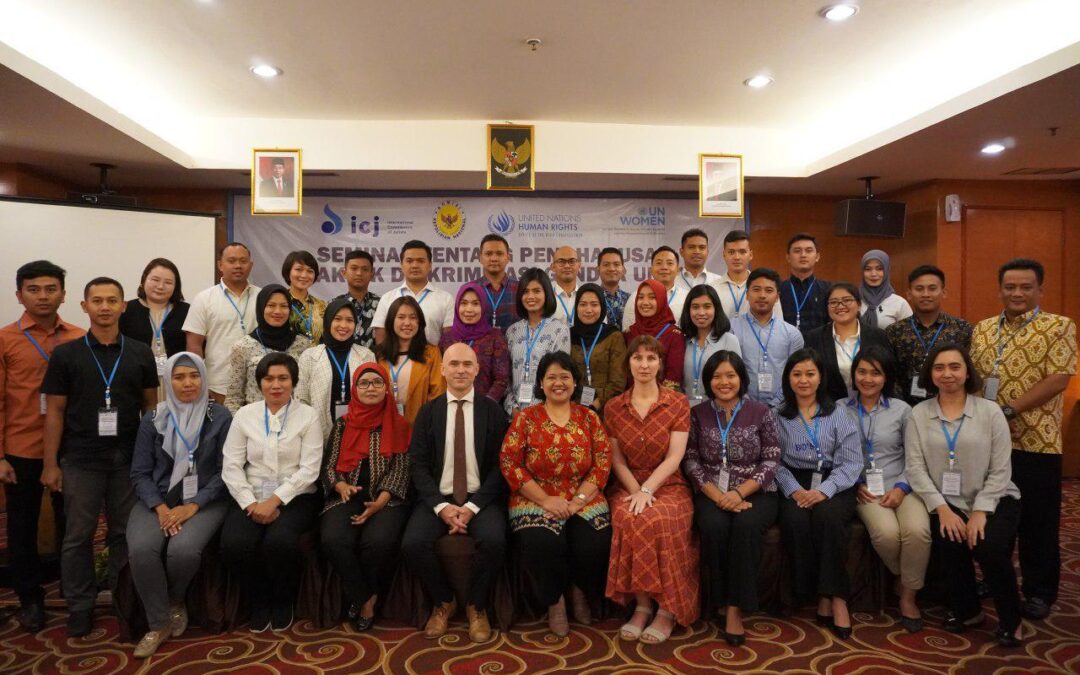
From 16 to 17 January 2020, the ICJ, in collaboration with the National Police Commission (KOMPOLNAS), UN Women, and the Office of the United Nations High Commissioner for Human Rights (OHCHR) organized a Seminar on Eliminating Gender Discriminatory Practices for the Police.
It was held in Bogor, Indonesia and gathered 30 law enforcement officers from Indonesian provinces that are reported to have the highest rate of incidents of violence against women.
Frederick Rawski, ICJ’s Asia and the Pacific Regional Director, stressed to participants that, “Police officers are the first point of contact for women who try to access justice for violations committed against them. It is important therefore for these officers to be well-trained on gender sensitivity and women’s human rights.”
“Only 40 percent of women speak out on violence, and only 10 percent of these report to the police because they are often blamed for the violence they experience or humiliated by those who should protect them,” added Ms. Doreen Buettner, Programme Specialist on Access to Justice of UN Women.
Indonesia is a State Party to the Convention on Elimination of All Forms of Discrimination Against Women (CEDAW), having ratified it on 13 September 1984. It has established a gender mainstreaming mechanism under Presidential Instruction No. 9 of 2000 on Gender Mainstreaming in National Development, which obliges all government representatives and agencies, including the police, to mainstream gender in their work in order to eliminate gender-based discrimination.
Ms. Poengky Indarti, Commissioner from the National Police Commission (KOMPOLNAS), stressed that “Gender-responsive police training should not a one-time thing, we need to institutionalize the training for it to be sustainable.”
At the seminar, the discussions were aimed at strengthening the understanding of the members of police officers on women’s human rights, and the importance of eliminating gender stereotyping in their work to enhance access to justice for women.
Ms. Siti Aminah, Commissioner of the National Commission of Violence Against Women in Indonesia (Komnas Perempuan) and Professor Meg Garvin, Executive Director of the National Crime Victim Law Institute (NCVLI) and Clinical Professor of Law at the Lewis & Clark Law School facilitated discussions on common gender stereotypes in Indonesia and strategies, protocols and good practice relating to all aspects of responses to incidents of violence against women.
Contact
Ruth Panjaitan, National Legal Advisor for Indonesia, International Commission of Jurists, e: ruthstephani.panjaitan(a)icj.org
Resources
To access pictures from the event, click here.
Jan 17, 2020
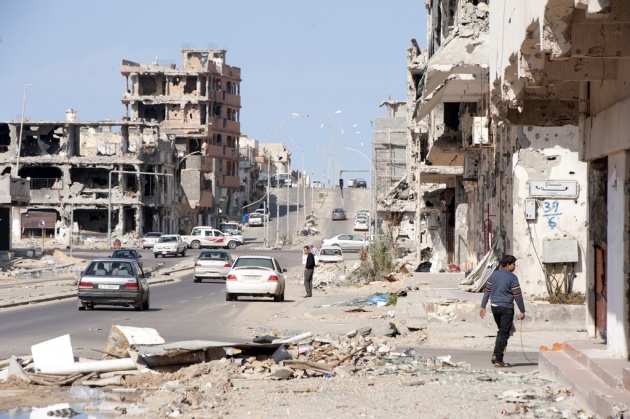
The 19 January 2020 Berlin Peace Conference should prioritize accountability for crimes under international law committed in Libya and ensure that any resulting Political Agreement (PA) lays the foundations for the rule of law to be established and for human rights to become firmly entrenched in Libya, the ICJ said today.
Upholding of international human rights and humanitarian law is one of the six baskets of activities provided for by the Berlin process to end the conflict in Libya.
The other baskets relate to the Libyan-led political process; the implementation of the arms embargo, security and economic reform; and, most immediately, securing a ceasefire.
Earlier this week, efforts to end nine months of armed conflict between the Government of National Accord (GNA) and the National Libyan Army (LNA) failed to materialize, with the LNA leader refusing to sign a ceasefire.
“The Berlin Conference must send an unequivocal message to all parties that impunity will not be the price of peace,” said Said Benarbia, the ICJ’s MENA Programme Director.
“Peace can only be achieved when State officials and members of armed groups responsible for past and ongoing human rights atrocities are held to account, and when the States that have systematically violated the United Nations-imposed arms embargo are also held to account,” Benarbia added.
The ICJ calls on all those involved in the Berlin process to ensure that any resulting PA include provisions on the right to truth, justice, reparation and guarantees of non-recurrence, including commitment to institutional reforms to secure accountability and victims’ rights.
The process should also support calls by civil society organizations, the UN Special Representative of the UN Secretary-General in Libya, and the Office of the High Commissioner for Human Rights for the establishment of an accountability mechanism for Libya at the 43rd session of the UN Human Rights Council.
“Accountability is a key, not an obstacle to the establishment of the rule of law in Libya,” said Kate Vigneswaran, the ICJ’s MENA Programme Senior Legal Adviser.
“The Berlin Conference should support the establishment of a Commission of Inquiry or similar mechanism with a mandate to document human rights violations and abuses in the country, identify those responsible for them, and collect and preserve evidence for use in future criminal proceedings,” she added.
In a briefing published today, the ICJ also urged all parties involved in the Berlin process to ensuring that any resulting PA provide: for armed and security forces to be subordinated to civilian authorities; for any process of integrating officials and members of armed groups in the State’s armed and security forces to be conducted through adequate vetting standards and processes; for the right of all Libyans to participate in the conduct of public affairs to be enshrined and fully complied with; for the independence and accountability of the judiciary and the Office of the General Prosecutor to be secured; and for universally recognized human rights to be protected in Libya’s Constitution and laws.
Contact
Said Benarbia, Director of the ICJ Middle East and North Africa Programme, t: +41-22-979-3817; e: said.benarbia(a)icj.org
Kate Vigneswaran, ICJ Senior Legal Adviser, t: +31624894664, e: kate.vigneswaran(a)icj.org, twitter: @KateVigneswaran
Libya-ICJ recommendations-Advocacy-Analysis brief-2020-ENG (full briefing paper, in PDF)
Jan 16, 2020 | Advocacy, Non-legal submissions
The ICJ has submitted information and recommendations for the upcoming review of the UN Global Counter-Terrorism Strategy, emphasising the need to strengthen the role of human rights in the framework and implementation of the strategy.
The submission was prepared in response to a call for civil society input, from the UN Office of Counter-Terrorism (UNOCT).
It summarizes recent ICJ activities relevant to implementation of the strategy, and urges among other things:
- removal of impediments to civil society participation in certain UN or other global policy-making processes;
- recognition that not only is violation of human rights in the context of countering terrorism, whether through arbitrary application or deliberate abuse, in itself unlawful and unacceptable, it also undermines the credibility and effectiveness of the struggle against terrorism;
- better recognition and implementation of the human rights of victims of terrorism;
- mainstreaming of human rights throughout the text and implementation measures for the Strategy as a whole;
- establishment of an independent human rights oversight entity within the UN counter-terrorism architecture;
- creation of a Civil Society Unit within UNOCT;
- increased resources for the UN Special Rapporteur on the promotion and protection of human rights and fundamental freedoms while countering terrorism;
- increased engagement of the UN counter-terrorism architecture with OHCHR and with other UN Special Procedures;
- benchmarks and indicators for assessing States’ compliance with human rights obligations in implementation of the GCTS.
The complete submission can be downloaded in PDF format here: UN-Advocacy-GCTStrategy-2019
For more information contact un(a)icj.org
Jan 15, 2020 | News
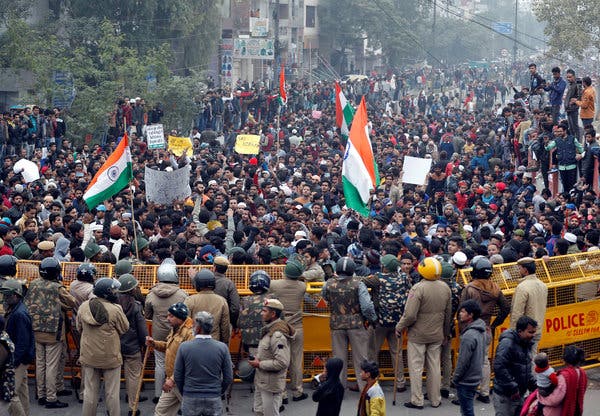
The Indian government must investigate the use of excessive and unlawful force by Uttar Pradesh police against demonstrators protesting the imposition of a discriminatory new law, the International Commission of Jurists said today in a briefing paper.
The briefing paper, based in part on firsthand interviews with witnesses and victims, documents the unnecessary, excessive and indiscriminate use of force in the state of Uttar Pradesh that have led to more than 19 deaths and several more critical injuries since 11 December 2019 as a result of use of firearms as well as teargas, water cannons, and baton charging by the police in response the ongoing protests against the Citizenship (Amendment) Act, 2020.
Section 144 of the Code of Criminal Procedure, which restricts right to assembly of more than 4 persons, has been imposed in Uttar Pradesh since December 19, 2019, thereby effectively preventing people from protesting. However, protests broke out in several cities in Uttar Pradesh despite the ban. While police authorities claim that the protestors initiated the violence, firsthand interviews with victims and witnesses and numerous other credible reports indicate that the police used force on peaceful protestors including lathis, teargas, bullets.
“The high death toll of peaceful protestors in Uttar Pradesh highlights the use of excessive force by the police, in contravention of international standards of policing and human rights. The state and federal governments must investigate any death or injury that occurs during protests by law enforcement officials and to ensure access to justice to victims and their families,” Sam Zarifi, ICJ Secretary General said.
Individuals reported that they had not been able to get their medico-legal certificates and victims’ families reported inability to access postmortem reports.
The right to life and freedom from ill treatment is protected under international law including the International Covenant on Civil and Political Rights to which India is a party and requires that when arbitrary deprivation of life occurs, there is accountability and reparation for victims.
The Allahabad High Court is hearing Shree Ajay Kumar v. State of Uttar Pradesh starting 16 January 2020, wherein it has taken suo moto cognizance of a letter sent by Ajay Kumar a lawyer in Bombay and has treated it as a basis for the commencement of a public interest litigation. The letter alleges that “the situation in the State of Uttar Pradesh is antithetical to core constitutional values and warrants interference of this Court.”
“A ruling that the Uttar Pradesh police violated protestors right to life by use of firearms and indiscriminate use of batons, teargas will serve as an important reminder to the police and the Indian State to respect the rights to life, freedom from ill-treatment and freedom of assembly and expression of protestors and that the use of such force against peaceful protestors will not be condoned by the State” said Sam Zarifi.
To download the full statement with additional background information, click here.
Contact
Sam Zarifi, ICJ Secretary General , e: sam.zarifi(a)icj.org
Maitreyi Gupta, International Legal Adviser for India, t: +91 7756028369 ; e: maitreyi.gupta(a)icj.org
Read also
ICJ Press Release: India: Discriminatory citizenship law passed by Parliament violates international and constitutional law, December 11, 2019
ICJ Press Release: India: Authorities must cease the excessive use of force and ill-treatment of Citizenship (Amendment) Act 2019 protestors, December 16, 2019