
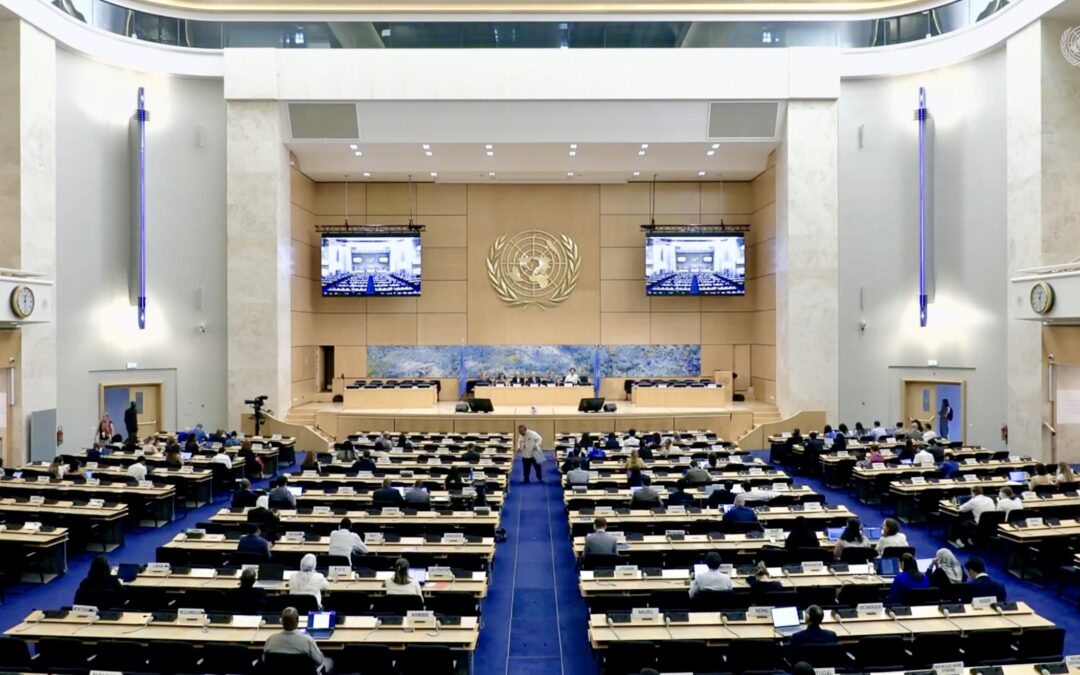
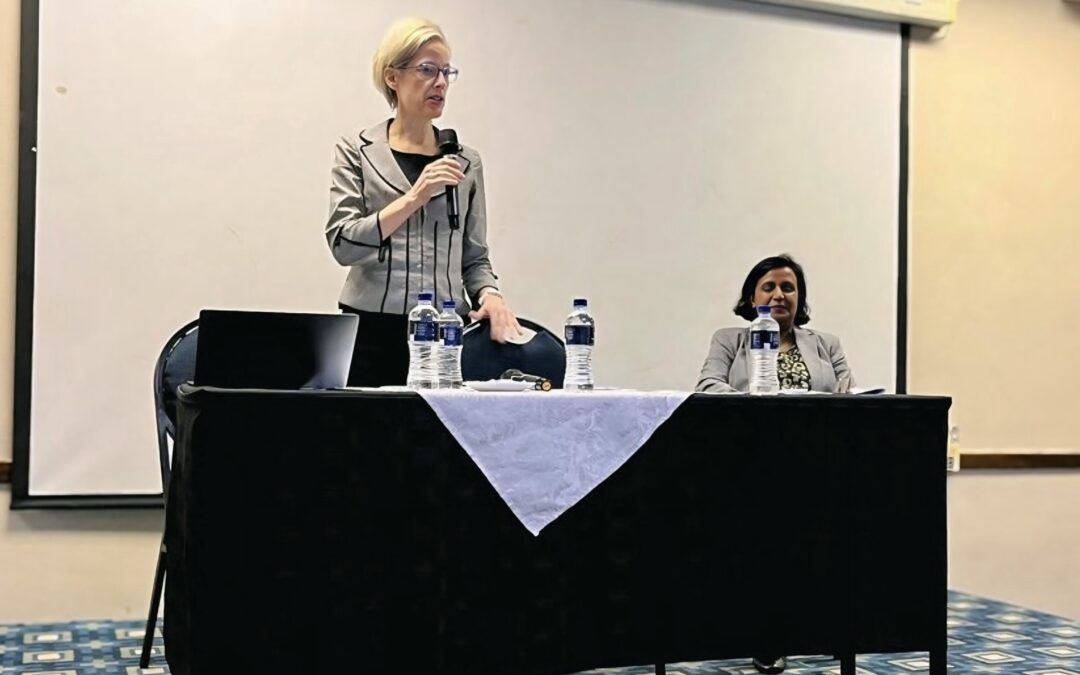
Eswatini: In the face of ongoing repression of the legal profession, lawyers raise concerns with UN Special Rapporteur on the Independence of Judges and Lawyers
The Special Rapporteur on the Independence of Judges and Lawyers emphasized the fundamental importance of the independence of judges and lawyers in the protection of human rights and the rule of law. In a social media post issued on 13 April 2025 after meeting...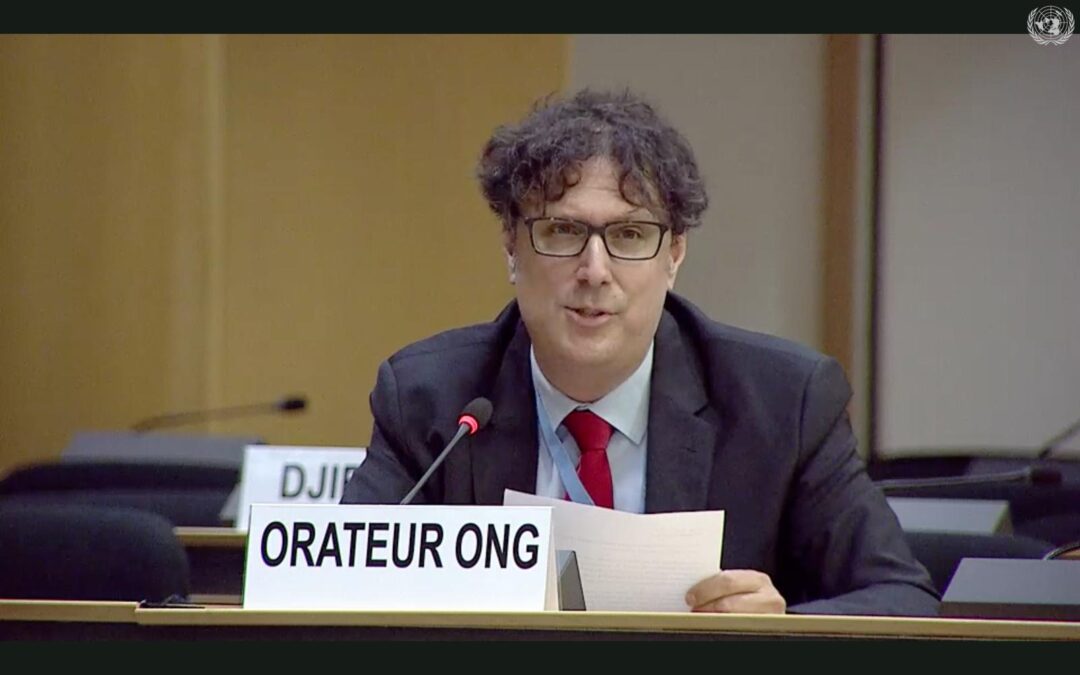
Contemporary challenges to the independence and impartiality of prosecutors
Speaking at the UN Human Rights Council the ICJ today emphasized the need for a human-rights-based approach to addressing corruption in justice systems, and urged more attention be given to the abuse of non-independent prosecution services by Executive governments.
The statement, delivered in an interactive dialogue with the Special Rapporteur on the independence of judges and lawyers, read as follows:
“Mr Special Rapporteur,
The International Commission of Jurists (ICJ) concurs with the affirmation in your report that justice systems must effectively counter corruption; that corruption in justice systems negatively impacts human rights; and that addressing such impacts is within the mandate of the Human Rights Council.[1]
At the same time, the UN Office on Drugs and Crime (UNODC) already actively provides resources and specialized technical expertise to States and prosecutors in implementing the Convention against Corruption. Keeping the Human Rights Council’s focus on the specific value added by a human-rights-based approach to such overlapping issues makes the best use of the Council and OHCHR’s limited resources and special competence and expertise.
For example, this report could have presented a detailed analysis of, and recommendations on, the right to remedy and reparation of victims of human rights violations caused by corruption of prosecutors, judges and lawyers. However, while the report briefly mentions victims (para 30), human rights defenders (para 31), and human rights training (para 58), and that human rights issues can impede international cooperation (para 49), but otherwise it mostly addresses technical advice for effective counter-corruption measures. The ICJ invites you to elaborate on the specific new elements a human-rights-based approach adds to the expert advice already provided by UNODC in this regard.
We also urge you to devote a future report to the manipulation of non-independent prosecution services by Executive governments to repress dissenting voices and human rights defenders, neutralize political opposition, shrink civil society space, and entrench impunity for human rights violations, which as our submission documented is no less urgent a global human rights issue than corruption, and is not a special focus of UN bodies other than the Council and OHCHR.
Thank you.”
[1] Indeed, twenty years ago the ICJ adopted a Policy Framework for Preventing and Eliminating Corruption and Ensuring the Impartiality of the Judicial System and its work against corruption in cooperation with judiciaries and prosecution services continues at the global and national levels.

ICJ highlights human rights impacts of abuse of prosecutorial powers
The ICJ has urged the UN Special Rapporteur on Independence of Judges and Lawyers to ensure that his upcoming report on challenges to the independence of prosecutors, fully addresses abuse of prosecution powers to target human rights defenders, political opponents or others, or giving rise to a more general and systemic lack of fair trial for accused persons, or entrenching impunity of State perpetrators of human rights violations, as among the dominant contemporary challenges to prosecutorial independence globally from a human rights perspective.
The Special Rapporteur has made clear his intention to address challenges to prosecutorial independence arising from transnational corruption and organized crime. While the ICJ certainly agrees that such interference can and does have impacts on human rights, to varying extents around the world, the ICJ submission also highlights and documents that threats to prosecutorial independence emanating from the prosecutor’s own Executive government should be seen to be of at least equal concern from a human rights perspective, globally, and should be fully addressed in any report on “contemporary challenges of prosecutorial independence” from a human rights perspective.
The ICJ’s submission can be downloaded in PDF format here: UN-Advocacy-SRIJLProsecutors-2019
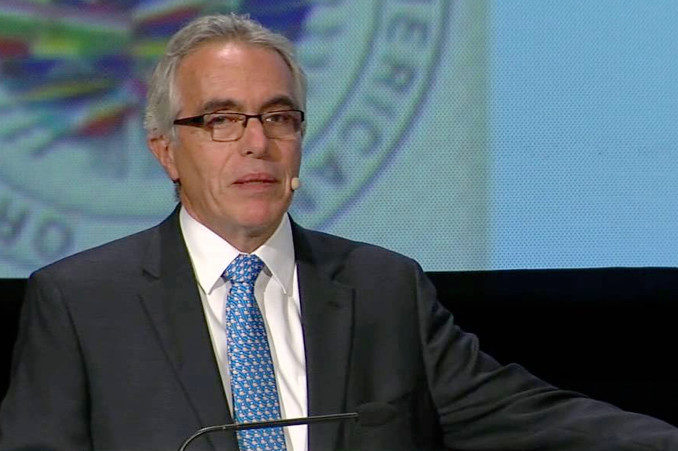
ICJ welcomes the first visit of the UN Special Rapporteur on the Independence of Judges and Lawyers to Uzbekistan
The ICJ welcomes this week’s visit to Uzbekistan of the UN Special Rapporteur on the independence of judges and lawyers, Diego García-Sayan, during which he will assess reforms of the judicial system, the independence of the judiciary and the independence and role of lawyers.
“The visit of the Special Rapporteur to Uzbekistan, at the invitation of the government, is an indication that the Uzbekistan authorities are serious about the ongoing reforms of the justice system. This visit is only a starting point for the deep reforms needed to establish an independent and fair justice system in Uzbekistan. Realising these reforms will require sustained commitment of all institutions of government, lawyers and civil society,” said Temur Shakirov, Senior Legal Adviser of the ICJ Europe and Central Asia Programme.
The ICJ, along with other NGOs and IGOs, met with the Special Rapporteur in Tashkent yesterday on the first day of his visit, and drew his attention to issues concerning the independence of judges and lawyers in Uzbekistan.
“The visit will be followed by the report of the Special Rapporteur containing findings and recommendations. These recommendations should be effectively implemented and the ICJ is committed to provide expert and other support in the Uzbekistan’s effort to bring its justice system in line with the recommendations,” Shakirov added.
Background
The visit of the UN Special Rapporteur on independence of judges and lawyers takes place from September 19-25, 2019.
The Special Rapporteur will hold meetings with representatives of the government, judiciary, prosecutors, lawyers and civil society and is expected to issue a report analyzing the independence of judges and lawyers in Uzbekistan, following his visit.
The Special Rapporteur on the independence of judges and lawyers is one of the special procedures of the United Nations Human Rights Council, appointed as an independent expert to monitor the compliance of UN Member States with international standards on the independence of judges and lawyers.
Recent News
 HRC63: ICJ Calls for Renewal and Strengthening of the Venezuela Fact-Finding Mission21 Sep 2026
 Joint Statement: Attacks on the Rule of Law, Judicial Independence and Access to Justice in Zambia17 Sep 2026
 HRC63: ICJ Raises Concern over Widespread and Systematic Arbitrary Detention in Egypt16 Sep 2026
 Myanmar: As armed conflict rages and military rule continues, critical measures can be taken towards eventual justice and accountability for victims of Enforced Disappearance10 Sep 2026