May 3, 2013 | Multimedia items, News, Video clips
The ICJ warmly welcomes the entry into force of the Optional Protocol to the ICESCR that will be effective on Sunday, 5 May, 2013.
As noted in previous statements, the ICJ considers that the entry into force of the new instrument allowing the review of alleged violations of economic, social and cultural rights by a UN Committee will mark an historic boost to the international protection of these rights.
The ICJ and its allies in the International NGO Coalition for the OP-ICESCR look forward to pursuing the dialogue and interaction with the UN Committee on Economic, Social and Cultural Rights and States parties, and aim to contribute at making the new procedures offered an effective tool for victims who could not achieve justice in their domestic justice systems.
Coalition press release in English
Coalition press release in Spanish

Mar 22, 2013 | News
The ICJ, the World Organisation Against Torture (OMCT) and Geneva for Human Rights are encouraged by steps taken by Taiwan to review compliance with human rights and urge further steps towards the realization of rights on the ground.
Due to the fact that the territory of Taiwan is not recognized by the international community as a sovereign State, Taiwan is not a member of the United Nations.
As such, the UN HUman Rights Committee and Committee on Economic, Social and Cultural Rights have been unable to review Taiwan’s implementation of the International Covenant on Civil and Political Rights and the International Covenant on Economic, Social and Cultural Rights, in respect of which Taiwan has enacted incorporating legislation.
Notwithstanding this position, the Government of Taiwan has facilitated a parallel review by independent experts of implementation of these instruments.
This review was conducted on 25-27 February 2013, leading to the adoption by the independent experts of concluding observations and recommendations.
The ICJ, OMCT and Geneva for Human Rights are encouraged by the steps taken.
They urge the Government of Taiwan to undertake prompt and effective steps towards implementation of the recommendations of the independent experts by means that involve a constructive dialogue with civil society, including as this pertains to the abolition of the death penalty.
They also call on the Government to take similar steps for incorporation of human rights standards set out in other universal treaties, including the Convention against Torture.
Taiwan-ICCPR-ICESCR-Conclusions-IndependentExperts-2013 (download concluding observations of the independent experts)
Mar 21, 2013 | News
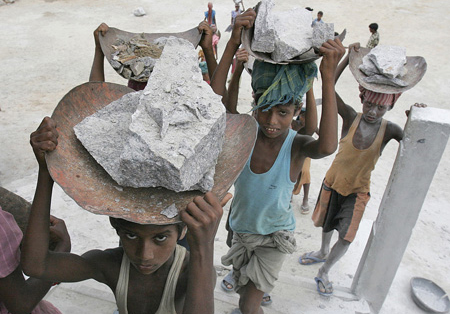
The ICJ welcomes the adoption by the UN Committee on the Rights of the Child of a General comment on State obligations regarding the impact of the business sector on children’s rights.
The ICJ stresses the Committee is the first UN human rights treaty body to address this issue directly in a General comment.
“The Committee on the Rights of the Child has taken a decisive step in clarifying standards under the Convention on the Rights of the Child and providing much needed guidance for States to better protect the rights of the child against business abuse,” said Carlos Lopez, ICJ’s Senior Legal Adviser on Business and Human Rights.
The UN Committee recognizes that while there is no international legally binding instrument on the business sector’s responsibilities vis-à-vis human rights, “duties and responsibilities to respect the rights of children extend in practice beyond the State and State-controlled services and institutions and apply to private actors and business enterprises. Therefore all businesses must meet their responsibilities regarding children’s rights and States must ensure they do so.”
The UN Committee also acknowledges that voluntary actions of corporate responsibility by business enterprises are not a substitute for State action and regulation of businesses or for businesses to comply with their responsibilities to respect children’s rights.
The General Comment was elaborated through a consultative process over nearly two years with the support of the ICJ, UNICEF and Save the Children International.
It gives interpretation and guidance for States in key areas:
- how they should ensure that the activities and operations of business enterprises do not adversely impact on children’s rights;
- how to create an enabling and supportive environment for business enterprises to respect children’s rights across their local or global operations; and
- how to ensure access to effective remedy for children whose rights have been infringed by a business enterprises.
“The recommendations and guidance provided by the Committee are a key contribution to national and international strategies by States and other actors,” Lopez added. “States now need implement these recommendations.”
BHR-FINAL CRC GC 16-comment-2013 (full text in pdf)

Mar 19, 2013 | Advocacy, Non-legal submissions
The ICJ today welcomed the recent deposit of the tenth instrument of ratification to the Optional Protocol to the International Covenant on Economic, Social and Cultural Rights (ICESCR).
Noting that the entry into force of the Optional Protocol (OP) on 5 May 2013 will mark an historic boost to the international protection of economic, social and cultural rights, the ICJ called on the Human Rights Council and its members to become party to the OP and other individual communications procedures of the treaty bodies.
The ICJ’s statement was made during the General Debate under Item 8 of the Human Rights Council’s agenda (follow-up and implementation of the Vienna Declaration and Programme of Action) during the 22nd regular session of the Council (25 February to 22 March 2013).
HRC22-Item8GD-OPICESCR-NonLegalSubmission-2013 (download full statement in ODF)

Feb 5, 2013 | News
The 10th ratification of the Optional Protocol to the International Covenant to Economic, Social and Cultural Rights (OP-ICESCR) is an historical boost for the international protection of these rights, the ICJ said today.
“With the deposit today at the UN of the 10th instrument of ratification by Uruguay, we are very close to the long awaited entry into force of this new treaty”, said Sandra Ratjen, ICJ Senior Legal Adviser on Economic, Social and Cultural Rights (ESCR).
The OP-ICESCR will enter into force in three months from today and will provide for remedies at the international level to victims of violations of economic, social and cultural rights.
The Protocol establishes mechanisms that enable the UN Committee on Economic, Social and Cultural Rights to examine complaints and initiate inquiries in cases of violations of these rights in the State parties whenever the victims could not obtain justice at the national level.
“We warmly welcome the 10th ratification of the Optional Protocol and we congratulate Uruguay on this decisive step for the protection of economic, social and cultural rights nationally and internationally”, said Wilder Tayler, ICJ’s Secretary General. “This is an important moment for the ICJ. We have a long-standing commitment and work in favour of the recognition of ESCR as legal and justiciable rights, on the same footing as other human rights.”
The ICJ urges States parties to the ICESCR to join the first ten States who became party to the Optional Protocol – Ecuador, Mongolia, Spain, El Salvador, Argentina, Bolivia, Bosnia and Herzegovina, Slovakia, Portugal and Uruguay.
The ICJ stresses that only when a significant number of States will have become party to the Protocol, the mechanisms it offers will be effectively accessible to a great number of victims of violations of ESCR.
Contact:
Sandra Ratjen, ICJ Senior Legal Adviser on Economic, Social and Cultural Rights, t: +41 22 979 38 35 ; e-mail: sandra.ratjen(at)icj.org
NOTE:
The ICJ is a member of the International NGO Coalition for the OP to the ICESCR. Together with the other members of the Coalition, the ICJ is involved in the Campaign in favour of the ratification of the OP-ICESCR.