Mar 27, 2014 | News
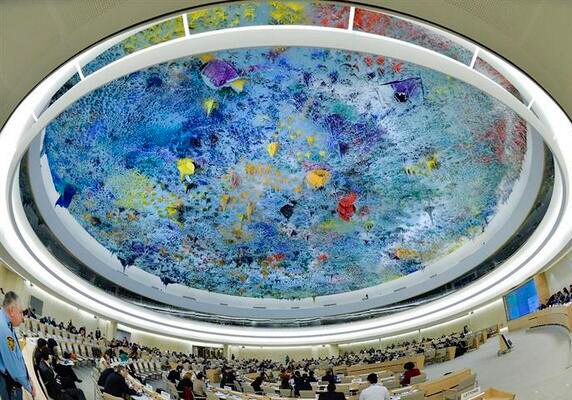
The UN Human Rights Council resolution to establish an international investigation into allegations of human rights violations and abuses committed by both sides in Sri Lanka’s civil war gives hope to tens of thousands of victims who continue to be denied truth and justice.

Mar 18, 2014 | News
The arbitrary arrest and detention of prominent human rights defenders is an attempt to silence criticism and divert the spotlight from ongoing abuses, leading global and Asian human rights monitors said today in a joint statement.
The statement was issued by Amnesty International, Forum Asia, Human Rights Watch, the International Crisis Group, and the International Commission of Jurists.
Ruki Fernando of the Colombo-based INFORM and Father Praveen Mahesan, a Catholic priest, were arrested in Kilinochchi on March 16, and are believed to be detained without formal charges under Sri Lanka’s notoriously draconian Prevention of Terrorism Act (PTA).
“The Sri Lankan authorities need to release Fernando and Father Praveen, and end the ongoing state harassment of human rights defenders,” said David Griffiths, Amnesty International’s deputy director for Asia Pacific. “How can the international community take Sri Lanka’s claims to respect rights seriously when rights defenders continue to face intimidation and criminal charges for demanding accountability and human rights protection?”
The police Terrorism Investigation Division (TID) detained and questioned Ruki Fernando and Father Praveen after they sought to ensure the welfare of 13-year-old Balendran Vithushaini, who had been ordered into probationary care following the arrest of her mother, Balendran Jeyakumari, on March 13. Both mother and daughter are active opponents of enforced disappearances in Sri Lanka and have been prominently featured in international media coverage of demonstrations by families of the disappeared, most recently in Jaffna in November 2013 during a visit by British Prime Minister David Cameron.
Fernando and Father Praveen were questioned separately in two different buildings for more than three hours by several TID officers. Lawyers acting on their behalf were given contradictory information about the arrests and the reasons for their detention. The most recent information is that Fernando and Father Praveen have been taken to police Terrorism Investigation Division headquarters in Colombo, and their lawyers are still seeking access to them.
Fernando and Father Praveen have not been charged to date, but according to Sri Lankan Police spokesperson Senior Superintendent Ajith Rohana, they will be charged with “attempting to create instability among communities” and “allegedly promoting separatism” under the Prevention of Terrorism Act.
The PTA has been widely criticized by Sri Lankan civil society, international monitoring organizations, and United Nations bodies. In its report, Authority without Accountability: The Crisis of Impunity in Sri Lanka, the International Commission of Jurists documents how provisions of the PTA have resulted in arbitrary detention, contravened suspects’ right to a fair trial and due process, and facilitated torture and other ill-treatment and enforced disappearances
The human rights groups said that the arrests are particularly disturbing since a resolution on Sri Lanka’s failure to address accountability is under discussion and will be voted on soon at the ongoing Human Rights Council (UNHRC) sessions in Geneva. The international community has long called for Sri Lanka to take meaningful steps to end its culture of impunity.
“This ongoing campaign of reprisals against those speaking out against human rights violations shows the extent of the government’s impunity,” said Sam Zarifi, Asia director at the International Commission of Jurists. “The international community, through its voting at the Human Rights Council, must judge Sri Lanka not by its promises, but by its actions.”
In spite of two prior resolutions by the UNHRC in 2012 and 2013, Sri Lanka has taken no measurable steps towards ensuring justice for the victims of its civil war, and has instead launched an aggressive campaign against those who advocate for accountability. Human rights defenders, activists, journalists, and civil society members who are critical of the government have regularly been threatened and harassed. Those who have an international profile, such as Fernando, face particular government hostility.
“Sri Lankan authorities systematically clamp down on those who seek to reach out to the international community, especially around significant events such as the Human Rights Council sessions or the Commonwealth Heads of Government Meeting,” said Evelyn Balais-Serrano, the executive director of Forum-Asia. “Instead of protecting human rights defenders, the latest arrests show the Sri Lankan government is stepping up its aggressive stance towards those seeking justice and answers.”
The arrests also call into question the Sri Lankan government’s stated commitment to improving respect for human rights since the end of the armed conflict with the Liberation Tigers of Tamil Eelam in 2009, the groups said.
“Arresting peaceful activists known for their work with victims of rights violations from all ethnic communities is not a way to build trust and restore relationships damaged by the war,” said Jonathan Prentice, the International Crisis Group’s chief policy officer. “If sustainable peace is to be more than an illusion, the rights of Sri Lanka’s victims and human rights defenders to speak freely and safely must be protected.”
The organizations stressed that Fernando and Father Praveen should be given full rights while they remain in detention. Under international law, including the International Covenant on Civil and Political Rights, to which Sri Lanka is a state party, people deprived of their liberty must be promptly informed of the reasons for their detention, be given prompt and regular access to lawyers, and be promptly brought before a judge or judicial officer.
“Human Rights Council members should demand the immediate release of Fernando and Father Praveen and be clear that this will not deter them from adopting a necessary resolution on Sri Lanka,” said Brad Adams, Asia director at Human Rights Watch. “The arrest of these human rights defenders shows just how important it is for the international community to stand up for human rights in Sri Lanka.”
Signed by:
- Amnesty International
- FORUM-ASIA
- International Commission of Jurists
- International Crisis Group
- Human Rights Watch
For more information, please contact:
In London, for Amnesty International
In Bangkok, for International Commission of Jurists, Sam Zarifi: +66-857-200-723; orsam.zarifi@icj.org
In Bangkok, for International Commission of Jurists, Sheila Varadan: +66-857-200-723; or sheila.varadan@icj.org
Mar 3, 2014 | News
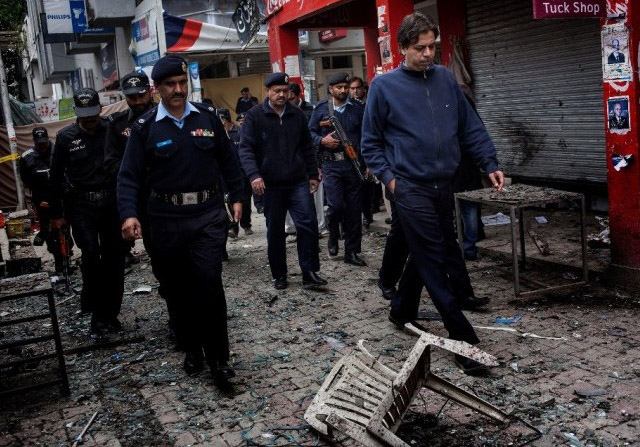
The shooting and bombing at an Islamabad Court today should be condemned as a presumed attack against the judicial officials and the independence of the judiciary in Pakistan, says the ICJ.
The attack resulted in the killing of Additional Sessions Judge Rafaqat Ahmad Khan Awan and at least ten other persons, including several lawyers.
According to reports, armed gunmen forced their way into a court complex in Islamabad, openly firing on judges and lawyers before at least two of the men blew themselves up inside the court complex.
One of the attackers detonated himself outside the door of a judge’s office, while the other targeted the office of the Lawyers’ Union President.
Another gunmen entered Judge Rafaqat Awan’s courtroom, where he shot and killed him.
“An intentional killing of a member of the judiciary can be seen as nothing other than an attack against the independence and impartiality of the judiciary as a whole,” said Sam Zarifi, ICJ Asia Pacific Regional Director.
“In addition to personal tragedy that has befallen the slain victims and their families, this attack and those like it are devastating for the people of Pakistan,” he added. “Courthouses, which should be places where justice is administered, are instead becoming slaughterhouses.”
This is the third armed attack against members of the judiciary in Pakistan in under a year. In March 2013, a judicial compound was attacked in Peshawar, killing four people.
In June 2013, a Sindh High Court judge’s convoy was attacked in Karachi, killing nine people.
As set out in the UN Principles on the Independence of the Judiciary, Pakistan must take steps to protect and ensure the safety of members of the judiciary from threats and violence from any quarter for any reason.
The Beijing Statement of Principles on the Independence of the Judiciary in the LAWASIA region further elaborates that the executive branch must at all times ensure the security and physical protection of judges and their families.
As a State party to the International Covenant on Civil and Political Rights, Pakistan is under a general obligation to ensure the safety of all persons within its territory at all times.
“If judges are under constant fear of violence from insurgent groups, they cannot function as an independent and impartial judiciary – an indispensible requirement for preserving rule of law and democracy,” Zarifi said.
The ICJ calls on the Government of Pakistan to take steps to immediately investigate and bring to justice those persons responsible for the armed attack on the Courthouse.
Contact:
Sam Zarifi, ICJ Asia-Pacific Regional Director, (Bangkok), t:+66(0) 807819002; email: sam.zarifi(a)icj.org
Reema Omer, ICJ Legal Advisor, Pakistan (London), t: +447889565691; email: reema.omer(a)icj.org
Photo credit: MYRA IQBAL
Feb 24, 2014 | Events, Training modules
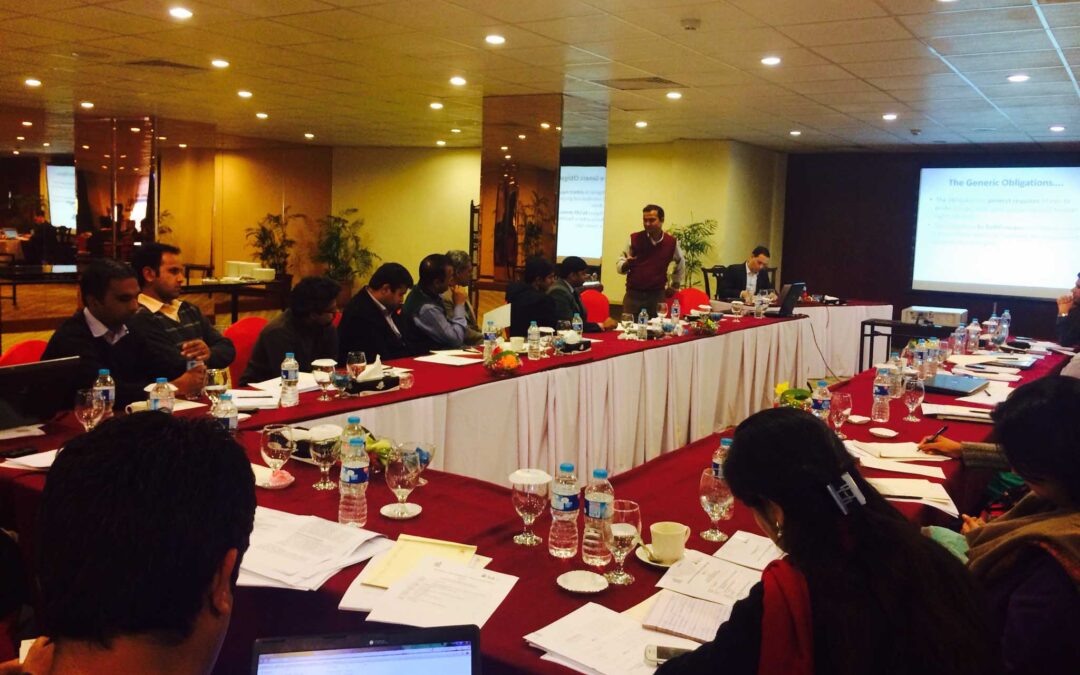
In partnership with the Human Rights Commission of Pakistan (HRCP), the ICJ conducted two-day workshops on NGO engagement with the United Nations, held in Pakistan on 18-19 and 21-22 February 2014.
The workshops, held in Lahore and Islamabad, focused on enhancing the meaningful participation of national NGOs with the UN human rights system. Participants included representatives from civil society working on a wide range of human rights issues, including enforced disappearances, education, violence against women and child rights.
Drawing from experiences of ICJ staff and participants, the workshops considered how international advocacy and engagement with the UN can benefit NGOs and addressed:
- The nature of international human rights law;
- State obligations under international human rights law;
- The UN human rights system;
- The Universal Periodic Review mechanism;
- The UN Special Procedures and the making of individual complaints to them;
- The UN Treaty Bodies, individual complaints and periodic reporting; and
- Documenting human rights violations.
Background materials on the Universal Periodic Review: (ENG) and (URDU)
Background materials on the UN Special Procedures: (ENG) and (URDU)
Background materials on the core functions of the UN Treaty Bodies: (ENG) and (URDU)
BAckground materials on periodic reporting to the UN Treaty Bodies: (ENG) and (URDU)

Feb 11, 2014 | News
The personal decision of Khil Raj Regmi to resign and not return to his post as Chief Justice safeguards the independence of the judiciary and maintains the rule of law in Nepal, the ICJ says.
Caretaker Council of Minister Chairman Khil Raj Regmi announced this afternoon that he would not return to his former post of Chief Justice after acting as the Chairman of the Council of Ministers since March 2013.
“Khil Raj Regmi’s decision is one that will help to preserve the Supreme Court’s hard-earned reputation as an independent institution,” said Ben Schonveld, ICJ’s South Asia Regional Director.
International standards, including the International Covenant on Civil and Political Rights (ICCPR) and the UN Basic Principles on the Independence of the Judiciary, clarify that all governmental officials and institutions as well as judges must respect and preserve the independence and integrity of the judiciary.
The 2007 Interim Constitution of Nepal enshrines guarantees for the independence of the judiciary and contains safeguards for the separation of executive, legislative and judicial powers.
Article 106 of the 2007 Interim Constitution explicitly bans sitting and retired judges from assuming any appointment in government service apart from a role in the national human rights commission.
To enable former Chief Justice Regmi to act as caretaker Prime Minister, the President amended several provisions of the Interim Constitution, including Article 106.
These amendments were made in contravention of the Constitution, which required a two-thirds majority of a sitting Parliament.
“The return of Khil Raj Regmi to the post of Chief Justice would have significantly undermined the appearance of independence of the Supreme Court and the judiciary as a whole,” Schonveld added.
The Bangalore Principles of Judicial Conduct clarify that judges must not only be free from any inappropriate connections with the executive and legislative branches of government but also must appear to a reasonable observer to be free therefrom.
The ICJ applauds the personal decision of Chairman Khil Raj Regmi to resign as Chief Justice.
The ICJ calls on the new Government under the leadership of the Nepali Congress Chairperson, Sushil Koirala as well as the other elected political parties of the Constituent Assembly to honour the commitments made during the election and work to end impunity for gross violations of human rights.
Contact:
Ben Schonveld, ICJ South Asia Director, (Kathmandu); t: 977 9804596661; email: ben.schonveld(a)icj.org
Govinda Bandi Sharma, ICJ Senior Legal Adviser, Nepal (Kathmandu), t: +977 9851061167; email: govinda.sharma(a)icj.org
Sheila Varadan, ICJ Legal Adviser, South Asia Programme (Bangkok), t: +66 857200723; email: sheila.varadan(a)icj.org
Feb 7, 2014 | News
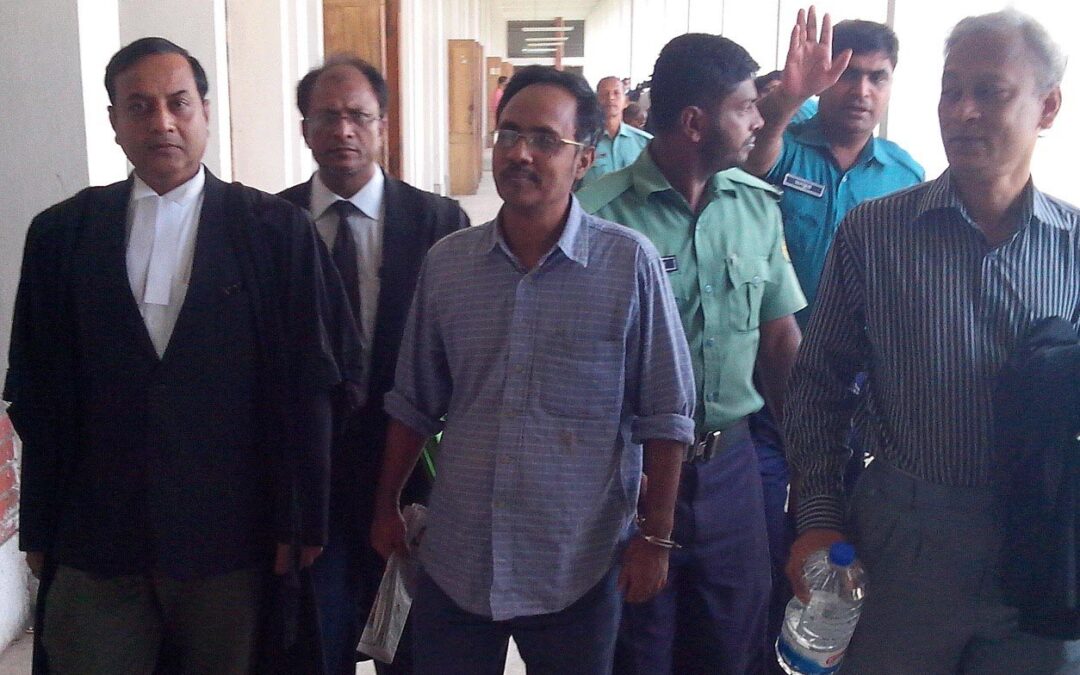
Bangladesh authorities must immediately cease their harassment of Adilur Rahman Khan, Secretary of Odhikar, a prominent human rights organization and ICJ affiliate, and members of his family, the ICJ said today.
On 5 February 2014, Odhikar reported that two officers of the Special Branch of Police followed a member of Adilur Rahman Khan’s family from his home. When he realized he was being followed he decided to return home. The security officers continued to follow him, and parked their motorcycle next to his house.
Odhikar previously reported that security forces monitor its Dhaka offices as well as Adilur Rahman Khan, his family and other staff. In August 2013, security forces raided Odhikar’s office, confiscating computers containing potentially sensitive material such as the identities of witnesses.
“These actions are deliberate acts of intimidation against Odhikar, its staff and their families, designed to silence the legitimate actions of human rights defenders,” said Ben Schonveld, the ICJ’s Asia Director.
Article 12 of the United Nations Declaration on the Right and Responsibility of Individuals, Groups, and Organs of Society to Promote and Protect Universally Recognized Human Rights and Fundamental Freedoms (Declaration on Human Rights Defenders), clarifies that States must take all necessary measures to ensure the protection of human rights defenders from any violence, threat, retaliation, pressure, or any other arbitrary action as a consequence of the legitimate exercise of rights, including the freedom of expression.
Background:
Adilur Rahman Khan and Nasiruddin Elan, Secretary and Director of Odhikar, have been charged under section 57 of the Information and Communication Technology (ICT) Act, 2006, for publishing a report on the Government crackdown on a Hefazat-e-Islam rally in May 2013. The report alleged that 61 people were killed in the protest; the Government disputes the number of casualties. Rahman and Khan were indicted on 8 January 2014 and are both currently on bail.
Contact:
Ben Schonveld, ICJ South Asia Director (Kathmandu), t: +977 14432651; email: ben.schonveld(a)icj.org
Reema Omer, ICJ International Legal Advisor (London), t: +447889565691; email: reema.omer(a)icj.org