Jun 17, 2015 | Events, News
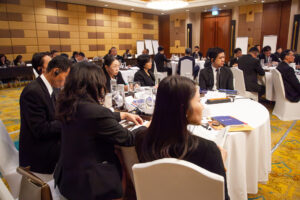
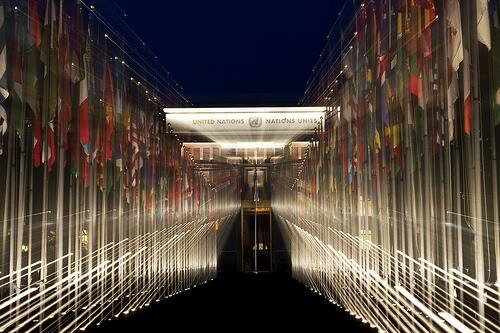
Head of ICJ’s Centre for the Independence of Judges & Lawyers, Matt Pollard, today moderated a side event on “Securing the independence and effectiveness of the Judiciary: European initiatives and perspectives in global context” at the UN Human Rights Council.
At the event, representatives of the Council of Europe highlighted the work of the European Commission for the Efficiency of Justice (CEPEJ) and the Consultative Council of European Judges (CCJE). The UN Special Rapporteur on the Independence of Judges and Lawyers, Ms Gabriela Knaul (from Brazil) reflected on the global relevance of European initiatives and institutions during her six years in the mandate.
Matt Pollard discussed the impact of Council of Europe standards and jurisprudence, both within Europe and in terms of global influence, from the perspective of civil society, as well as highlighting that standards and jurisprudence developed in other regions also present a rich source that European institutions should do more to draw on in their own work.
The interactive Panel discussion included extensive questions and comments from state delegations and civil society representatives in attendance at the event.
Panelists:
Mr. Georg Stawa, President of the European Commission for the Efficiency of Justice, Council of Europe
Mr. Bart van Lierop, President of the Consultative Council of European Judges
Mrs. Gabriela Knaul, UN Special Rapporteur on the Independence of Judges and Lawyers
Mr. Matt Pollard, Centre for the Independence of Judges and Lawyers, International Commission of Jurists (moderator)
This side event was organised by the Permanent Delegation of the Council of Europe to the UN Office in Geneva, with the co-sponsorship of Australia, Botswana, Hungary, Mexico as the main sponsors of the resolution on the independence of judges and lawyers
Jun 12, 2015
On 12 June, the ICJ made a submission to the UN Human Rights Committee in view of the Committee’s elaboration of a new general comment on Article 6 of the International Covenant on Civil and Political Rights guaranteeing the right to life.
May 15, 2015
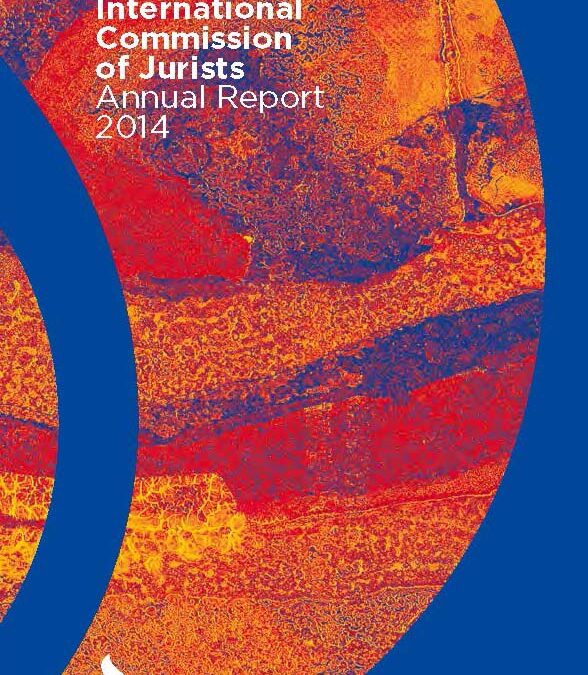
The ICJ has issued its Annual Report 2014, which offers a concise summary of the work carried out by the ICJ over the last year.
In 2014, the world witnessed a new threat to its peace and security with the growing menace of publicity-seeking extremist groups, committing acts of unspeakable barbarity, inflicting wanton cruelty on innocent individuals around the globe.
In addition to the threat to human rights that these groups pose in and of themselves are the threats to human rights that arise from states counter-terrorism efforts that confine the space in which fundamental freedoms are accessible to its citizens.
The ICJ does not believe that counter-terrorism efforts give states carte blanche to disregard their human rights obligations.
Throughout 2014, the ICJ proactively advocated for the accountability of officials responsible for torture, enforced disappearances and other human rights violations that occurred in the course of the CIA’s rendition and secret detention programmes.
In May 2014, Thailand underwent its twelfth military coup since 1932, which has resulted in the implementation of a wide range of measures in clear contravention of Thailand’s international human rights obligations.
The ICJ has worked diligently to remind Thailand of its international responsibilities and to highlight these violations to the international community.
The rule of law cannot exist without an impartial and effective judiciary. In 2014, the ICJ shone a spotlight on the lack of judicial independence in Venezuela through a series of publications, press releases and public events.
The ICJ was also compelled to condemn the judicial persecution of prominent Swazi human rights defender Thulani Maseko, after he was charged and sentenced to two years imprisonment following the publication of an article criticizing judicial conduct.
In 2015, the ICJ intends to develop its work with the institutions of the EU and strengthen its voice in Europe, following the establishment of the ICJ-European Institutions Brussels office.
In Europe and Central Asia, the ICJ will continue its dedicated work on migration and will look to geographically expand its programme of activities further.
In Asia, the ICJ will continue its work with the judiciary in Myanmar and efforts to counter the increasing use of military courts for civilians across the region.
In Africa, the ICJ will be starting a new project in Swaziland and continuing its work to strengthen regional networks of human rights defenders and lawyers.
In Central and South America, the ICJ will continue to strive for justice for victims of enforced disappearances.
In the Middle East, the ICJ continues to expand its field presence and to work for the implementation of strong regional human rights standards.
Download:
Universal-ICJ Annual Report-Publications-Annual Report-2015-ENG (full ICJ Annual report 2014 in PDF, high resolution, best quality)
Universal-ICJ Annual Report low res-Publications-Annual Report-2015-ENG (full ICJ Annual report 2014 in PDF, low resolution, lighter, but lesser quality)
May 4, 2015 | Advocacy, Non-legal submissions
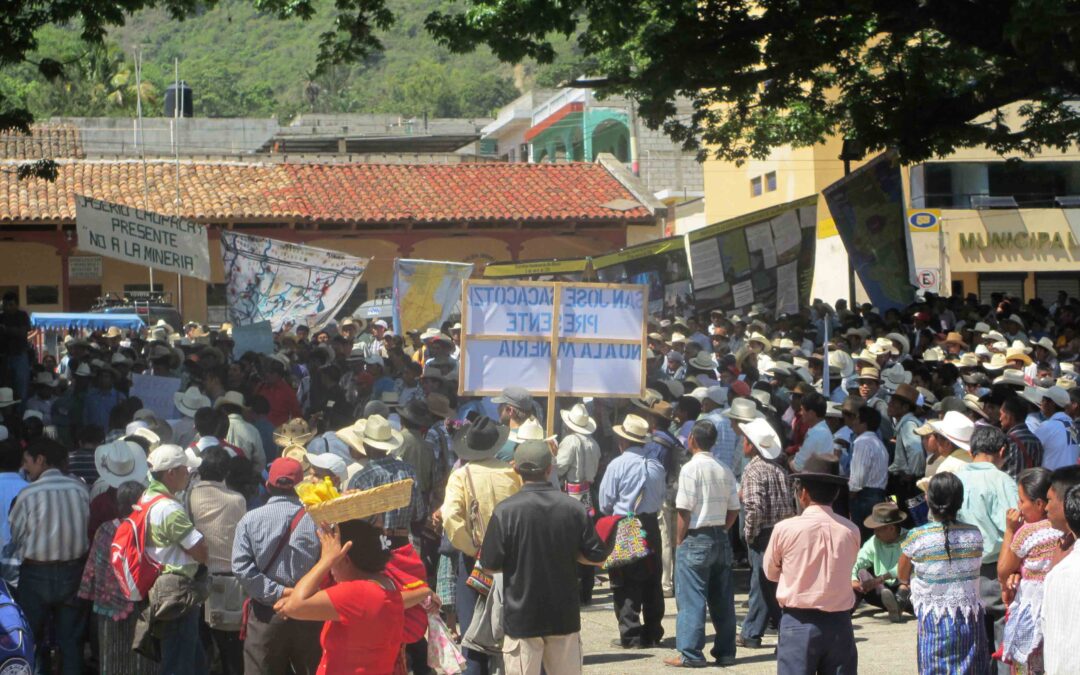
The ICJ welcomes the opportunity offered by the UN Committee on Economic, Social and Cultural Rights to contribute to its current work on the right to just and favourable conditions of work.
Like other UN treaty bodies, the Committee elaborates general comments to interpret the treaty it is in charge of monitoring and to provide guidance on how to implement the provisions and thus comply with the obligations under this treaty.
Currently, the Committee is consulting relevant actors on its further general comment on article 7 of the international Covenant on Economic, Social and Cultural Rights.
This article guarantees a number of rights to individuals at work, including regarding remuneration and occupational health.
The ICJ is particularly pleased to be given the possibility to share its international and country-based experience on the very topical issues covered by article 7.
In addition to its written submission (read below), the organization will actively participate in the further consultation that will take place during the Committee’s next session in June.
Universal-CESCR Draft General Comment Article 7-Advocacy-Non legal submission-2015-ENG (full text in PDF)