Jan 2, 2015
Initially published in Spanish in September 2014, the seventh book of the ICJ series of Practitioners Guides has now been translated into English.
It can be downloaded here or below:
Universal-Fight against impunity PG no7 comp-Publications-Practitioners’ guide series-2015-ENG (full English Guide in PDF)
Universal-Lucha contra la Impunidad PG7-Publications-Practitioners’ guide series-2014-SPA (full Spanish Guide, in PDF)
Dec 4, 2014 | Articles, Événements, Nouvelles
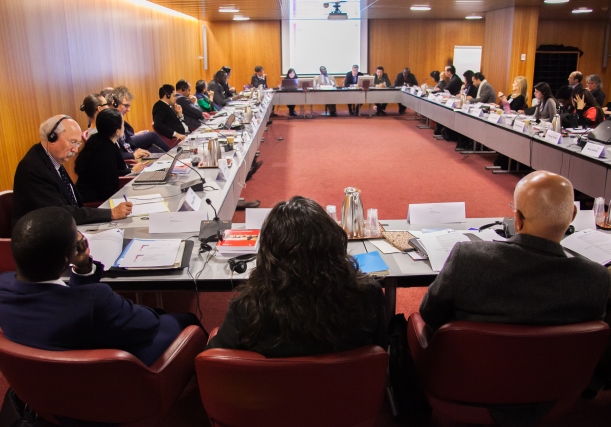
Le Forum 2014 de la CIJ accueille des juges et des avocats de toutes les régions du monde pour discuter de “l’application judiciaire des droits économiques, sociaux et culturels”. Gilles Badet parle de son expérience au Bénin, son pays (vidéo).
Les participants au Forum 2014 de Genève échangent leurs vues sur les progrès accomplis durant les deux dernières décennies, et notamment sur l’entrée en vigueur du Protocole facultatif se rapportant au Pacte international sur les droits économiques, sociaux et culturels (PF-PIDESC) de mai 2013.
Dans la vidéo, Gilles Badet donne sa vision de la protection judiciaire des droits économiques, sociaux et culturels (ESCR) ainsi que sur les changements nécessaires pour garantir des réparations effectives aux victimes de violations de leurs droits socio-économiques.
Le Forum de Genève des juges et avocats est une initiative du Centre pour l’Indépendance des Magistrats et Avocats de la CIJ (CIMA).
Compte rendu et programme du forum:
Universal-Programme GVA Forum 2014-Events-2014-FRA (Compte rendu complet en PDF)
Voir l’interview de Gilles Badet:
Dec 4, 2014 | Events, News
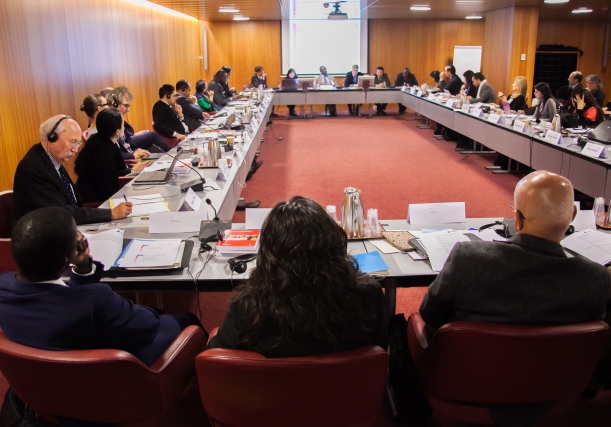
Today and tomorrow, the ICJ welcomes judges and lawyers from all regions of the world to discuss the “Judicial Enforcement of Economic, Social and Cultural Rights”.
The 2014 Geneva Forum of Judges and Lawyers is a joint initiative of the ICJ Center for the Independence of Judges and Lawyers (CIJL) and the ICJ Programme on Economic, Social and Cultural Rights.
Participants are exchanging views on the progress made over the past two decades, including the entry into force of the Optional Protocol to the International Covenant on Economic, Social and Cultural Rights in May 2013.
The Protocol allows individuals to bring complaints of violations of such rights to an independent international body of experts for adjudication.
Discussions are held also in relation to challenges to the justiciability of these rights, including as regards the principle of separation of powers between the judicial, executive and legislative branches of government.
Managing potential implications for public human and financial resources of judicial orders for enforcement of ESCR, and the conflicts that may arise between state development plans, public interest and the interests and rights of the individuals, will also be topics of discussion.
Participants are invited to ground the discussion of conceptual issues in examples from their own actual experience and practice in their national jurisdictions.
Alejandra Ancheita, recent winner of the Martin Ennals Award 2014 – The Nobel Prize of Human Rights – is among the guest speakers.
A report of the discussions will be published in 2015.
The draft agenda for the 2014 Geneva Forum is available here:
Universal-Programme GVA Forum 2014-Events-2014-ENG (English)
Universal-Programme GVA Forum 2014-Events-2014-ESP (Español)
The 2014 Geneva Forum has been made possible with the support of the République et Canton de Genève, the Permanent Mission of Germany to the United Nations in Geneva, and the Taipei Bar Association.
The Geneva Forum has been convened annually by the CIJL since 2010.
Information on, and reports of, the previous Geneva Forums can be found here:
Geneva Forum 2013 (photo)
Geneva Forum Series no. 1: Women and the Judiciary
Geneva Forum 2012
Third Geneva Forum for Judges and Lawyers: the report is published
Geneva Forum 2011
2nd ICJ Geneva Forum of Judges and Lawyers: final report
Geneva Forum 2010
1st ICJ Geneva Forum of Judges and Lawyers: accountable national security policies – the role of judges and legal practitioners
Nov 21, 2014
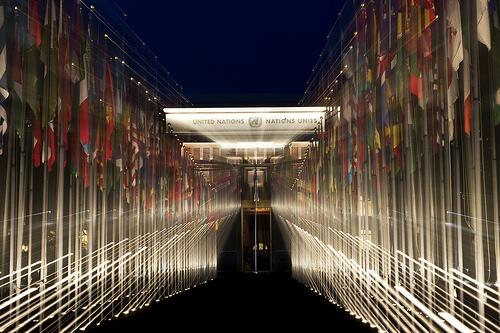
The ICJ welcomes the UN General Assembly’s Third Committee’s adoption of resolution A/C.3/69/L.47 on Extrajudicial, summary or arbitrary executions on 19 November most recently.
The resolution, which is introduced biennially, urges States to protect the right to life of all people. Importantly, it calls upon States to investigate killings based on discriminatory grounds, including killings that target people based on their sexual orientation or gender identity. It is the only resolution at the General Assembly to make specific reference to sexual orientation and gender identity.
The resolution was introduced by Finland and co-sponsored by 62 additional states. The support came after a concerted effort by civil society to ensure the successful adoption of the resolution, culminating in a joint letter to all States by 30 NGOs, including the ICJ.
An effort led by Egypt to weaken the resolution, by introducing an amendment that would have removed reference to any of the groups particularly at risk of extrajudicial killings, was defeated by a vote of 86 against, 53 in favour and 24 abstaining.
The resolution was adopted 111 to 1, with 63 abstentions. Kiribati after the vote declared their intention to change their ‘no’ vote to abstention.

Nov 6, 2014 | Events
The ICJ’s Director of International Law and Protection Programmes, Alex Conte, will speak next week on access to justice at a meeting of the OECD Public Governance Committee.
The meeting Fostering Inclusive Growth and Trust in Justice Institutions: Access, Performance and Alternatives, will be held in Paris on 12 November 2014.
The ICJ’s presentation will focus on the key components of access to justice as a means of ensuring access by all to legal institutions capable of rending independent, impartial, binding and enforceable decisions.
It will also address the question of how, when such components are adhered to, trust in justice institutions is attained, from the perspective of the rule of law and public governance, from individuals’ perspectives and from investment and international perspectives.