Sep 19, 2019 | Advocacy, Non-legal submissions
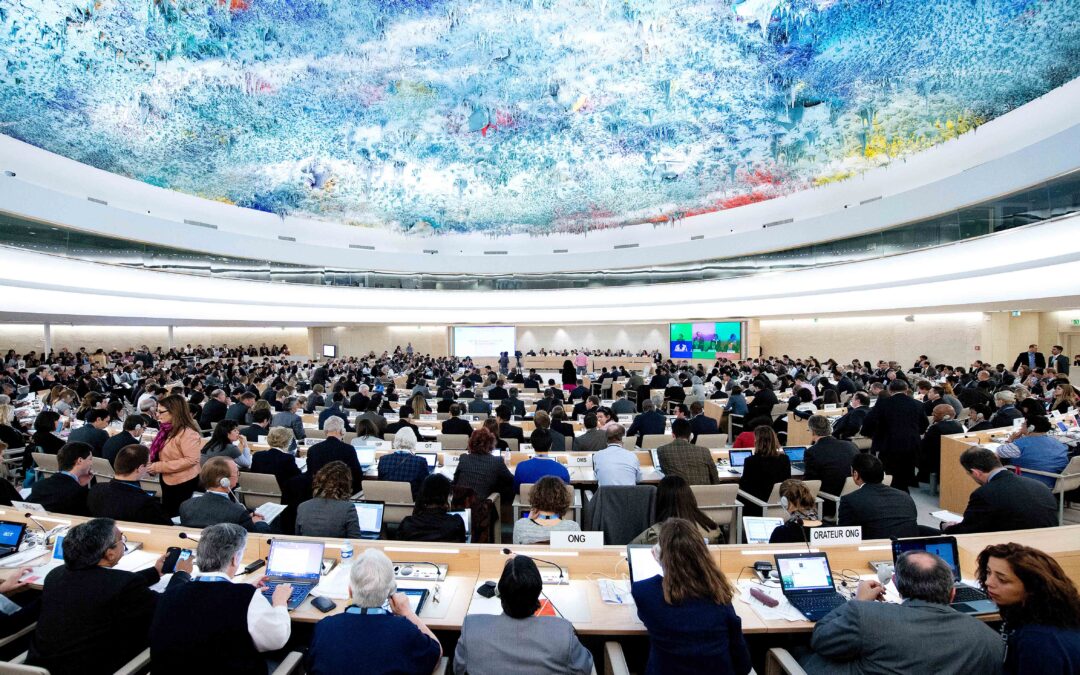
The ICJ today joined other NGOs in an oral statement to the UN Human Rights Council in Geneva, highlighting ongoing challenges faced by independent UN human rights experts, supporting the process the experts have established to make their own work effective, and calling for related issues of funding and non-cooperation of States to be addressed.
The statement was delivered on behalf of the group of NGOs by Amnesty International and read as follows:
“We note the concerns in the Declaration of the Special Procedures’ mandate holders at the Annual Meeting 2019 and share their concern about the global retrenchment against the values and obligations embedded in international human rights law and the challenges they spell out with regard to non-cooperation.
We also express appreciation[1] for the process set in place by the Special Procedures Coordination Committee to discuss ways in which the work can be strengthened including by seeking input from a wide range of stakeholders. This process presents the most appropriate way to ensure the effectiveness of the Special Procedures in protecting and promoting human rights, and to discuss ways to strengthen cooperation and address situations where there may be concerns regarding the actions of individual mandate holders.
We hope that this process will also provide an opportunity to discuss issues of chronic underfunding, non-cooperation of States with the Special Procedures, acts of reprisal and intimidation against human rights defenders and ad hominem attacks against mandate holders and how to make non-cooperation including selective cooperation by states more costly.”
(Partial) list of signatories:
- Amnesty International
- Cairo Institute for Human Rights Studies
- Center for Reproductive Rights
- Child Rights Connect
- CIVICUS: World Alliance for Citizen Participation
- Colombian Commission of Jurists
- Defence for Children International
- Forum for Human Rights and Development (FORUM-ASIA)
- Geneva for Human Rights
- ILGA World
- International Bar Association’s Human Rights Institute
- International Commission of Jurists
- International Movement against All Forms of Discrimination and Racism (IMADR)
- International Service of Human Rights
- Peace Brigades International
- Women’s International League for Peace and Freedom (WILPF)
- World Organisation Against Torture (OMCT)
[1] Civil society statement on efforts to strengthen and increase effectiveness of the United Nations Special Procedures , https://www.amnesty.org/download/Documents/IOR4009672019ENGLISH.pdf
Sep 17, 2019 | Events, News
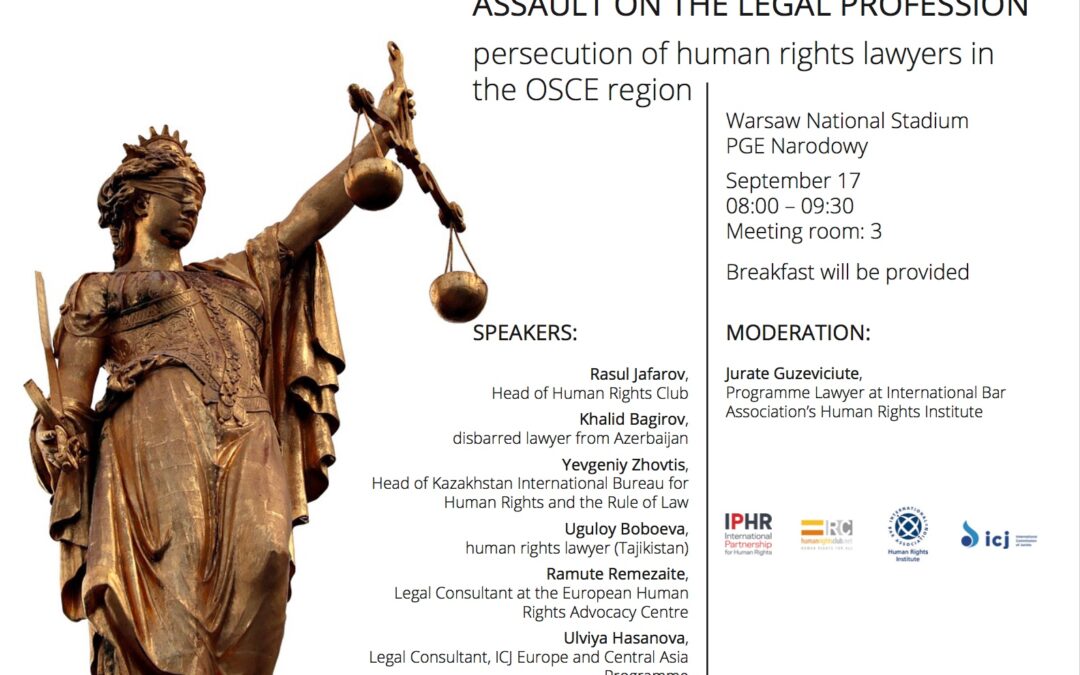
This event held in Warsaw, Poland, will provide an overview of the ongoing challenges human rights lawyers in the OSCE region are facing in their daily work.
A flyer for the event is available here.
Sep 10, 2019 | Events, News
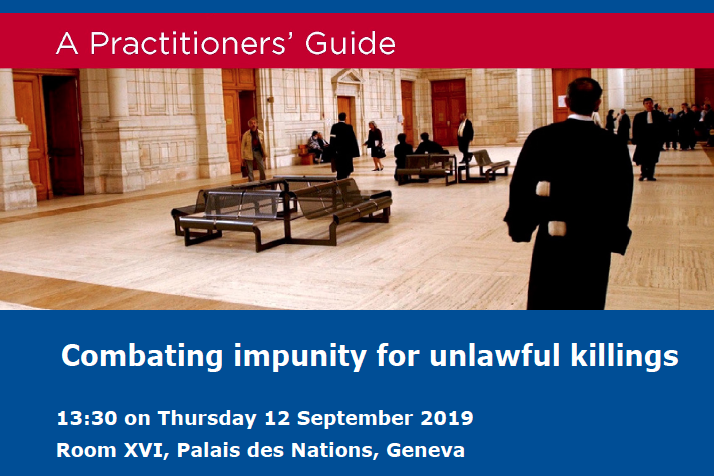
The ICJ invites you to a discussion of new tools to assist investigation and accountability for extrajudicial, summary or arbitrary executions, and other potentially unlawful deaths. The event takes place on Thursday, 12 September, 13:30, Room XVI, at the Palais des Nations in Geneva.
ICJ’s new Practitioners’ Guide No 14 on the Investigation and Prosecution of Unlawful Death helps legal practitioners ensure that investigation and accountability processes are implemented in accordance with international human rights law.
The Guide elaborates on the revised Minnesota Protocol on the Investigation of Potentially Unlawful Death (2016), a set of practical standards and guidelines that was updated by former UN Special Rapporteur on extrajudicial, summary or arbitrary executions, Christof Heyns, and published by the Office of the United Nations High Commissioner for Human Rights (OHCHR) in 2017.
The panel discussion will highlight key elements of the Protocol and Practitioners Guide, and their relevance to cases such as the 2016 killing of political commentator, Kem Ley, in Cambodia and the 2018 killing of Saudi Journalist, Jamal Khashoggi in Turkey.
Speakers
- Agnes Callamard, Special Rapporteur on extrajudicial, summary or arbitrary executions (by video conference, TBC).
- Stuart Maslen, Honorary Professor, Centre for Human Rights, University of Pretoria.
- Kingsley Abbott, Senior Legal Adviser & Coordinator of the ICJ’s Global Accountability Initiative.
Moderator
- Carolina Villadiego, ICJ Legal and Policy Adviser, Latin America
Printed copies of the ICJ’s Practitioners’ Guide No 14 on the Investigation and Prosecution of Unlawful Death will be available.
A flyer for the event is available here.
*** Room XVI is on the 5th floor of Building A, behind the Assembly Hall, accessible by the elevators at the Salle des Pas Perdus. Details here.
Jul 1, 2019 | Advocacy, Non-legal submissions
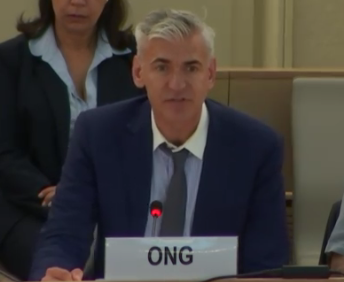
The ICJ today highlighted the negative impacts of criminalisation of HIV non-disclosure, exposure and transmission, on human rights, as well as an ongoing initiative to develop a set of relevant principles, at the UN Human Rights Council.
The oral statement, delivered during the General Debate under Agenda Item 3, was titled “Developing principles to address the detrimental impact on health, equality and human rights of criminalization with a focus on select conduct in the areas of sexuality, reproduction, drug use and HIV” and read as follows:
“The ICJ welcomes the High Commissioner’s report (A/HRC/41/27) on human rights in the response to HIV.
Unjust criminalization of HIV non-disclosure, exposure and transmission is a barrier to the realization of human rights – fostering stigma, discrimination, violence and abuse.
Last year, the ICJ – supported by UNAIDS, OHCHR and UNDP – convened a meeting of jurists to address the harmful effects of misuse of criminal law in relation to HIV and other issues.
The meeting endorsed civil society’s call for jurists to elaborate a set of principles to assist legislatures, the courts, administrative and prosecutorial authorities, and advocates address the deleterious impact on health, equality, and human rights of criminalization in a range of areas. In addition to HIV, jurists concluded the principles should address criminalization of sexual and reproductive healthcare services, including abortion; criminalization of consensual sexual conduct, including sex work, sex outside marriage, same-sex relations, and adolescent sexual activity; and criminalization of drug use and of possession of drugs for personal use.
To ensure the jurists’ principles are effective and protect the most at-risk individuals, the process for developing them is as important as the content of the principles themselves. Thus, broad consultation with a wide range of stakeholders, including national and international civil society organizations, UN human rights mandate holders and UN agencies, is ongoing.”
Jul 1, 2019 | Advocacy, Non-legal submissions
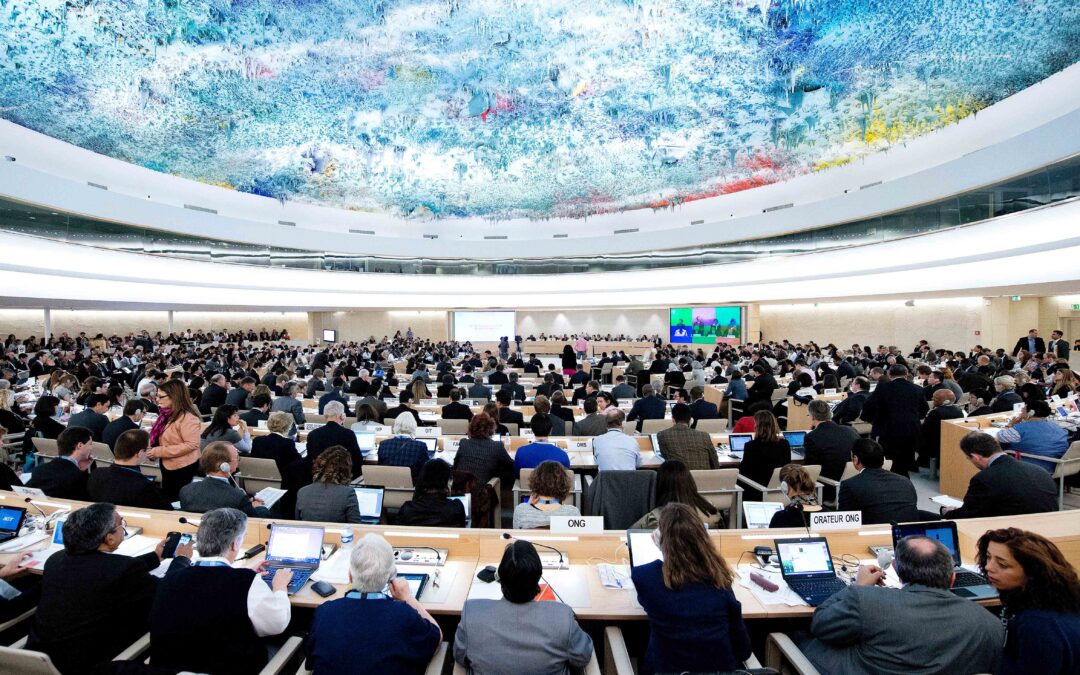
The ICJ today joined other NGOs in calling on States to do more to save lives and uphold human rights of migrants, including by recognising the role of civil society and creating an environment for its work.
The statement to the UN Human Rights Council, delivered on behalf of the group of NGOs by the International Catholic Migration Commission, read as follows:
“We are deeply concerned by widespread and growing violations of the human rights of migrants and an environment where those who seek to protect them are increasingly criminalized.
The Global Compact for Migration provides technical guidance and a cooperative framework for the implementation of existing legal commitments. It is mobilizing resources to support States in this.
We are asking you to do more and to do better to save lives and uphold human rights. The Compact can help you do this.
Civil Society is already using the Compact at regional and national level, often in partnership with States, for example:
- Civil society in Central America are developing a pilot programme to identify missing migrants to support States’ implementation of Objectives 8 and 9.
- Migrant Forum in Asia has led consultations with governments and other stakeholders throughout Asia.
- Cross-Regional Center for Refugees and Migrants has developed a baseline assessment on the GCM for the MENA region.
- The International Detention Coalition is working with States to develop a cross regional platform on alternatives to child immigration detention in line with Objective 13(h)
We believe these activities can inspire similar measures, but we need all States to create an environment that enables us to do so and we need all States to take leadership on implementation.
The human rights of migrants deserve the acknowledgement, respect, and urgent action of all of us.”
Delivered by the International Catholic Migration Commission, the statement was co-sponsored by the following ECOSOC accredited NGOs:
- ACT Alliance
- Alianza Americas
- Asylum Access
- Caritas Internationalis
- Congregation of Our Lady of Charity of the Good Shepherd
- Congregations of St. Joseph
- Defence for Children International
- International Catholic Migration Commission
- International Commission of Jurists
- International Council of Voluntary Associations (ICVA)
- International Detention Coalition
- International Movement Against All Forms of Discrimination and Racism (IMADR)
- Migrant Forum in Asia
- Save the Children
- Terre des Hommes International Federation
- Translators without Borders
- Vivat International
- World Organization for Early Childhood Education (OMEP)
The statement was also supported by the following NGOs and networks who do not have ECOSOC accreditation:
- Action Secours Ambulance (ASA)
- Asia Pacific Refugee Rights Network (APRRN)
- Asociación Rumiñahui
- Bloque latinamericano y el Caribe sobre Migración
- Casa Monarca ayuda humanitaria al migrante
- Center for Migrant Advocacy, Philippines (CMA-Phils)
- Centro de Atención y Desarrollo Integral Migrante (CADIM Oxnard)
- Centro de Recursos Centroamericanos Del Norte California (CARECEN)
- Centro de Atención a la Familia Migrante e Indígena (CAFAMI)
- Civil Society Action Committee
- Comision de Accion Social Menonita (CASM)
- Destination Unknown Network
- Estancia del Migrante González y Martínez
- FM4 – Paso Libre
- Fundación para la Justicia y el Estado Democrático de Derecho
- Global Coalition on Migration
- Institution para las Mujeres en la Migración (IMUMI)
- Instituto de Estudios y Divulgación sobre Migración (INEDIM)
- International Presentation Association
- NGO Coalition on Migration
- Organismo Cristiano de Desarrollo Intergral de Honduras (OCDIH)
- Pacific Islands Association of Non-Government Organisation (PIANGO)
- Plateforme des Organisations Nationales et Territoriales (Pont-Sch)
- Red de Mujeres del Bajío
- Red Internacional de Migración y Desarrollo
- Red Jesuita con Migrantes de América Latina y Caribe (RJM-LAC)
- Religious of the Sacred Heart of Mary
- Solidarity Centre
- The Mixed Migration Centre
- Women in Migration Network